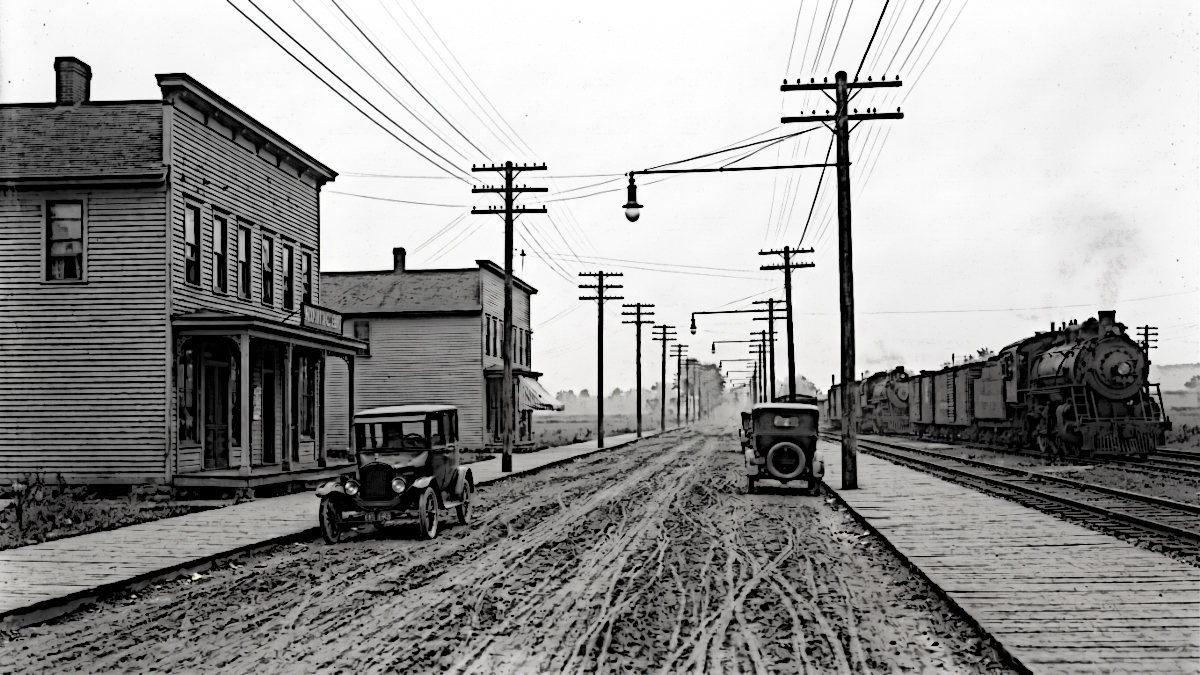
During the Great Migration, a period of American history when millions of black southerners moved to find work in the industrialized cities of the north, many found themselves in Tuscarawas County, Ohio including Tennessee native Frank Wilson.
In the early hours of November 7, 1925, Frank Wilson (1902-1925) was killed by a six-inch ax fracture to the skull at a rooming house on Depot Street in Dover, Ohio. Wilson was a native of Chattanooga, Tennessee, who had moved north and found work as a laborer at the Robinson Clay Product Company. The suspect, Cleve Robinson (c. 1895-?) and known as “C & O Red”, was a Georgia native with a prior criminal record in his home state. It was following a series of disputes with Wilson over a woman that Robinson attacked Wilson. Robinson immediately fled the area, narrowly evading a local police officer in the process.
For seven years, Robinson lived a double life as a fugitive in Atlanta, Georgia. While he established a successful trucking and transfer business and he continued to encounter the law, including a 1930 arrest for burglary in Macon. This period was also marked by significant personal tragedy when his common-law wife was stabbed to death in a brawl by another woman. Throughout this time, the case remained open in Ohio as Dover Police Chief Frank H. Javens (1896-1974) pursued the suspect. His persistence culminated in four months of intensive work using letters and telegrams to systematically trail Robinson’s movements across Georgia until he was located in October 1932.
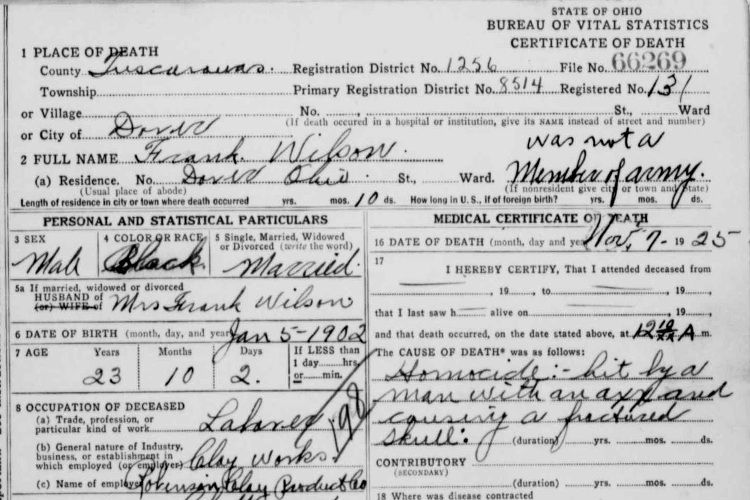
Detail from Frank Wilson’s death certificate, November 1925. (Source: familysearch.org) 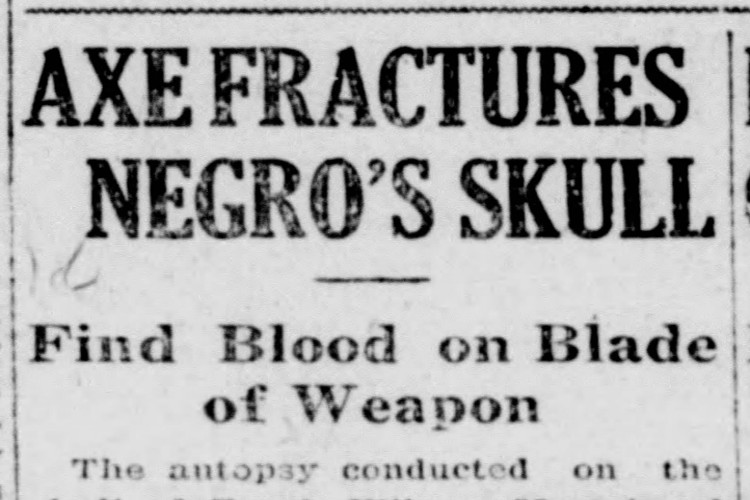
New Philadelphia, Ohio newspaper headline on the killing of Frank Wilson, November 1925. (Source: newspapers.com) 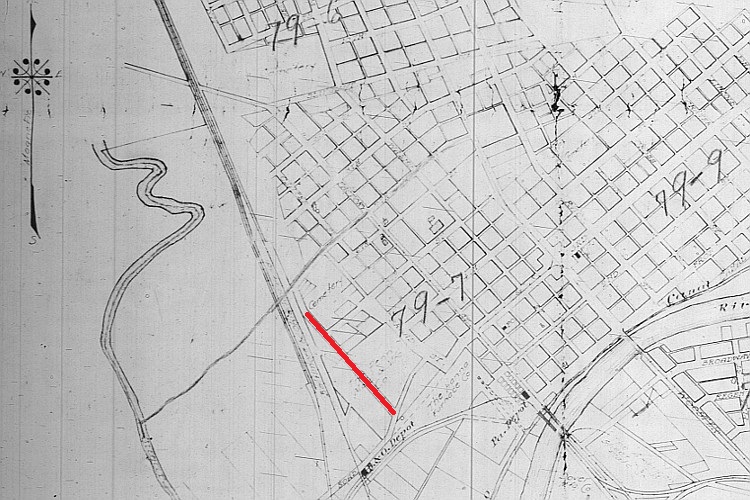
1930 US Census Enumeration Map of Dover, Ohio with Depot Street highlighted in red. (Source: familysearch.org) 
Modern view of Depot Street, 2023. (Source: Google)
That month Javens successfully located Robinson in Barnesville, Georgia, while the fugitive was visiting his mother. After the Governor of Georgia honored the extradition papers, Robinson was returned to Tuscarawas County by the County Sheriff and Javens to face a first-degree murder charge. The state’s case relied heavily on the testimony of the Robinson’s previous landlady who witnessed the events, and another boarding house resident who was brought from his new home in Youngstown as a material witness.

Just as the legal proceedings were gaining momentum, Robinson staged a daring escape from the Tuscarawas County Jail during the night of December 23, 1932. After picking the lock of the cell block, he reached the jail’s garret and cut through the lath, plaster, and flooring. To reach the ground, he attached a rubber garden hose to a rafter and descended from an attic window, fleeing in a machine provided by an accomplice. Chief Javens marveled that Robinson “certainly can travel” after the fugitive made a remarkably fast journey back to the South and was soon reported once again in the vicinity of Macon and Atlanta, Georgia.
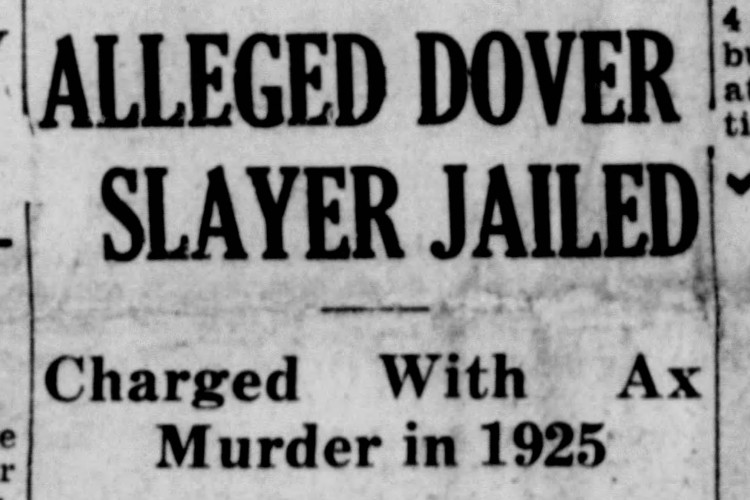
New Philadelphia, Ohio newspaper headline reporting on the arrest of Cleve Robinson, October 1932. (Source: newspapers.com) 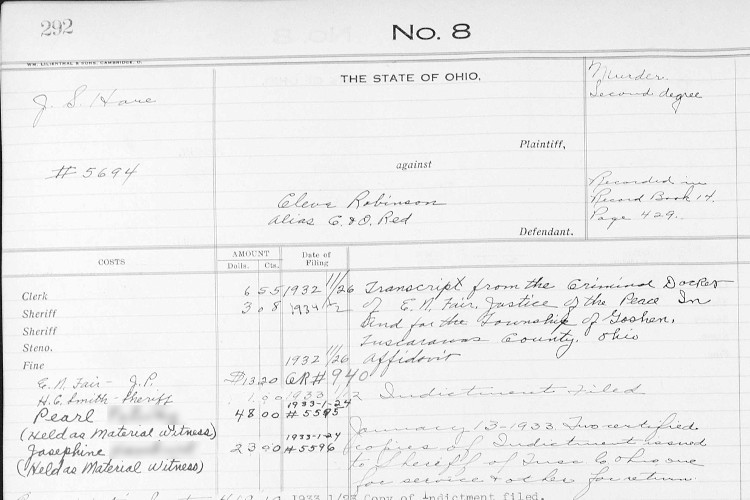
Detail from Cleve Robinson’s Criminal Court docket record, 1933-1934. (Source: familysearch.org) 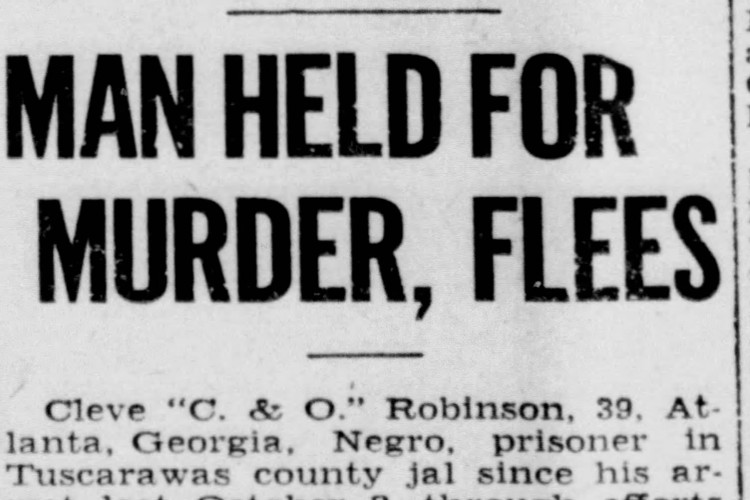
New Philadelphia, Ohio newspaper headline reporting on Cleve Robinson’s escape from the Tuscarawas County Jail, December 1932. (Source: newspapers.com) 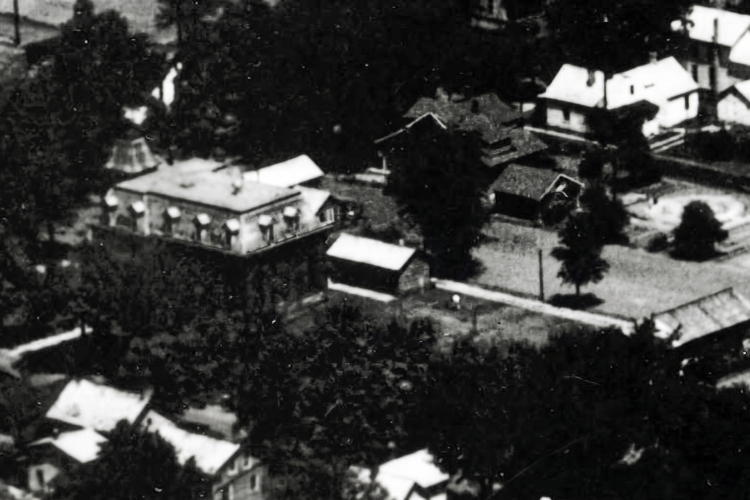
Enhanced aerial image showing the Tuscarawas County Jail, c. 1930s. (Source: ohiomemory.org; Google Flow)
In early January 1933, Robinson’s brief freedom came to an abrupt end in Atlanta after he became intoxicated. In a drunken rage, he assaulted his new wife and his aged father, prompting his own family to call the local police. The Atlanta authorities soon realized their prisoner was the wanted Ohio fugitive and notified the Tuscarawas County Sheriff. After a hearing before the Governor of Georgia, Robinson was extradited to Ohio for a second time and placed in solitary confinement until his trial.
The case concluded on January 23, 1933, when Robinson appeared before a Tuscarawas County Judge and pleaded guilty to a reduced charge of manslaughter. He maintained a claim of self-defense, asserting that Wilson had threatened him with a gun on the night of the incident. The Judge sentenced Robinson to an indefinite term of one to twenty years in the Ohio state penitentiary. Robinson was officially listed as eligible for parole in September 1935 and likely returned to Georgia, yet as the historical records are difficult to track after this date, his ultimate fate and life following his release remain a mystery. Meanwhile, his victim was buried in Maple Grove Cemetery in Dover, Ohio.
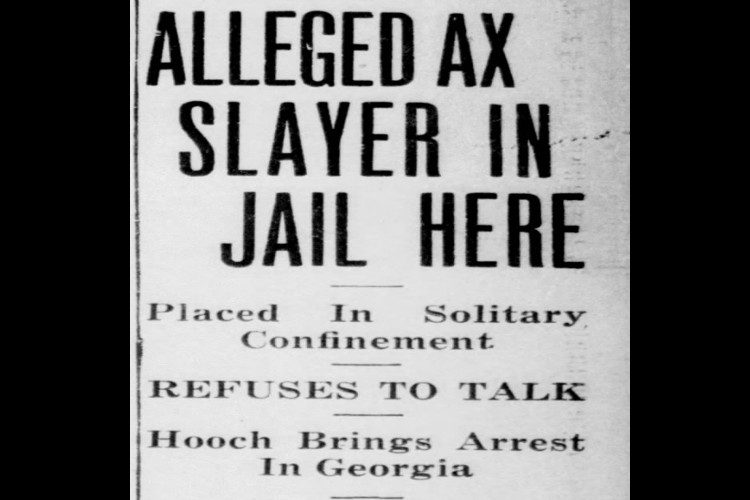
New Philadelphia, Ohio newspaper headline reporting on Cleve Robinson’s rearrest after his escape, January 1933. (Source: newspapers.com) 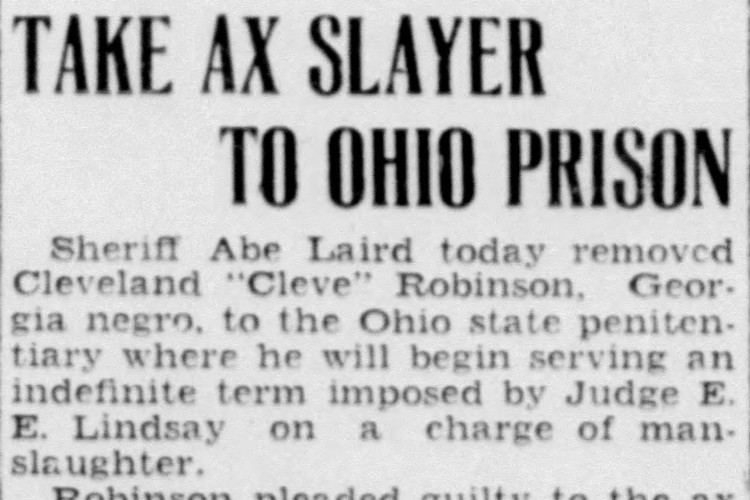
New Philadelphia, Ohio newspaper article reporting on Cleve Robinson’s transfer to the Ohio Penitentiary, January 1933. (Source: newspapers.com) 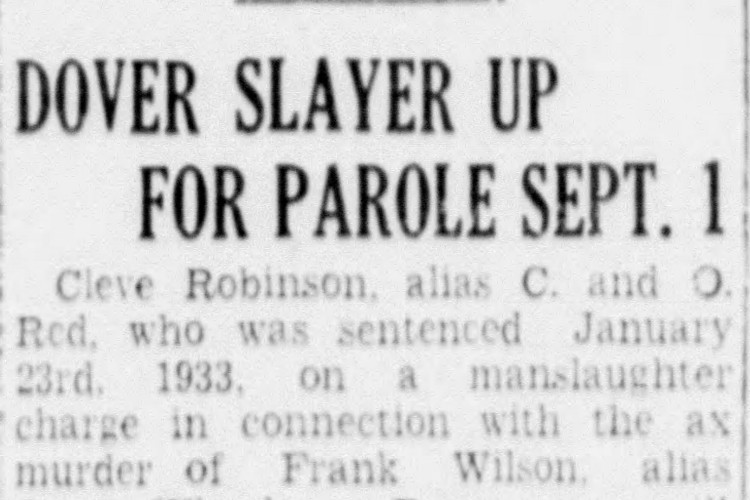
New Philadelphia, Ohio newspaper article reporting on Cleve Robinson’s parole, July 1935. (Source: newspapers.com) 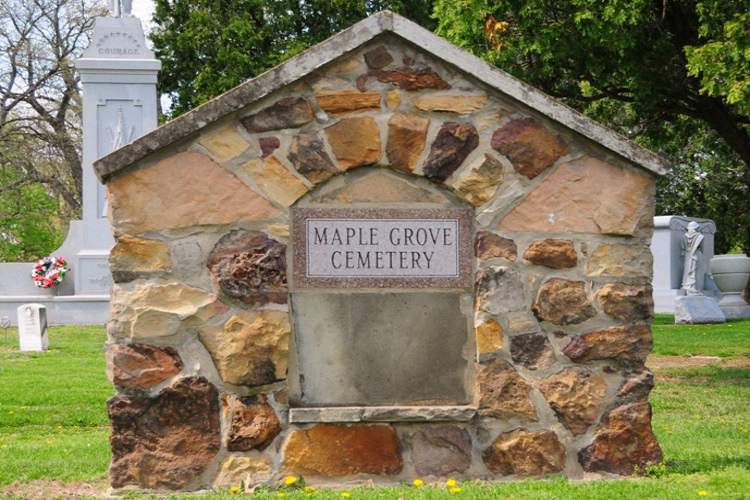
Maple Grove Cemetery in Dover, Ohio where Frank Wilson was buried after his killing, 2010. (Source: findagrave.com)
Enjoy the stories?

© Noel B. Poirier, 2026.

