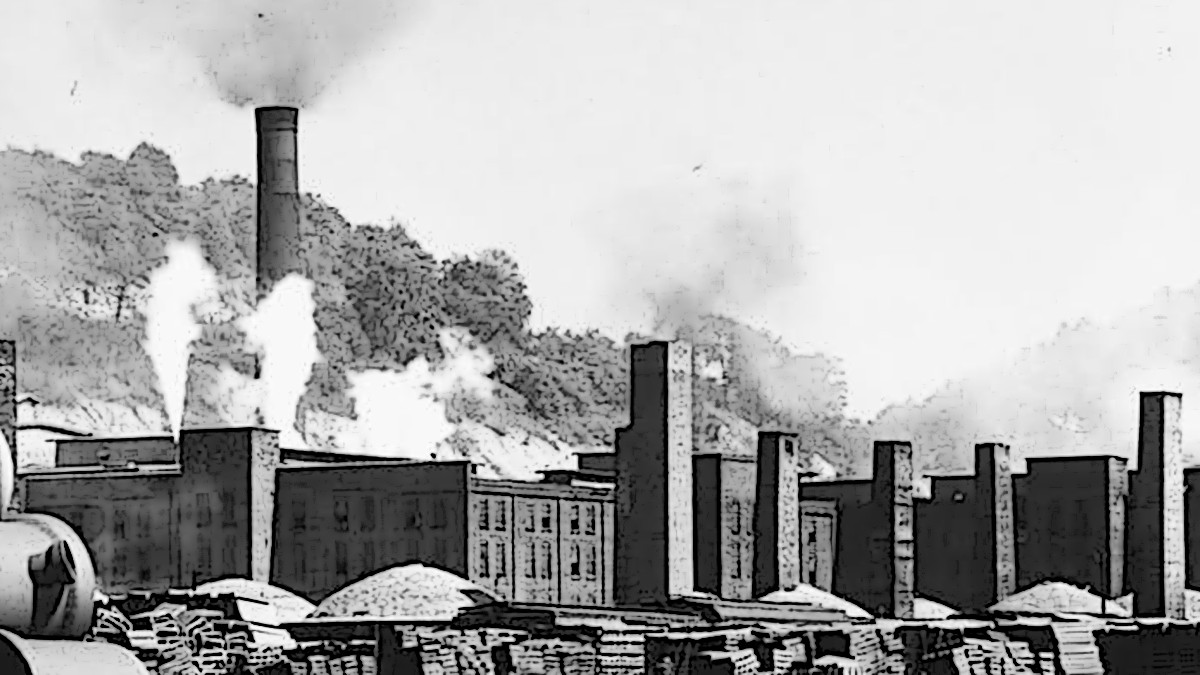
Tragedy struck Midvale when a violent boiler explosion claimed the lives of two young workers.
On the morning of December 17, 1909, the Royal plant of the Robinson Clay Product Company in Midvale, Ohio, was operating a battery of eight horizontal tubular boilers under approximately 95 pounds of pressure. At 7:10 AM, a catastrophic explosion originated in boiler number one, a massive unit sixty inches in diameter and sixteen feet long. The blast was so powerful that it gutted the factory’s interior, projecting the boiler shell upward and scattering debris across a wide area while leaving the plant’s engine exposed amidst the ruins of the engine room and boiler house.
The disaster instantly claimed the lives of two young laborers, seventeen-year-old David R. Hinds (1892-1909) and twenty-six-year-old Denes Abraham (1883-1909). Hinds, the son of a coal miner who grew up in a large family in Coshocton County, was standing on top of the boiler when it failed; the force of the explosion hurled his body 800 feet through the air into a four-story building. Abraham, a Hungarian immigrant who had recently moved his wife and two small children into a new home near the plant, was crushed to death beneath falling masonry in the boiler room.
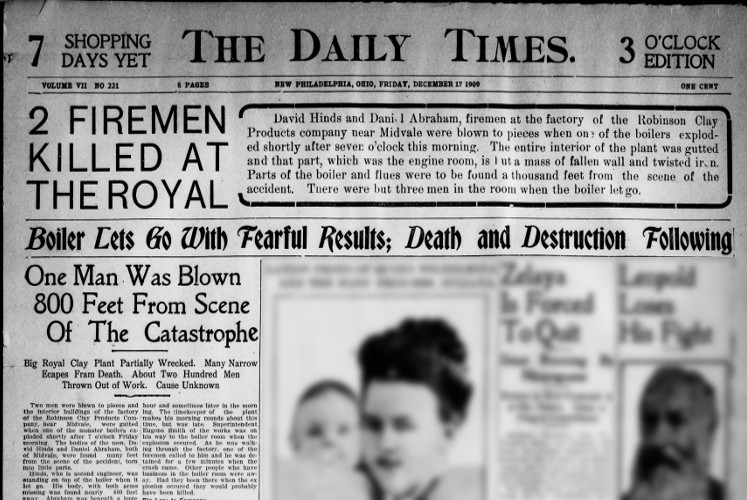
New Philadelphia, Ohio newspaper front page reporting on the explosion, December 1909. (Source: newspapers.com) 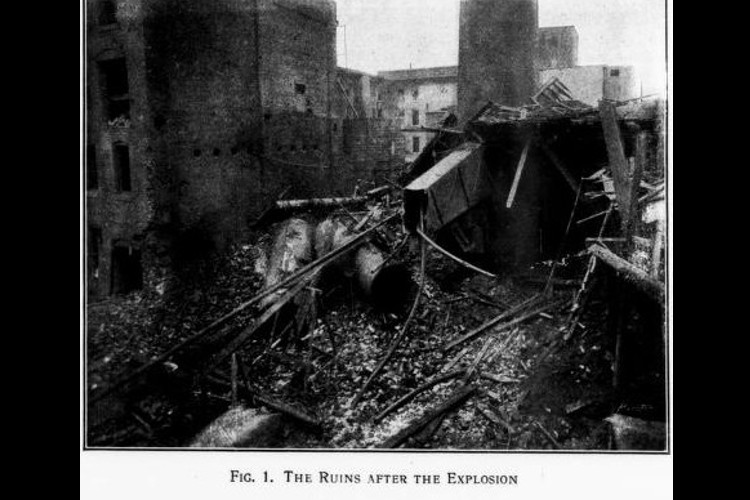
Image of the exploded boiler and room that appeared in the publication Power and the Engineer, February 1910. (Source: archive.org) 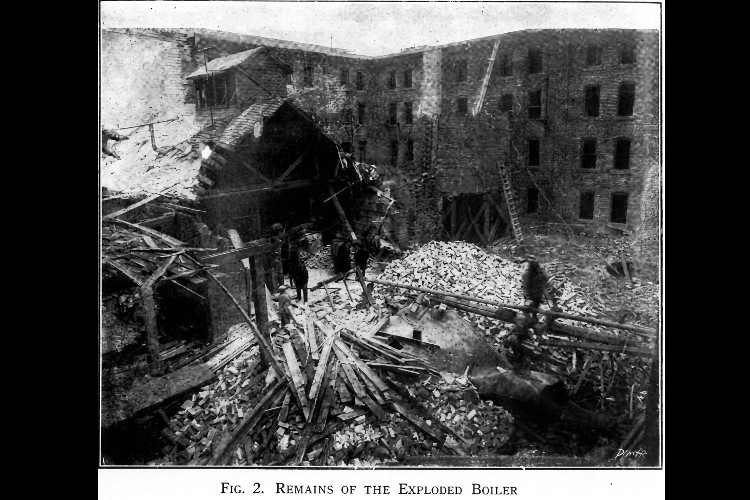
Image of the exploded boiler and room that appeared in the publication Power and the Engineer, February 1910. (Source: archive.org)
Remarkable accounts of survival and heroism emerged from the wreckage. The plant’s engineer, Jacob L. W. Kalp (1841-1931), a Civil War veteran then in his late sixties, was standing only twenty feet away but miraculously escaped being crushed by the tons of falling brick. Meanwhile, machinist Benjamin Plotner (1868-1922) was lauded for heroically entering the scalding steam and ruins to shut off valves, potentially preventing further explosions in the remaining boilers.

Technical investigations into the disaster, published in Power and the Engineer in 1910, concluded the explosion was likely caused by a “water hammer” effect. This occurred when Hinds reportedly attempted to clear a leaking safety valve by lifting its lever, causing a sudden, violent reaction within the high-pressure system that the iron shell could not contain. Local manufacturers viewed the accident as a grim lesson, noting that a lack of rainfall had forced them to use river water high in lime content, which may also have created dangerous scale buildup inside the boilers.
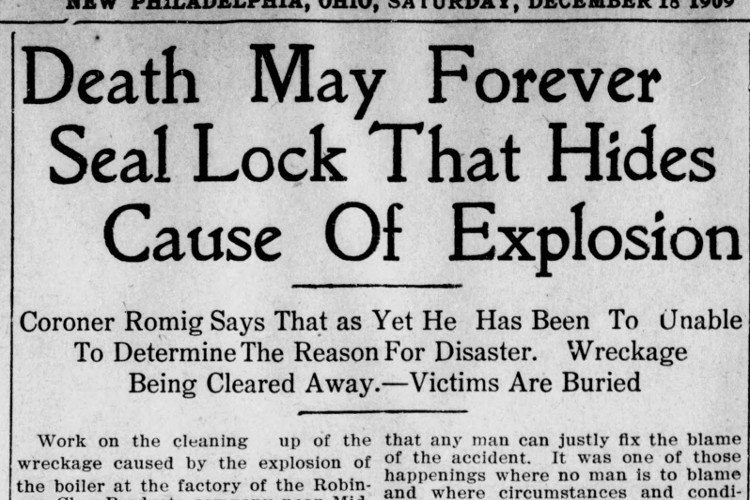
New Philadelphia, Ohio newspaper article on the investigation into the explosion, December 1909. (Source: newspapers.com) 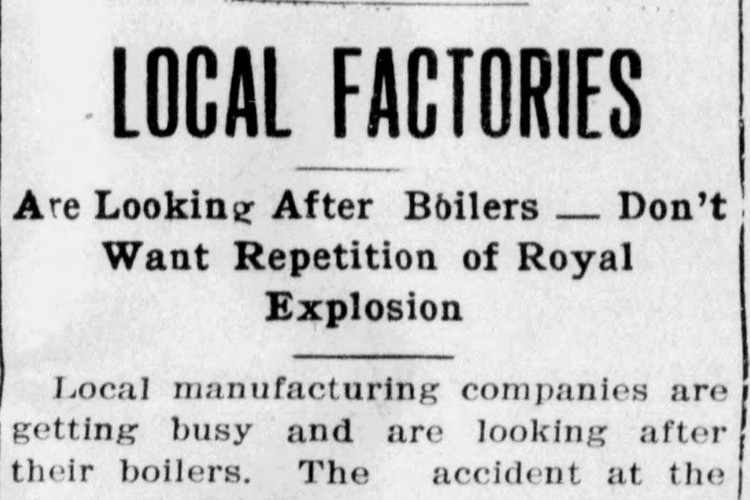
New Philadelphia, Ohio newspaper article on the affect of the the explosion on other businesses, December 1909. (Source: newspapers.com) 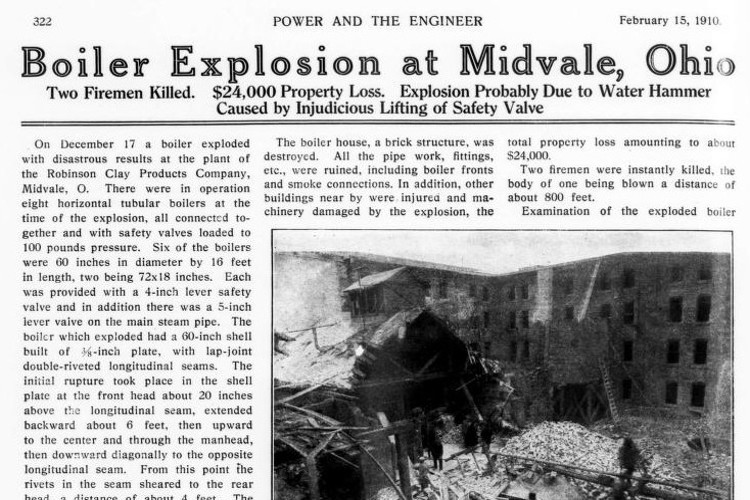
Detail from the article on the explosion that appeared in the publication Power and the Engineer, February 1910. (Source: archive.org)
The magnitude of the destruction, which resulted in a $24,000 (approximately $800,000 today) property loss, drew thousands of spectators who crowded streetcars the following Sunday to view the havoc. The plant’s Superintendent oversaw the months-long process of clearing wreckage and rebuilding, meanwhile the County Coroner and Prosecuting Attorney conducted an inquest to officially determine the cause of the deaths. The community grappled with the loss of two industrious young men whose lives were cut short by the mechanical failure.
The tragedy concluded with the final rites for the two firemen. Funeral services for Denes Abraham were held the following Saturday morning, December 18, at the Catholic church in Dennison, followed by his burial in Mt. Calvary cemetery. The funeral for David R. Hinds took place the following Sunday afternoon at his parents’ residence, after which he was laid to rest in New Philadelphia on December 20, 1909. In a tragic twist of fate, Benjamin Plotner met his own end years later in October 1922, killed in a machinery accident at the very same Royal plant.
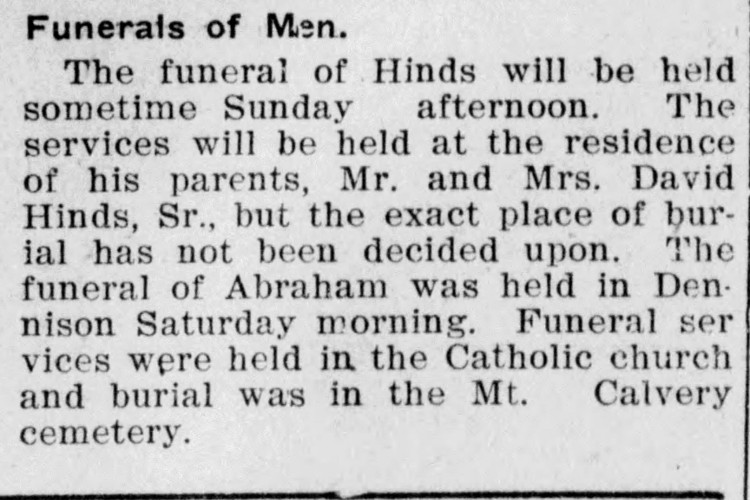
New Philadelphia, Ohio newspaper mention of the funerals of Hinds and Abraham, December 1909. (Source: newspapers.com) 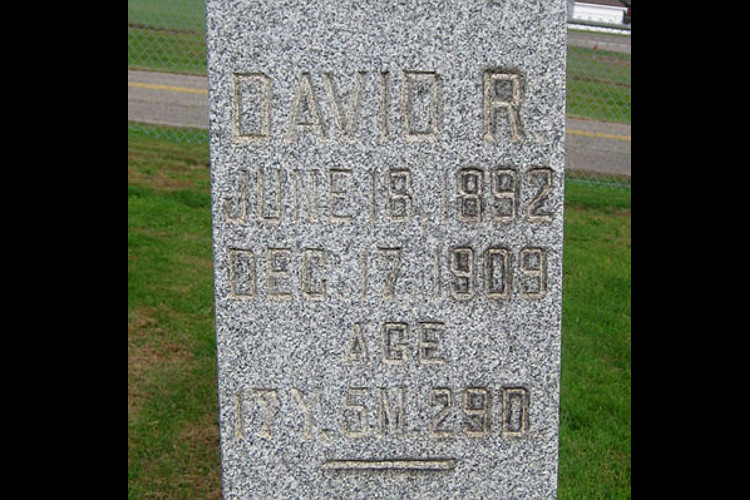
Detail from David Hinds’ headstone in East Avenue Cemetery in New Philadelphia, Ohio, 2011. (Source: findagrave.com) 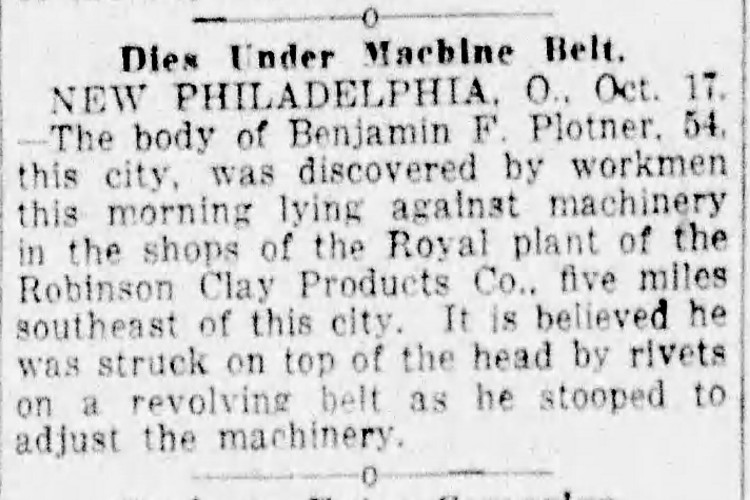
Article in a Cleveland, Ohio newspaper reporting the death of Benjamin Plotner, October 1922. (Source: newspapers.com)
Enjoy the stories?

© Noel B. Poirier, 2026.

