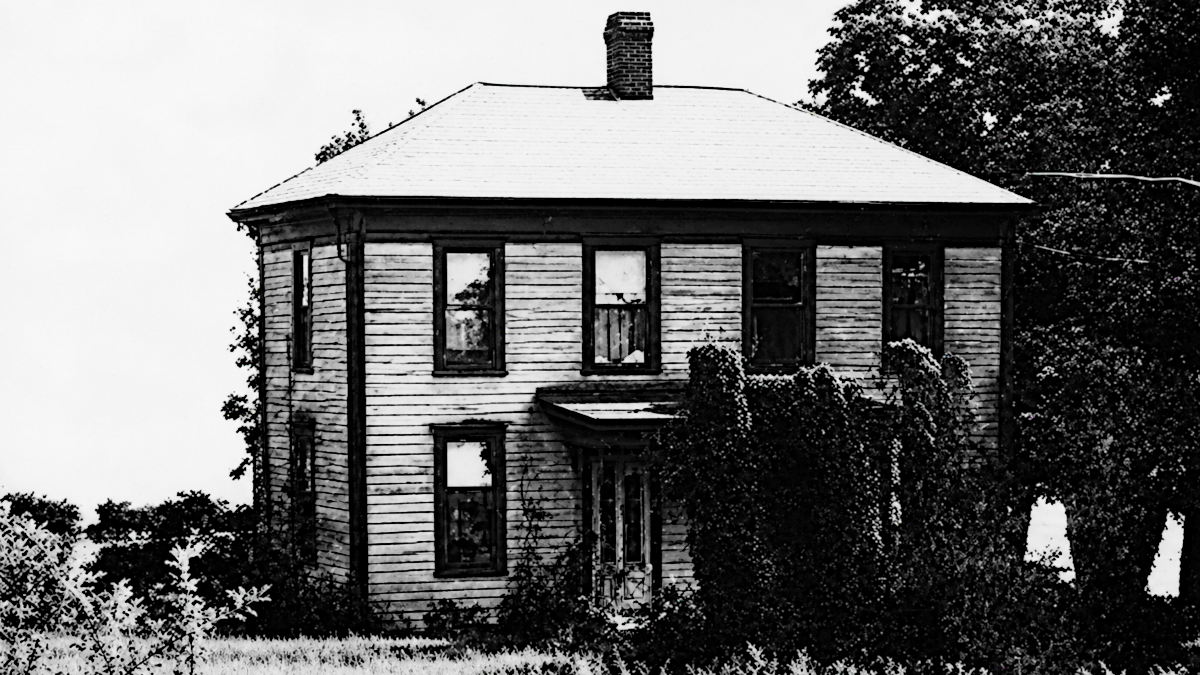
A delusional perceived grudge triggers a shocking double murder and insanity trial.
In the early morning hours of June 3, 1949, a terrifying double shooting shattered an isolated farm in Lee Township, near Harlem Springs in Carroll County, Ohio, sending instant shockwaves into neighboring Tuscarawas County. John Dunlap George (1909-1949), a telephone installation lineman, rose at 6:30 a.m. to dress when he confronted an intruder in his living room. John asked the man, “What are you doing in here?” before being struck in the abdomen by a fatal shotgun blast. His wife, Virginia Dare George (1911-1949), heard the gunshot and rushed to the room, only to be shot in the abdomen and brutally kicked as she collapsed. Despite her injuries, Virginia dragged herself across the floor to the telephone to alert the Harlem Springs operator, who summoned the sheriff, a doctor, and an ambulance. Virginia lost consciousness and died on route to a Canton hospital around 8:10 a.m.. News of the morning tragedy immediately made front-page banner headlines in New Philadelphia’s newspaper, captivating readers across Tuscarawas County.
When investigators arrived at the blood-stained residence, they found John deceased on the living room floor clutching his overalls, with his shoes and socks sitting beside the sofa. Money inside the home, including $30 in a billfold and a jar of half dollars, was left completely undisturbed, prompting the coroner and prosecutor to rule out robbery as a motive. Search efforts were immediately complicated when news broke that fourteen life-term convicts had escaped from the West Virginia State Penitentiary in Moundsville at 3:45 a.m. that same morning. The killer fled the scene in the Georges’ 1936 Dodge sedan, prompting the sheriff and a local pilot to scour the rural countryside by air and patrol cars. Weeks later, in late June, the stolen automobile was found wrecked and abandoned on the outskirts of Moundsville, West Virginia.
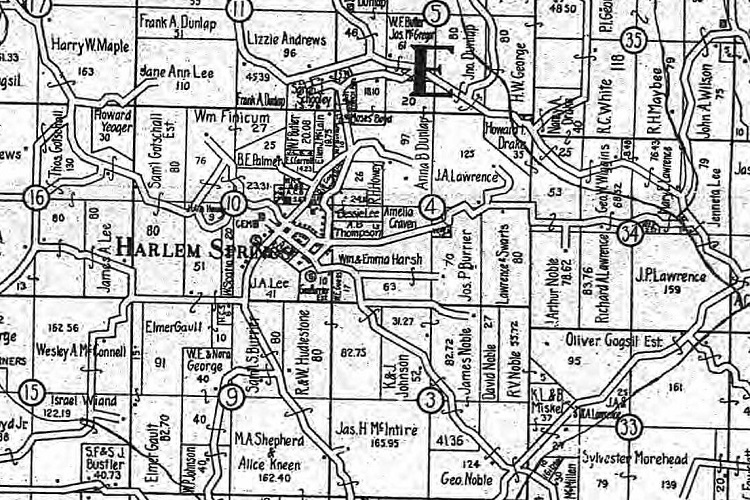
The village of Harmony Springs, Lee Township, Carroll County from the 1915 Atlas of Carroll County, Ohio. (Source: ancestry.com) 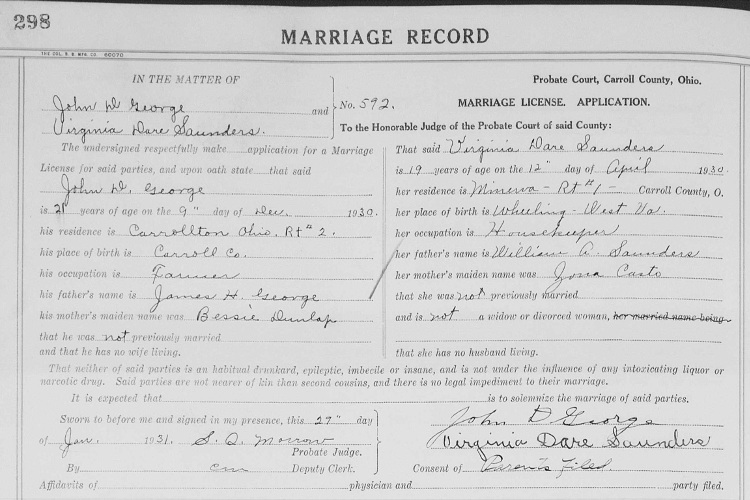
Carroll County, Ohio marriage record of John George and Virginia Saunders, January 1931. (Source: familysearch.org) 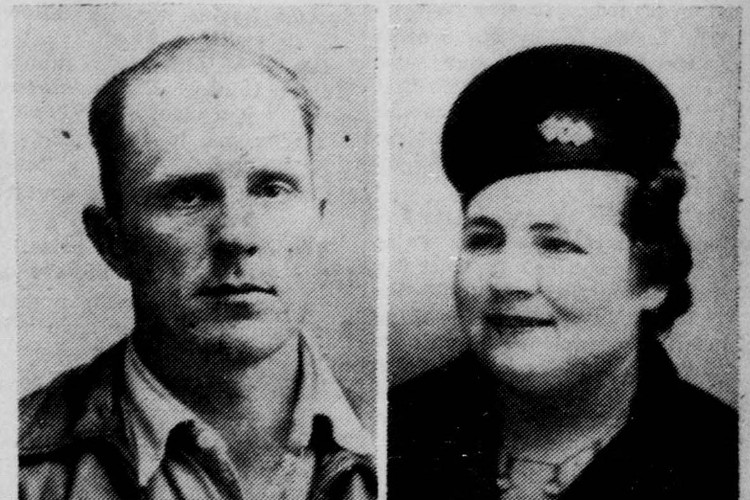
John and Virginia George, c. 1940s. (Source: ohiomemory) 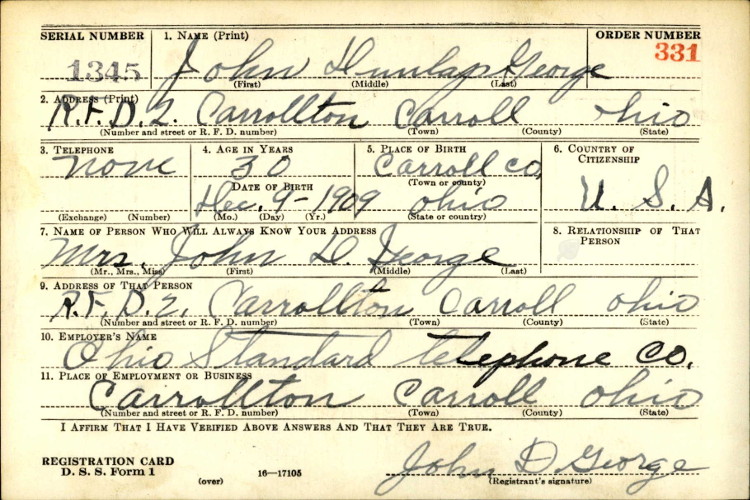
John George’s World War Two draft registration, October 1940. (Source: ancestry.com)
As months passed without an arrest, official scrutiny shifted toward Ernest Bennett Deem (1907-1965), a cousin of Virginia George born in Calhoun County, West Virginia. Deem, a World War II veteran possessed a distinct medical history featuring head fractures in three places received before his service. Local reporting revealed that Deem was seen lurking near Harlem Springs for several days prior to the slayings and had purchased a 20-gauge shotgun the day before the murders. He abruptly left his family in Belona, Virginia, late in May, warning his mother and sister that he would not return until autumn. Realizing the killings were a calculated execution, Carroll County Commissioners offered a $500 reward for Deem’s capture, while the prosecutor prepared a secret first-degree murder indictment.
The search finally ended on May 19, 1950, when a sharp-eyed resident recognized Deem from a wanted poster. Deem was living as a lodger on a remote farm near Webster Springs, West Virginia. The Carroll County sheriff and a deputy traveled south to apprehend Deem, who voluntarily signed a full confession admitting to the double murder. Upon returning to Carrollton, Deem revealed a series of bizarre motives, claiming he had harbored a 30-year grudge against his cousin Virginia because he believed she permanently injured him during a childhood fight or that she neglected him while he was sick with the mumps.
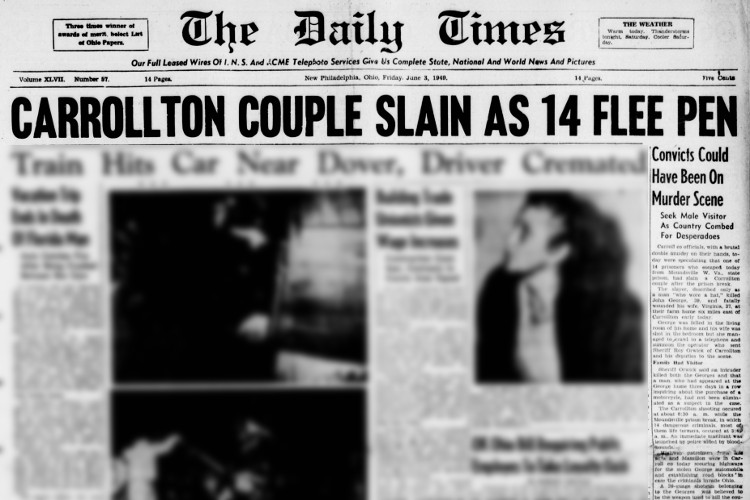
New Philadelphia, Ohio newspaper headline and story on the murder of John and Virginia George, June 1949. (Source: newspapers.com) 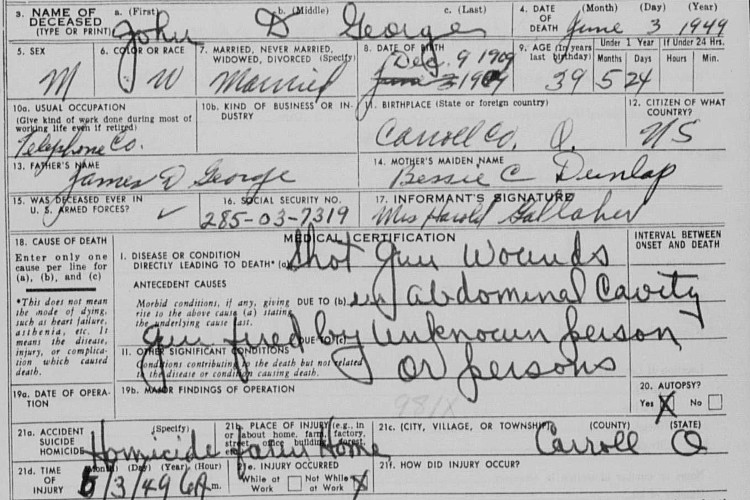
John George’s death certificate, June 1949. (Source: familysearch.org) 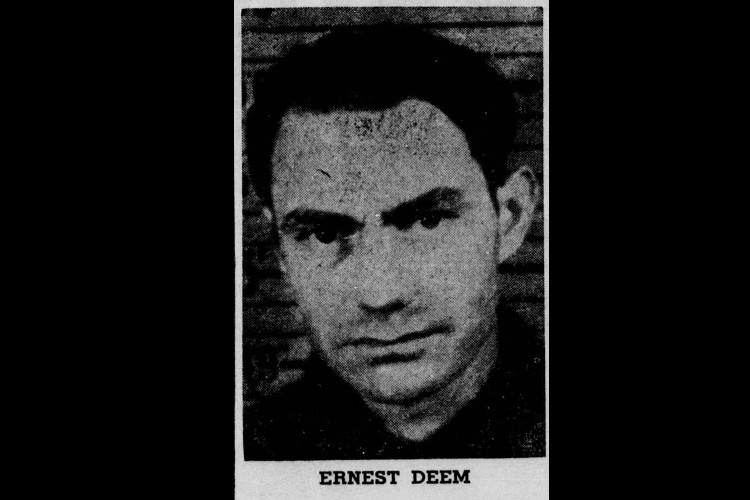
Photograph of Ernest Deem that appeared in a Carroll County newspaper, June 1950. (Source: ohiomemory) 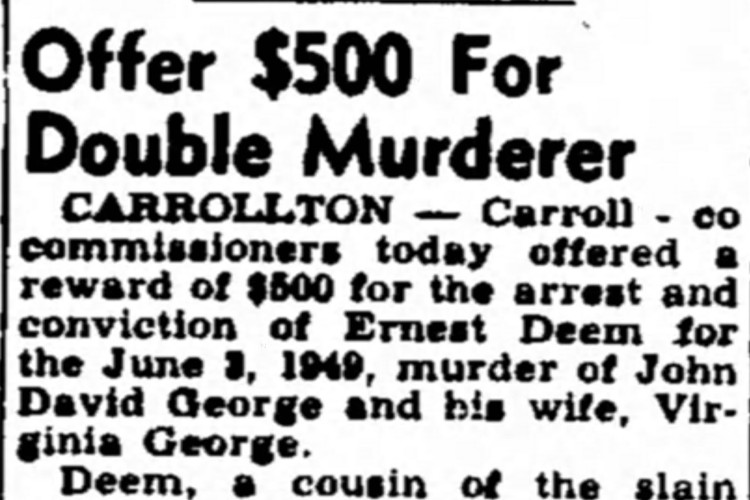
New Philadelphia, Ohio newspaper report on the $500 reward for the capture of Ernest Deem, February 1950. (Source: newspapers.com) 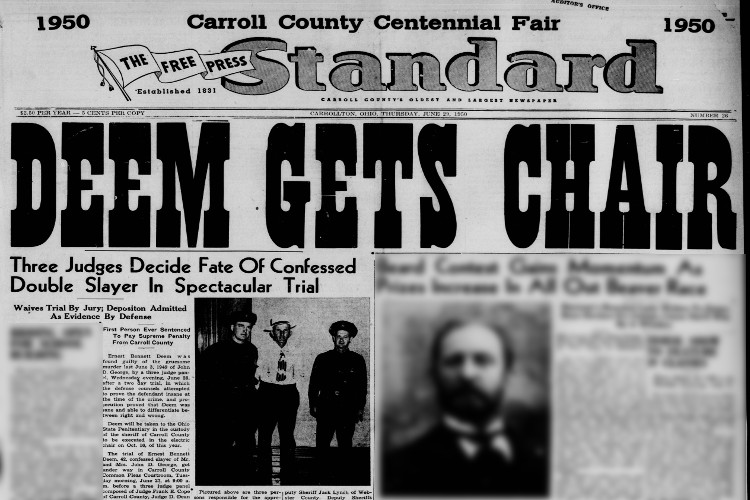
Headline and story in a Carroll County, Ohio newspaper on the sentencing of Ernest Deem to death, June 1950. (Source: ohiomemory)
Later that month, Deem’s court-appointed attorneys entered a plea of not guilty by reason of insanity before the Common Pleas Judge. Prominent medical experts from Lima State Hospital, Massillon State Hospital, and a Canton neuropsychiatrist testified that Deem suffered from paranoid schizophrenia, experiencing persecutory delusions that stripped him of the ability to distinguish right from wrong. The prosecutor countered that Deem was a cold-blooded killer who had meticulously planned the execution of the Georges. A special jury declared Deem sane enough to stand trial, and on June 28, 1950, a three-judge panel convicted him of first-degree murder, sentencing him to die in the electric chair at the Ohio Penitentiary on October 16, 1950.
Defense appeals secured an automatic stay of execution, and in January 1951, The Ohio Penitentiary Warden took the rare step of requesting a sanity hearing after four examining psychiatrists again concluded Deem was severely psychotic. On January 22, 1951, a Franklin County Judge declared Deem legally insane, indefinitely postponing his execution and committing him to the Lima State Hospital for the Criminally Insane. On November 17, 1965, Ernest Bennett Deem died of natural causes at age 58 inside Lima State Hospital, bringing a quiet conclusion to a tragic crime saga that captured the public’s attention across Tuscarawas and Carroll counties for sixteen years.
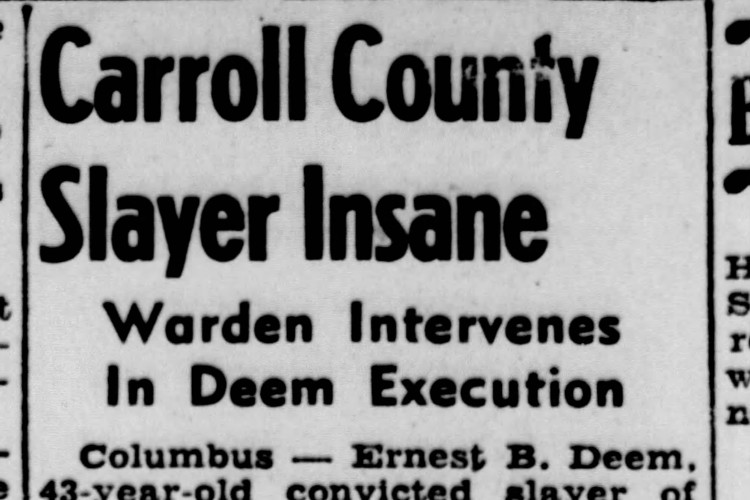
Dover, Ohio newspaper headline on Deems being declared insane, January 1951. (Source: newspapers.com) 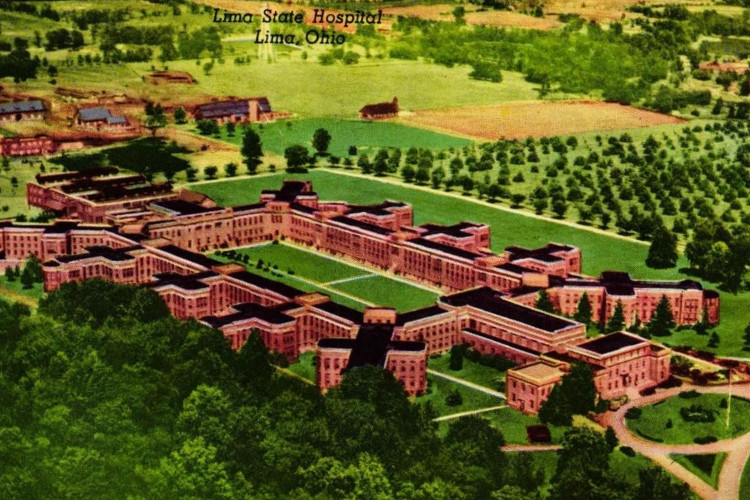
Postcard of the Lima State Hospital, c. 1960s. (Source: ebay.com) 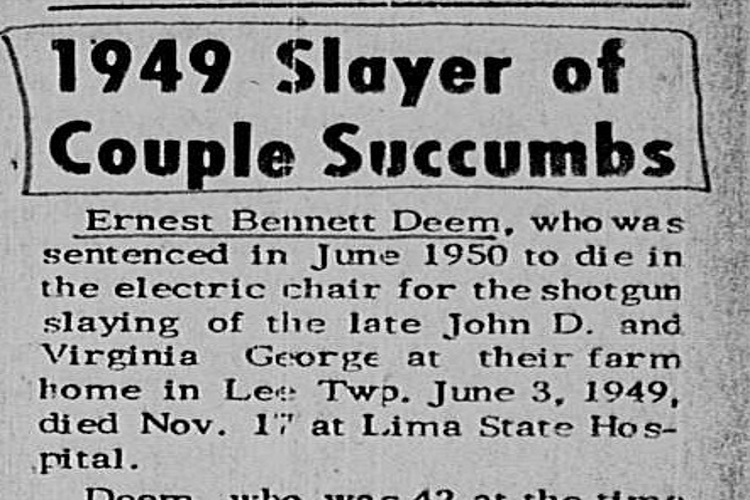
Carroll County, Ohio newspaper reference to the death of Ernest Deem, December 1965. (Source: familysearch.org) 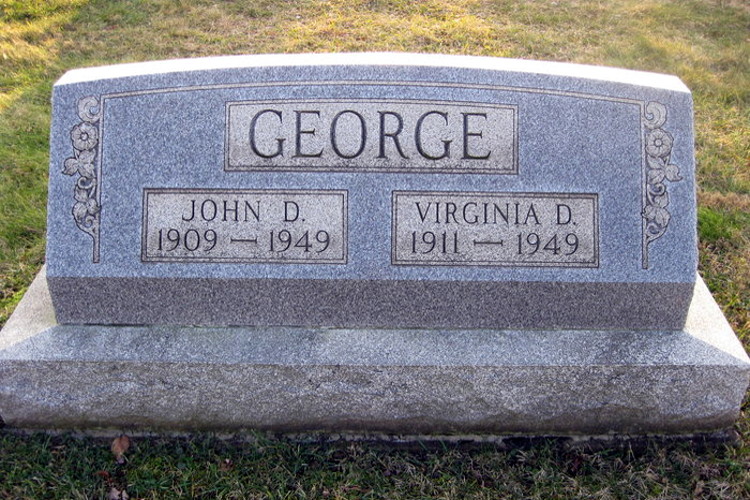
John and Virginia Georges’ headstones in Harlem Springs Cemetery, Carroll County, Ohio, 2012. (Source: findagrave.com)
Enjoy the stories?
© Noel B. Poirier, 2026.

