Content warning: This post contains references to suicide and post-traumatic stress. If you or someone you know has a mental illness, is struggling emotionally, or has concerns about their mental health, there are ways to get help. Click here for resources to find help for you, a friend, or a family member.
Charles Albert Bundy (1924-1961) was born in Uhrichsville, Ohio, and grew up living with his maternal grandparents. After attending Uhrichsville High School, he enlisted in the United States Navy in early 1942 and was assigned as a gunner in the Naval Armed Guard aboard merchant ships. On September 24, 1942, while deployed aboard the merchant vessel S.S. Losmar in the Indian Ocean, his ship was torpedoed and sunk by a Japanese submarine. Bundy, along with four other crewmen, managed to board an open life raft, spending eleven harrowing days adrift at sea. When he was finally rescued, Bundy was found with severe burns extending from his feet to his thighs. Twenty-seven members of the crew perished.
Following initial emergency care at a British Royal Air Force hospital in Arabia, Bundy returned to the United States for extensive medical treatment. Over the next several months, he was transferred through facilities in Cleveland and Bethesda, Maryland before undergoing care at a naval hospital in Washington, D.C. He received an honorable discharge for service-connected disability on June 15, 1943, bearing permanent physical scars. Upon returning to civilian life in Uhrichsville, underlying psychological trauma persisted; in April 1947, an affidavit filed by the county service officer for veterans led the probate judge to commit him to a veterans hospital for battle fatigue, where he remained for five months.
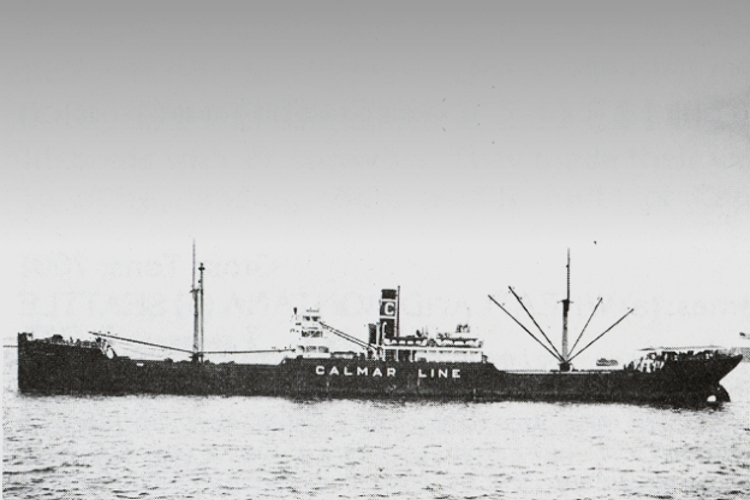
Photograph of the SS Losmar, sunk by a Japanese submarine in September 1942. (Source: navylog.navymemorial.org) 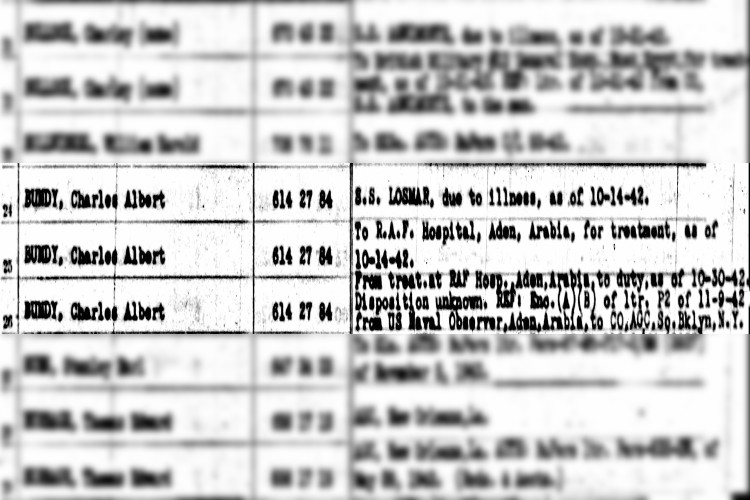
Detail from Charles Bundy’s service record, November 1942. (Source: ancestry.com) 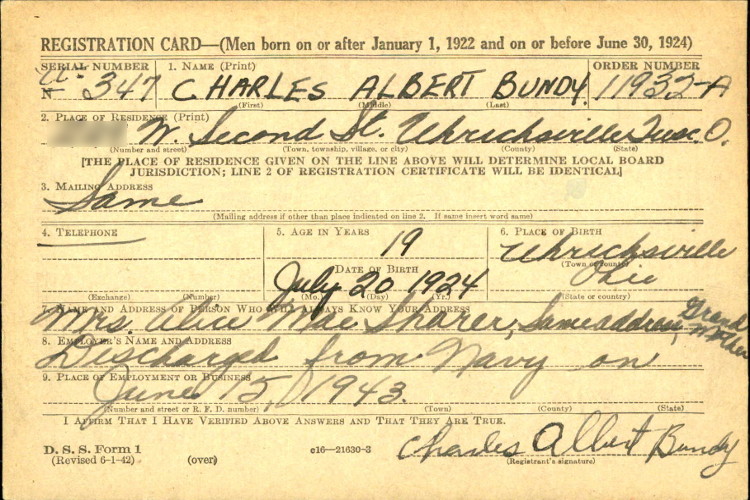
Charles Bundy’s draft registration card filled out after his discharge from the US Navy, February 1944. (Source: familysearch.org) 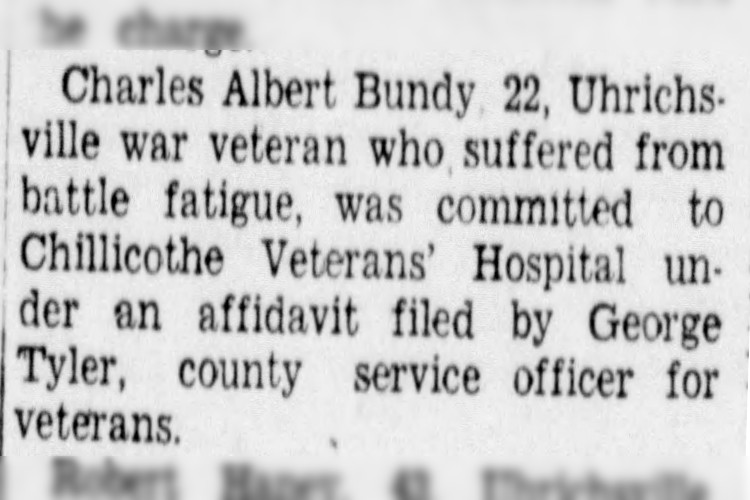
New Philadelphia, Ohio newspaper article reporting on Charles Bundy’s 1947 hospitalization, April 1947. (Source: newspapers.com)
Bundy worked as a laborer at a local sewer pipe manufacturing plant according to the 1950 census. One year later, in May 1951, he applied for a marriage license with Eileen June Wagstaff (1922-1961), a local beautician, and the couple wed on June 3, 1951. The family established their residence in Gnadenhutten and welcomed two children, a daughter born in 1953 and son born in 1957. Bundy maintained a quiet routine and engaged in local veterans’ activities, being installed as chaplain for a newly organized Veterans of Foreign Wars post in late 1958. Neighbors and acquaintances described him as a devoted family man and a quiet, nervous veteran who carried a service-connected disability rating and rarely spoke about his war experiences.

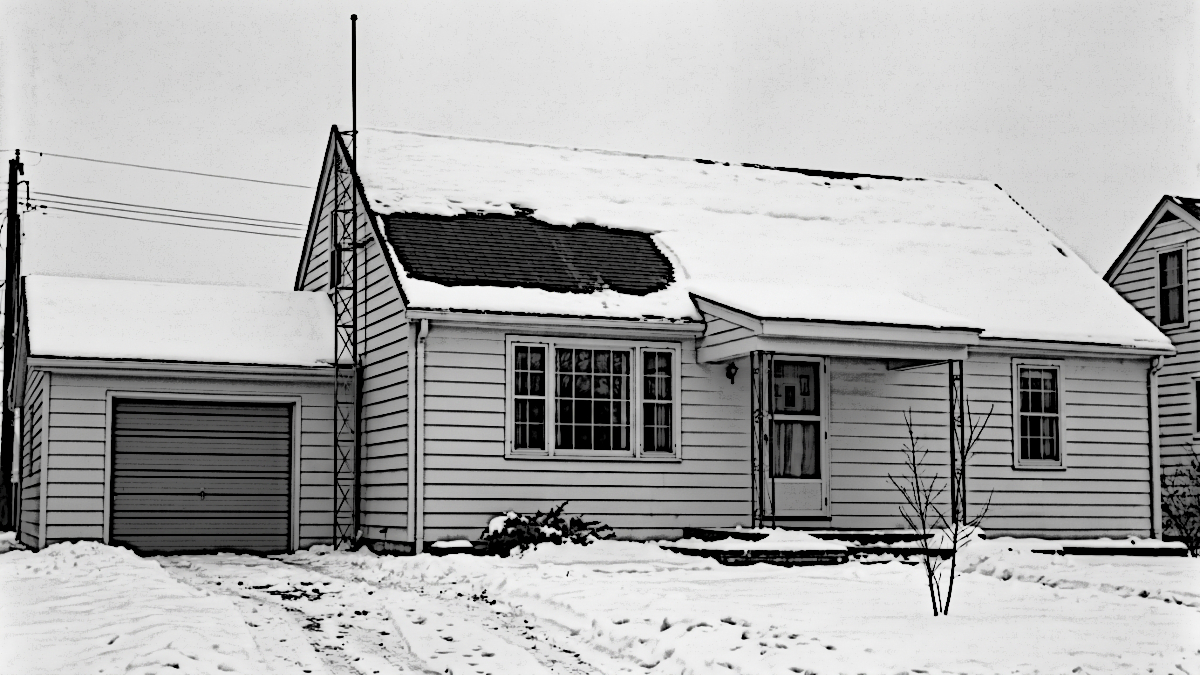
Events took a sudden and violent turn in the early morning hours of Saturday, February 4, 1961. At approximately 1:45 a.m., while driving on Route 250 two miles north of Uhrichsville, Bundy lost control of his vehicle on a curve, skidding into an oncoming automobile and causing heavy damage to both cars. Responding law enforcement cited him for excessive speed, and he suffered a laceration to his left wrist during the collision. Following the crash, he returned to his family’s home in Gnadenhutten, where his wife and children were sleeping.
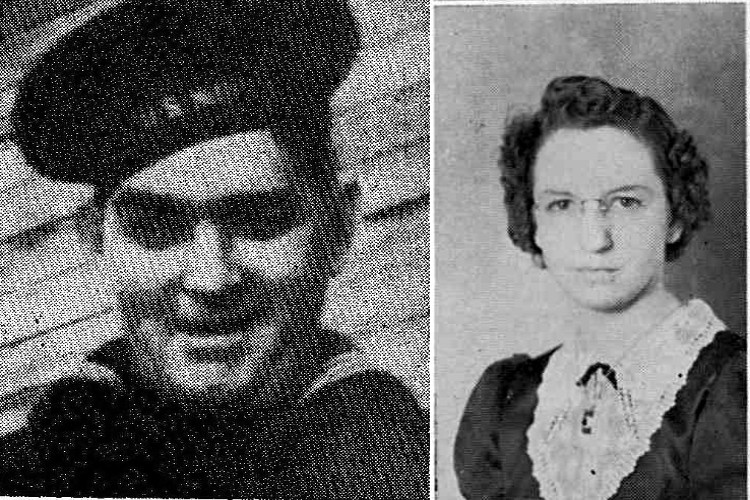
Charles Bundy photographed while in the US Navy and Eileen Wagstaff’s senior year picture. (Source: ancestry.com) 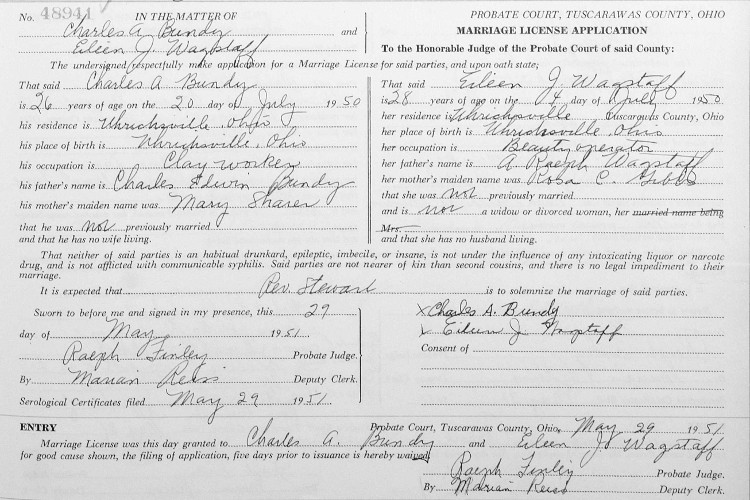
Charles Bundy and Eileen Wagstaff’s marriage license, May 1951. (Source: familysearch.com) 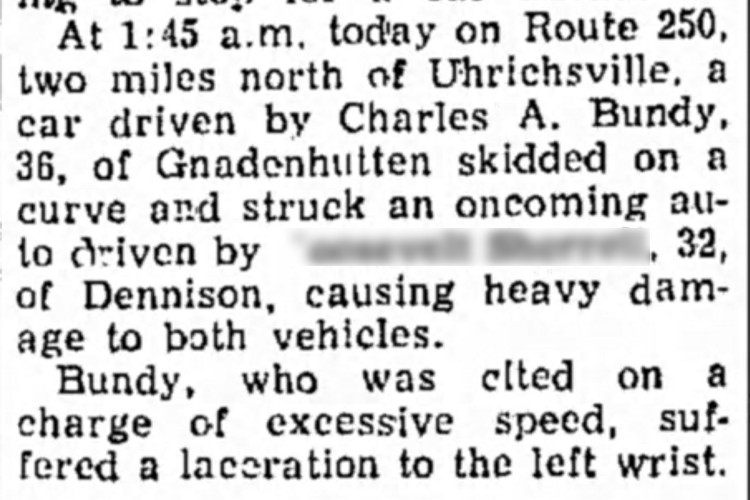
New Philadelphia, Ohio newspaper reference to Charles Bundy’s car accident on February 4, 1961. (Source: newspapers.com)
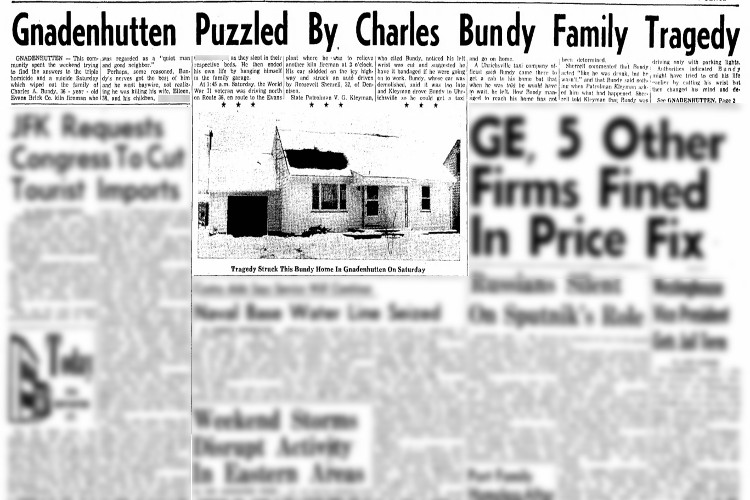
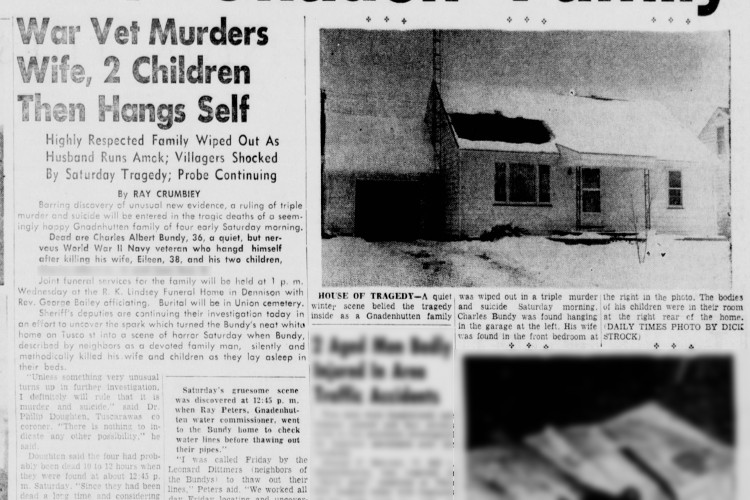
Sometime that night, a horrific tragedy unfolded inside the Bundy residence. Charles Bundy attacked his sleeping wife and two young children using a claw hammer and a kitchen knife, inflicting fatal head trauma and stab wounds. After attacking his family, Bundy attempted to take his own life with the knife, leaving cuts on his wrists and chest, before going to the garage. There, he hanged himself from a rafter.
The crime scene was discovered on Saturday afternoon when the village water commissioner visited the residence to check for frozen water pipes. County sheriff’s deputies and the county coroner immediately launched an investigation and official death certificates filed by the county coroner confirmed that the three family members died of homicide and Bundy died of suicide. A quadruple funeral service was conducted at a local funeral home and all four family members were laid to rest together. Ultimately, this devastating tragedy stands as a solemn testament to the invisible, lingering wounds of war, where the profound trauma of surviving eleven days on an open life raft and enduring years of post-war hospitalizations culminated in an unimaginable act.
Enjoy the stories?

© Noel B. Poirier, 2026.

