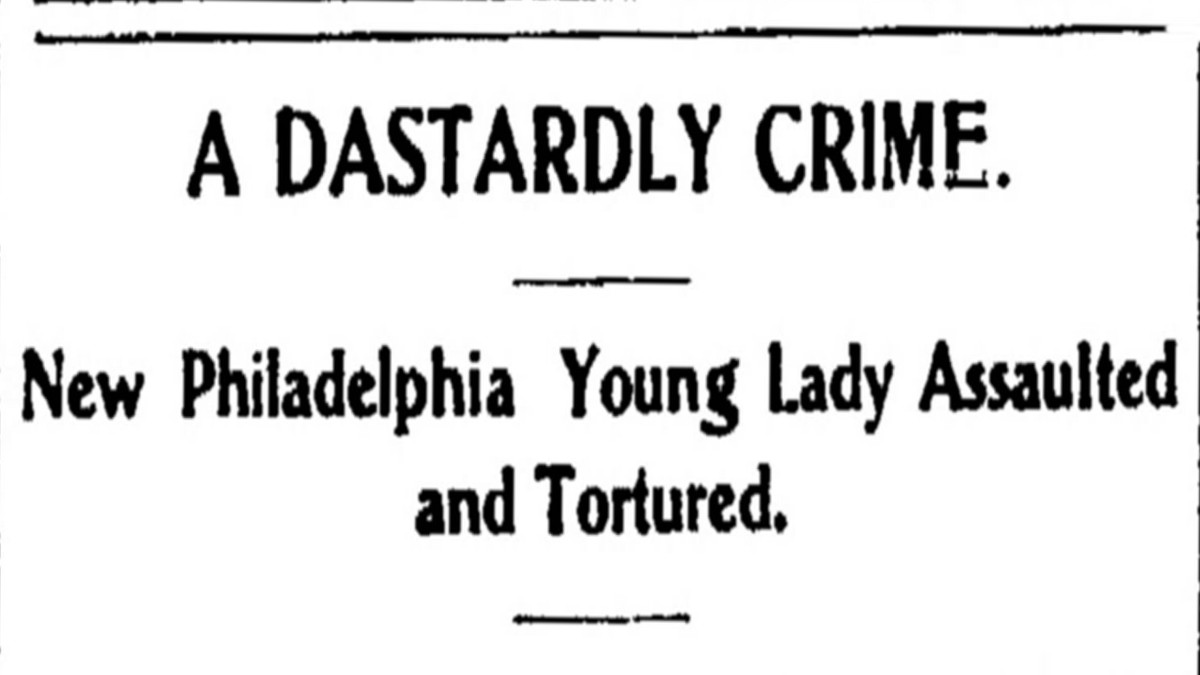
A brutal attack of a young woman in New Philadelphia ignited mob fury and an unsuccessful manhunt.
William W. Bowers (1849-1925) married Emma Kaltenbach (1851–1939) in Tuscarawas County, Ohio, in July 1872. The couple established their residence in New Philadelphia and raised six children, including their daughter Cora Irene Bowers, who was born on May 9, 1882. The family resided on East St. Clair Street near the railroad tracks by 1900 and William operated a cigar and confectionery business on West High Street. On the evening of Tuesday, June 12, 1900, William and Emma left their 17-year-old daughter Cora at home to care for a visiting young nephew and niece while they spent the evening with William’s aged mother in another part of the city.
Shortly after dark, Cora stepped outside alone to close the door of an outkitchen located a few steps from the rear of the house. Hearing an unusual noise in the darkness, she went to investigate and was suddenly ambushed by a burly assailant who seized her by the throat and choked her into unconciousness. The attacker tore her clothing into shreds until only her stockings and shoes remained, set fire to her garments, and threw her body onto the burning pile before fleeing. Uneasy over her long absence, the children inside saw smoke from her burning garments and called for help, enabling neighbors and her brother to rush to the scene as she attempted to drag herself away from the flames
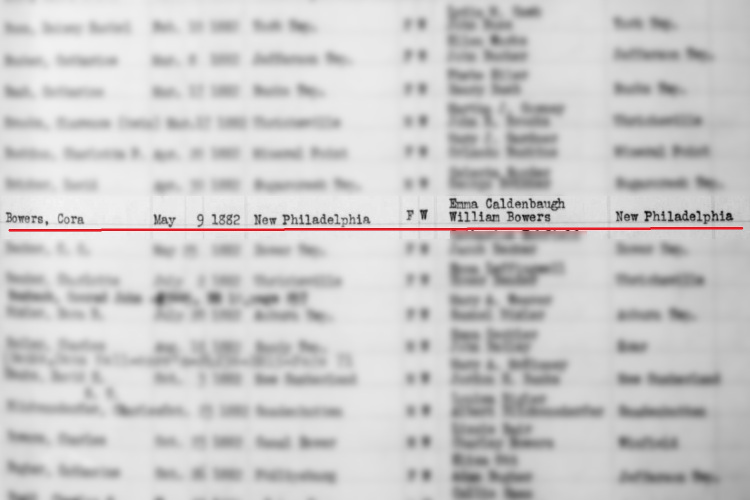
Cora Bowers’ birth recorded in the Tuscarawas County records, June 1882. (Source: familysearch.org) 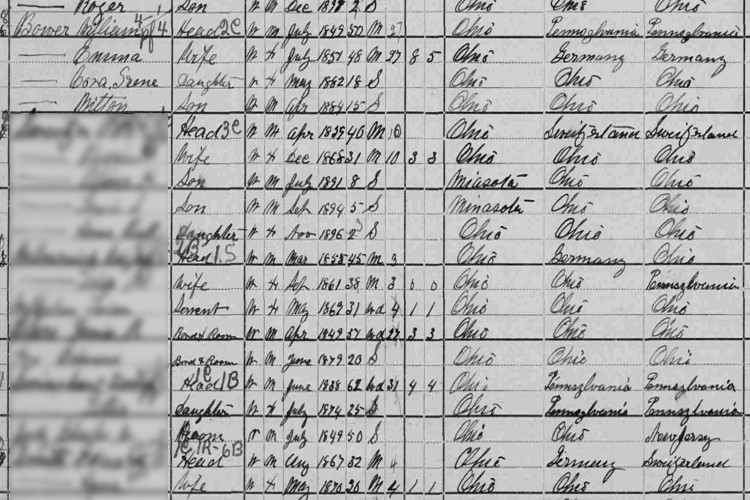
The Bowers family recorded on the 1900 census of New Philadelphia, Ohio. (Source: familysearch.org) 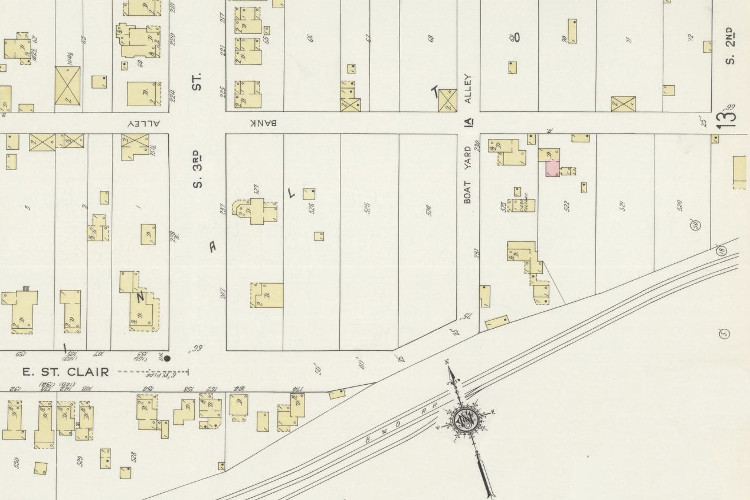
Map of the Bowers’ neighborhood on St. Clair Street in New Philadelphia, Ohio, 1914. (Source; loc.gov)
Local law enforcement, including police bloodhounds from Uhrichsville, quickly initiated a pursuit. The hounds tracked the suspect’s scent to the river’s bank, across by boat, and into Possum Hollow (off modern Oldtown Valley Road) near a coal mine before the trail went cold near a pasture where the assailant likely mounted a horse to escape. A young local witness, who used a garment from a clothesline to extinguish Cora’s burning clothes, reported seeing the burly attacker sitting on a nearby fence watching her in agony before leaping over and disappearing into the night. Miss Bowers described her assailant as a large, thick-set, rough-looking “hobo” wearing dirty clothes with a distinctive large patch on one knee.

Uhrichsville police soon detained a suspect named Frank Dougher (1882-1915) in a local barber shop after he arrived on a freight train travel-stained, mud-splattered, and bearing a two-week growth of beard. News of Dougher’s arrest sparked intense public excitement and open threats of lynching among gathered crowds in New Philadelphia and Uhrichsville. However, his physical description differed significantly from the assailant: Dougher weighed only 150 pounds and had a very light complexion, unlike the heavy-set, burly tramp described by the eyewitness. Authorities officially exonerated and released Dougher after receiving a telegram from his factory foreman in Sheffield, Ohio confirming Dougher’s employment and that he was journeying through Cleveland at the time of Cora’s assault.
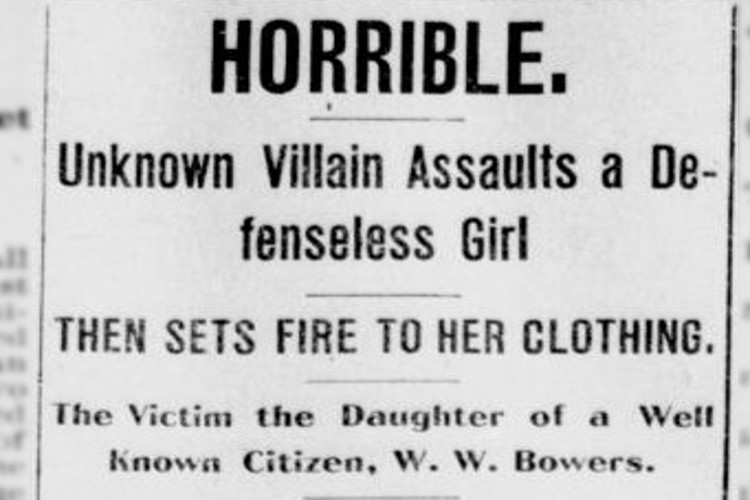
New Philadelphia, Ohio newspaper headline on the assault of Cora Bowers, June 1900. (Source: newspapers.com) 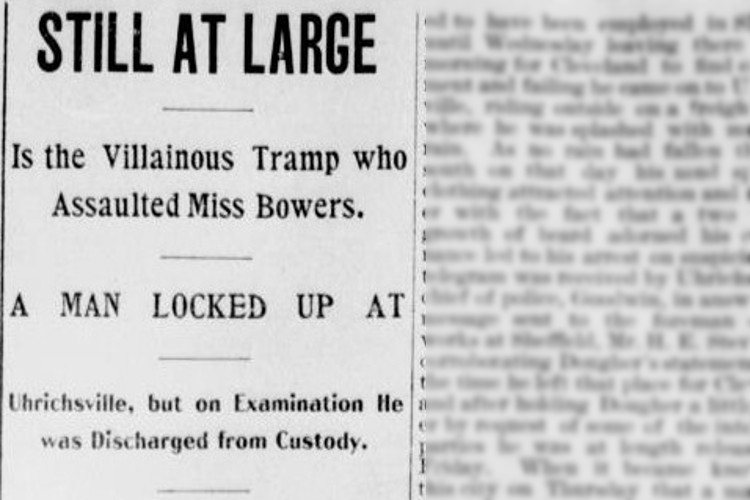
New Philadelphia, Ohio newspaper headline on the assault of Cora Bowers, June 1900. (Source: newspapers.com) 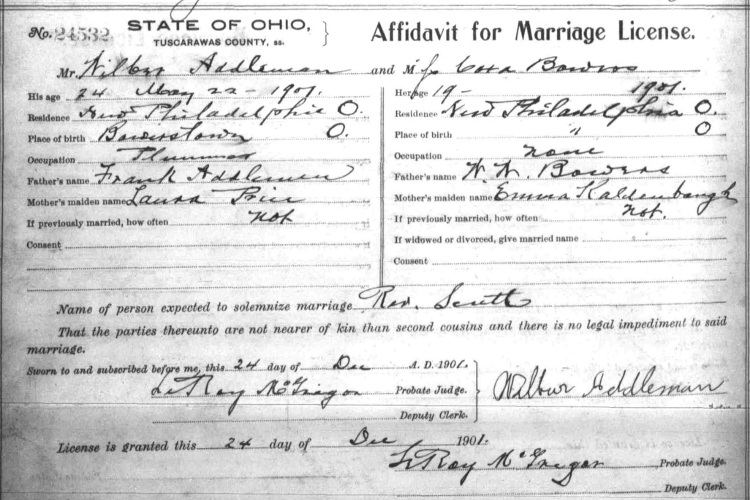
Marriage record of Cora Bowers and Wilbur Addleman, December 1901. (Source: familysearch.org)
Following Dougher’s release, the Tuscarawas County Commissioners posted a $500 reward for the arrest and conviction of the perpetrator. Despite the substantial financial incentive, bloodhound tracking, and widespread public vigilance, authorities were unable to secure any tangible clues pointing to the culprit. The brutal assault on St. Clair Street remained an unsolved mystery, leaving the unknown assailant uncaptured despite widespread public outrage.
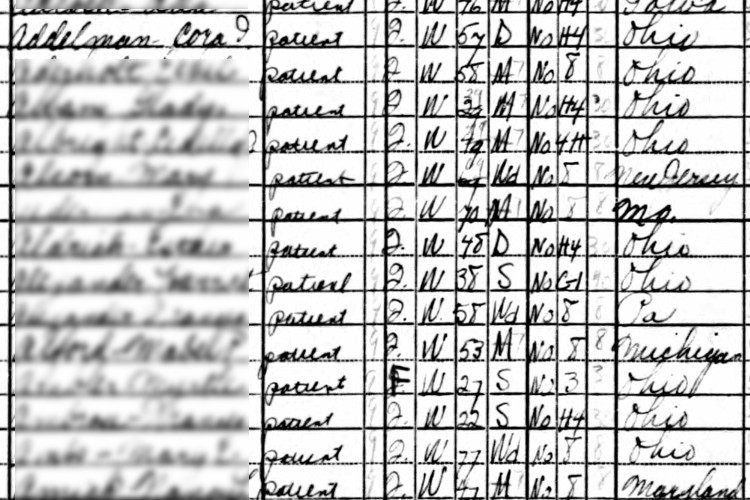
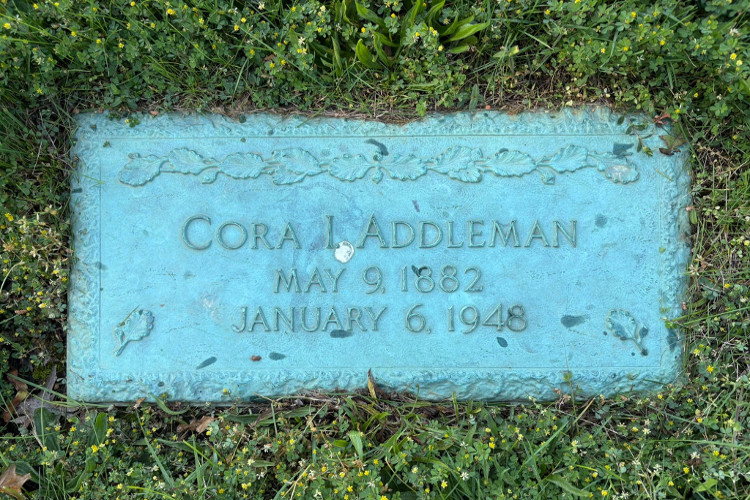
Cora Bowers recovered from her injuries and married plumber Wilbur J. Addleman (1877-1958) on December 24, 1901, subsequently raising two children in Tuscarawas County. Census schedules record Cora as divorced by 1930 and living with her widowed mother, Emma, before entering Massillon State Hospital in 1937. On January 6, 1948, Cora passed away from lobar pneumonia at the state hospital at the age of 65 and was laid to rest at Rose Hill Memorial Park in Massillon.
Enjoy the stories?

© Noel B. Poirier, 2026.

