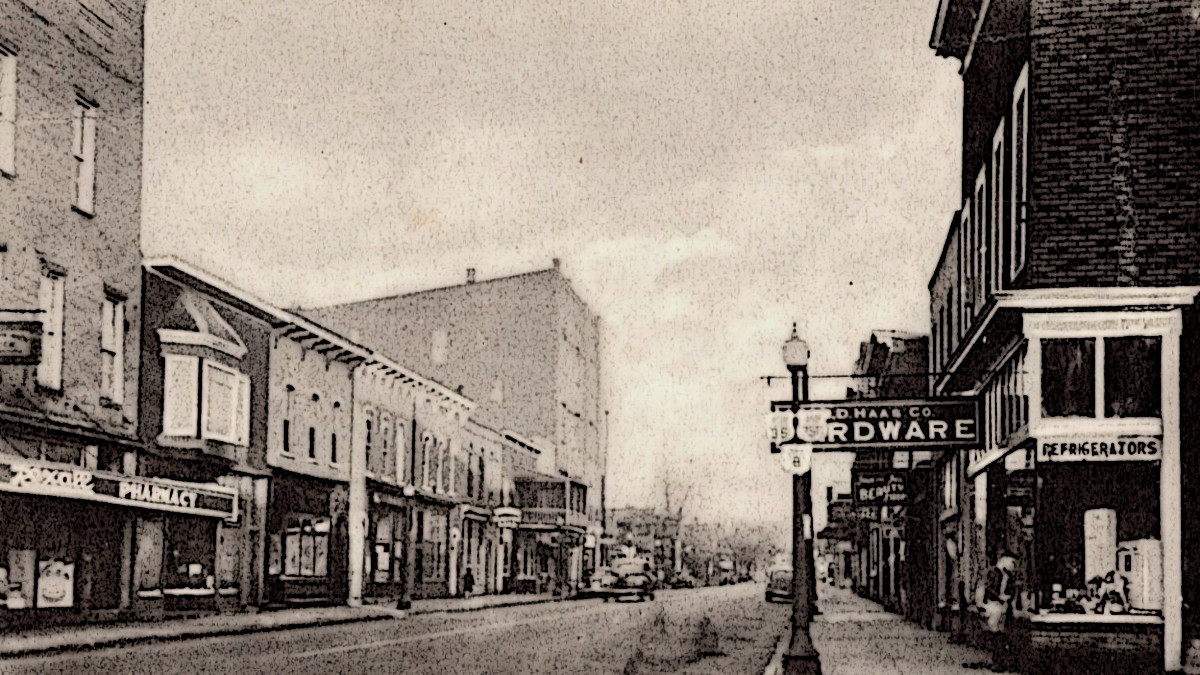
During Prohibition, a desperate search for alcohol led two men to drink a toxic concoction.
On the night of Monday, January 19, 1931, Kentucky-born Ben McAtee (1881-1931), an unemployed laborer and former railroad worker, met with Adam P. Ludwig (1900-1931), an unemployed pipe fitter, in Dennison, Ohio. During the time of national Prohibition, both men had a history of previous arrests for buying alcohol and public intoxication. Seeking alcohol to drink that evening, the pair approached 25-year-old taxicab driver Albert Nelson (1906-1967) and asked him to procure liquor for them.
At approximately 5:00 a.m. on Tuesday, January 20, Nelson drove to an east end filling station owned by Nicholas Katsetos (c. 1890-c. 1960). There, he purchased a quart bottle of bluish-green automobile radiator anti-freeze for 25 cents from 17-year-old station attendant Henry Chini (1913-2007). Chini sold the denatured wood alcohol solution believing it was intended for Nelson’s car. Shortly after Nelson departed, a coworker of Chini’s warned him that the mixture was toxic and meant exclusively for car radiators.
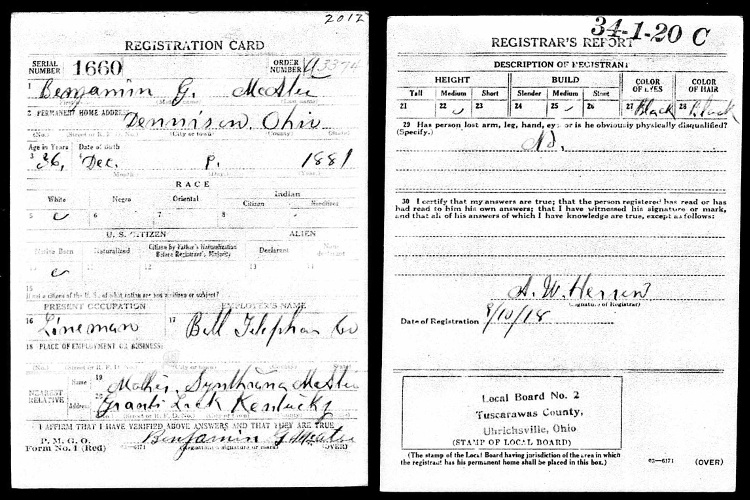
Benjamin McAtee’s World War One draft registration card, August 1918. (Source: familysearch.org) 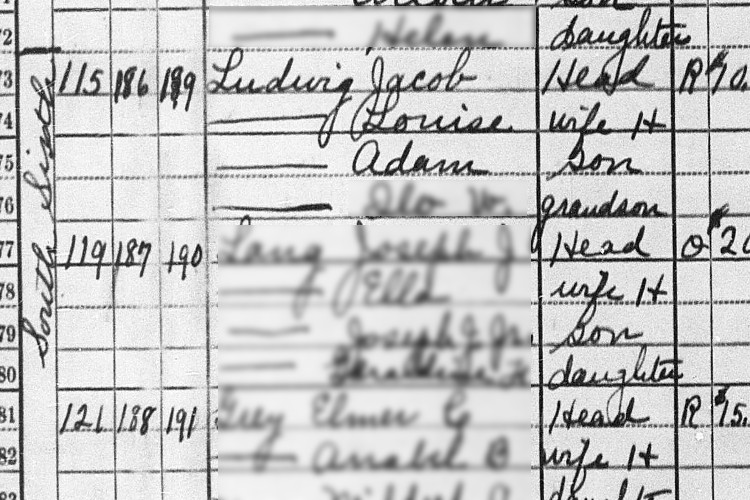
Adam Ludwig recorded on the 1930 census record for Dennison, Ohio. (Source: familysearch.org) 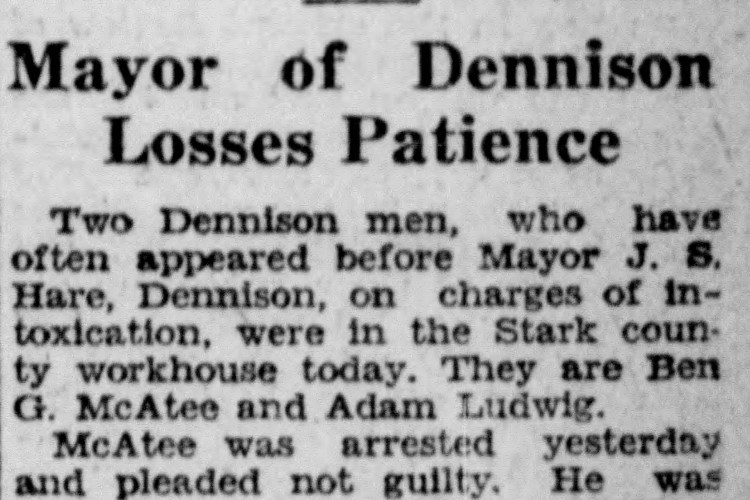
One of many New Philadelphia, Ohio newspaper references to McAtee and Ludwig’s brushes with the law, November 1929. (Source: newspapers.com)
Nelson returned to his parked taxicab near the Dennison Depot and informed McAtee and Ludwig that he had been unable to buy them any regular liquor. Ludwig retrieved the quart bottle of denatured alcohol from the car, remarking on its unusual color, and shared the drink with McAtee. Both Nelson and Chini later claimed that they were unaware that the two men intended to actually consume the radiator fluid.
The deadly effects of the wood alcohol manifested quickly. At 1:00 a.m. Tuesday, Dennison police arrested Ludwig for intoxication at the local fire station, confiscating a pint bottle nearly full of the bluish-green solution. By 7:00 p.m. in the city jail, Ludwig became violently ill and died two hours later at Twin City Hospital. Remembering that Ludwig had been seen with McAtee earlier, officers proceeded to McAtee’s Dennison residence on Center Street, broke down the bedroom door, and discovered his body on the floor. Autopsies conducted on the two men confirmed that the poisonous alcohol severely seared the men’s kidneys, causing kidney shutdown and total organ failure.
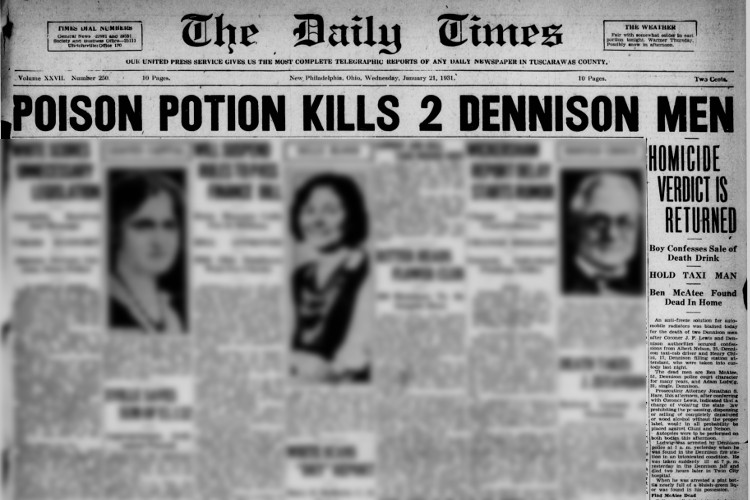
New Philadelphia, Ohio newspaper headline and story on the deaths of McAtee and Ludwig, January 1931. (Source: newspapers.com) 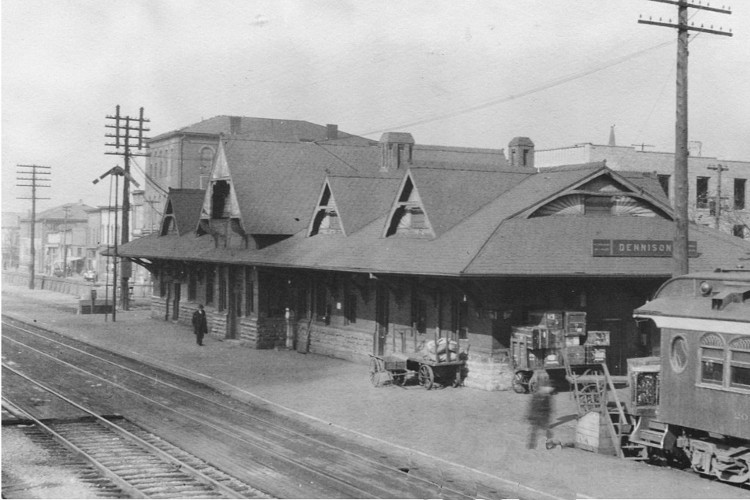
Early 20th century photograph of the Dennison Depot in Dennison, Ohio. (Source: west2k.com) 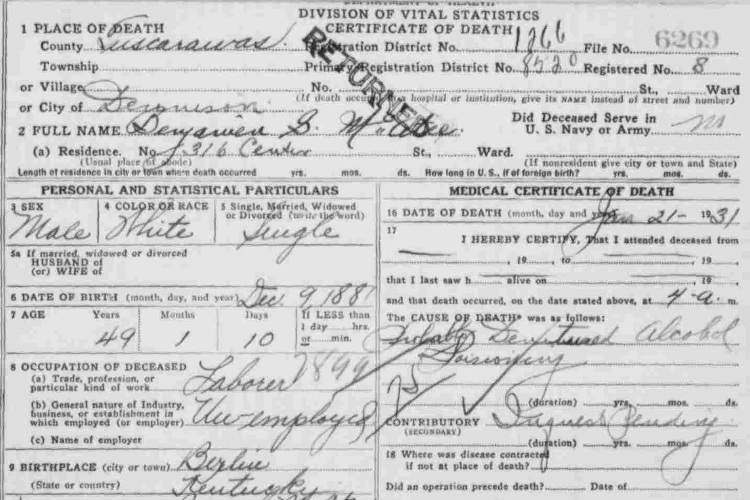
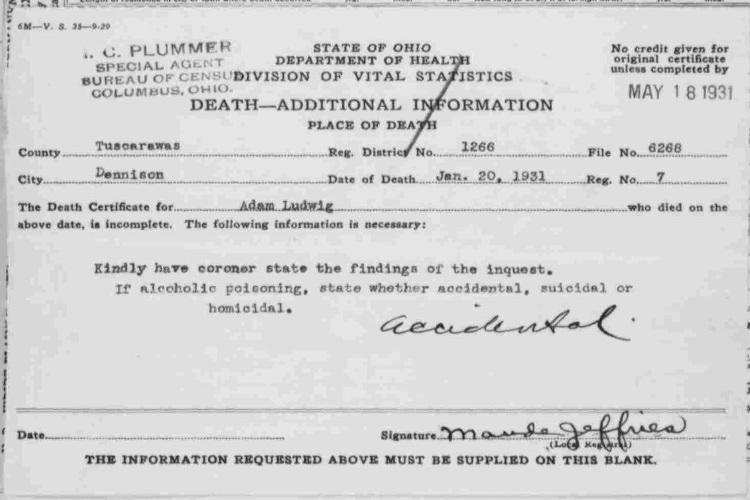
Detail from Benjamin McAtee’s death certificate, January 1931. (Source: familysearch.org)
Authorities initially held Nelson and Chini in custody while investigating the fatalities. In a written confession, Chini admitted selling the anti-freeze but revealed that Katsetos instructed him to lie to the police by claiming he had no memory of selling the fluid to a cab driver. The Prosecuting Attorney, City Solicitor, Coroner, and Probation Officer then conducted a formal inquiry into the events that led to the deaths of McAtee and Ludwig.
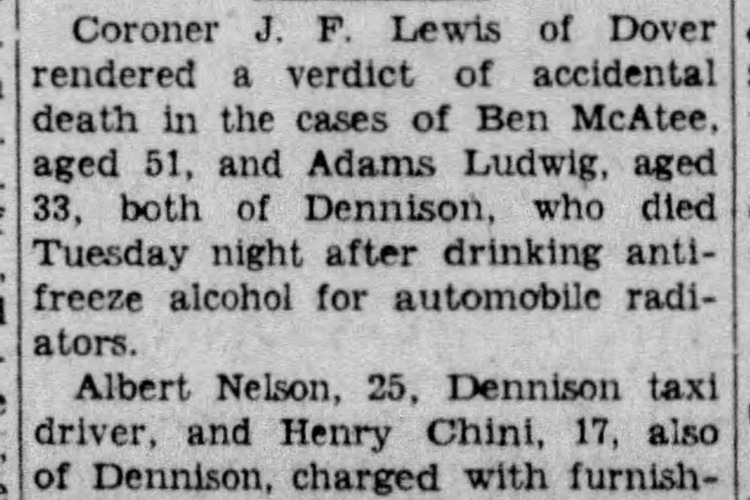
The legal investigation concluded that Chini sold the mixture in good faith and that Nelson could not be prosecuted under an Ohio statute that only penalized possession of unlabeled denatured alcohol in quantities of five gallons or more. The Coroner officially rendered a verdict of accidental death for both victims and both men were cleared of homicide charges. Chini was released through juvenile court, while Nelson was released under a $500 bond to appear for potential further questioning. Ultimately, the official verdict of accidental death brought a close to the legal inquiry, clearing the men of criminal liability and leaving the fatal incident as a stark reminder of the deadly hazards surrounding alcohol consumption during Prohibition.
Enjoy the stories?

© Noel B. Poirier, 2026.
 Tuscarawas County Stories