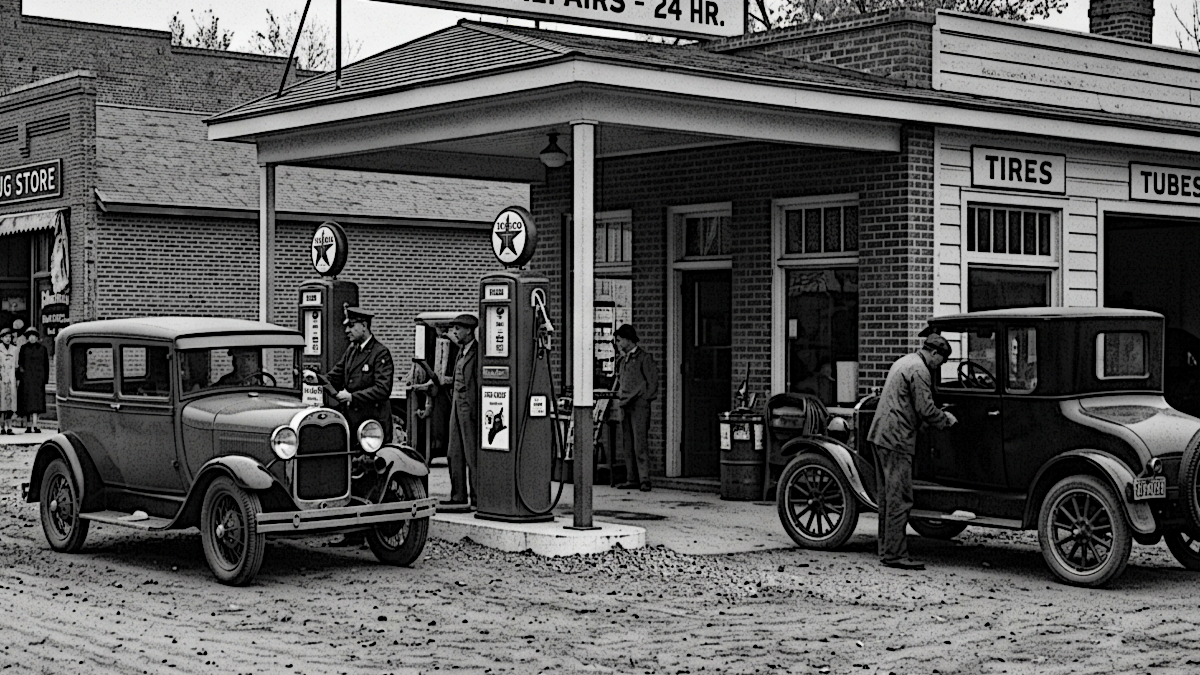
Eight bullet holes, a fatal 1930 “accident,” and the constable who walked away entirely free.
Gilbert Sunkle Lloyd (1899-1930) was a Cleveland native who established a life in Dover, Ohio, as a family man and business owner. Lloyd was a well-known local figure, operating a gas station on the 300 block of Factory Street while he maintained active memberships in the Masons and the Knights of Pythias. Robert Douglas Amos (1906-1955), born in Canal Dover, was several years Lloyd’s junior. Amos served as a Dover township constable in the summer of 1930, a role that placed him in frequent contact with local residents like Lloyd.
The lives of the two men intersected tragically in the early hours of August 11, 1930, at Lloyd’s filling station. Around 2:30 AM, Lloyd was struck in the abdomen by a bullet fired from his own .25 caliber Spanish automatic pistol while Amos was holding the firearm. Amos maintained that the shooting was a freak accident that occurred while he was handling the weapon, specifically claiming it fired when he attempted to clear a jam. Lloyd was rushed to Union Hospital, where he reportedly corroborated the accidental nature of the shooting in a deathbed statement before he succumbed to internal hemorrhaging at 5:30 AM.
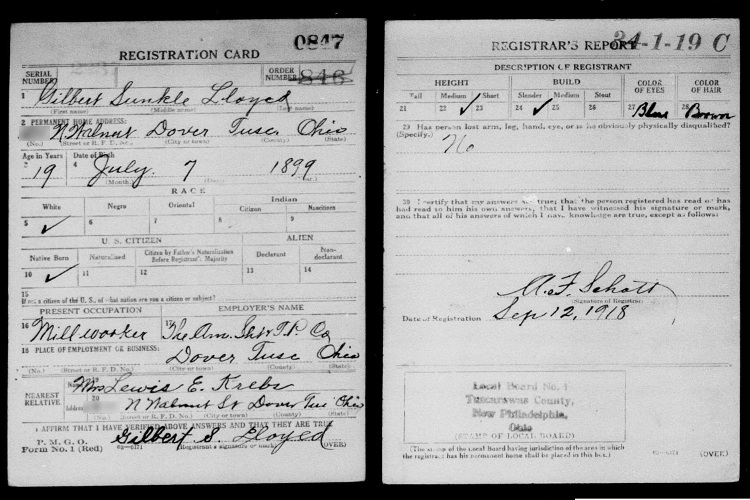
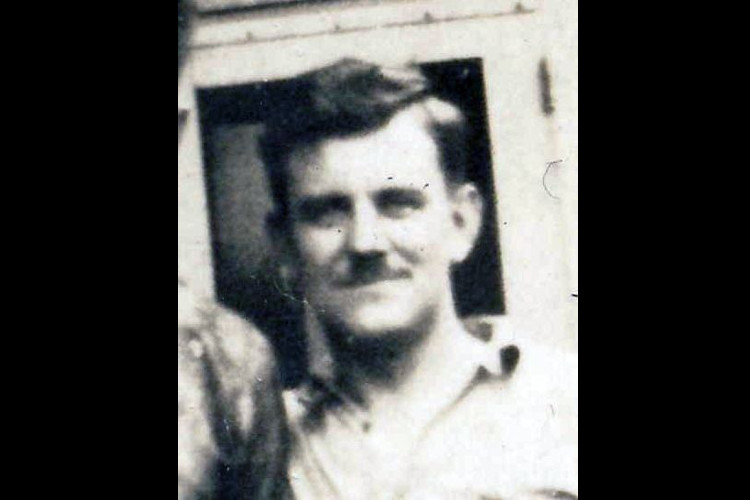
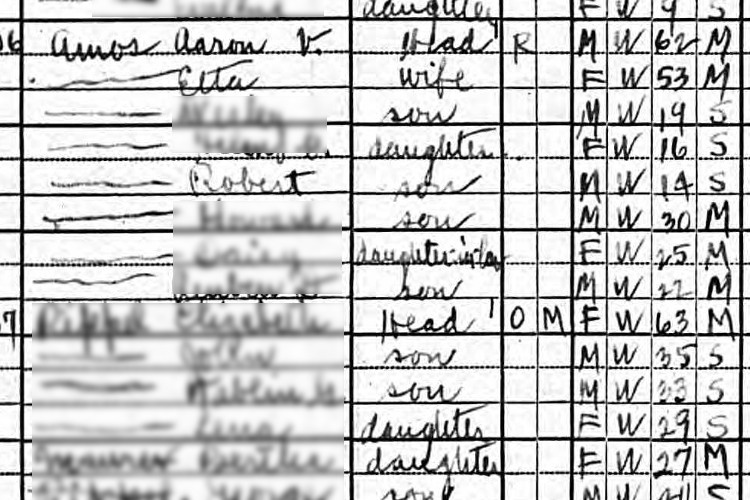
Despite the victim’s statement, local authorities remained skeptical after a forensic sweep discovered eight bullet holes in the filling station walls, which suggested more than one shot had been fired. Rumors circulated that Amos had been harassing Lloyd under suspicion of bootlegging, making three separate visits to the station that night. Although no illegal liquor was found on the premises, the physical evidence of multiple shots led to Amos being bound over to the grand jury on a charge of second-degree murder.
By the time the case reached the courtroom in late 1930, the charge had been reduced to manslaughter. The state’s case eventually collapsed due to key evidentiary rulings by case’s judge. The court barred testimony regarding Amos’s past habit of carelessly handling firearms, and the state’s final witness, who claimed Amos had threatened the victim while in jail, was impeached after the defense revealed he had been legally declared incompetent. On December 5, 1930, the judge directed a verdict of acquittal, and Amos vowed to “stay away from revolvers in the future”.
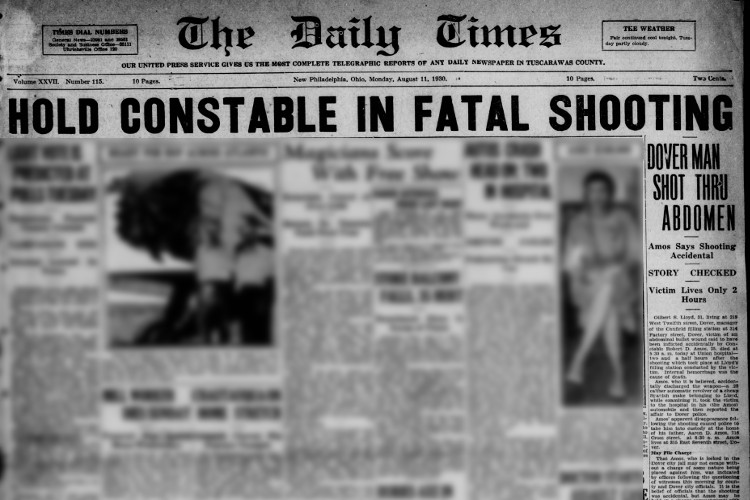
New Philadelphia, Ohio newspaper article on the shooting of Gilbert Lloyd, August 1930. (Source: newspapers.com) 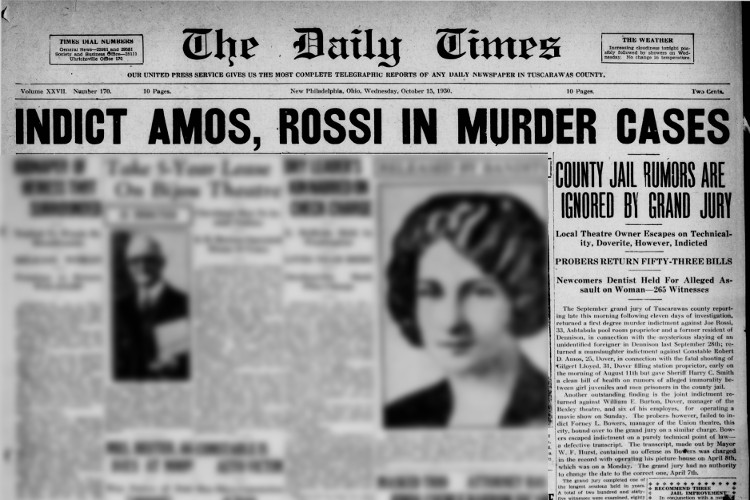
New Philadelphia, Ohio newspaper article on the indictment of Robert Amos for the murder of Gilbert Lloyd, October 1930. (Source: newspapers.com) 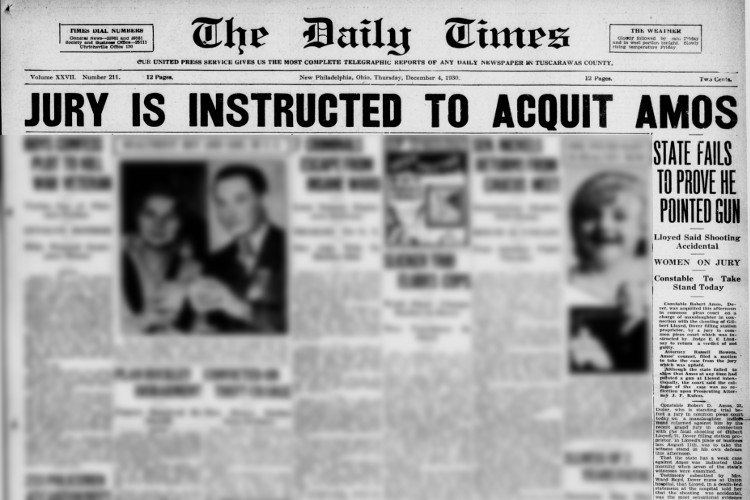
New Philadelphia, Ohio newspaper article on the acquittal of Robert Amos for the killing of Gilbert Lloyd, December 1930. (Source: newspapers.com) 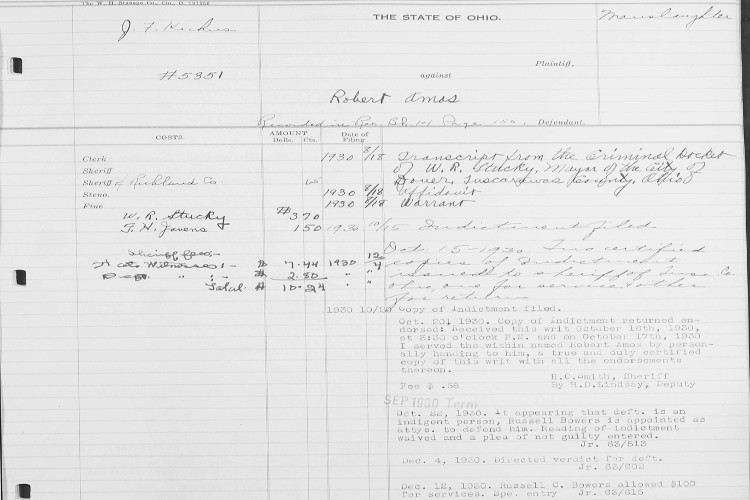
Tuscarawas County Criminal Court Docket entry for Robert Amos, December 1930. (Source: familysearch.org)
Amos’s brushes with the law did not end in Ohio, however, as he soon became involved in a check forgery scheme in the western United States. He arrived in Nebraska by May 1932 with the intention of being married, but was instead arrested after confessing to forging approximately a dozen checks. These included several salary checks and others totaling hundreds of dollars. A month later he was sentenced to three to twenty years of hard labor at the Nebraska reformatory for men in Lincoln.
Following his time in the Nebraska reformatory, Robert Amos moved to Denver, Colorado, by 1935. He married in 1937 and eventually found employment at the Colorado State Penitentiary in Canon City. He later moved to San Diego, California, where he worked for many years as a bus driver for the San Diego Transit Company. Robert Amos died in a San Diego hospital on May 10, 1955, at the age of 48. While Robert Amos’s death in California brought a quiet end to his own long journey, the 1930 tragedy left an indelible mark on the lives of Gilbert Lloyd’s widow and their three young children who were left to face a future forever changed by that fateful night at a Dover filling station.
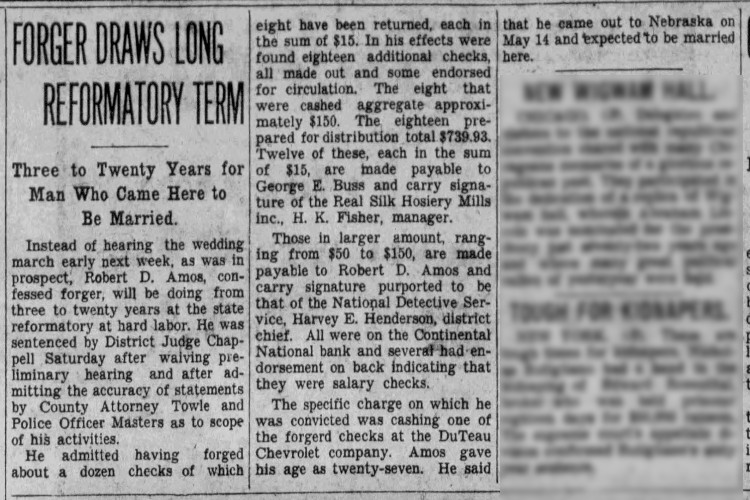
Lincoln, Nebraska newspaper story on Robert Amos’s conviction for check forging, June 1932. (Source: newspapers.com) 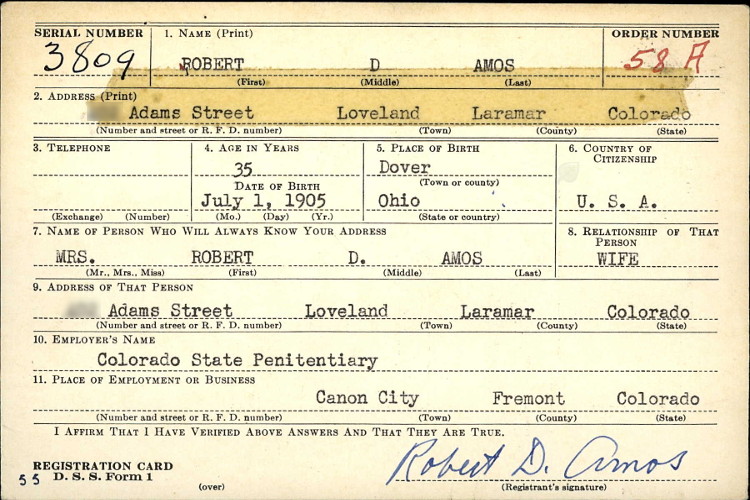
Robert Amos’s World War Two draft registration, December 1940. (Source: familysearch.org) 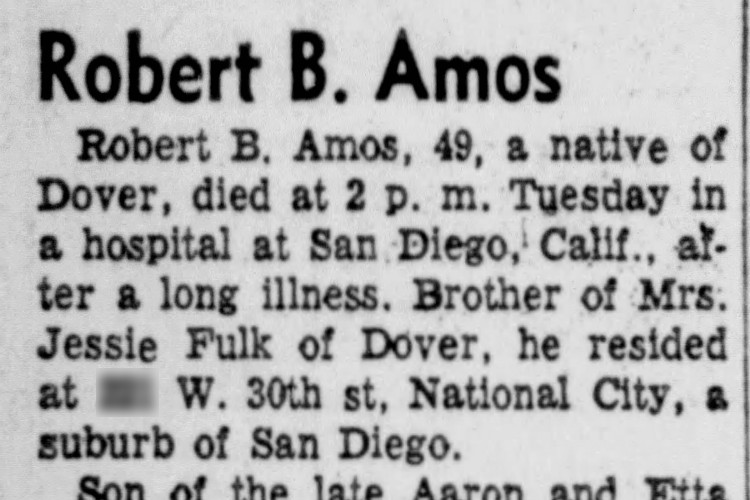
Robert Amos’s obituary in the New Philadelphia, Ohio newspaper, May 1955. (Source: newspapers.com) 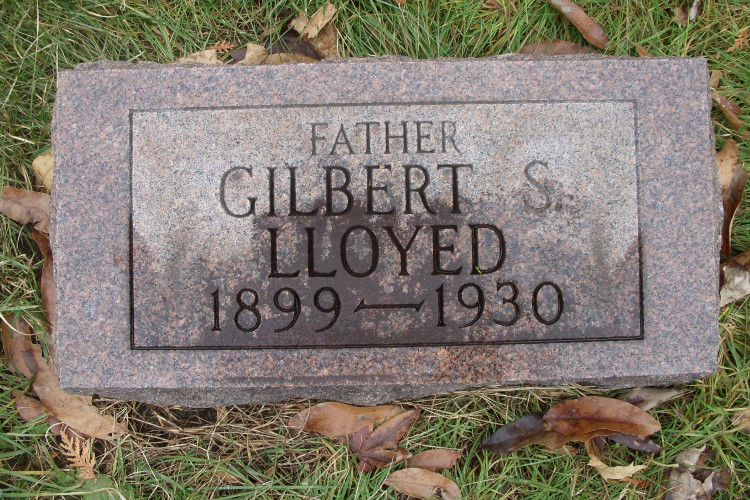
Gilbert Lloyd’s headstone in Maple Grove Cemetery, Dover, Ohio, 2019. (Source: findagrave.com)
Enjoy the stories?
© Noel B. Poirier, 2025.

