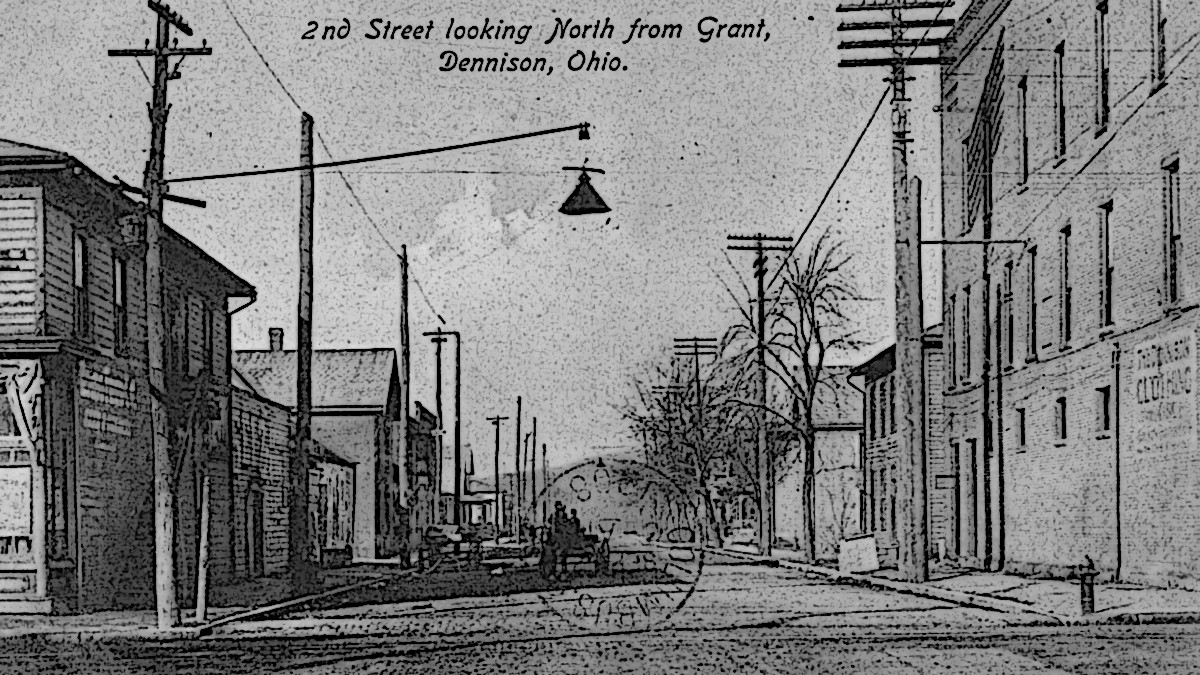
A drunken shooting spree leads to a fatal police pursuit, a murder indictment, and a hopelessly divided jury.
On a Monday night in February 1888, Charles “Dock” Canter (1863-1888), a railroad brakeman from Buchtel Furnace, Ohio, arrived in Dennison. Though his fellow employees typically considered him a peaceable man when sober, he frequently became cantankerous company when under the influence of liquor. Canter spent the evening drinking heavily before visiting a local house of “ill-fame” managed by a woman named Mrs. Alexander.
While inside the establishment, Canter started an argument with another railroad worker and drew his revolver. He fired several shots, forcing the other man to flee for safety toward a nearby saloon. Canter pursued his target into the street and renewed his gunfire near the saloon, even sending one bullet through the man’s coat. Following this second altercation, Canter wandered toward a lunch room to find a meal while local law enforcement organized a pursuit.
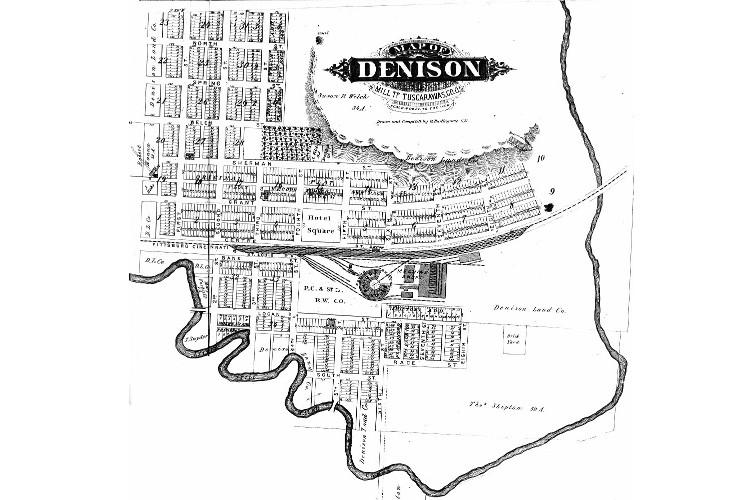
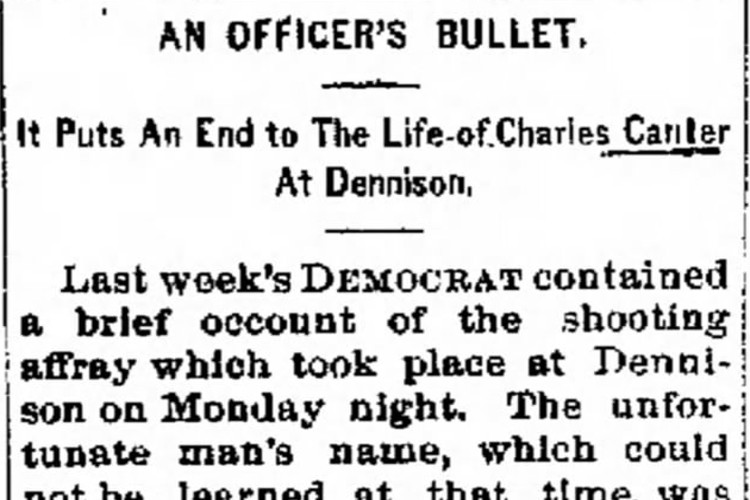
The town Marshal quickly called for assistance and deputized Michael “Mike” Galvin (1860-1894) to help apprehend the gunman. Galvin, a twenty-eight-year-old railroad fireman from Steubenville and a father of two, joined the officers as they tracked Canter toward the east end of the railroad yard. As the lawmen approached, Canter spotted them and attempted to flee through the dark yard rather than surrender.
The officers opened fire as Canter ran, discharging three or more shots into the night. Galvin fired a shot that ultimately brought Canter to the ground. The projectile penetrated Canter’s bladder, dealing a fatal internal injury. Although Canter initially broke loose from his captors and hid on a nearby hill, he eventually returned to Mrs. Alexander’s house, where the authorities finally secured him.
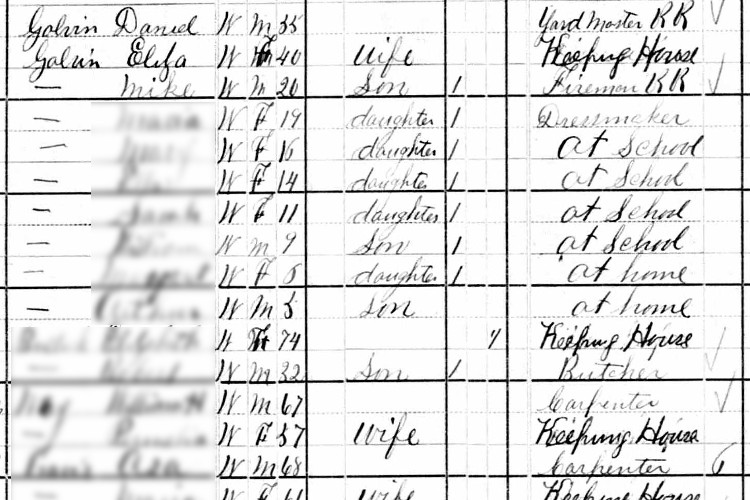
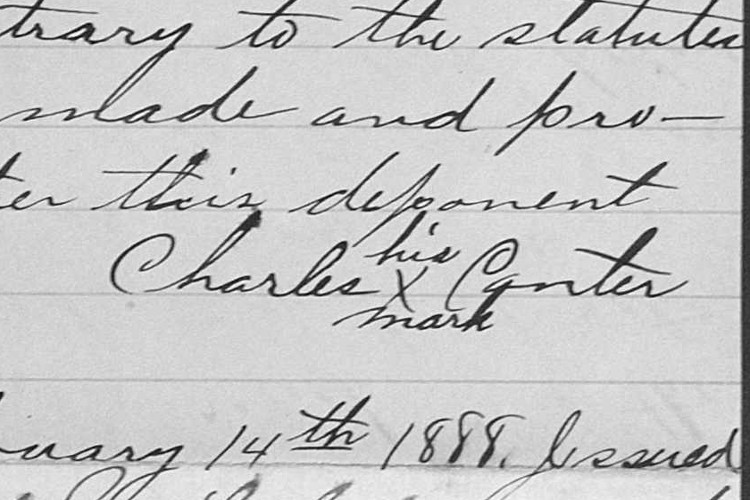
The next morning, a dying Canter provided a sworn statement to Dennison’s Mayor. He admitted his intoxication and filed a formal complaint against Galvin for shooting him with intent to kill. Canter’s health declined rapidly over the following week, and he succumbed to his wounds at eleven o’clock on Wednesday, February 22, 1888. Authorities subsequently shipped his remains back to his hometown for burial.
The legal system moved swiftly against Galvin, initially committing him to the Tuscarawas County jail when he failed to provide a $1,000 bond. A special grand jury later indicted him for murder in the second degree. During the June term of court, the case finally went to trial, but the proceedings ended in a stalemate. After a long period of balloting, the jury failed to reach a verdict, standing seven for acquittal and five for conviction of manslaughter. Galvin returned to Steubenville, and his family, and died there in April 1894 and was buried at Mount Calvary Cemetery in Steubenville.
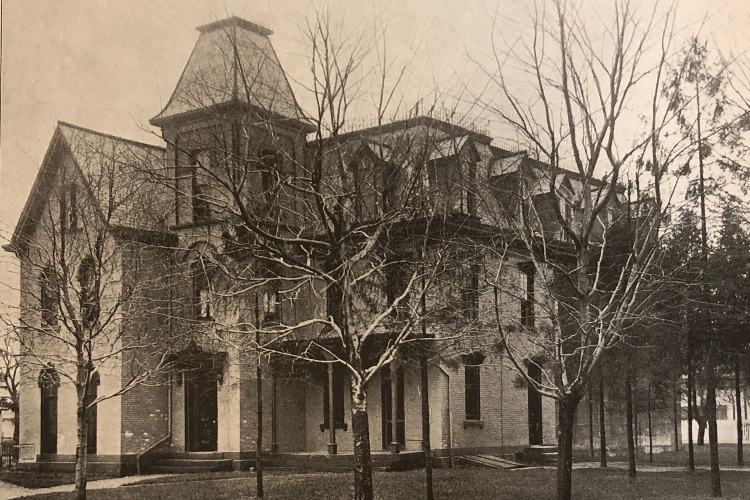
The Tuscarawas County Jail in New Philadelphia, Ohio pictured in the 1908 Atlas of Tuscarawas County. (Source: ancestry.com) 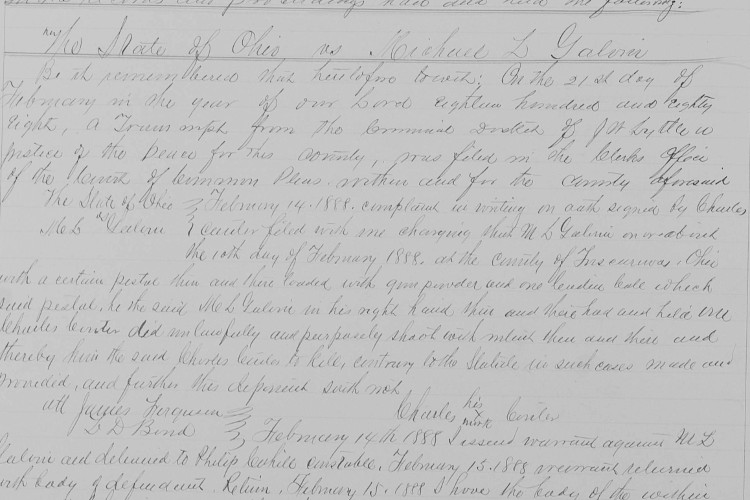
Detail from the criminal court records relating to the killing of Charles Canter by Michael Galvin, February 1888. (Source: familysearch.org) 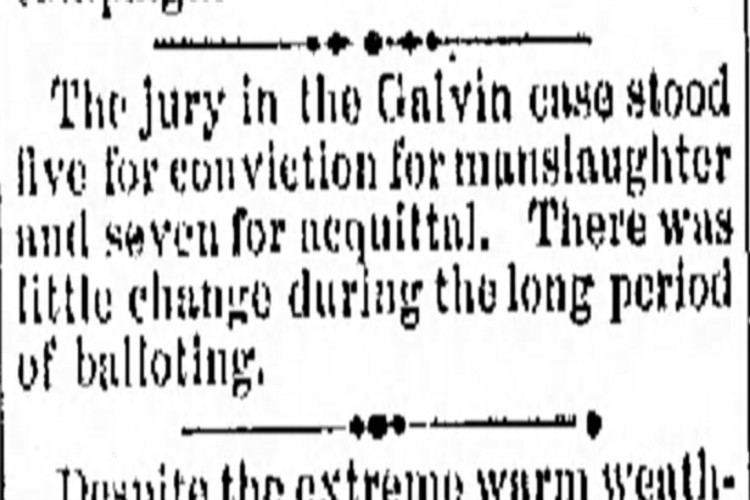
New Philadelphia, Ohio newspaper blurb on the jury deliberations in the trial of Michael Galvin, June 1888. (Source: newspaperarchive.com)
Enjoy the stories?

© Noel B. Poirier, 2026.

