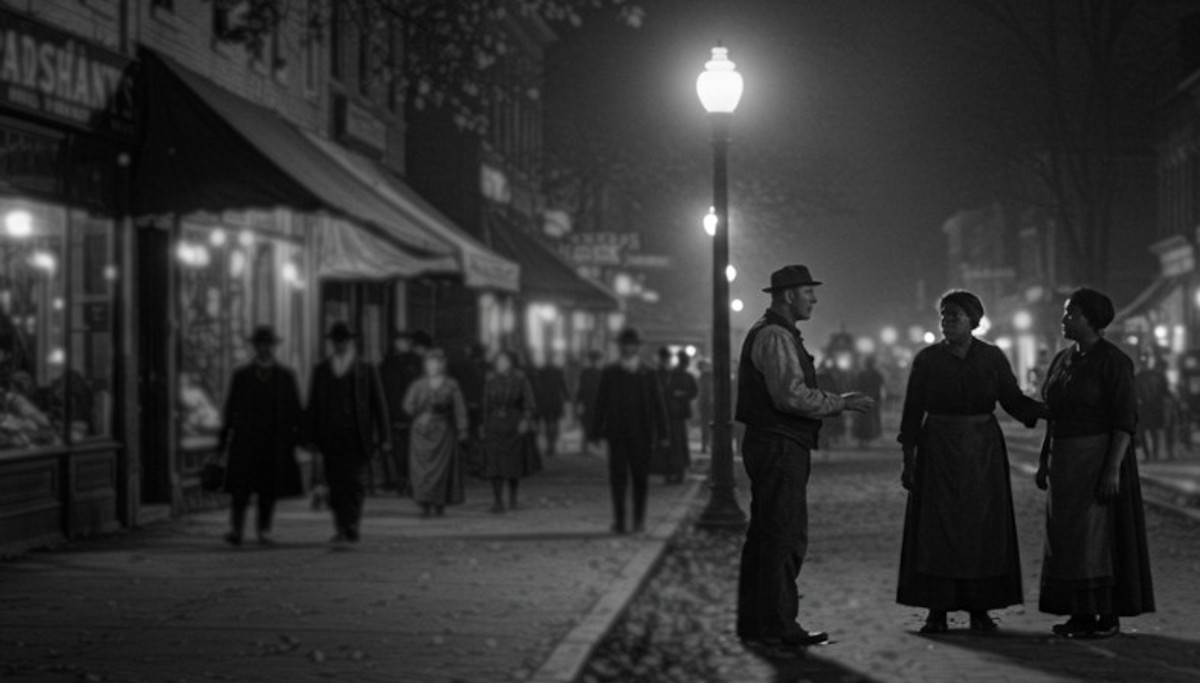
Minnie Adkins—a young Black mother and domestic worker—sparked a rare wave of public sympathy after she shot and killed a white man who threatened her.
Minnie Williamson (1884-aft. 1950) was born in 1884 in North Carolina to Bedford Williamson and Della Willis. One of nine siblings, Minnie came of age in the post-Reconstruction South as part of a large Black family navigating the challenges of rural life. The Williamson family lived in Yancyville Township, Caswell County, North Carolina in June 1900. Shortly after that census was taken, and seeking better opportunities, Minnie migrated north to Dennison, Ohio, where she joined many Black Americans during this early wave of the Great Migration northward.
Minnie arrived in Tuscarawas County around 1903 and married James Adkins, from Ashland County, Ohio, in April 1905. The couple had two children; a daughter born in 1905, and a son, born in 1906. The marriage was short-lived and by late 1908, Minnie amicably separated from James and was living with a friend in Uhrichsville, Ohio. She supported herself and her young children by working as a domestic, a common occupation for Black women at the time, reflecting both her resilience and the limited economic options available to women of color. Many of Minnie’s clients were considered the “best people in the Twin Cities.”
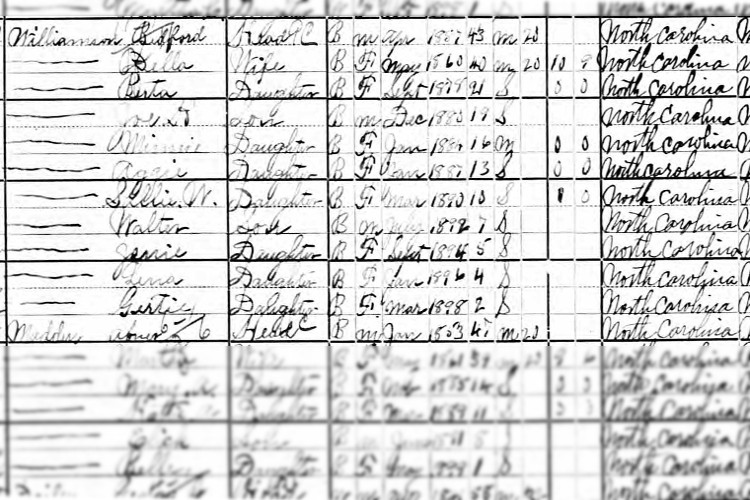
The Williamson family, including Minnie, recorded in the 1900 census for Caldwell County, North Carolina. (Source: familysearch.org) 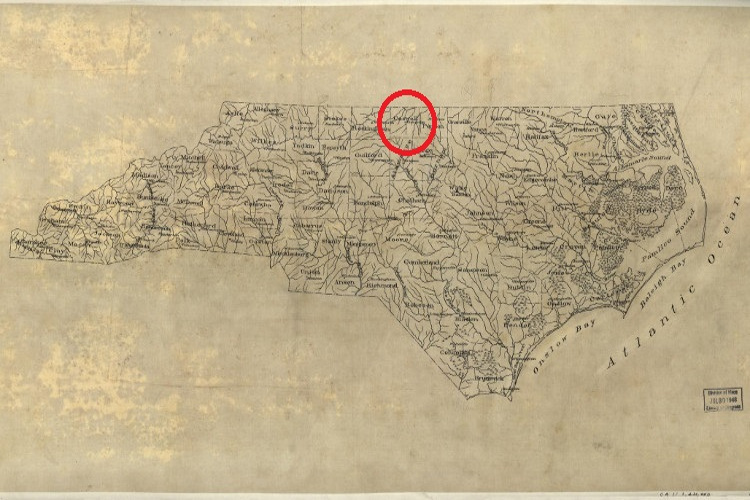
1893 map of North Carolina showing the location (in red) of Caswell County. (Source: loc.gov) 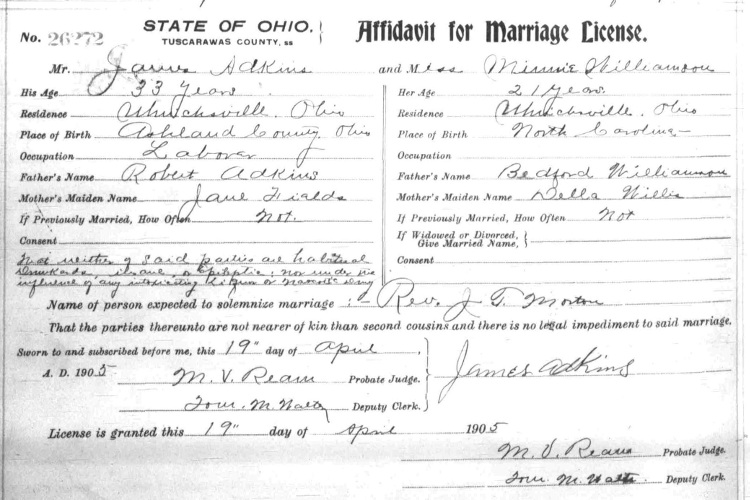
Minnie Williamson’s marriage to James Adkins recorded in Tuscarawas County, Ohio in April 1905. (Source: familysearch.org) 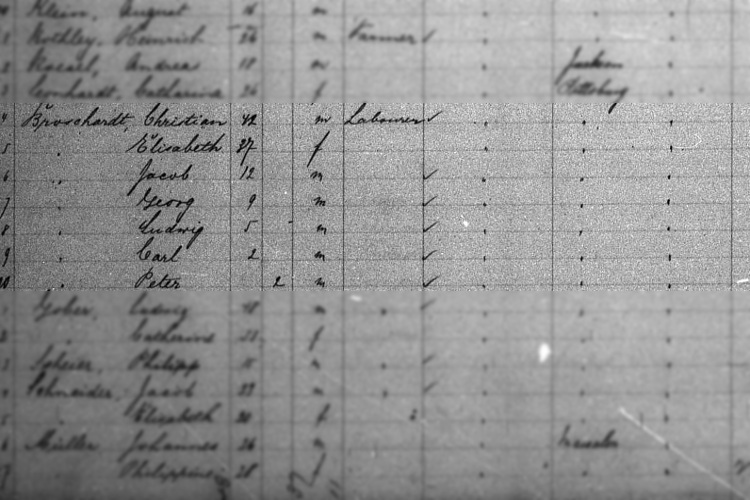
The Broschardt family recorded on the passenger list when they immigrated to the United States in April 1883. (Source: familysearch.org)
Jacob Broschardt (1870-1908) was born in June 1870 in Katzenbach, Germany, and immigrated to the United States with his family at age thirteen, settling in Ohio as part of a wave of German immigrants. By the age of twenty, he married Minnie Fowler (1872-1931), with whom he had six children, and they lived in Mill Township near Dennison and Uhrichsville. After his divorce from Minnie in 1902, Jacob married Samantha McKean Schlitz (1863-1916), a hardworking local cook. He eventually secured steady work as a car painter at the Dennison railroad shops, an important role in the region’s booming rail industry. Jacob lived in the community of Roanoke in the fall of 1908 when he and Minnie Adkins’ paths crossed in Dennison, Ohio.
On the night of September 12, 1908, at around 10:00 p.m., Minnie Adkins and her roommate, Katherine Smith (1883-?), were walking down Center Street in Dennison, Ohio, returning home to Uhrichsville after an evening visit to Treadway’s Store and a nearby ice cream parlor. As they neared the corner of First and Center Streets, they encountered Jacob Broschardt, who called out to them. When the women ignored him and continued walking, Broschardt became enraged, hurling threats and “blasphemous” insults at them. The confrontation escalated into a heated argument, and when Broschardt advanced menacingly toward Minnie, she, fearing for her life, drew a .32 caliber revolver from her purse and fired. The bullet struck Broschardt in the chest, piercing his heart and killing him instantly.

Headline in the New Philadelphia, Ohio newspaper about the killing of Jacob Broschardt, September 1908. (Source: newspaperarchives.com) 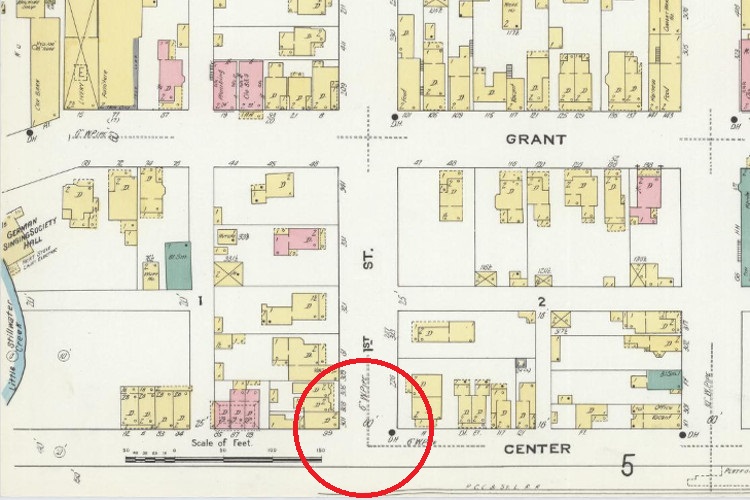
The intersection of 1st and Center Streets in Dennison, Ohio where the killing took place as seen on the 1909 Sanborn Map. (Source: loc.gov) 
Minnie Adkins recorded in the Jail Register for the Tuscarawas County Jail, September 1908. (Source: familysearch.org) 
Minnie Adkins’ photograph published in the New Philadelphia, Ohio newspaper, October 1908. (Source: newspaperarchives.com)
The words Jacob Broschardt directed at Minnie and Katherine, confirmed by witnesses, must have been particularly vile. Public sentiment, along with the press, quickly sided with Minnie, who publicly stated that although she regretted killing Jacob, she believed her life was in immediate danger at the time. Minnie was initially charged with first-degree murder, but the charge was later reduced to second-degree murder. After a very anticipated two-day trial, a jury convicted Minnie Adkins of manslaughter and sentenced her to one year in the Ohio State Penitentiary.
After her release from the penitentiary a year later, Minnie briefly returned to Uhrichsville before relocating to the Youngstown, Ohio area. She married a second time in 1912 but was widowed shortly thereafter. Minnie lived with her adult children in Trumbull and Mahoning Counties until 1950, when she married for a third time. Due to the multiple married names she used between 1905 and her death, it is difficult to determine exactly when and where Minnie Adkins died. For a brief time in the fall of 1908, her killing of Jacob Broschardt—and the public outcry over his behavior toward her—stood as a stark reminder of the price of going too far in Tuscarawas County.

New Philadelphia, Ohio newspaper headline reporting on Maddie Atkins’ verdict, October 1908. (Source: newspaperarchives.com) 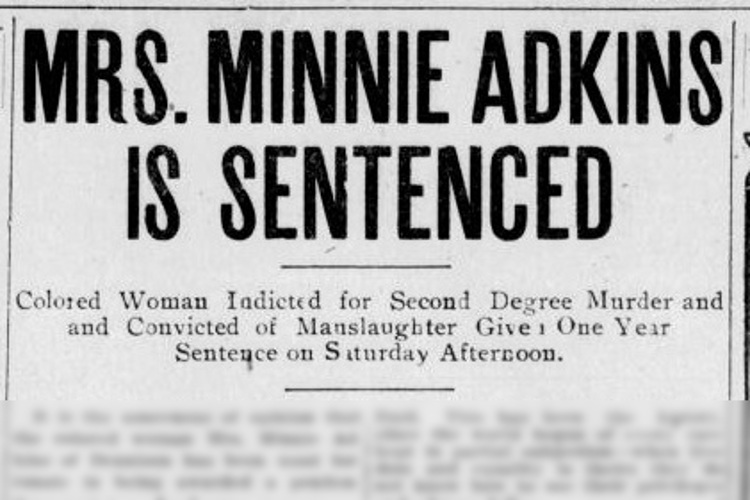
New Philadelphia, Ohio newspaper headline reporting on Maddie Atkins’ sentencing, October 1908. (Source: newspaperarchives.com) 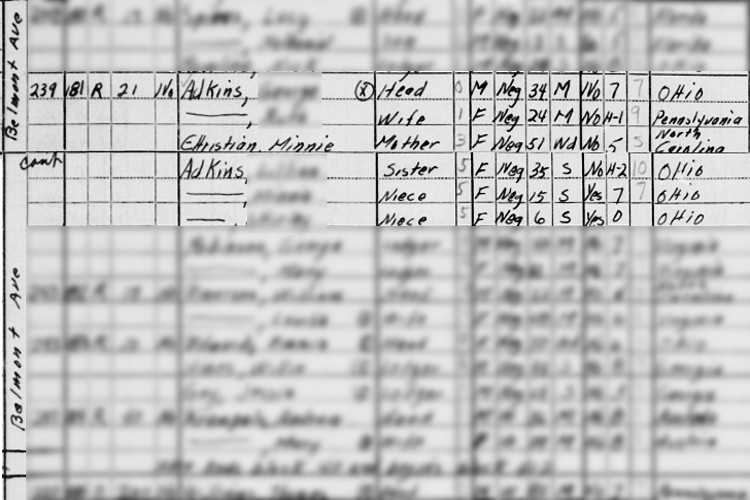
Minnie Adkins (Christian) recorded with her son and daughter’s families Niles, Ohio in 1940. (Source: familysearch.org) 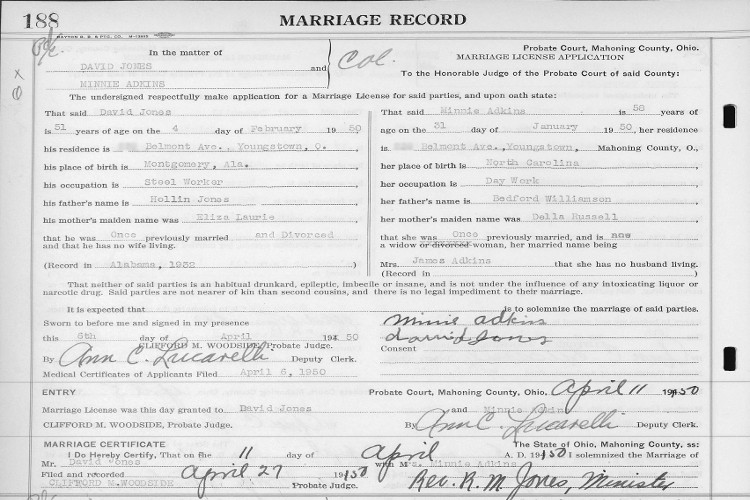
Minnie Adkins’ marriage to David Jones recorded in Mahoning County in 1950. (Source: familysearch.org)
Enjoy my stories?


© Noel B. Poirier, 2024.
 Tuscarawas County Stories
Capitalizing the “B” in Black is all well, and good. The same respect ought to be given with capitalizing the “W” in White. Fair is fair.
LikeLike