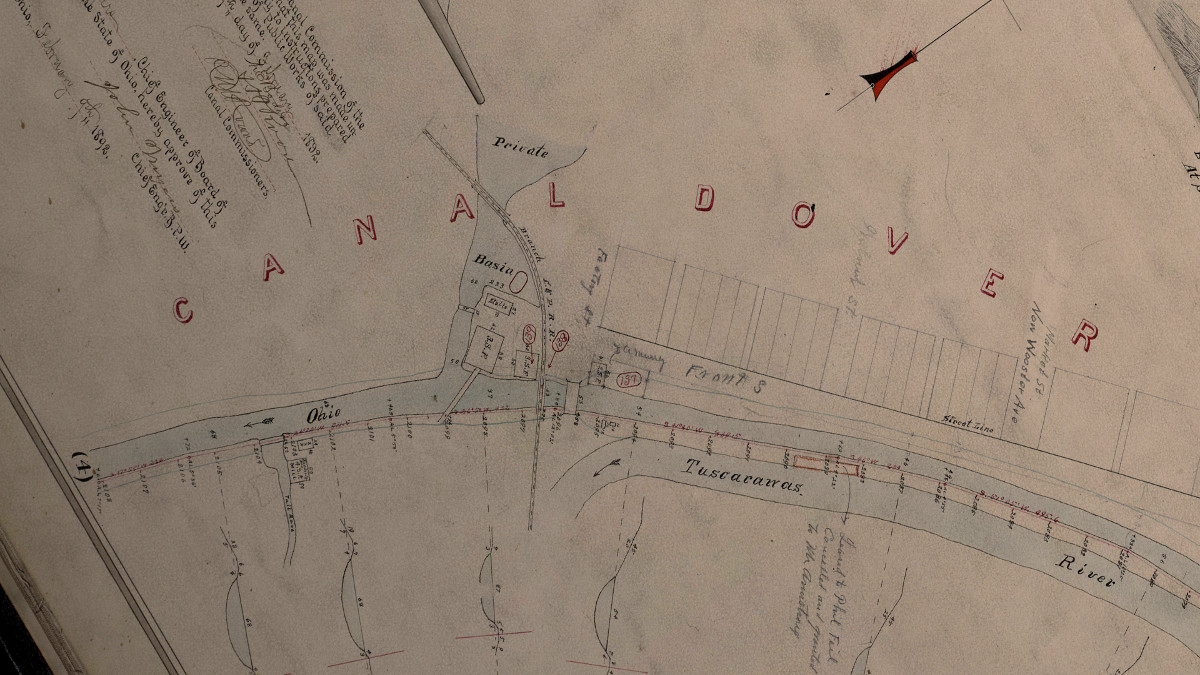
A bitter rivalry over stagecoach fares culminated in violence outside a Dover tavern.
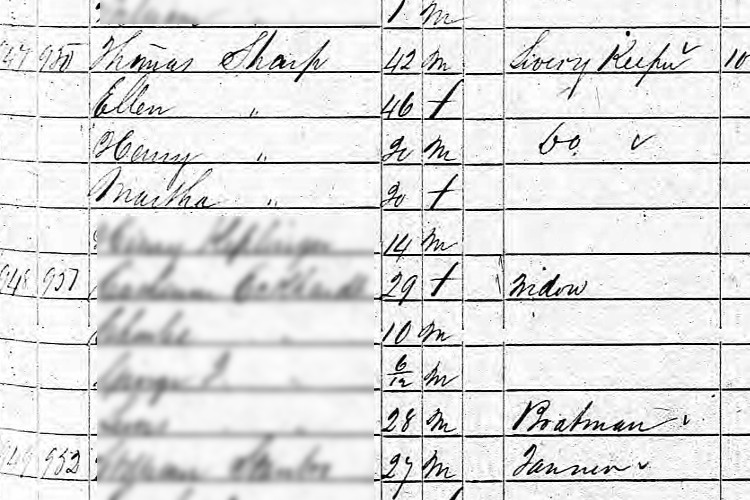
In the summer of 1850, John F. Walton (c. 1820-?) began operating a passenger hack and U.S. Mail route between Dover and Massillon, Ohio, traveling via Bolivar and Zoar. To attract passengers, Walton significantly reduced his fares, creating friction with rival Dover operators and livery owners Thomas Sharp (1808-1865) and his son Henry Sharp (1826-1881). This commercial rivalry sparked frequent verbal arguments and angry exchanges at other pick-up locations on the route over passenger pickups and route schedules. Tensions between the rival stage operators steadily escalated over several weeks.
On the morning of Sunday, September 15, 1850, Walton pulled up to Jacob Kaldenbaugh’s (1798-1860) tavern in Dover with his stagecoach to pick up passengers bound for Massillon. Thomas Sharp and Henry Sharp arrived at the establishment from their nearby livery stable shortly afterward and discovered that Walton was taking passengers who had previously arranged travel with them. Henry Sharp approached Walton with one hand concealed beneath his coat, eyeing him closely. Walton informed the Sharps that because it was Sunday, he wished to avoid any quarrel with Thomas Sharp, though he added that if they insisted on fighting, they could take him out into the road one at a time.
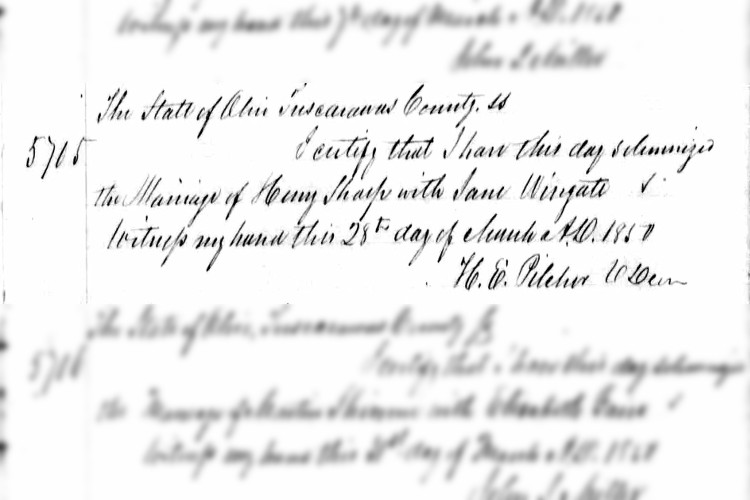
The confrontation rapidly turned violent when Thomas Sharp ran inside the tavern, retrieved an iron stove poker, and returned to strike Walton over the head and left arm, fracturing a bone in Walton’s arm. Henry Sharp actively encouraged his father during the assault, shouting for him to hit Walton again. Joining the physical conflict directly, Henry Sharp drew a knife and stabbed Walton in his left side. The knife wound penetrated Walton’s chest cavity and lung, causing immediate and critical internal bleeding.
Crying out for help and bleeding heavily, Walton retreated across the street toward a bench outside the canal collector’s office. Henry Sharp gathered stones from the road and pursued him, throwing three or four stones that struck Walton in the head and back. An eyewitness warned Henry Sharp to stop before he killed Walton, while the local constable and a bystander intervened, with Henry Sharp eventually being disarmed of his knife. A doctor treated Walton at the scene for severe blood loss, head trauma, and his broken arm, after which Walton remained bedridden in Dover for about two weeks.
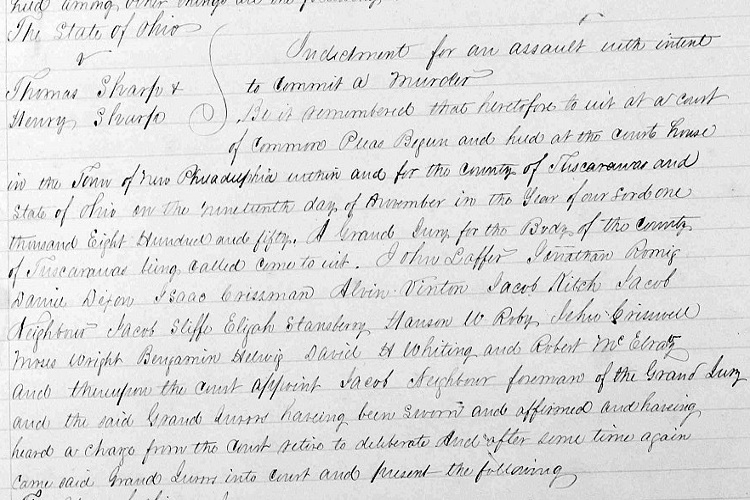
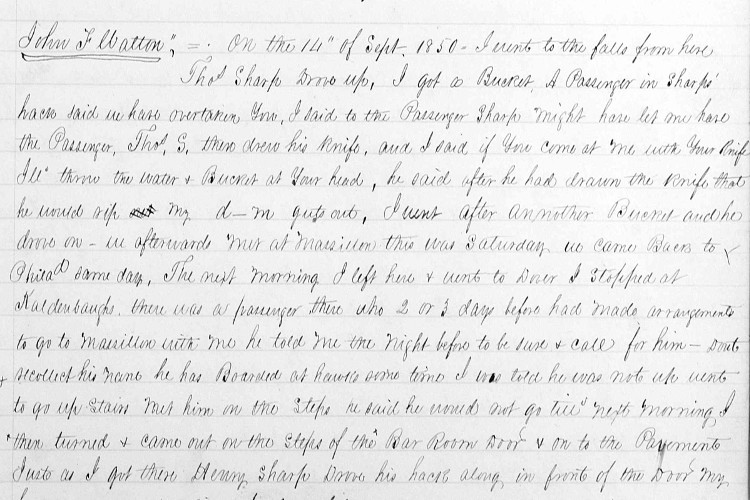
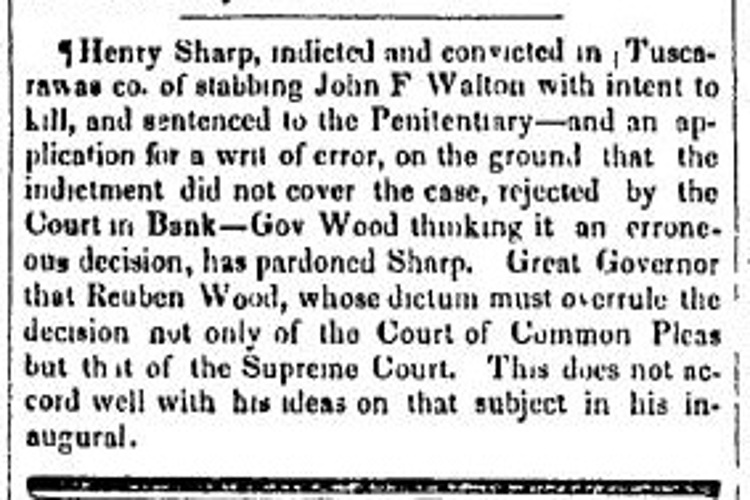
Formal criminal proceedings against the Sharps were initiated in November 1850. A grand jury returned an indictment against Thomas Sharp and Henry Sharp for assault with intent to commit murder and the Sheriff brought the defendants into court. Following trial testimony, the jury returned a verdict finding Henry Sharp guilty of assault with intent to commit murder, while finding Thomas Sharp guilty only of simple assault and battery. The Judge sentenced Henry Sharp to three years of hard labor in the state penitentiary and Thomas Sharp to pay a fine and serve two days in the county jail on bread and water. After defense motions were overruled and an application for a writ of error was denied by a Supreme Court Judge, the Governor exercised executive clemency in January 1851 and granted Henry Sharp a full pardon.
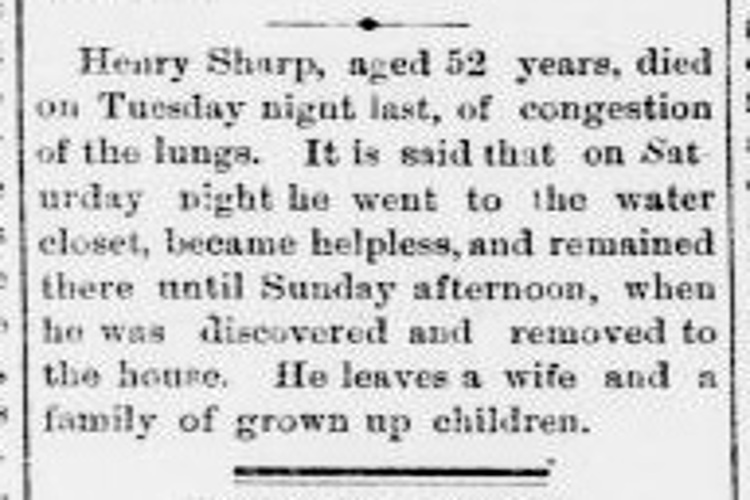
Following the resolution of the court case and his executive pardon, Henry Sharp returned to Dover, Ohio, where he raised a family and worked as a laborer and furnace hand. During the American Civil War, Henry Sharp served as a Corporal in Company G of the 126th Ohio Volunteer Infantry, eventually passing away on September 6, 1881, at the age of fifty-five and being buried in Dover’s Fourth Street Cemetery. His father, Thomas Sharp, continued living in Dover as a hack driver and livery keeper until his death in July 1865. In contrast, what happened to John F. Walton following his recovery from the assault and participation in the trial has proven difficult to ascertain. What began as a bitter commercial feud over stagecoach fares ended as a dramatic legal saga in 19th century Dover.
Enjoy the stories?
© Noel B. Poirier, 2026.

