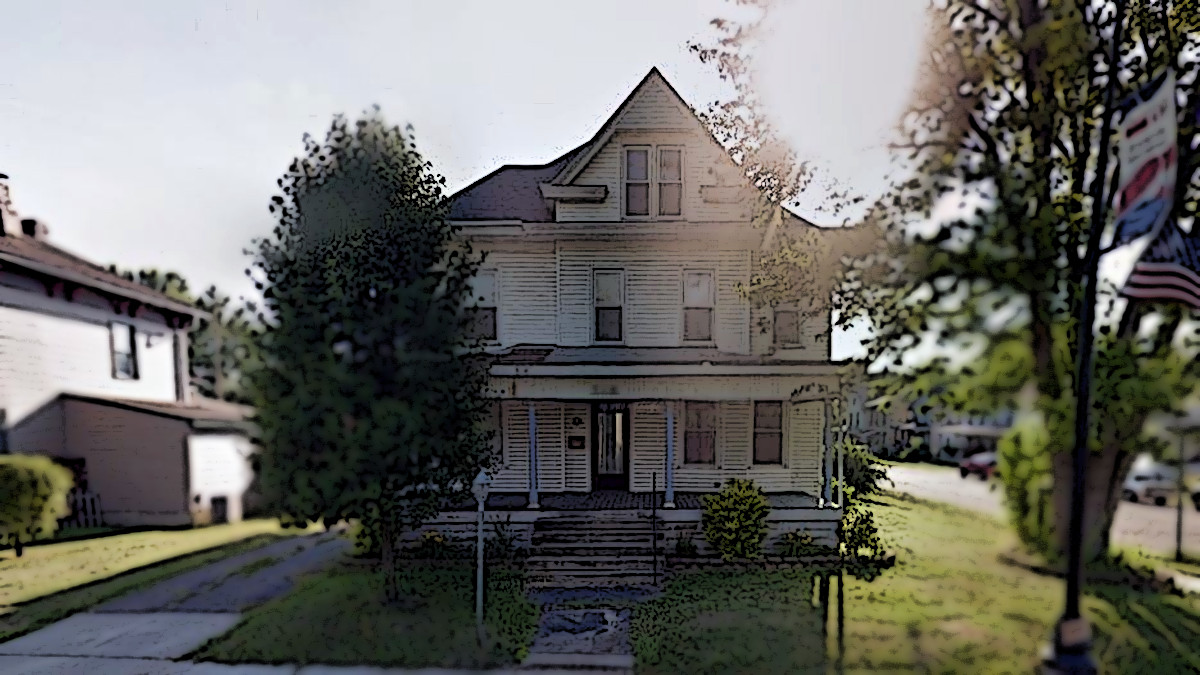
The home built by an Uhrichsville banker over 120 years ago stands as a monument to the town’s early success.
Thomas A. Latto (1854-1909) purchased Lot 24 on the southwest corner of North Water and Sixth Streets in Uhrichsville, Ohio for $2,000 in April 1902. Prior to Latto’s acquisition, Sanborn Fire Insurance Maps from 1895 and 1901 recorded an earlier frame dwelling occupying the site. To make way for a grander residence, Latto demolished the existing structure and constructed, by June 1903, a substantial new dwelling valued at $4,000.
Architecturally, the Latto home exemplifies a turn-of-the-century classic Queen Anne style with American Foursquare elements. As illustrated in 1907 and 1915 Sanborn maps and historical photographs, the residence is a two-and-a-half-story wood-frame structure built over a heavy rusticated foundation and porch base. Its defining exterior feature was a sweeping, one-story wrap-around front porch supported by classical round columns, accompanied by a secondary side porch entrance. The hipped roof is anchored by a prominent front-gabled attic dormer that was decorated with fish-scale shingle siding and carved pediment woodwork. Symmetrical double-hung upper windows, wide overhanging cornices, brick chimneys, and a shingled roofline complete the home’s balanced visual design.
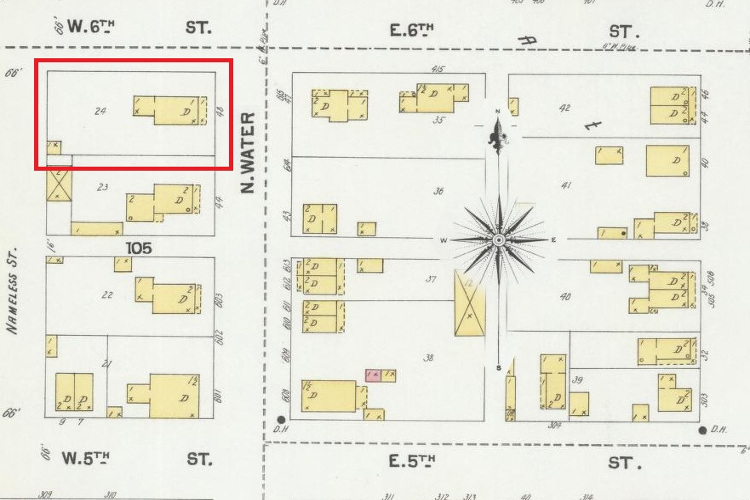
The house that previously stood on lot 24 depicted on the 1901 Uhrichsville Sanborn Fire Insurance Map. (Source: loc.gov) 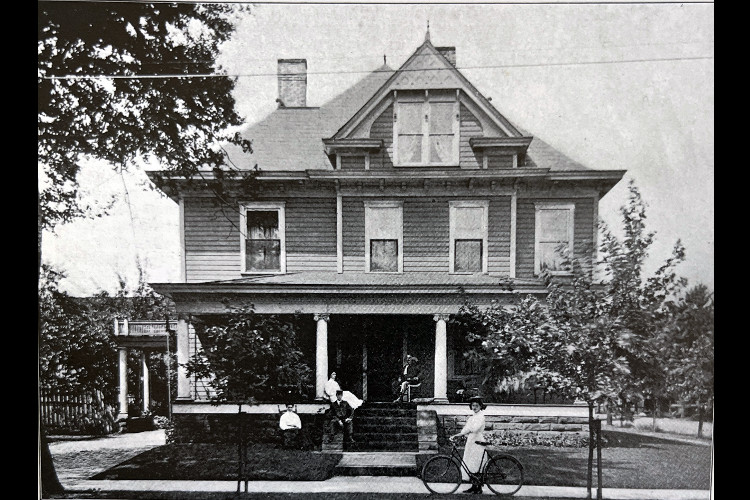
Photograph of the Latto home that appeared in the Combined Atlas of Tuscarawas County, 1908. 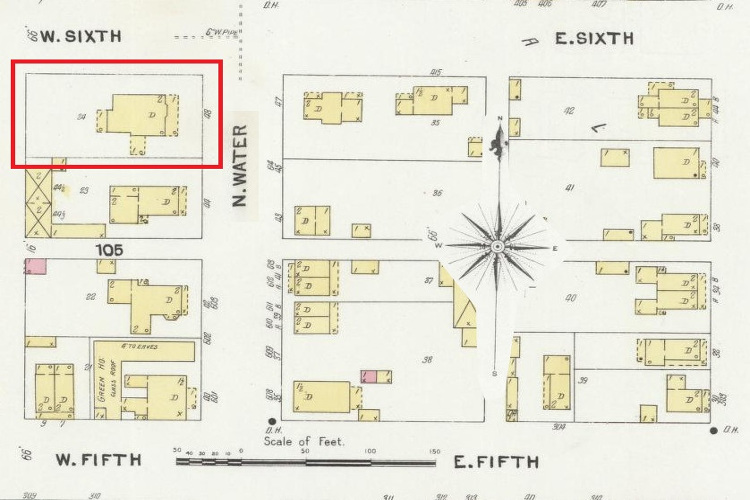
The Latto home depicted on the 1907 Uhrichsville Sanborn Fire Insurance Map. (Source: loc.gov) 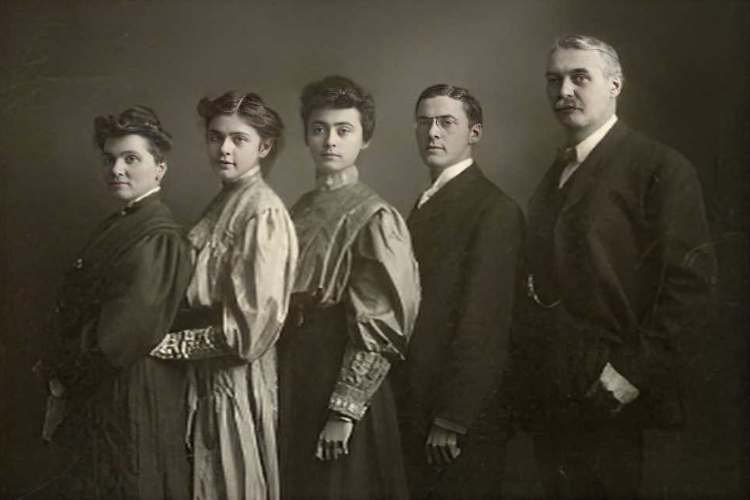
The Latto family, c. 1905. (Source: ancestry.com) 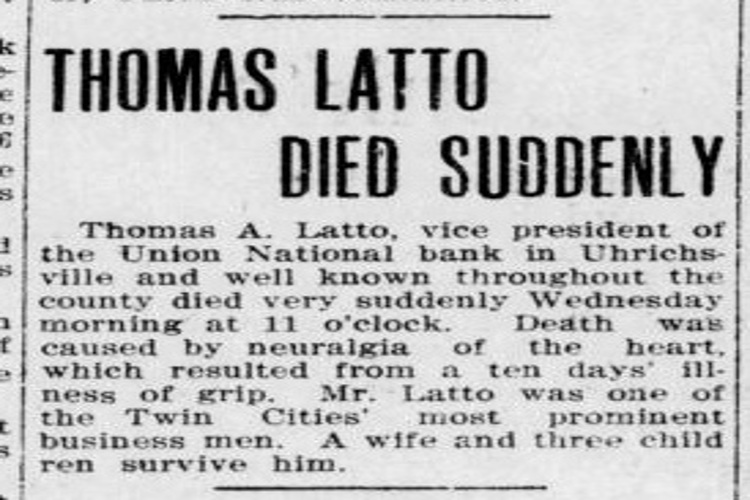
Thomas Latto’s death reported in the New Philadelphia, Ohio newspaper, January 1909. (Source: newspaperarchive.com)
Following its completion, the house served as the residence of Thomas A. Latto, vice-president of the Union National Bank and treasurer of the Twin City Lumber Co., his wife Adaline “Addie” Caldwell Latto (1857-1923), and their children Forrest Edgar (1881-1938), Hallie Marie (1883-1937), and Ruth Elizabeth (1891-1976). The home served as the setting for prominent local social gatherings, including the December 1906 wedding of daughter Hallie Latto, which was held in the family parlor before thirty-five guests. Thomas A. Latto’s tenancy ended when he died suddenly at the residence on January 6, 1909, from heart neuralgia after a ten-day bout of grip.

After his father’s death, Forrest Latto continued living at the home while advancing from assistant cashier to president of the Union National Bank in February 1925. Following a 1905 divorce from his first wife, Edith Eckfeld (1882-1911), Forrest quietly married Faye Ophelia Temple (1894-1944) in January 1918, who joined him at the North Water Street residence until their divorce four years later. Forrest maintained North Water Street as his permanent home throughout his career, as recorded in his World War I draft registration, 1910, 1920, and 1930 federal census entries, and 1927 and 1932 city directories. The household noted the death of Forrest’s mother, Adaline Latto, in September 1923, and Forrest resided at the home until his death from chronic heart trouble on August 27, 1938, after which funeral services were held at the house.
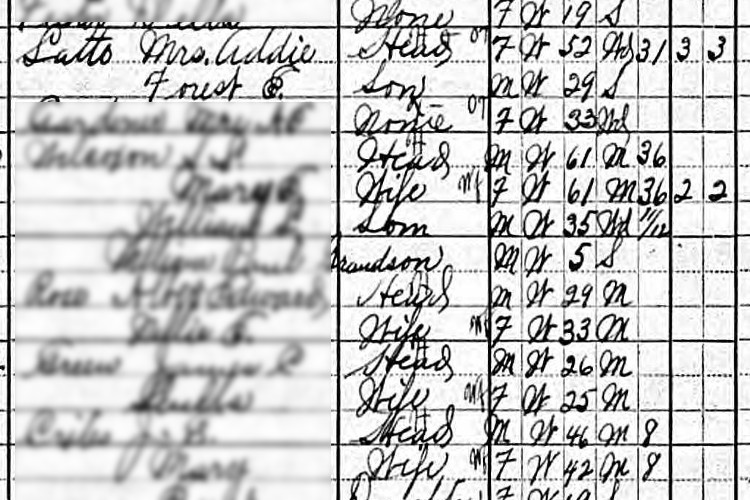
Forrest Latto and his mother, living in the home, recorded on the 1910 census. (Source: familysearch.org) 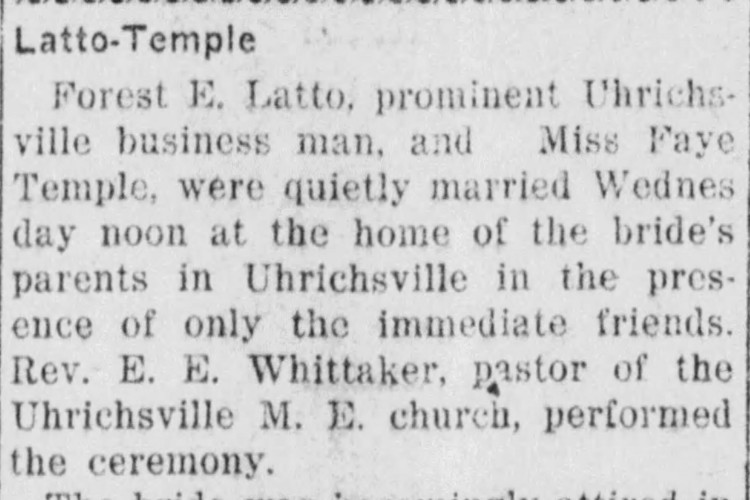
Forrest Latto’s marriage to Faye Temple reported in the New Philadelphia, Ohio newspaper, January 1918. (Source: newspapers.com) 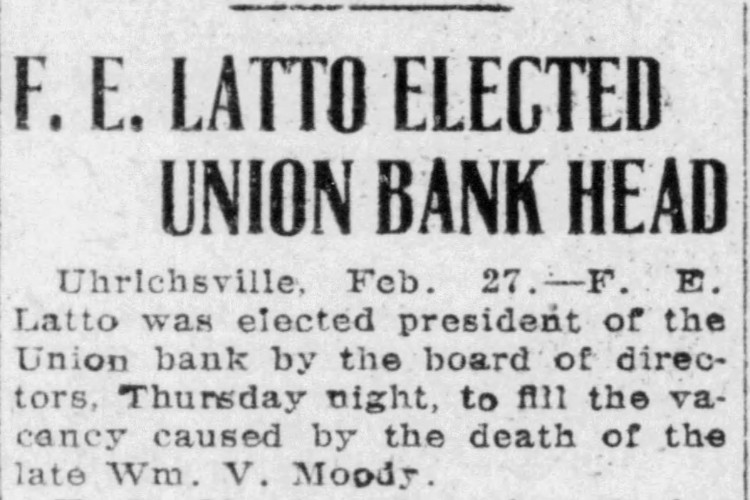
Forrest Latto’s promotion to bank president reported in the New Philadelphia, Ohio newspaper, February 1925. (Source: newspapers.com) 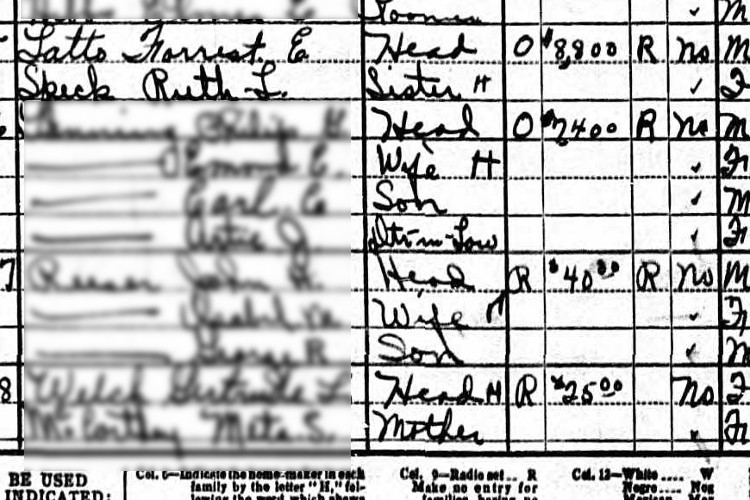
Forrest Latto and his sister Ruth, living in the home, recorded on the 1930 census. (Source: familysearch.org) 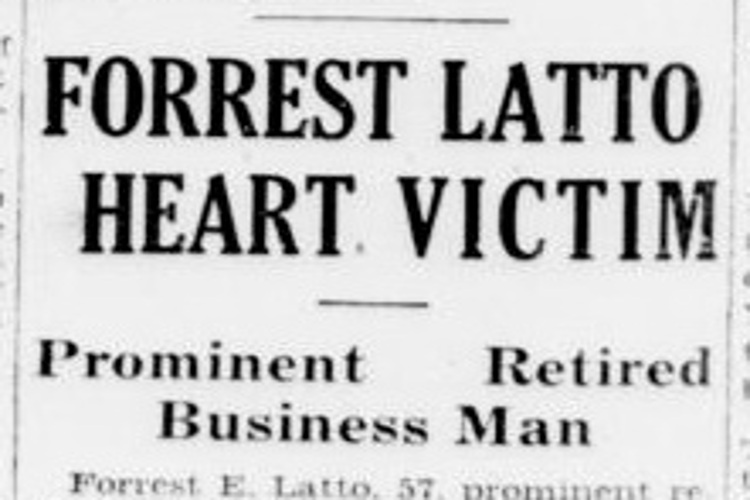
Forrest Latto’s death reported in the New Philadelphia, Ohio newspaper, August 1938. (Source: newspaperarchive.com)
The house, in February 1939, was connected to legal proceedings when Forrest’s sister, Ruth, filed a $5,500 lawsuit against the estate of her brother for ten years of uncompensated caregiving provided at the residence. Two years after Forrest’s death, the house was occupied by Bertram B. Beltz (1891-1941), vice president and superintendent of the Romig Clay Company, along with his wife Ruth (1892-1978) and their family. Beltz’s tenancy was cut short when he suffered a fatal heart attack and died at the home on October 11, 1941, at age 49. Funeral services for Bertram Beltz were conducted at the residence prior to his burial in Union Cemetery.
Following the Beltz family’s time at the property, the home continued to house local residents during Uhrichsville’s mid-twentieth-century era. The April 1950 federal census records James G. Denis (1923-?), a 27-year-old manager born in Greece, living at the North Water Street address with his wife, their six children, and a lodger. Nearly 123 years after its construction by Thomas A. Latto the historic corner home remains an enduring residential landmark along North Water Street in Uhrichsville.
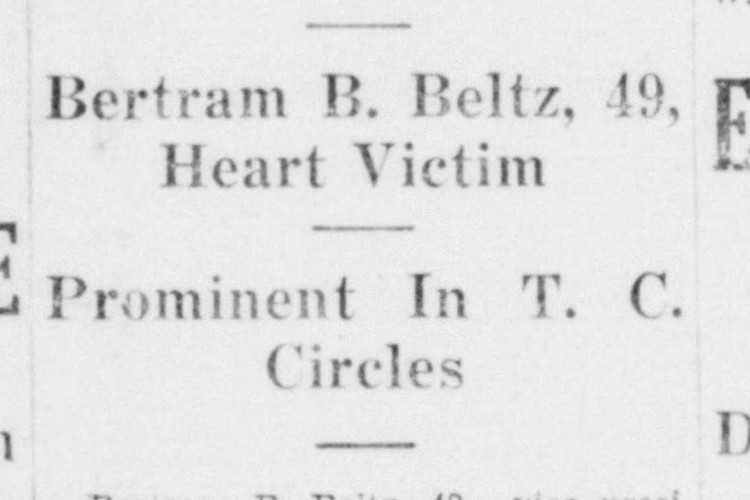
Bertram Beltz’s death reported in the New Philadelphia, Ohio newspaper, October 1941. (Source: newspapers.com) 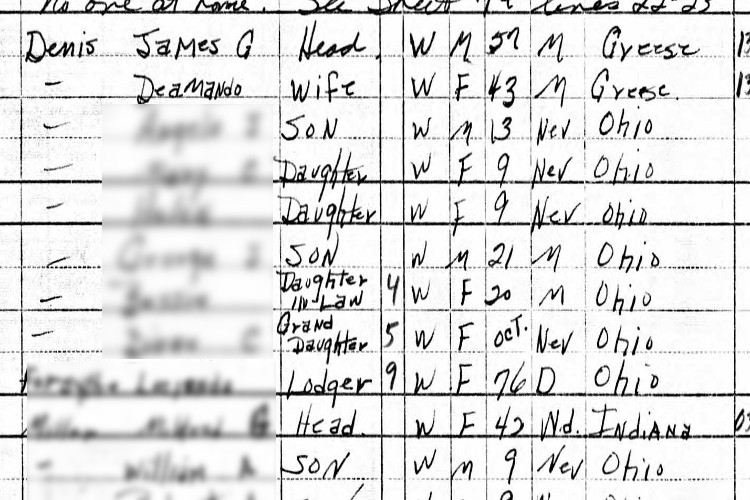
The Denis family, residing in the home, recorded on the 1950 census. (Source: familysearch.org) 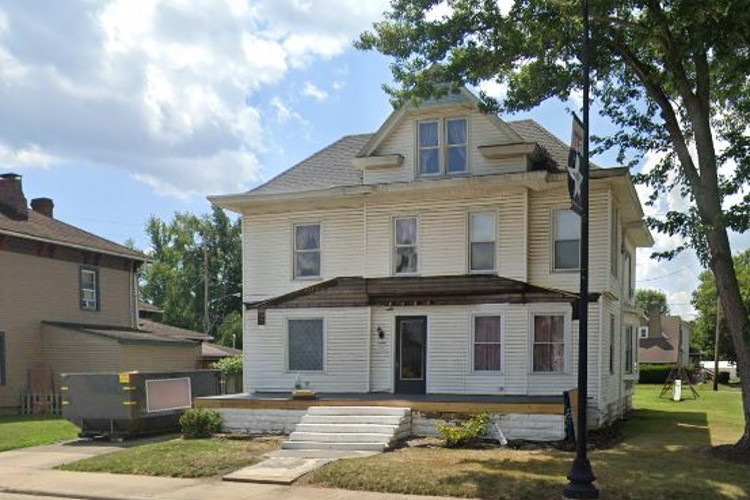
Photograph of the Latto home taken in 2022. (Source: google.com) 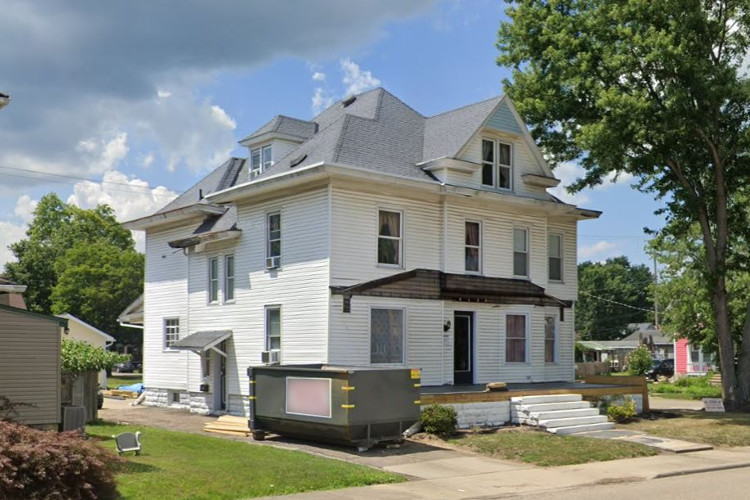
Photograph of the Latto home taken in 2022. (Source: google.com) 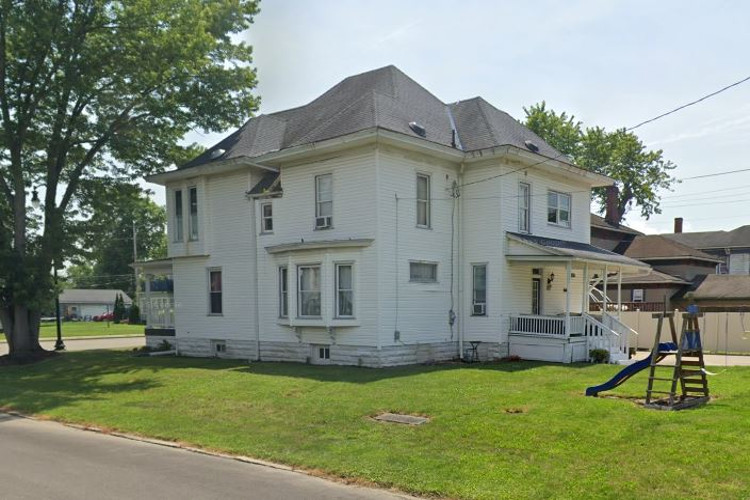
Photograph of the Latto home taken in 2025. (Source: google.com)

© Noel B. Poirier, 2026.

