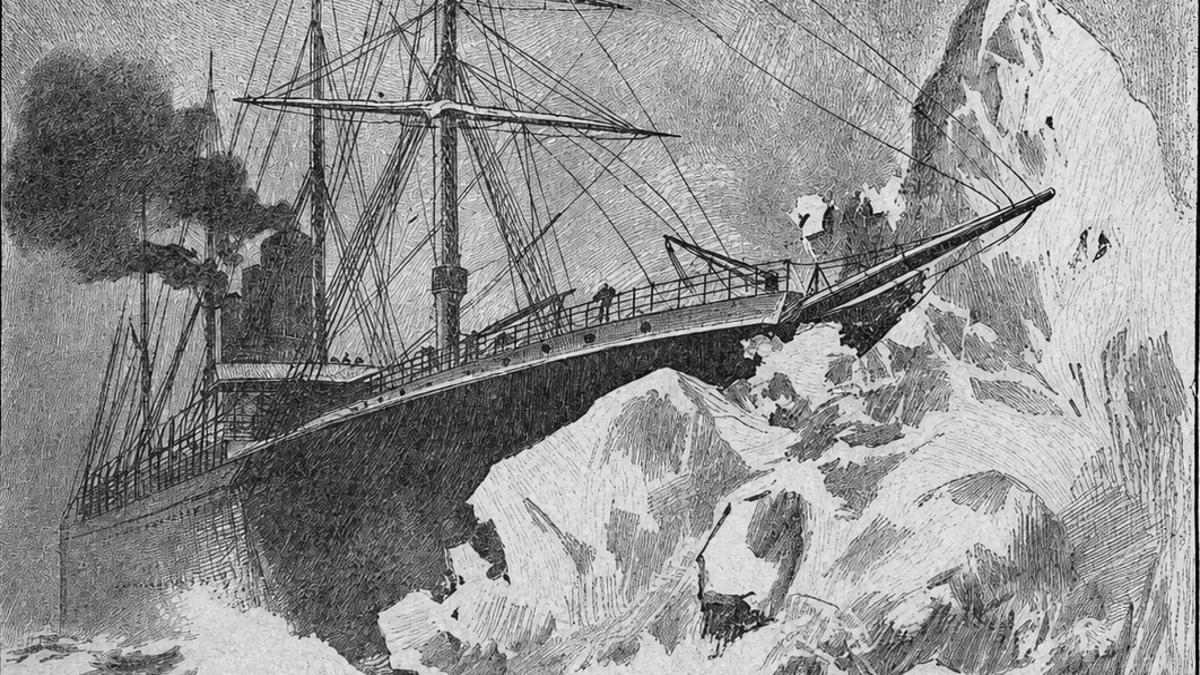
Thirteen years before the Titanic disaster, a New Philadelphia jeweler survived a terrifying North Atlantic iceberg collision.
In April 1912, as the world reeled from the news of the Titanic disaster, John Ernest Joss (1873–1961) came forward to share a chillingly similar experience from thirteen years earlier. A prominent jeweler and optometrist in New Philadelphia, Ohio, born to John Christian Joss (1846–1922) and Emma Marinda Smith Joss (1852–1933), Joss had seen firsthand the terror of an iceberg collision in the North Atlantic. Speaking to the press just days after the Titanic sank, he described how he and his wife, Edith Scott (1876–1940), had “stared death in the face” during what was supposed to be the celebratory conclusion of their three-month wedding tour of Europe.
Their journey had begun in July 1899, following the couple’s wedding in June. After traveling through Europe, they boarded the steamer City of Rome in England for their return to America. The voyage was routine until they reached the treacherous banks off Newfoundland, where a dense fog obscured the horizon for several days. The ship’s Captain, aware of the danger, remained almost constantly on the bridge, and eventually ordered the ship’s speed reduced from eighteen knots to about nine knots as the water temperature dropped; a potential warning of nearby icebergs.
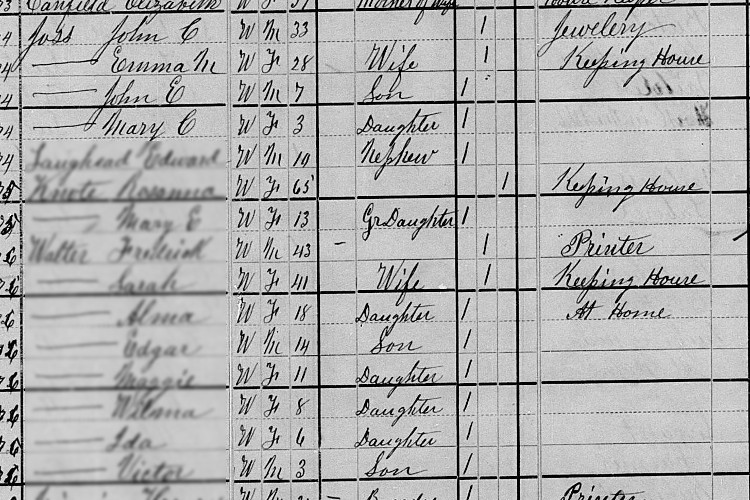
John E. Joss recorded on the 1880 census with his parents and sister. (Source: familysearch.org) 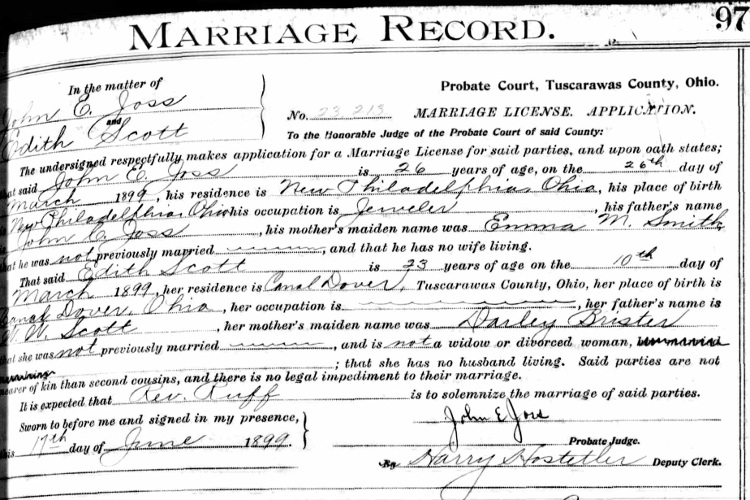
Marriage record of John E Joss and Edith Scott, June 1899. (Source: familysearch.org) 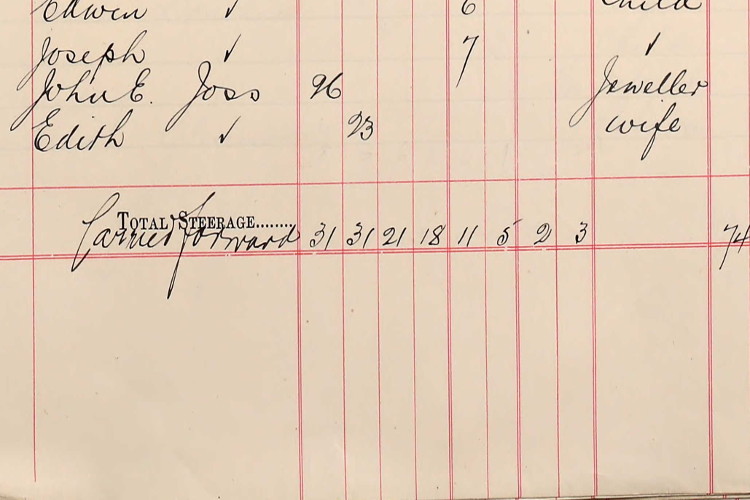
John E. and Edith Joss recorded on the passenger manifest for their outbound trip to Europe in 1899, July 1899. (Source: ancestry.com)
On the evening of August 31, 1899, at approximately 5:50 p.m., the silence of the fog was shattered by the lookout’s cry of “ice dead ahead”. Looming before them was a mountain of ice forty feet high and 300 feet long. Despite the engines being thrown into immediate reverse, the City of Rome struck a glancing blow on its starboard side. The impact was so violent that the front of the vessel shot up, lifting the bow twelve feet into the air before it crashed back down into the sea. Joss later compared the sensation to a terrifying first ride in an elevator.

Inside the first-class saloon, where passengers were gathered for supper, Joss recalled that “pandemonium reigned supreme” as dishes crashed and diners were thrown from their seats. While some passengers fell to their knees in prayer, others were driven to hysteria; one passenger was so overcome by the strain that he began flourishing a knife wildly until he was overpowered. Amidst the screams of women and children, the crew maintained admirable discipline, swinging out the lifeboats and assigning women and children to their stations while informing the men they would have to fend for themselves.
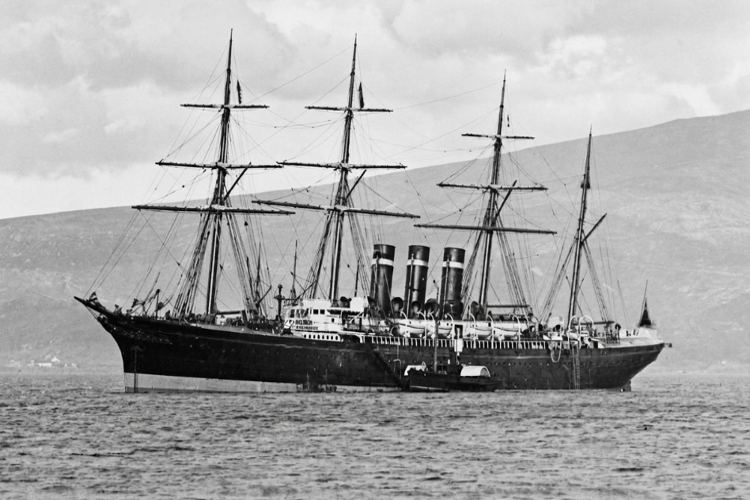
Photograph of the steamship City of Rome, 1882. (Source: Wikipedia) 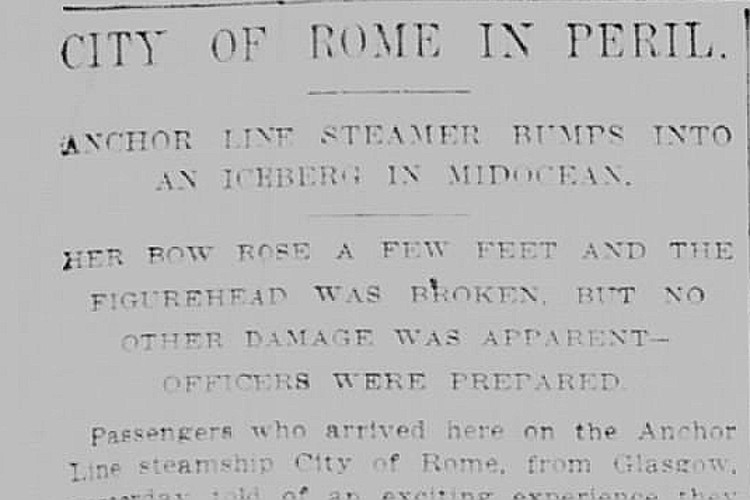
New York Tribune newspaper headline for a story on the SS City of Rome striking an iceberg, September 1889. (Source: newspapers.com) 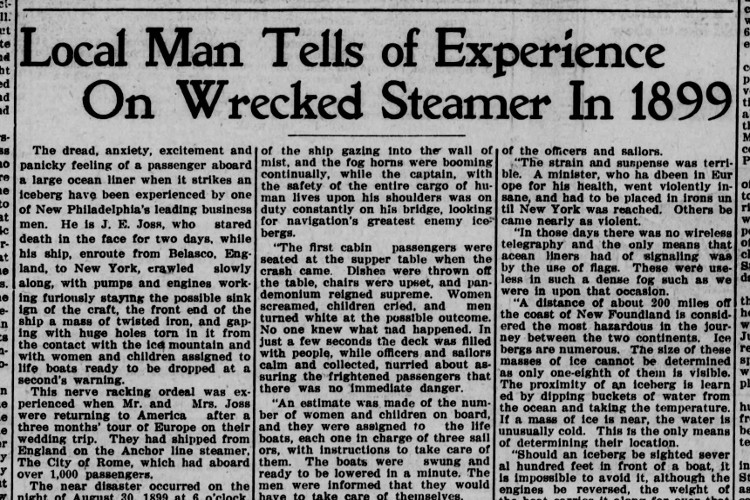
John E. Joss’ report of the SS City of Rome event reported on the day after the Titanic disaster, April 1912. (Source: newspapers.com)
As the ship began to list and seawater seeped through the bulkheads, Joss watched the crew desperately bolt the water-tight doors to keep the ocean at bay. The ship’s pumps worked furiously with a rhythmic throbbing that Joss said he would never forget. The Captain, after a personal inspection of the damage, returned to the passengers with a reassuring smile, insisting there was “not a bit of danger”. Despite his words, Joss recalled that no one slept that night; the ship remained brightly lit as it began a slow, agonizing two-day crawl toward New York.
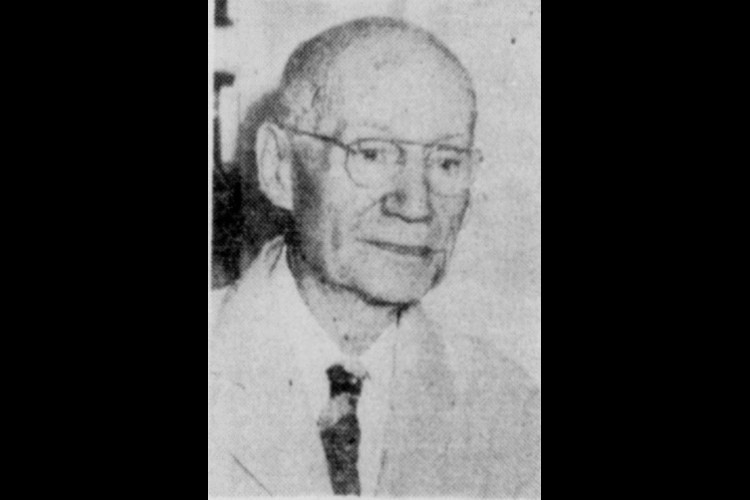
Reflecting on the tragedy of the Titanic in 1912, Joss noted that the City of Rome had been struck in almost the exact same location, around 100 miles off the coast of Newfoundland. He attributed his ship’s survival to its staunch iron bulkheads and the traditional seamanship of an era that relied on fog horns and temperature checks rather than wireless telegraphy. Joss lived to be 88, becoming the oldest practicing optometrist in Ohio before his death in 1961.
Enjoy the stories?

© Noel B. Poirier, 2026.

