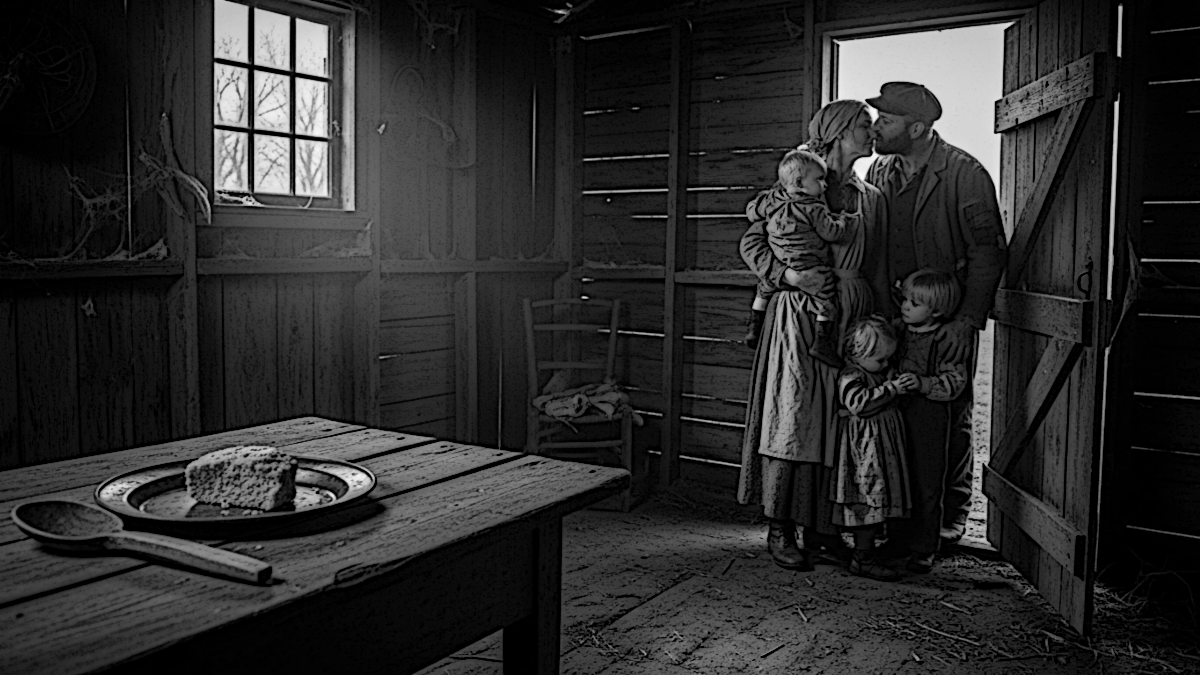
A Swiss immigrant’s American Dream ended with a blast of buckshot in 1885.
Arnold Abbhul (1848-1885) and his family arrived in the village of Barnhill shortly after their immigration from Switzerland in April 1885. Arnold sought a new life for his family in Ohio, only to find a labor conflict brewing when he arrived. Two months after his arrival, a bitter disagreement over tonnage rates gripped the Goshen Coal Mines, pitting union men against those who dared to work. Abbuhl, his family living in a shanty with no furniture and only enough food to last a single day, chose to work so that he could keep his family from starving.
On the evening of June 16, 1885, a three-man union committee, Scottish-born Robert Bankier (1850-1922), Ohio-born George Rogers (c. 1854-?), and a man named Watkins, visited Abbuhl with an ultimatum. They warned him that his life was in danger if he returned to the mines. Rogers, a miner with a son suffering from typhoid, later claimed that he and Bankier spent the rest of the night drinking and plotting. According to Rogers’ confession, Bankier grew increasingly volatile, vowing to “shoot the d-d Dutchman” for refusing to honor the strike.
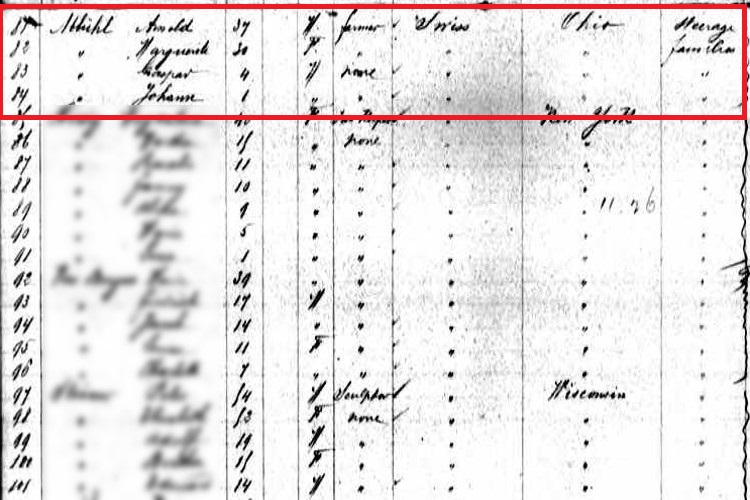
The Abbuhl family recorded on the passenger list for the ship St. Laurent, April 1885. (Source: familysearch.org) 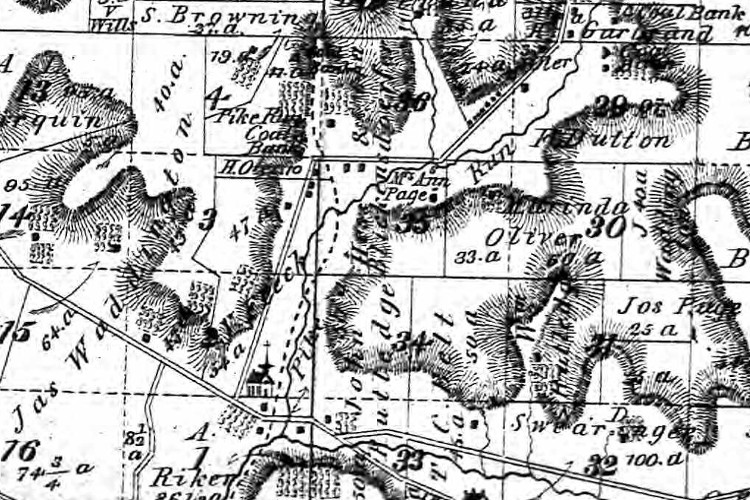
The Pike Run area of Tuscarawas County, Ohio near present-day Barnhill, 1875. (Source: ancestry.com) 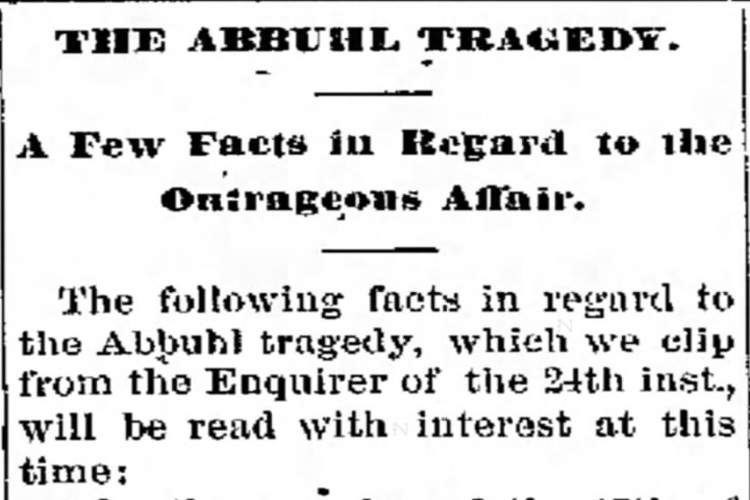
New Philadelphia, Ohio newspaper article on the murder of Arnold Abbuhl, November 1885. (Source: newspapers.com)
The following morning, June 17, 1885, Abbuhl kissed his children and reassured his terrified wife that no harm would come to him for simply trying to feed his family. Just five minutes after he stepped onto the path toward the mines, the silence was shattered. Hidden in a willow thicket, the assassins fired. Three large buckshot struck Abbuhl, one piercing his heart. He managed to stagger back to his gate and collapsed into his wife’s arms, dead within ten minutes.
The legal aftermath proved as volatile as the strike itself. Authorities indicted Bankier and Rogers for first-degree murder, but the alliance between the two men quickly crumbled. George Rogers flipped, pleading guilty to manslaughter in exchange for a sentence of one to twenty years in the penitentiary. He provided a detailed confession that led investigators to the murder weapon’s barrel, which he had buried under a hickory tree. Despite this testimony, a jury found Robert Bankier “not guilty” in December 1885, a verdict that left the community stunned.
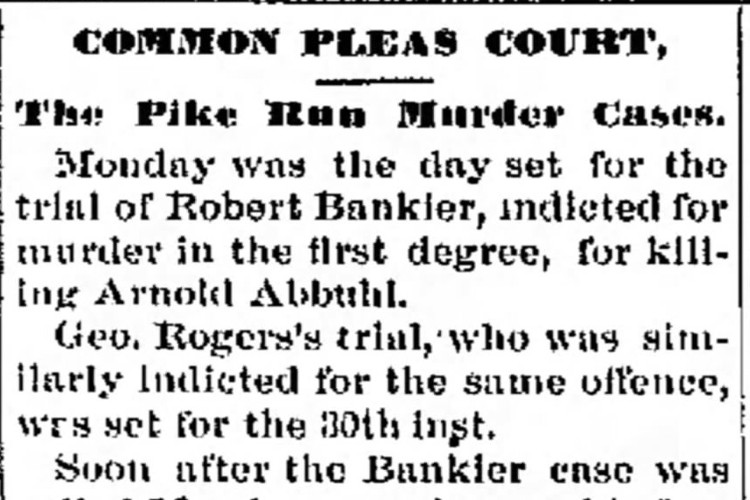
New Philadelphia, Ohio newspaper article on the murder of Arnold Abbuhl, November 1885. (Source: newspapers.com) 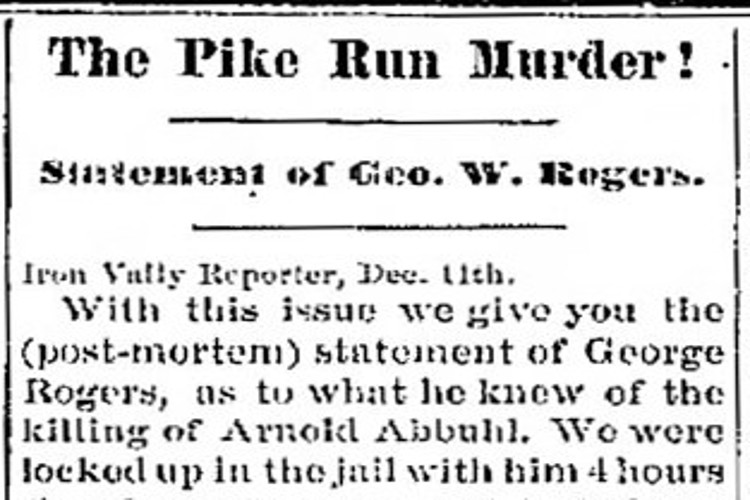
New Philadelphia, Ohio newspaper article on the murder of Arnold Abbuhl, November 1885. (Source: newspapers.com) 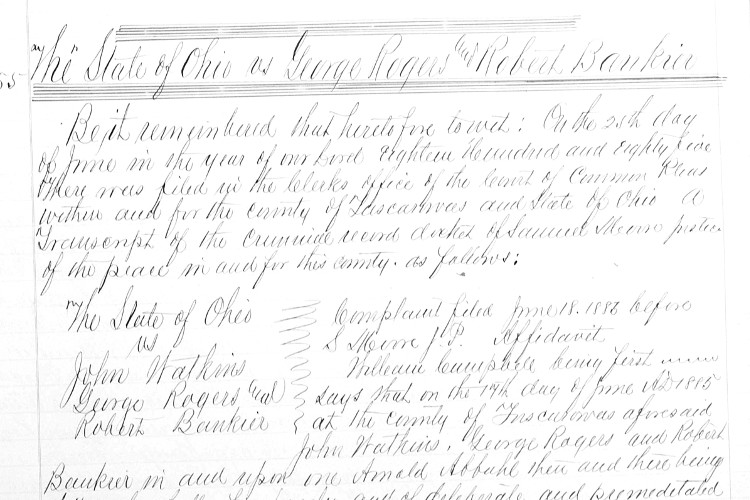
Detail from a page of the criminal court records relating to the murder of Arnold Abbuhl, November 1885. (Source: familysearch.org)
Life continued for Robert Bankier, who remained in the Ohio mining trade despite the shadow of the trial. He and his wife, Mary, expanded their family in Barnhill in the ensuing years and moved to Noble County, Ohio, by 1910 where he continued to work as a coal miner well into his sixties. He lived nearly four decades beyond the Pike Run tragedy, eventually dying of a cerebral hemorrhage on August 16, 1922.
Abbuhl’s widow, Margaret, died in 1893, only eight years after her husband’s murder. Their sons lived long lives, passing away in 1969 and 1956 respectively, but they grew up in the wake of a tragedy that defined the brutal era of labor strikes and violence. While Rogers vanished into the prison system and Bankier rebuilt his life in a new county. The “inoffensive Swiss laborer” Abbhul, in search of a better life in America for his family, remains a symbol of the high cost of economic desperation and labor violence.
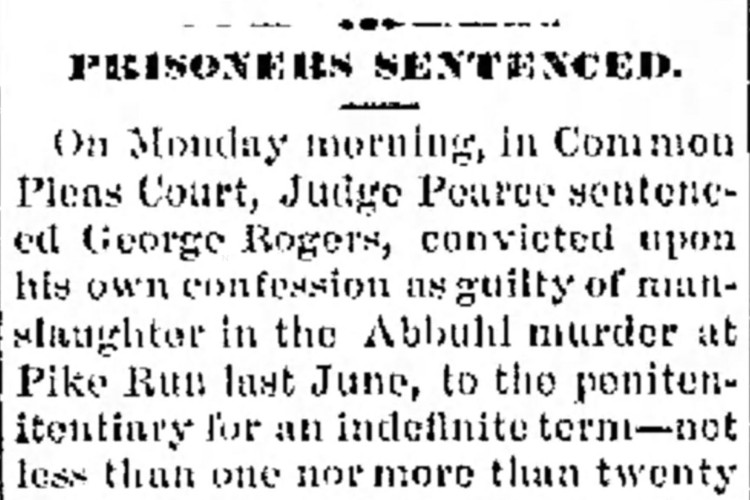
New Philadelphia, Ohio newspaper article on the sentencing of George Rogers, December 1885. (Source: newspapers.com) 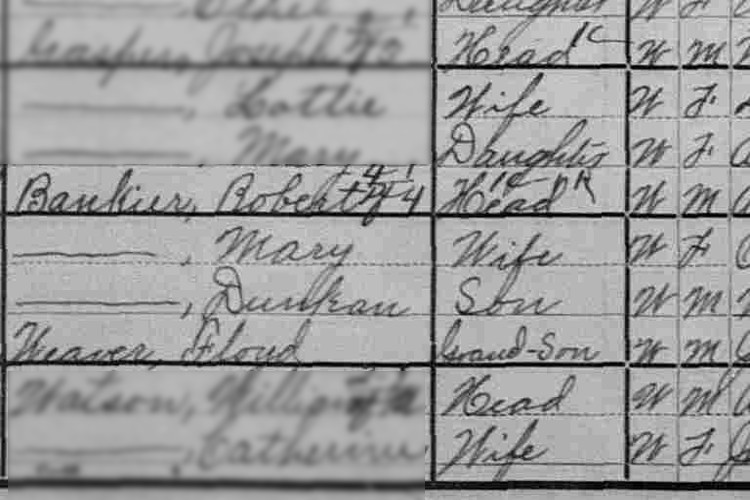
Robert Bankier and family recorded on the 1900 census for Goshen Township, Tuscarawas County, Ohio. (Source: familysearch.org) 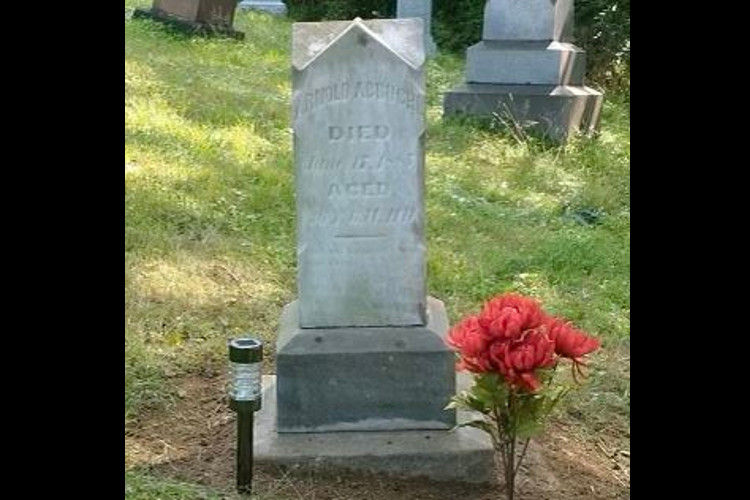
Arnold Abbuhl’s headstone in Roxford Church Cemetery, Barnhill, Ohio, 2023. (Source: findagrave.com)
Enjoy the stories?

© Noel B. Poirier, 2026.
 Tuscarawas County Stories