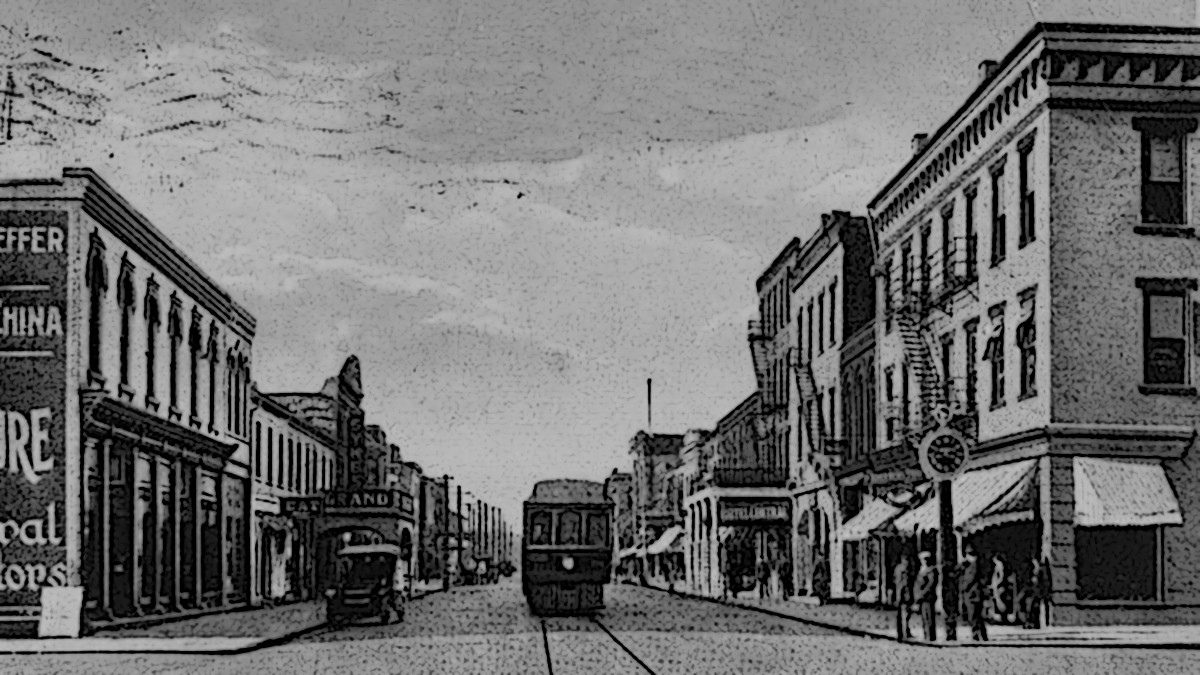
An unsolved 1940 slaying left Tuscarawas County questioning if a “total stranger” or hidden secrets killed Harry “Hetz” Snyder.
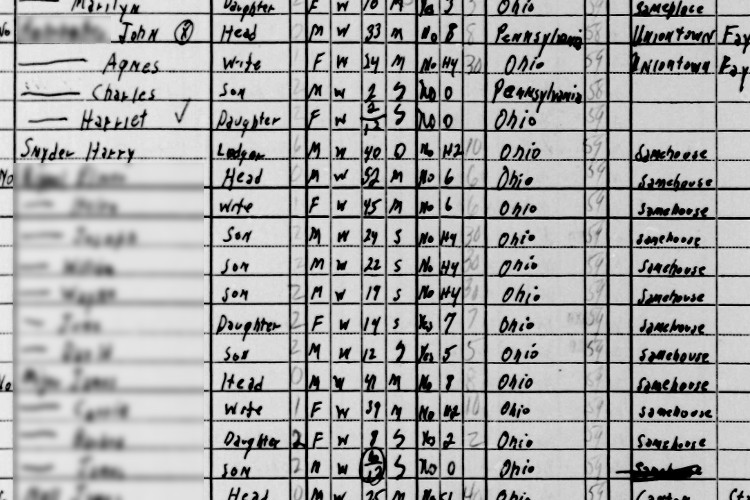
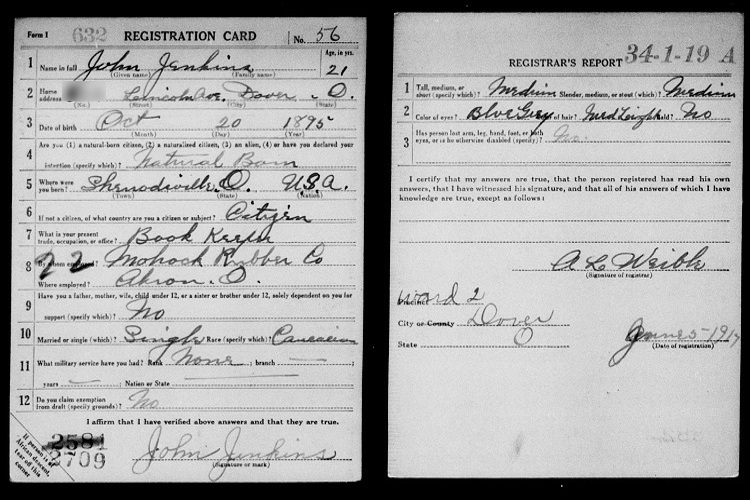
The town of Dover, Ohio, was shaken in early May of 1940 by a fatal confrontation that ended the life of well-known Harry “Hetz” Snyder (1901-1940), a 39-year-old divorced Wooster Avenue gas station owner. Snyder spent the evening of May 10, 1940 in the Dover Hotel’s “Fiesta Room” with his girlfriend Helen Wolf (1916-?) and her friend, Helen Bucher (1904-?). Local garage mechanic Newton Simmons (1906-1952) was also present at their table. The evening took a dark turn when a dispute erupted between Snyder and local restauranteur John L. Jenkins (1895-1967), a former high school athlete who served in the army during World War I
The argument, allegedly concerning the two women, prompted Snyder and Jenkins to leave the barroom around 11:00 p.m. to “settle” the matter on Cherry Street, the brick-covered alleyway behind the hotel. Jenkins later admitted that the two men engaged in a “drunken brawl,” though accounts of who also entered the alley remained contradictory. While a witness testified that he saw three men on the scene as he passed by in an automobile, he asserted that he did not witness any physical blows being struck.
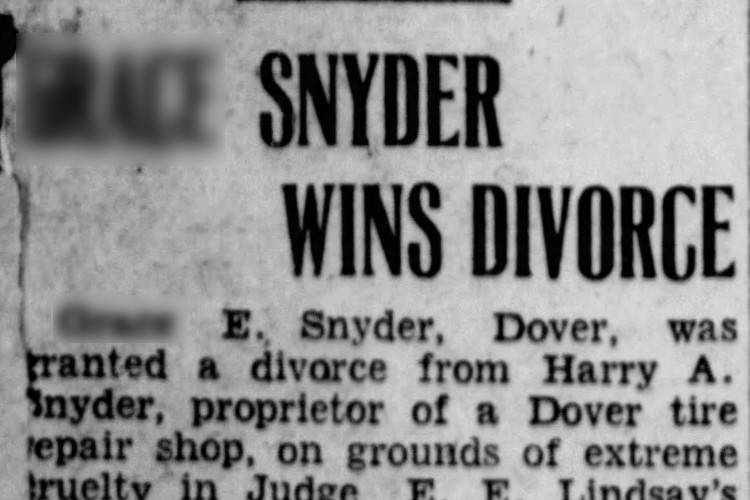
The violence of the assault on Snyder was revealed when an autopsy conducted by Coroner H. E. Reed, showed that Snyder was struck with enough force to break his jaw in two places. The blow caused Snyder to fall backward and strike his head on the hard brick alleyway with enough force that that his spinal column was forced into the base of his brain. Snyder died almost immediately. Jenkins consistently maintained that he did not deliver the fatal strike; instead, he claimed a “total stranger” had suddenly intervened in the fight, struck Snyder, and then fled down a side street.
Jenkins left Snyder’s unconscious body in the alley where it was discovered, lying in a pool of blood, around 1:00 am the next morning by two men walking down the alley. Following the discovery, Prosecutor Ralph Finley launched an investigation that led to Jenkins being arrested and charged with manslaughter, while Newt Simmons was held under bond as a material witness. To secure Jenkins’ release from jail while the case was pursued, his father provided a $2,500 bond.
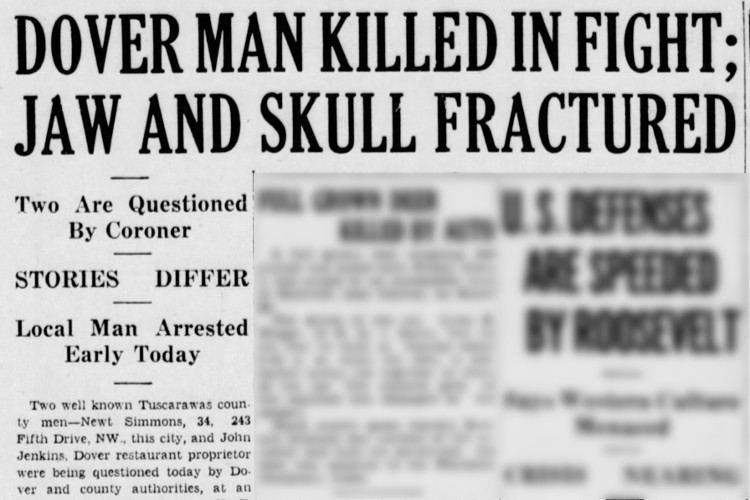
New Philadelphia, Ohio newspaper headline on the killing of Harry Snyder, May 1940. (Source: newspapers.com) 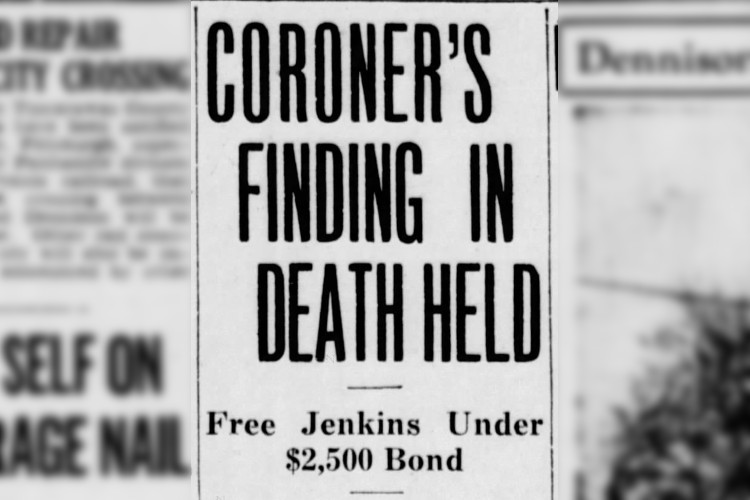
New Philadelphia, Ohio newspaper headline on the investigation into the killing of Harry Snyder, May 1940. (Source: newspapers.com) 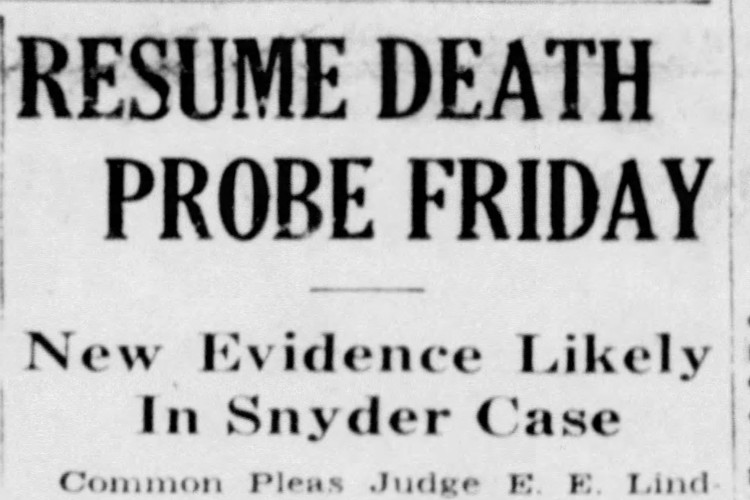
New Philadelphia, Ohio newspaper headline on the investigation into the killing of Harry Snyder, May 1940. (Source: newspapers.com) 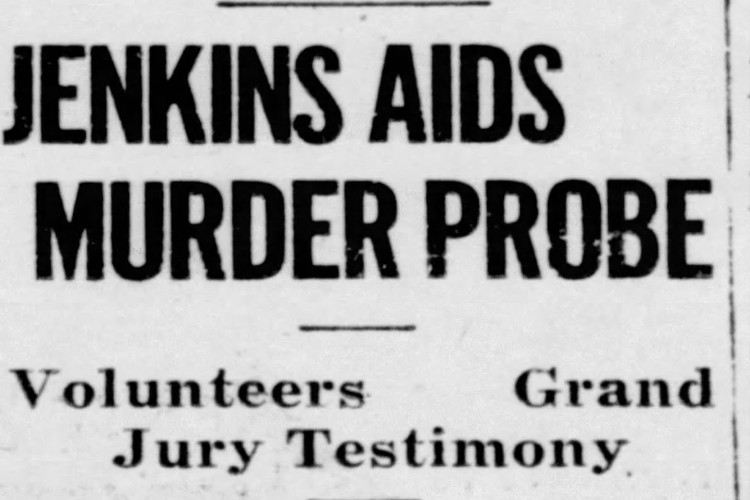
New Philadelphia, Ohio newspaper headline on the investigation into the killing of Harry Snyder, May 1940. (Source: newspapers.com)
In an attempt to resolve the widely diverging accounts of the night, authorities utilized lie detector tests on Jenkins, Simmons, Wolf, and the drive-by witness at the Dover city hall. Prosecutor Finley eventually disclosed that the “scientific apparatus” indicated that all four individuals were evidently concealing pertinent facts regarding the slaying. Despite these findings the witnesses, including hotel staff such as bartenders and waitresses, stuck to their versions of the event during the subsequent legal proceedings
During the subsequent grand jury investigation, Jenkins volunteered to testify and held to his story of the intervening stranger to the jurors. Ultimately, the grand jury failed to return an indictment against Jenkins, as the conflicting stories provided by the principals left the jurors in a state of “doubt”. Prosecutor Finley expressed his belief that information was being withheld by those involved and considered offering a reward for new clues, but the manslaughter charge was eventually ignored, leaving the death of Dover gas station proprietor Harry Snyder officially unsolved.
Harry “Hetz” Snyder was buried in Maple Grove Cemetery in Dover. John L. Jenkins lived until 1967 and, after a period of time in the Veterans Administration Hospital in Dayton, Ohio, died there in the summer of 1967. He was buried in the Dayton National Cemetery.
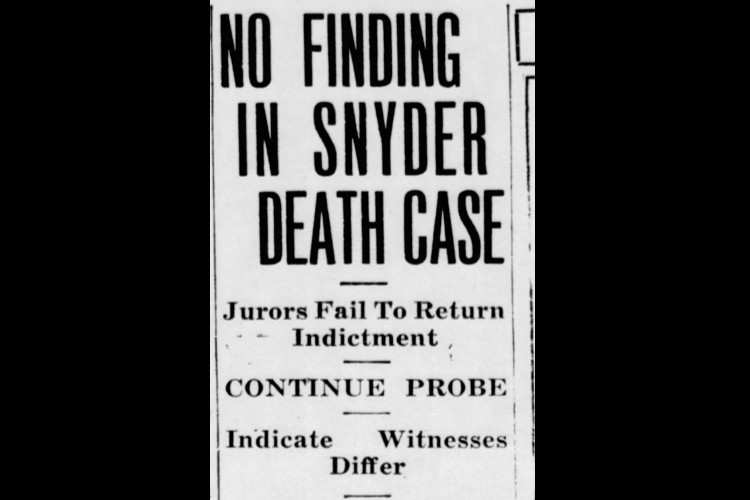
New Philadelphia, Ohio newspaper headline on the decision of the grand jury investigating the killing of Harry Snyder, May 1940. (Source: newspapers.com) 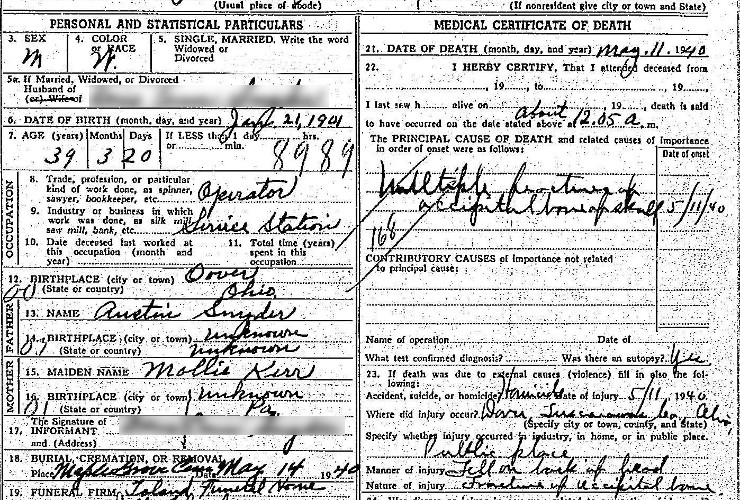
Detail from Harry Snyder’s death certificate, May 1940. (Source: familysearch.org) 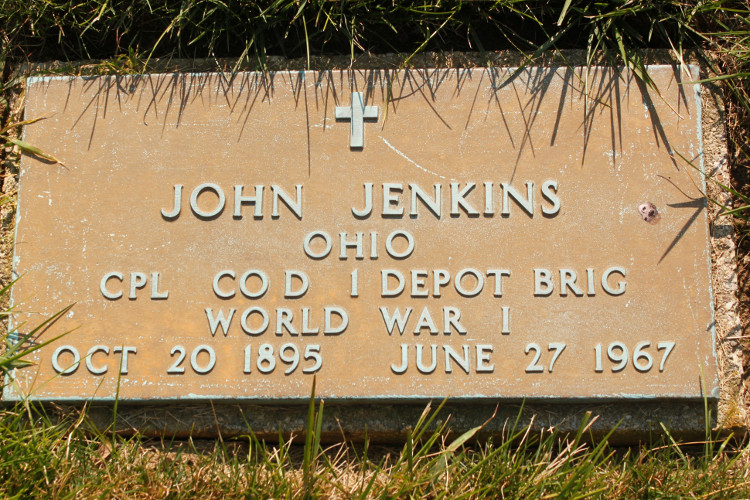
Headstone of John L. Jenkins in the Dayton National Cemetery, 2018. (Source: findagrave.com)
Enjoy my stories?
© Noel B. Poirier, 2025.
 Tuscarawas County Stories