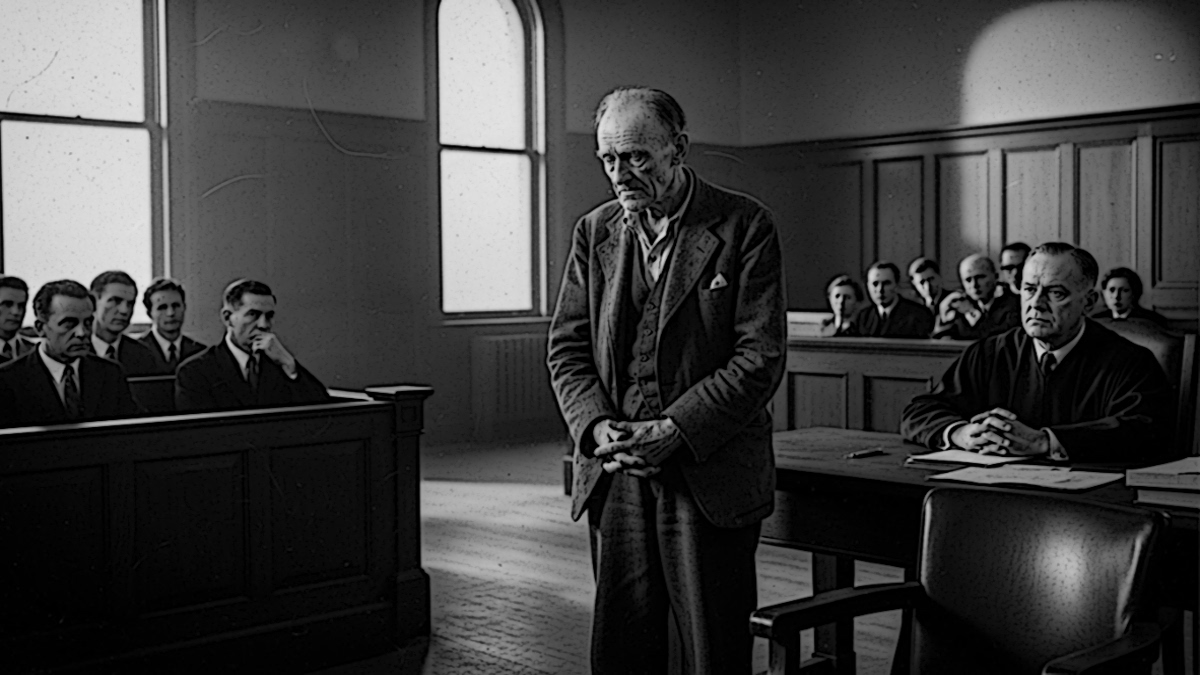
The trial of Andrew Covic was one of the most talked about trials of the era, garnering attention from the entire county.
Content warning: The following story contains references to domestic violence. If you are experiencing domestic abuse or violence and need help, please visit the National Domestic Violence Hotline.
The trial of Andrew Henry Covic did not begin until December 1949 but, when it did, it drew widespread attention in Tuscarawas County as one of the county’s most tragic and sensational domestic murder cases. Covic stood accused of killing his wife, Mary, on July 18, 1949 over her efforts to divorce him. For nearly a week, jurors heard testimony from family members, neighbors, and eyewitnesses, including Covic’s daughter Katherine and family friend Paul Harbold, both of whom had survived the bloody confrontation inside Mary Covic’s West Canal Street home. The prosecution, led by County Prosecutor Vernon Lee (1910-1985), portrayed Covic as a jealous, brooding husband whose anger at his wife erupted into murder.
Defense attorneys meanwhile built their case around Covic’s long history of hard labor, poor health, and emotional instability, and suggested that drink and desperation had driven him to an unplanned act rather than a calculated killing. They called numerous witnesses to describe the years of tension that had marked the Covic marriage, and hoped to convince the jury to consider manslaughter instead of murder. During cross-examination, the defense attempted to show that Covic had been provoked by his wife and her pursuit of divorce, but the testimony of eyewitnesses painted a clear picture of deliberate violence rather than sudden impulse.
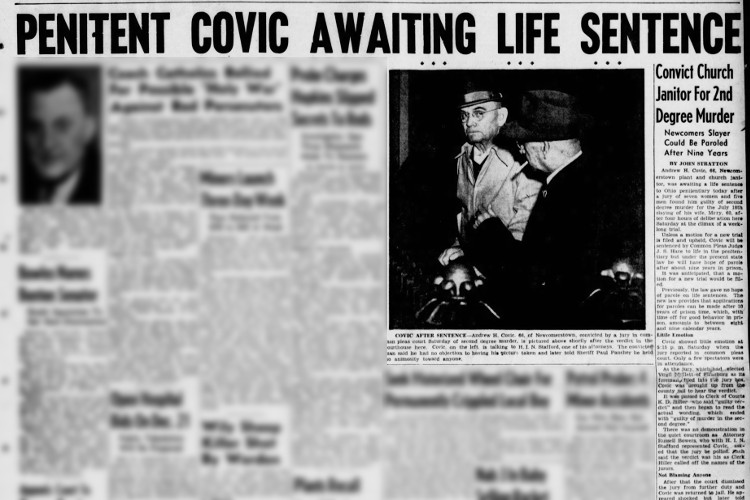
New Philadelphia, Ohio newspaper headline and story on the trial of Andrew Covic, December 1949. (Source: newspapers.com) 
New Philadelphia, Ohio newspaper headline and story on the trial of Andrew Covic, December 1949. (Source: newspapers.com) 
New Philadelphia, Ohio newspaper headline and story on the trial of Andrew Covic, December 1949. (Source: newspapers.com)
The prosecution countered with its own series of witnesses who detailed the events of the fatal night. They reminded jurors that Covic walked through town earlier that day, gathering signatures to defend himself against Mary’s accusations of drunkenness, while stopping at taverns for drinks along the way. According to the prosecutors. by the time he arrived at her home, he was armed, intoxicated, and intent on confrontation. Prosecutor Lee demanded a first-degree murder conviction and the death penalty, insisting that Covic’s actions showed intent, while the defense pleaded for acquittal or at least a lesser charge.
After closing arguments and Judge J.S. Hare’s detailed instructions, the jury retired to deliberate at midday on Saturday, December 3. The twelve jurors—seven women and five men—requested additional clarification on the difference between murder and manslaughter but were told to decide based on the charges already presented. After just over four hours, they returned their verdict: guilty of murder in the second degree. The courtroom fell silent as the Clerk of Courts read the decision aloud. Covic, standing motionless, showed little emotion as the verdict sealed was read.
New Philadelphia, Ohio newspaper headline and story on the trial of Andrew Covic, December 1949. (Source: newspapers.com) 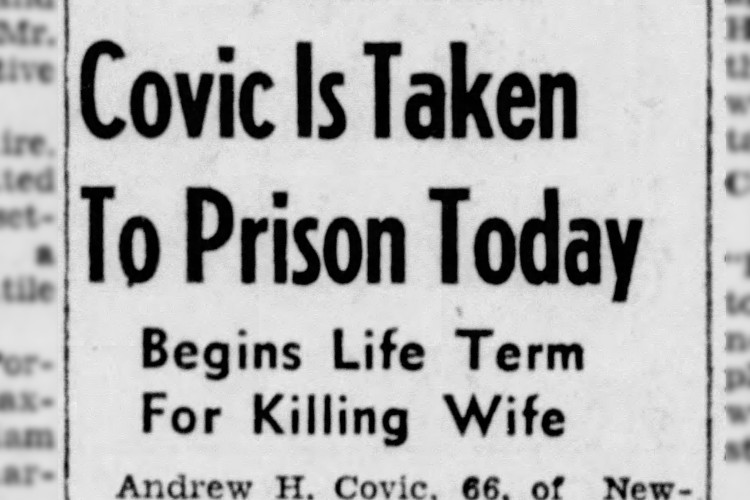
New Philadelphia, Ohio newspaper headline on the Andrew Covic’s transfer to prison, December 1949. (Source: newspapers.com) 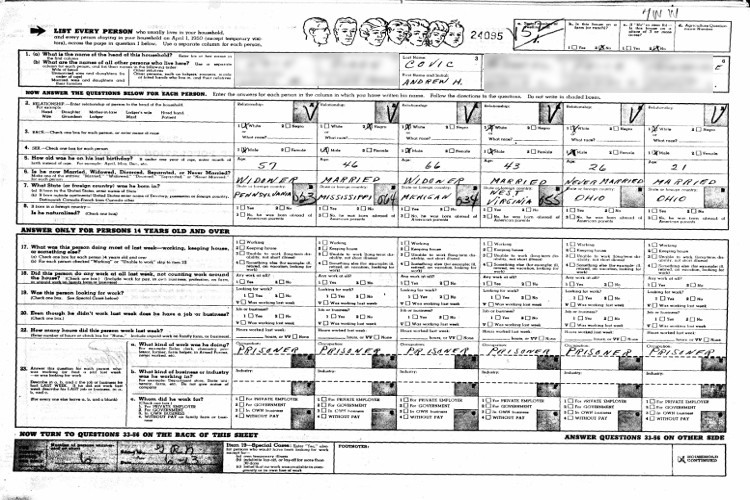
Andrew Covic recorded on the 1950 census as a prisoner at the Ohio State Penitentiary. (Source: familysearch.org)
Under Ohio law at the time, a life sentence allowed for parole consideration after roughly nine years with good behavior. Judge Hare scheduled Covic’s formal sentencing for life imprisonment in the Ohio Penitentiary, though his attorneys immediately signaled plans to file a motion for a new trial. As he was led from the courtroom, Covic reportedly told the Sherriff, “I’m not blaming anyone. I’ll just have to take it.” Covic was later sentenced to a life in prison and he was taken to the Ohio State Penitentiary at the end of December 1949 to begin serving his sentence.
Andrew Covic was 66 years old when the 1950 census recorded him as a prisoner at the Ohio State Penitentiary. He was paroled from the penitentiary in January 1960 at the age of 75 and returned to Newcomerstown where he lived until his death in February 1966. His obituary reported his many children and grandchildren, but simply mentioned the death of Mary Covic in 1949 without elaboration on Andrew Covic’s role in causing it. Andrew Covic was buried in West Lawn Cemetery in Coshocton County, Ohio. Mary, on the other hand, lies in Union Cemetery in Port Washington, Ohio. In the end, Andrew and Mary Covic’s troubled marriage ended in tragedy and two graves in separate towns.

New Philadelphia, Ohio newspaper headline on Andrew Covic’s parole, January 1960. (Source: newspapers.com) 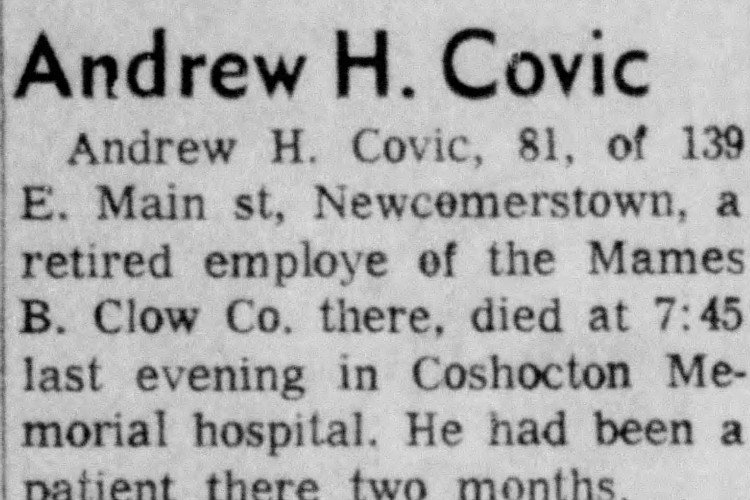
New Philadelphia, Ohio newspaper obituary for Andrew Covic, February 1966. (Source: newspapers.com) 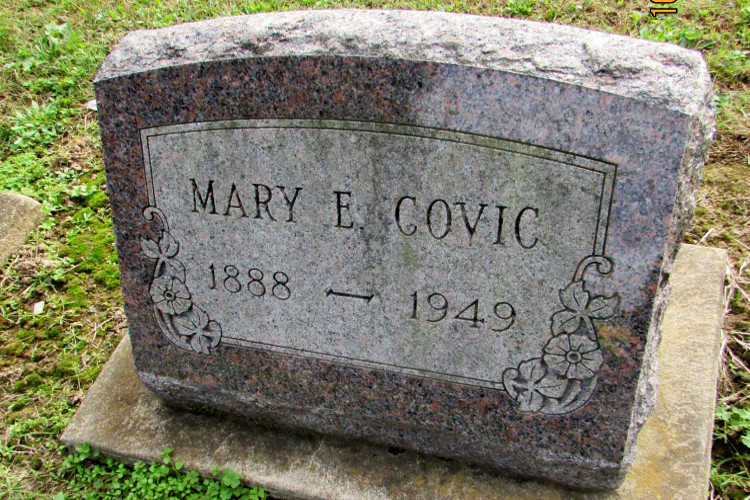
Mary Covic’s headstone in Union Cemetery, Port Washington, Ohio, 2016. (Source: findagrave.com)
Enjoy my stories?
© Noel B. Poirier, 2025.
 Tuscarawas County Stories