
A quiet laborer in Dover, Ohio, Frank Burns became the unintended victim of a Christmas Eve shooting in 1943.
Note: The Clakley surname is spelled a number of different ways in the various source material. I have chosen the spelling that appeared in the official criminal court records.
Frank C. Burns was born in Milton, Florida in April 1910. He was son of Richard Burns (1874-1941) and Lula Levins Burns (1875-1978). Richard moved his family, that included four children, to Dover, Ohio in 1924 where he found work at the Reeves Steel and Manufacturing Company. The Burns family lived in a modest home on the 800 block of Emerson Avenue in Dover. Frank only attended school until the fourth grade and, by 1930, was already working alongside his father as a scrap metal bundler at the Reeves facility.
Frank married and he and his wife moved into a house on North 5th Street in New Philadelphia, Ohio where they lived when the 1940 census was taken. He continued to work at the Reeves plant alongside his father until his father’s death in March 1941. There is no mention of Frank Burns in easily available newspaper accounts of the period, indicating that he obviously stayed out of trouble. Unfortunately, on Christmas Eve 1943, trouble found Frank.
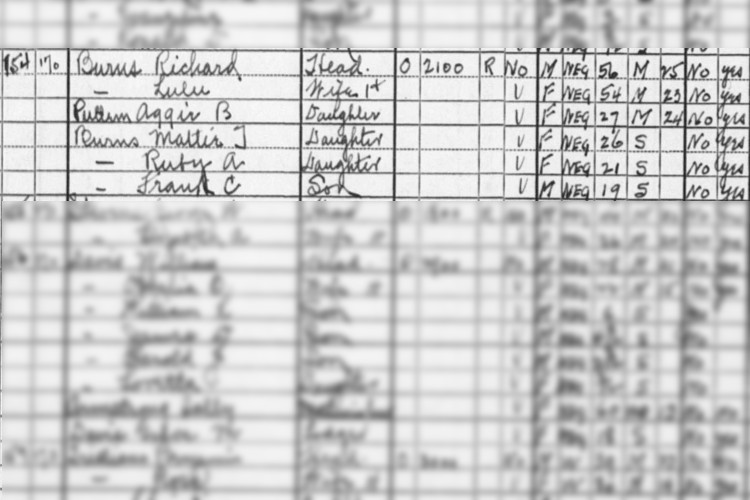
The Burns family recorded on the 1930 census for Dover, Ohio. (Source: familysearch.org) 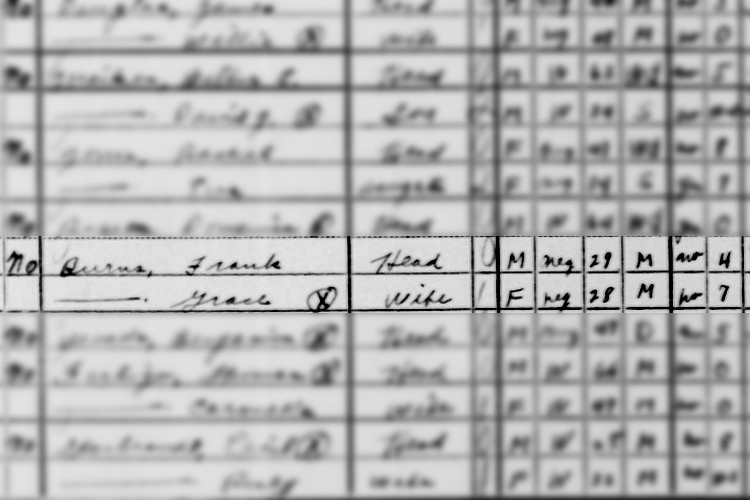
Frank Burns and his wife Grace recorded on the 1940 census for New Philadelphia, Ohio. (Source: familysearch.org) 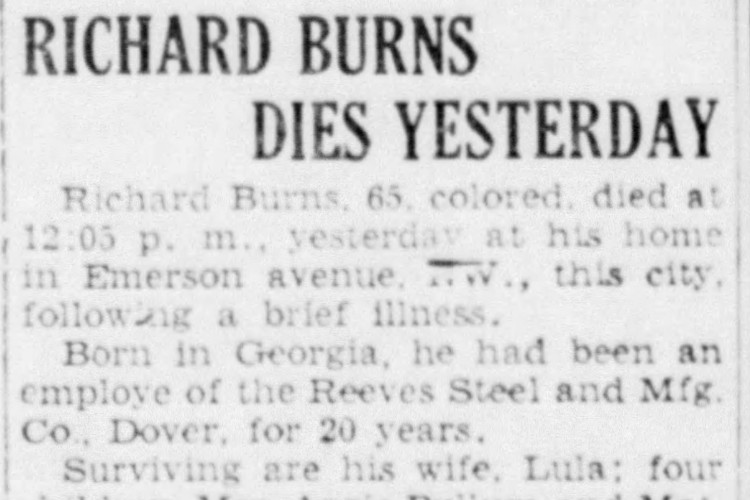
Richard Burns’ death recorded in the New Philadelphia, Ohio newspaper, March 1941. (Source: newspaperarchive.com) 
Map of Dover, 1944. (Source: pastmaps.com)
That night a deadly confrontation unfolded at the Dover, Ohio home of 65-year-old Hunter Alvin Clakley (1878-1958), a peg-legged man with a long criminal history. The incident began when Leonard Rudd (1901-?) and Frank Burns arrived at Clakley’s residence on Depot Street. An argument broke out between Clakley and Rudd that escalated into physical violence when Rudd allegedly choked Clakley against a wall. In response, Clakley drew a .38 caliber revolver from his pocket and opened fire. Rudd was struck twice—once in the jaw and once in the chest—while Burns, reportedly attempting to break up the altercation, was shot in the abdomen.
Following the shooting, both injured men were taken to Union Hospital by bystanders. Burns succumbed to his injuries on Christmas Day, while Rudd survived his wounds. Police found Clakley still at home, fully dressed with the gun in his pocket, and he confessed to the shooting. He initially claimed to have fired only two shots, but later admitted to three. Witnesses in the home confirmed hearing the shots, and police recovered two bullets from the house and a third from Burns’ body. Clakley expressed confusion over how Burns was hit, stating that Burns was a friend and not an intended target.
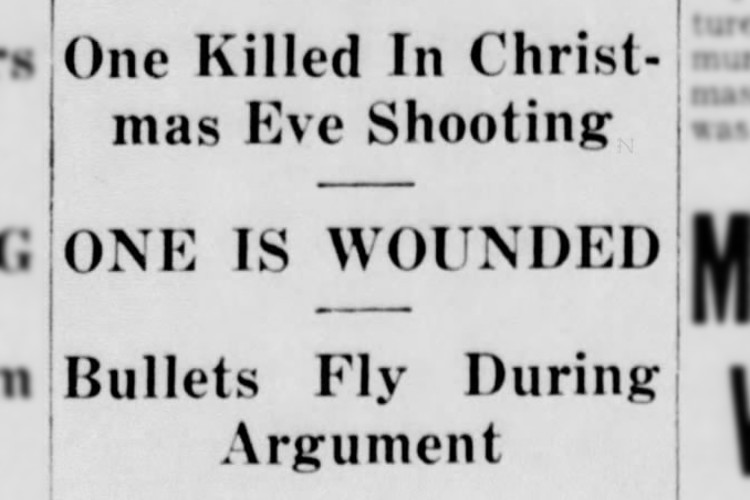
Newspaper headline reporting Frank Burns’ murder on Christmas Eve, December 1943. (Source: newspapers.com) 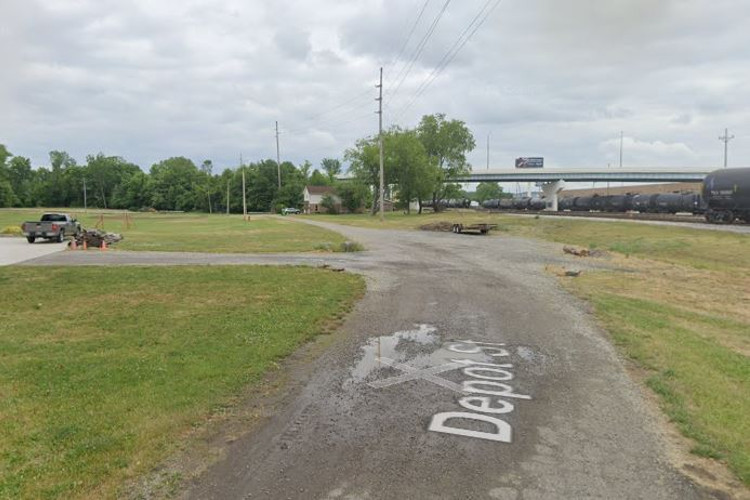
Modern view of Depot Street, Dover, Ohio, 2023. (Source: google.com) 
Newspaper headline reporting Hunter Clakley’s second grand jury, February 1944. (Source: newspapers.com) 
Newspaper headline reporting verdict in Hunter Clakley’s murder trial, May 1944. (Source: newspapers.com)
Clakley was arrested but a grand jury in January 1944 refused to indict him for any crime. The investigation continued and Clakley was held in custody until a second grand jury, in April 1944, indicted him for second degree murder and shooting with intent to kill. Clakley’s trial lasted two days in late May 1944 and ended with a guilty verdict on both counts. Clakley was sentenced to life in prison at the Ohio State Penitentiary and he arrived at the penitentiary on June 9, 1944 to begin serving his sentence. Clakley was 66-years-old.
Hunter Clakley was made eligible for parole in May 1954, ten years after the murder of Frank Burns, and was released. When he was released from the penitentiary that year he was 76-years-old. Clakley moved to a community just outside Detroit, Michigan where he died in February 1958 at the age of 79. Amazingly, Frank Burns’ mother Lula lived to be 103-years-old and died in the family’s Emerson Avenue home in July 1978. Frank Burns’ life, shaped by quiet perseverance and hard work, ended not through fault of his own but in a sudden act of violence as he attempted to aid a friend.
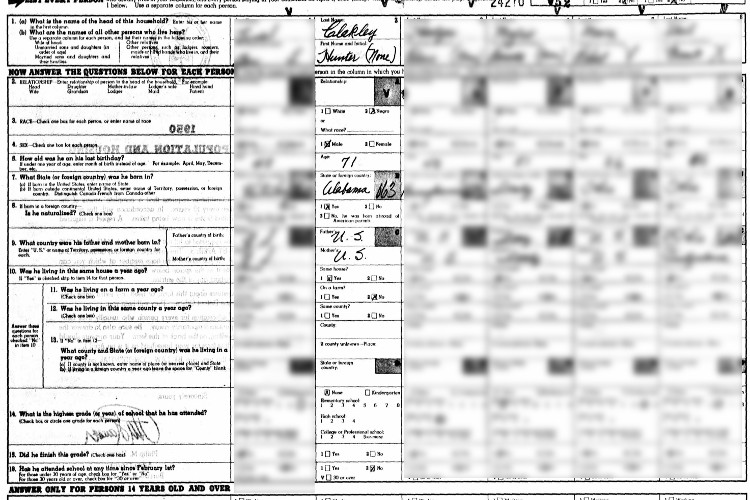
Hunter Clakley recorded on the 1950 census as a prisoner at the Ohio State Penitentiary. (Source: familysearch.org) 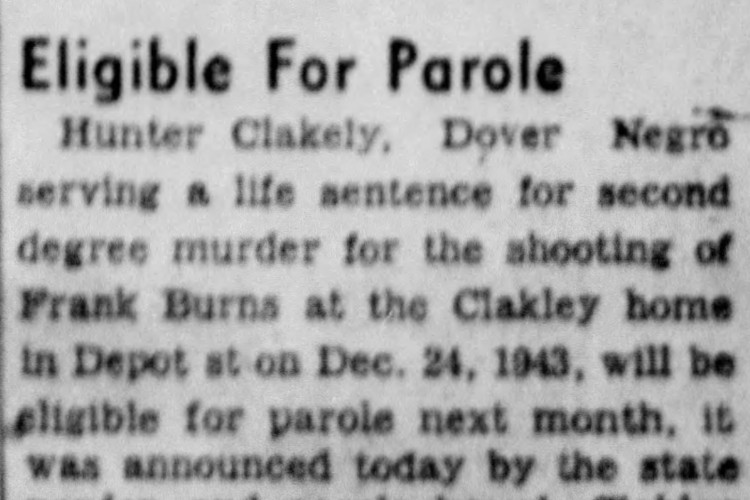
Newspaper article reporting Hunter Clakley’s eligibility for parole, May 1954. (Source: newspapers.com) 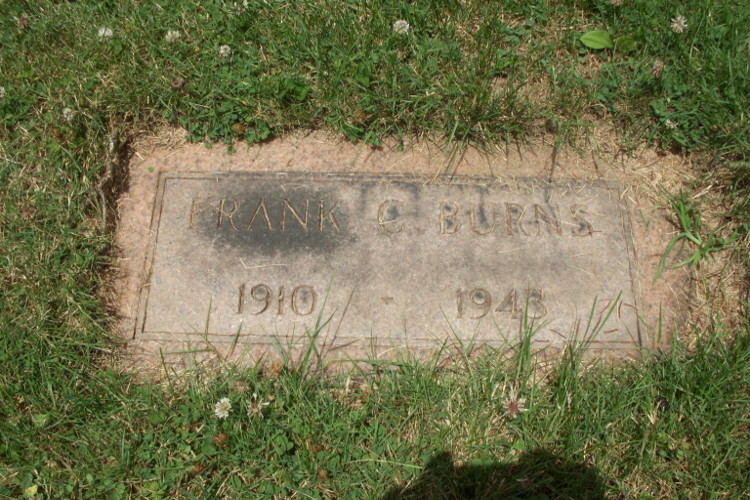
Frank Burns’ gravestone in Maple Grove Cemetery, Dover, Ohio, 2016. (Source: findagrave.com)
Enjoy my stories?
© Noel B. Poirier, 2024.
 Tuscarawas County Stories