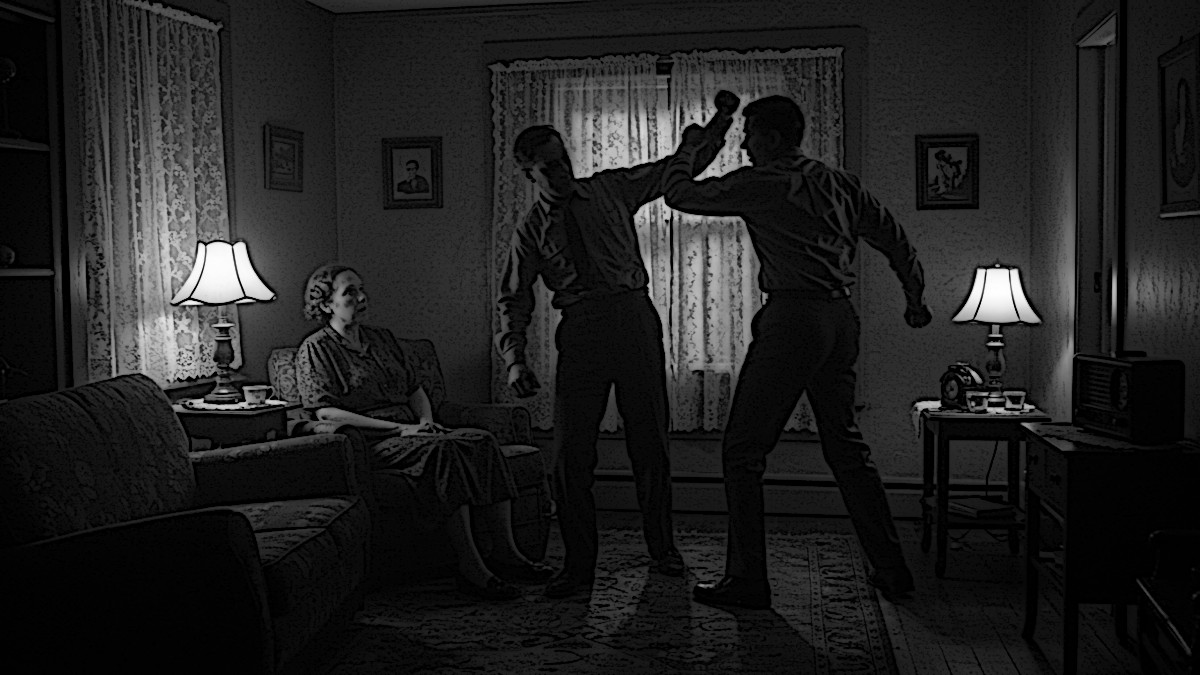
A Dennison man’s life ends in mystery after a fatal punch. Was it murder or a tragic twist of fate?
Clarence Garabrandt (1902-1935) was born in the village of Barnhill, nestled in Tuscarawas County, Ohio. The son of Ezra Garabrandt (1868-1923) and Lydia Smitely (1871-1951), Clarence grew up in a family familiar with hard labor. By the time he was eight, the family lived in Goshen Township, where his father and an older brother worked in the nearby coal mines. The family moved to Union Township by 1920 and Ezra was out of work when the census taker called. Lydia however, was recorded as employed in a clay works factory, and one of the family’s older daughters also worked to help support the household.
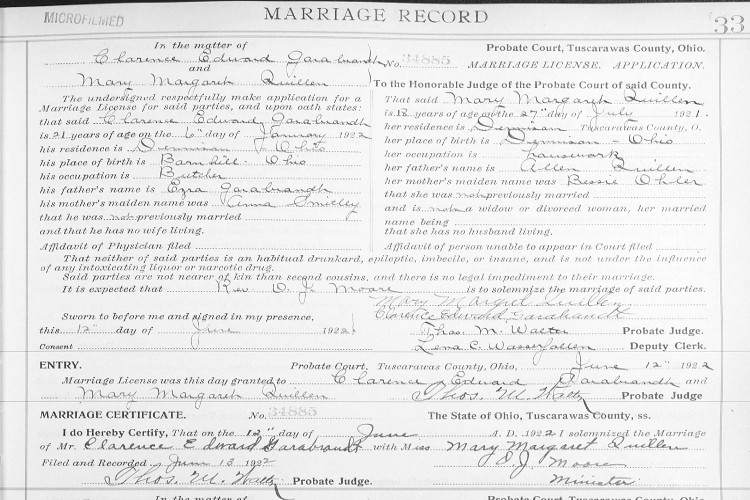
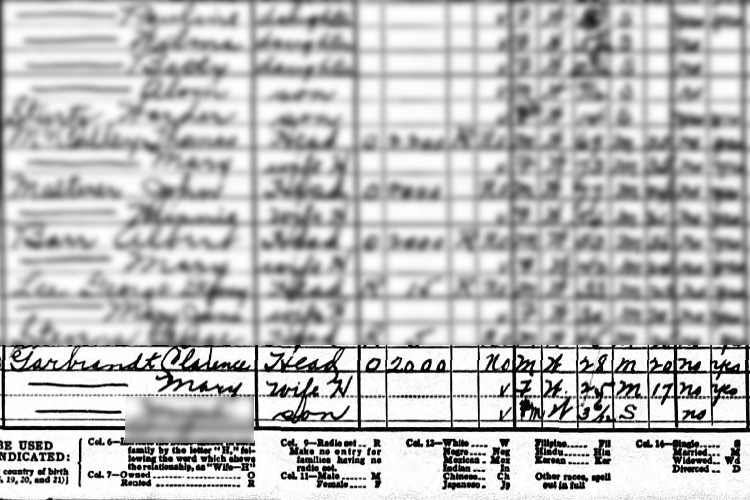
Clarence married Mary Margaret Quillen (1904-2004), a Dennison native, in June 1922. At the time they married Clarence worked as a butcher in Dennison where the couple decided to build a life together. Clarence transitioned to a laborer job at a sewer pipe plant by the 1930s and owned a home in the Shadyside neighborhood. Living with him were Mary, their young son, Clarence’s mother Lydia, and a brother. Despite the economic strains of the the Depression, Clarence maintained steady employment and later took work as a truck driver.

James “Jack” Stanley (1898-?) was a World War One veteran who had been drawn to the Twin Cities area when he found work with the Works Progress Administration on the construction of the Tappan Lake and Dam project. Information on Jack’s life before his arrival in Tuscarawas County is difficult to ascertain, though its possible he may be James W. Stanley (1898-1973) who was born in West Virginia and died in Dayton, Ohio. Regardless, by the time he came to know Clarence Garabrandt, Jack was living on Hanna Street in Dennsion with his wife.
Tragedy struck on the evening of November 9, 1935. when Clarence visited the Stanley’s home on Hanna Street. According to newspaper accounts of what transpired, Clarence allegedly became verbally abusive toward Stanley’s wife, which prompted Stanley to punch Clarence twice in the head, rendering him unconscious. Clarence did not regain consciousness and, after two days at home, was admitted to Twin City Hospital. Clarence died on November 22, 1935 at 5:00 a.m. The official cause of death was listed as cardiac thrombosis – a fatal blood clot in his brain. Stanley was charged with first-degree murder, but questions soon arose over what had truly caused Clarence’s death.
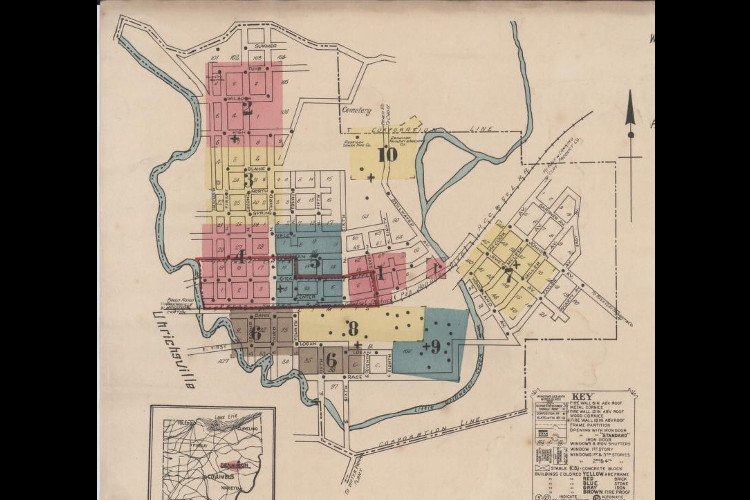
Dennison, Ohio as it appears on the 1921 Sanborn Fire Insurance Map. (Source: loc.gov) 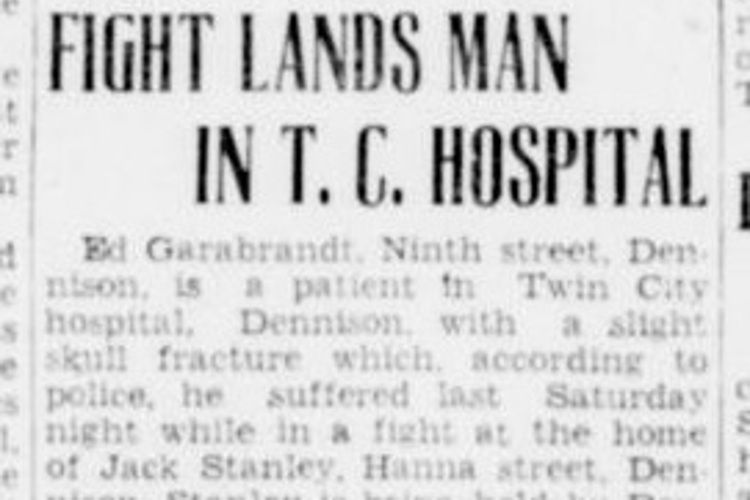
New Philadelphia, Ohio newspaper article about the fight between Clarence Garabrandt and James Stanley, November 1935. (Source: newspaperarchive.com) 
New Philadelphia, Ohio newspaper article about Clarence Garabrandt death and the charges against James Stanley, November 1935. (Source: newspaperarchive.com) 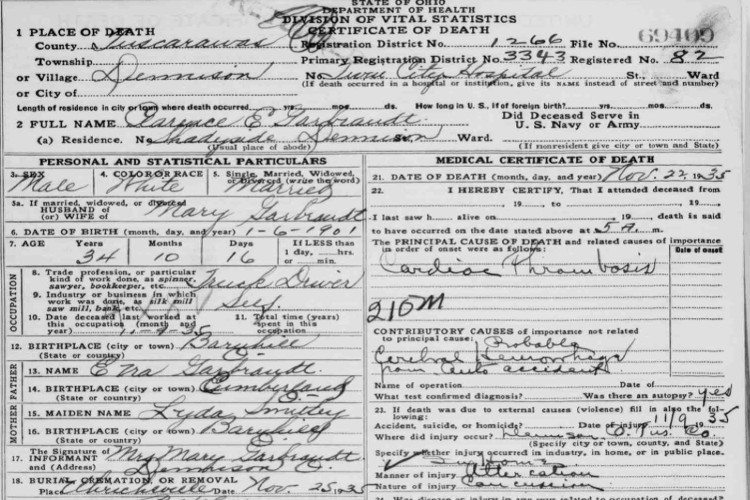
Clarence Garabrandt’s death certificate, November 1935. (Source: familysearch.org)
Two medical doctors conducted the autopsy on Clarence Garabrandt and one of them suggested that the fatal blood clot may have been linked to a traffic accident Clarence was involved in the months prior to the altercation. The other doctor maintained that, regardless what caused the clot, the trauma from the blows to the head delivered by Stanley was the decisive cause of his death. This difference of opinion proved crucial. The September 1935 grand jury was recalled at the end of November to hear all the evidence from the case and determine if Stanley should be indicted for Clarence’s death.
The grand jury, on November 29, 1935, declined to indict Stanley. After reviewing the evidence and hearing from witnesses who stated that Stanley had acted in self-defense, they cited insufficient evidence to establish a clear link between Clarence’s fatal injury and the confrontation in Stanley’s home. Clarence Garabrandt’s death closed not with a trial, a conviction, or punishment, but with ambiguity. The Garabrandt family was left to grieve and ponder the uncertainty about where responsibility, if there was any, ultimately lay in the death of Clarence Garabrandt. Less than a year after the event, James Stanley and his family left Tuscarawas County for good.
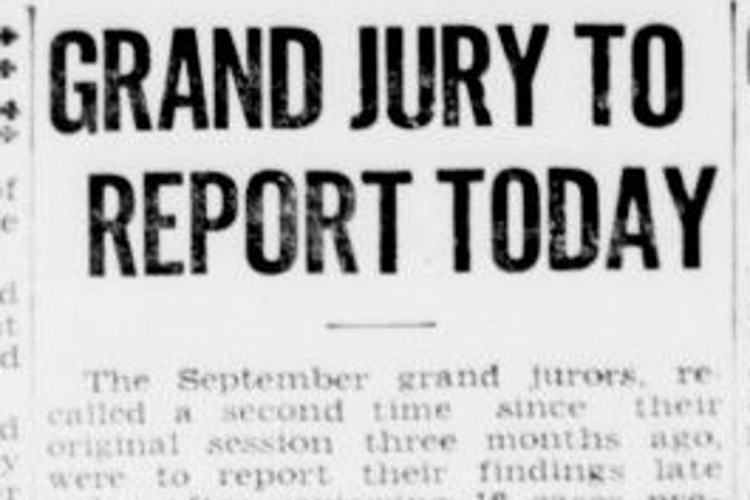
New Philadelphia, Ohio newspaper article on the convening of the grand jury in the Garabrandt case, November 1935. (Source: newspaperarchive.com) 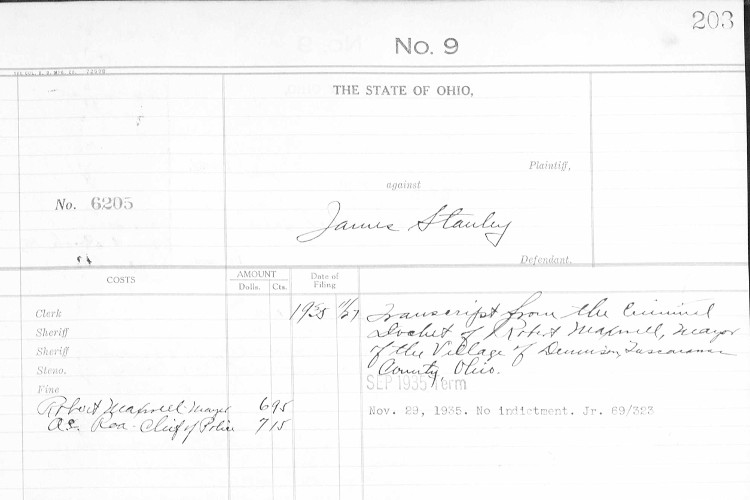
James Stanley’s Tuscarawas County Criminal Court Record, November 1935. (Source: familysearch.org) 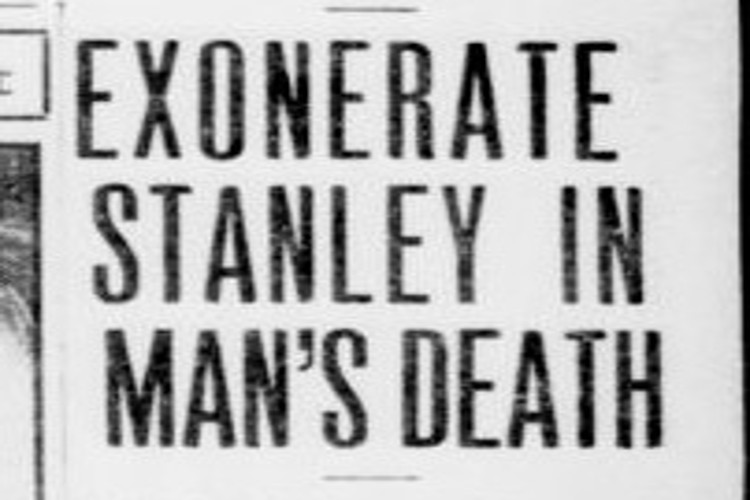
New Philadelphia, Ohio newspaper headline on the exoneration of James Stanley, November 1935. (Source: newspaperarchive.com)
Enjoy my stories?

© Noel B. Poirier, 2024.
 Tuscarawas County Stories