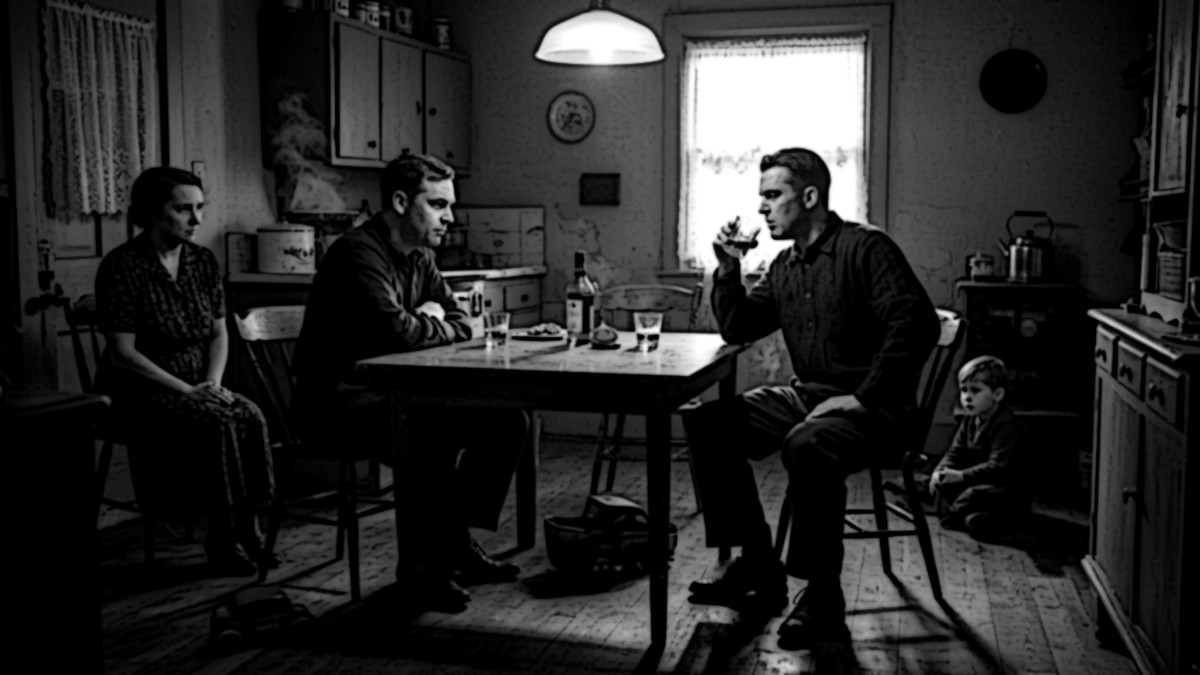
On a quiet street in Dover, Ohio, a friendship turned fatal one Sunday in 1934.
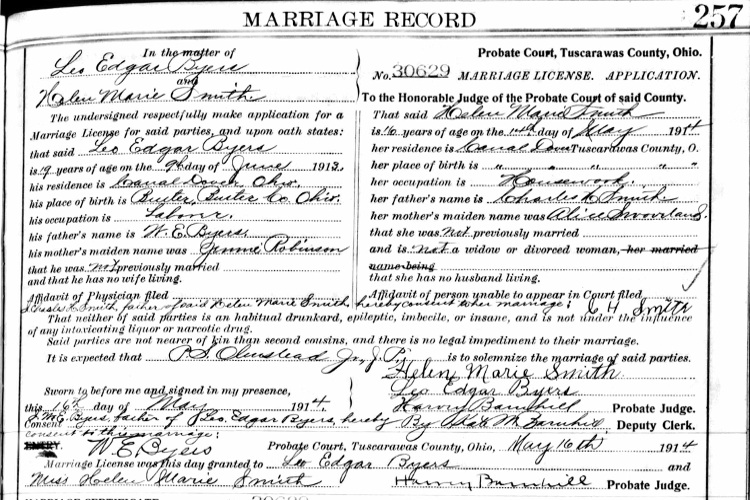
Leo E. Byers (1894-1934) was born in 1894 in Pennsylvania to William E. Byers (1868-1945), who later served as police chief in Dover, Ohio, and Jane Robertson (1869-1907). During his early years, he lived with his family in Westmoreland County, Pennsylvania. After the death of his mother in 1907, Leo moved with his remaining family to Dover, Ohio, where his father William at first worked as a mill laborer. Leo married Helen Marie Smith in Tuscarawas County in 1914, and the couple welcomed a daughter two years later. Leo was employed as a sheet mill worker for Reeves Manufacturing in Dover when he registered for the World War I draft in 1917.
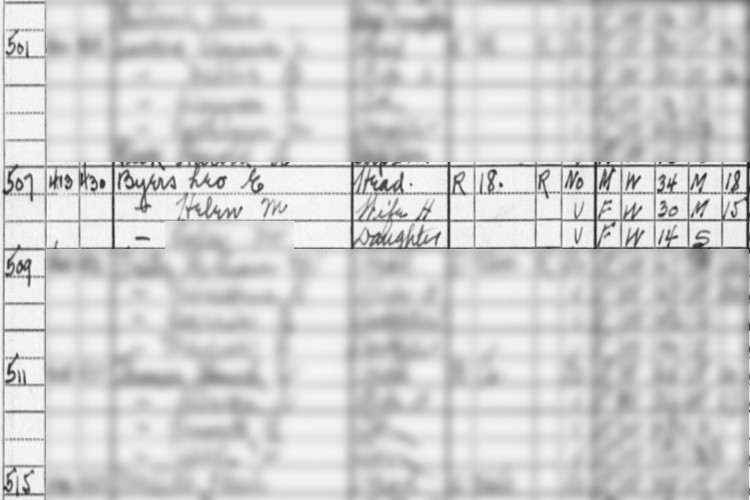
Leo’s married years were marked by both domestic struggles and minor legal incidents. He was fined in 1918 for failing to support his wife and daughter, and in 1920, he was involved in a violent altercation with a man who took his wife on a car outing. Despite this, Leo and Helen hosted social gatherings and had many friends in the community. The Byers family resided on Washington Street in Dover, and Leo worked as a roller helper in a steel mill. One of their neighbors, someone Leo was friendly with, was a man named George Alesiano (1881-1959).
George Alesiano, born Giacinto Alesiani in 1881 in Castel Di Lama, Italy, immigrated to the United States in 1905 aboard the Angonia, followed by his brother Angelo and sister-in-law Carmela the following year. Settling first in Pennsylvania, he worked as a railroad laborer while boarding in a rooming house in Petersburg. He lived in Belmont County, Ohio with Angelo’s family and worked as a coal miner by 1920. George declared his intent to become a U.S. citizen in 1918, and his naturalization was approved in 1921. One of his naturalization witnesses was Domenico Macri.
George and his brother eventually made their homes in Dover, Ohio, where the brothers became entangled in a series of legal troubles during Prohibition. Throughout the late 1920s, George was repeatedly fined and arrested for selling and transporting liquor, gambling, and housing questionable boarders. He resided on River Street in Dover with his wife Margaret, who struggled with mental illness and was institutionalized in 1930. That same year, George was arrested for assault and battery. His home sat almost immediately behind the home of the Byers family.
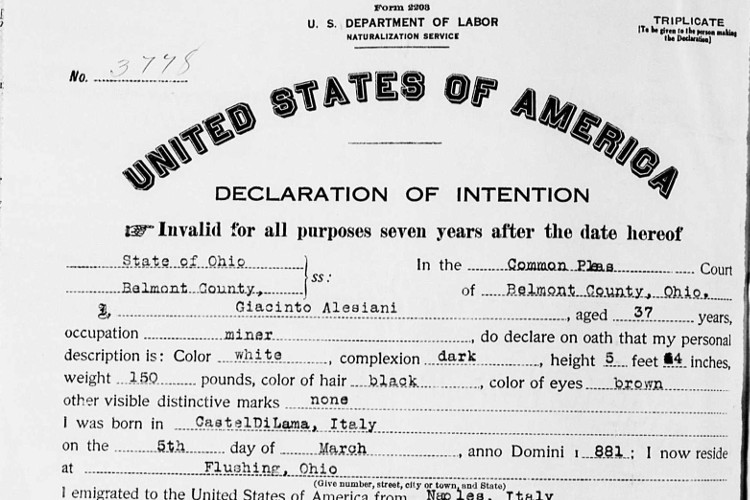
George Alesiano’s naturalization declaration, 1918. (Source: familysearch.org) 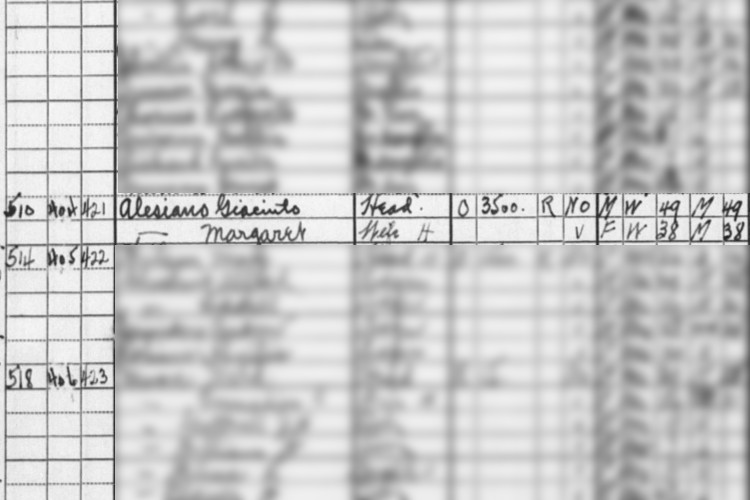
George Alesiano and his then-wife Margaret recorded on the 1930 census for Dover, Ohio. (Source: familysearch.org) 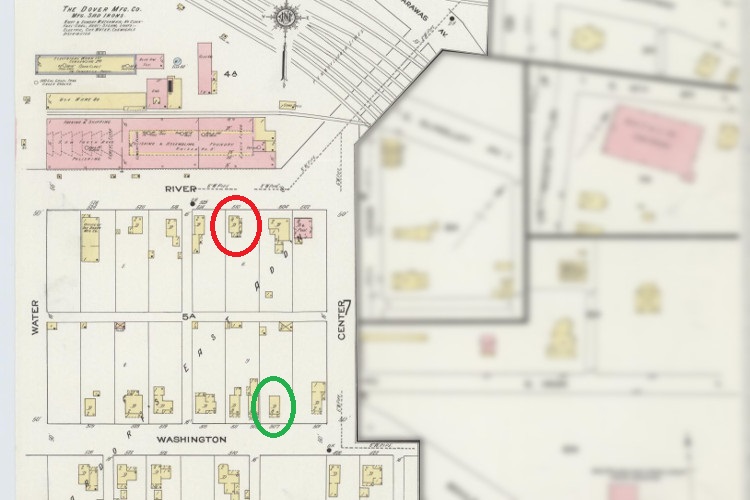
The location of the Alesiano home (red) and the Byers home (green) in Dover, Ohio as depicted on the 1914 Sanborn Map. (Source: loc.gov)
On Sunday morning, February 25, 1934, Leo, Helen, their three-year-old son Billy, and George Alesiano were spending time together at the Byers home. They then went to George’s house for a drink. Mrs. Byers returned home to prepare a late lunch but went back to retrieve her husband and son. George allegedly made an offensive suggestion about Mrs. Byers in front of Leo, prompting a heated argument. George refused to apologize, and after briefly threatening Leo with a baseball bat, pulled a revolver from his hip pocket and shot Leo. George then left the house, fired more shots outside, and ran off. Leo was quickly taken to Union Hospital, but died later that evening from his wounds.
George at first attempted to flee, but later thought better of it and turned himself in a couple of days later. He originally denied knowing anything about the killing, but after questioning admitted his role in the death of Leo Byers. A grand jury was called and, in April 1934, issued an indictment for manslaughter. George pleaded guilty and was sentenced to 1 to 20 years and was paroled after five years. He returned to Dover, married his brother’s widow, and lived there until his death in October 1959. Leo Byers, George Alesiano’s victim, was buried in Maple Grove Cemetery in Dover.
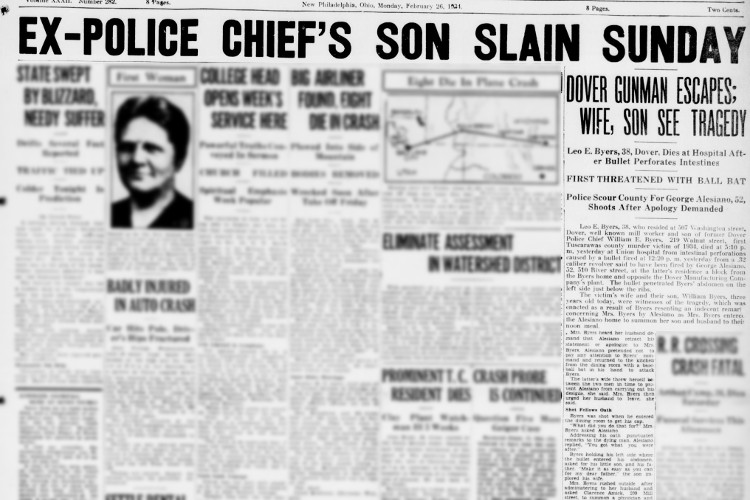
New Philadelphia, Ohio newspaper front page covering the killing of Leo Byers, February 1934. (Source: newspaperarchive.com) 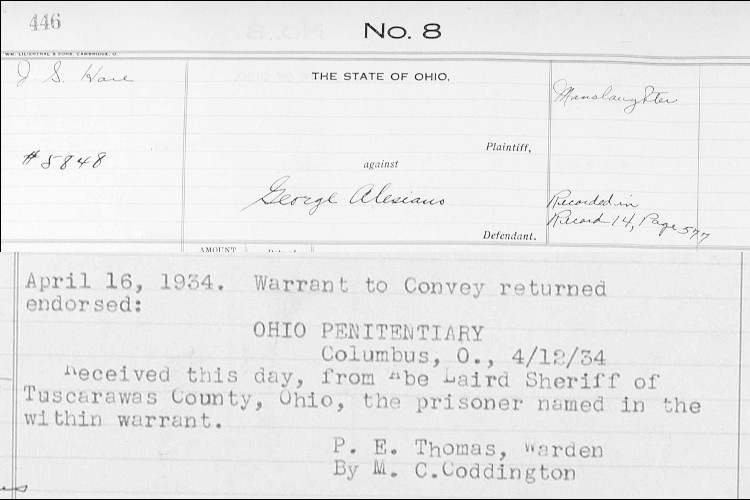
Detail from the criminal case file of George Alesiano, April 1934. (Source: familysearch.org) 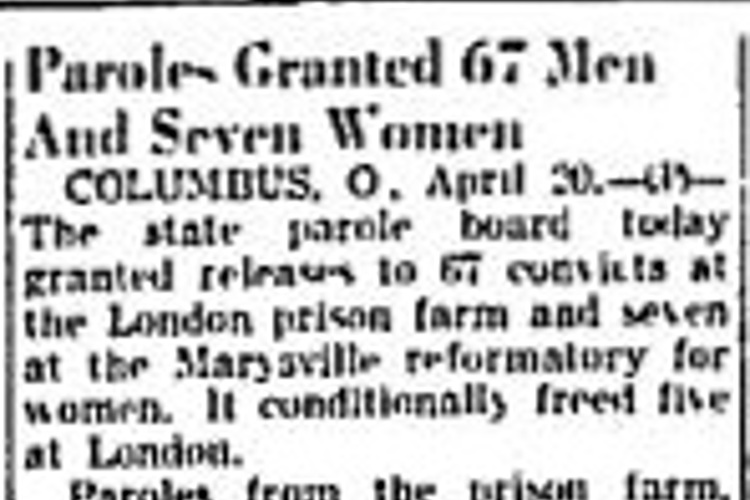
Zanesville, Ohio newspaper article on the parole of 67 men, including George Alesiano, April 1939. (Source: newspaperarchive.com) 
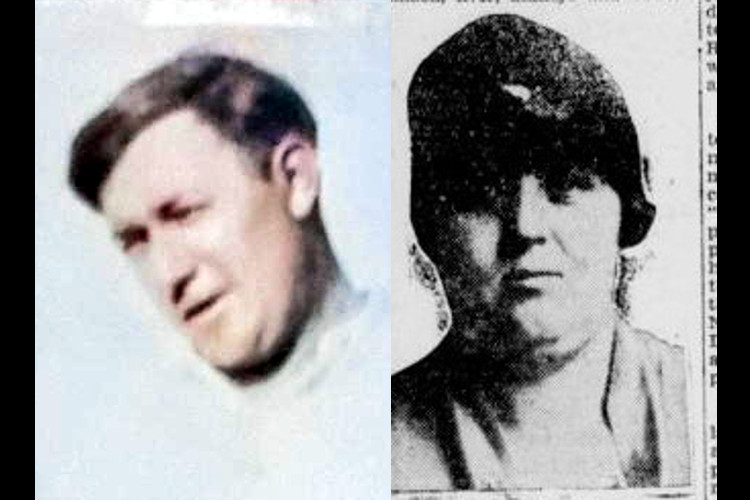
George Alesiano shortly after his parole, 1941. (Source: ancestry.com)
Enjoy my stories?


© Noel B. Poirier, 2024.
 Tuscarawas County Stories