
Cloyce Densel Jones’s death left behind more questions than answers and a trail of unsettling contradictions.
Content warning: This post contains references to suicide. If you or someone you know has a mental illness, is struggling emotionally, or has concerns about their mental health, there are ways to get help. Click here for resources to find help for you, a friend, or a family member.
On a dreary December afternoon in 1929, Cloyce Densel Jones met a tragic and untimely end in his Uhrichsville, Ohio home. His life was cut short by a fatal shotgun wound to the chest under circumstances that left more questions than answers. Authorities, upon their arrival questioned a clearly agitated Mary Jones who claimed she was occupied with household tasks—dyeing a dress and painting the stairway—when the woman witnessed by Lela Fouts knocked on the Jones door between 2:00 and 3:00 PM. She stated that it was Cloyce who answered the door, and shortly afterward, Mary heard what she assumed was the sound of a chair being knocked over.
Mary claimed she came downstairs a few moments later looking for Cloyce and that she found him slumped against the bathroom wall. He was unresponsive and she stated that she initially believed he must have fainted. Mary claimed she only realized the gravity of the situation when she touched him and felt the dampness of his blood soaked clothes. Mary asserted, both to the initial witnesses and then to the investigators, that she did not hear a gunshot and that there were no firearms in the Jones home.

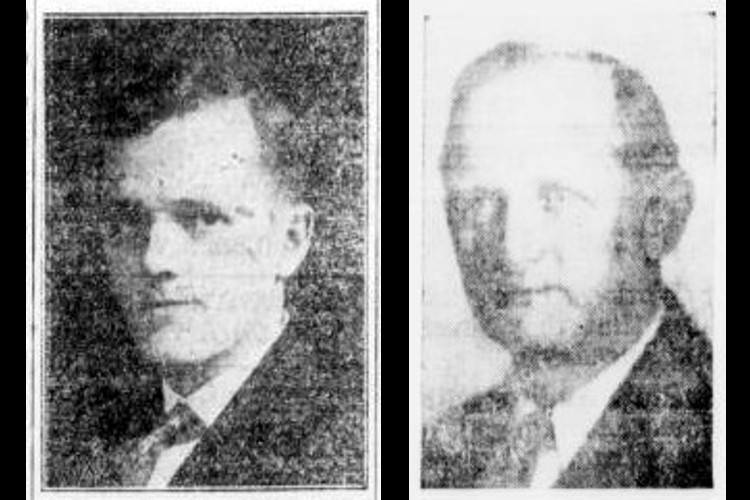
Neighbors, including Mrs. Oma Covert and Mrs. Margaret Mapel, who were first on the scene were also questioned by investigators. A stranger, they described as a “tramp,” was reportedly near the house and had gone for help after being accosted by Mary Jones. None of the witnesses claimed to have heard a gunshot and could not provide any explanation for how or why Cloyce was shot. The positioning of the body, the missing sound of a gunshot, and Mary’s evasiveness left investigators puzzled as they pieced together the events of that fateful afternoon.
Mary’s account raised suspicions among the investigators however, and, it was not until they threatened to search the home that she admitted there was a shotgun in the house—later found in her upstairs bedroom closet wrapped in a blanket. The weapon was a Herrington & Richards 12-gauge shotgun and it was quickly determined to be the one that had ended Cloyce’s life. The gun was recently fired and they discovered flecks of paint on the gun that matched the color being used to paint the Jones’s stairwell and living room.


Mary argued that, in her shock at having found Cloyce’s body, she purposely placed the gun on the closet so people would not think Cloyce killed himself. Sheriff Harry C. Smith (1876-1964), Coroner James Floyd Lewis (1899-1977), and Uhrichsville Police Chief Kingdon D. Hiller (1899-1960) scrutinized Mary’s statements, and noted her initial denial of the gun’s existence and her delayed reaction in calling for help. Police also found a note she had left for Cloyce’s niece, Freda Shuss, that suggested she had planned to leave him, though she denied this.
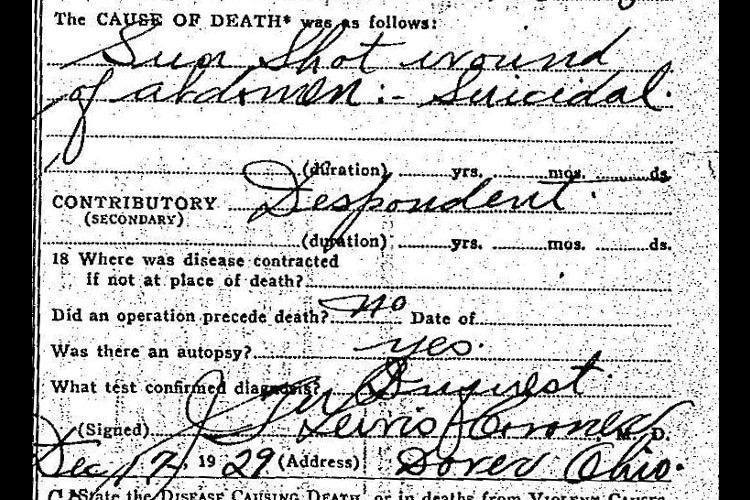
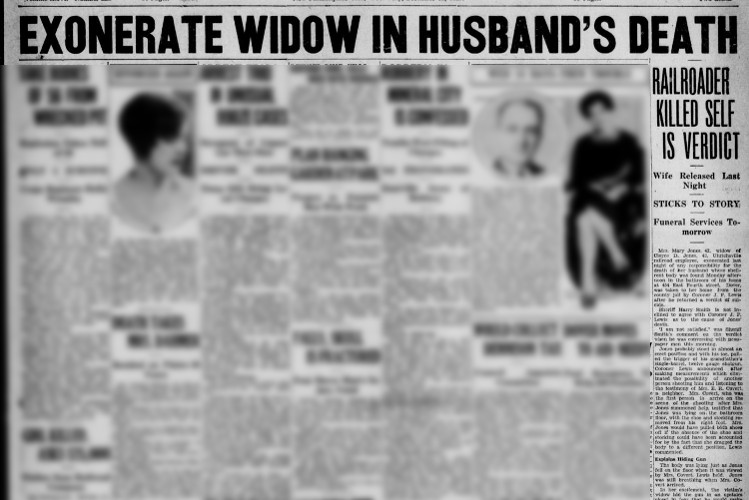
All of the above led them to decide to take Mary Jones to the Tuscarawas County Jail in New Philadelphia where she could be interviewed more. Once at the jail, she was further interviewed by Sheriff Smith, Coroner Lewis and, now, Tuscarawas County Prosecuting Attorney Joseph F. Kuhns (1866-1938). Mary held to her story and, despite the protestations of Sheriff Smith who had doubts and wanted to further investigate the case, Coroner Lewis determined that Cloyce D. Jones’s death was a suicide. That determination ended any further investigation; but what really happened to Cloyce D. Jones?
Enjoy my stories?

© Noel B. Poirier, 2024.
 Tuscarawas County Stories