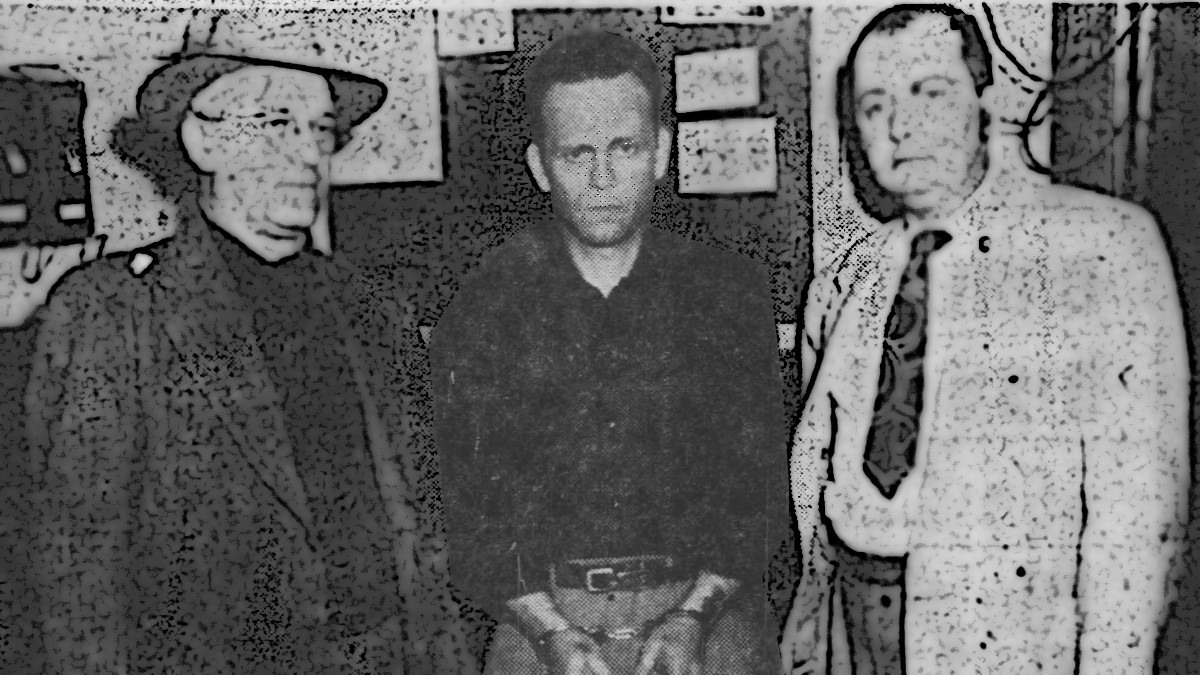
Who was Delbert Hershel Sizemore, the violent Indiana convicted felon, and what was his connection to the murder of John Myers on the evening of November 19, 1947?
Click here to read part three.
Delbert Hershel Sizemore’s life began quietly enough in 1914, in the small Indiana town of Center Point. But beneath the surface of what should have been a ordinary Midwestern upbringing was a fractured family history that likely shaped his troubled personality. Delbert’s parents divorced under unclear circumstances after 1918, likely while the family was living in North Carolina. Following the split, Delbert was sent to live in Kentucky with his maternal grandparents where he resided in 1920. By 1930 he was back with his mother and lived with her and her new husband in West Virginia. The instability of Delbert’s early years set the stage for a life dominated by rebellion and criminality.
By the time he turned 18, Delbert Hershel Sizemore’s life was already spiraling into a pattern of crime and punishment. In June 1932, he made headlines as the teenage perpetrator of a bank robbery in Peoria, Illinois. Convicted and sent to the Peoria Reformatory, Sizemore served three years before being paroled. He was arrested again, in June 1935, for interstate vehicle theft, a federal crime that sent him to the Lewisburg Federal Penitentiary in Pennsylvania. Five months into his sentence, he escaped from prison, only to be swiftly recaptured and handed an additional five years. Violence followed him even in captivity; in 1936, he stabbed a fellow inmate, earning himself yet another four years.

Delbert Sizemore’s birth certificate, June 1914. (Source: familysearch.org) 
1930 census record showing Delbert Sizemore in the household of his mother and step-father in West Virginia. (Source: familysearch.org) 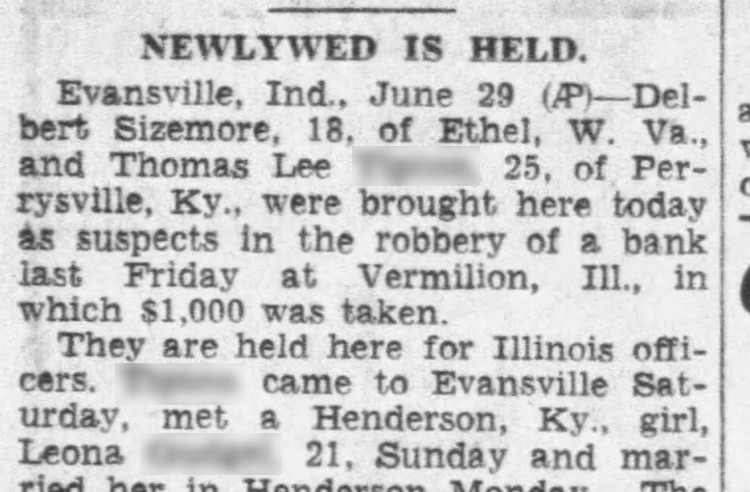
Muncie, Indiana newspaper article on Delbert Sizemore’s part in a 1932 robbery, June 1932. (Source: newspapers.com) 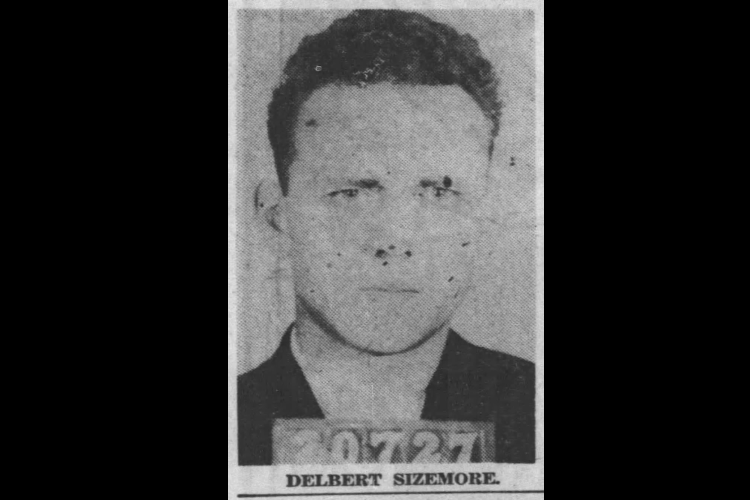
Early mugshot of Delbert Sizemore, c. 1930s. (Source: newspapers.com)
Freedom was apparently not a good fit for Sizemore. Paroled in late 1944, he found himself back in custody almost immediately for further parole violations. Released yet again, Sizemore, In September 1947, was a wanted man in two states and by the FBI, accused of armed robbery in Indiana and sought for a federal parole violation in Illinois. Sizemore was on the run, and heading south, in the fall of 1947 when the murder of John Myers took place in Zoar, Ohio on November 19th. The FBI, however, was aware of where Sizemore was likely headed.
Sizemore headed to the home of his brother and sister-in-law’s house in Swannanoa, North Carolina, east of Asheville, North Carolina in Buncombe County. When he arrived is unknown, but on December 3, 1947 he was arrested there by local and federal law enforcement officers. When arrested, Sizemore was carrying a .38 caliber German-made automatic pistol; the same caliber weapon as that used to murder John Myers. Whether Sizemore broached the subject or it was raised by his captors is unknown, but the subject of the murder of John Myers came up in conversations between Sizemore and the officers who arrested him.
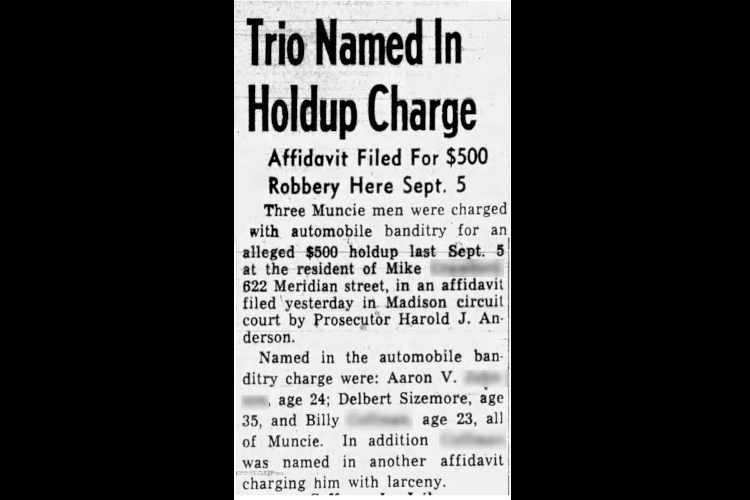
Anderson, Indiana newspaper report on Delbert Sizemore’s role in an armed robbery, November 1947. (Source: newspapers.com) 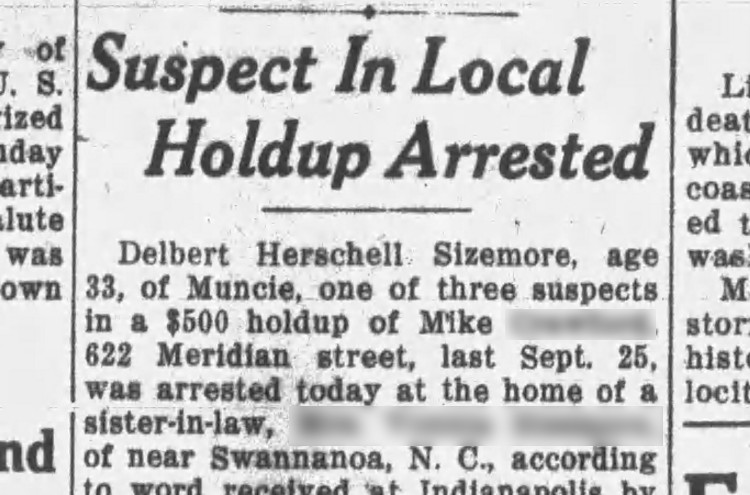
Report in the Anderson, Indiana newspaper on the arrest of Delbert Sizemore in North Carolina, December 1947. (Source: newspapers.com) 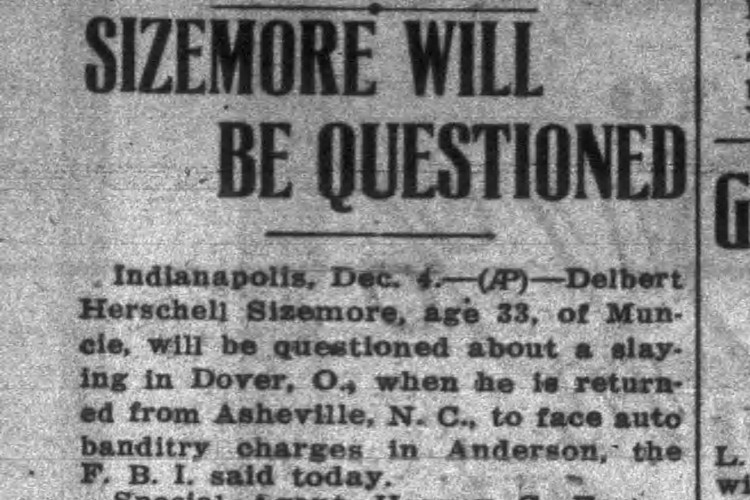
Anderson, Indiana newspaper report that Delbert Sizemore was questioned regarding the murder of John Myers, December 1947. (Source: newspapers.com) 
New Philadelphia, Ohio newspaper report that Delbert Sizemore was questioned and was a suspect in the murder of John Myers, December 1947. (Source: newspapers.com)
Sizemore allegedly agreed to be transported to Tuscarawas County to face questioning from local law enforcement there about the Myers murder. Once Sizemore was in custody, his mugshot was shown around the community and Zoar truck driver William Maurer identified him as a man that used the service station in Zoar just minutes before the murder. FBI Special Agent Harvey Foster (1912-1981), based in Indianapolis, Indiana stated that Sizemore would be questioned about the murder after his arrival in Indiana.
While the details of Sizemore’s questioning in Indianapolis are not known, one fact was made known to Tuscarawas County law enforcement. Sizemore acknowledged that he had passed through Tuscarawas County during his flight south, though he did not admit at that time to murdering John Myers. Tuscarawas County Sheriff John McIntosh (1901-1948) believed that Sizemore was the trigger man and later that month Sizemore allegedly offered to plead guilty to Myers’s murder rather than spend the rest of his life in jail. The FBI, however, decided instead to return Sizemore to federal incarceration in Illinois since they believed that “he never again will be paroled”.
End of Part Four

Delbert Sizemore’s mugshot in the New Philadelphia, Ohio newspaper, December 1947. (Source: newspapers.com) 
Muncie, Indiana newspaper article about Delbert Sizemore’s return to Illinois prison, December 1947. (Source: newspapers.com) 
Indianapolis, Indiana newspaper article about Delbert Sizemore’s offer to plead in the Myers murder case, December 1947. (Source: newspapers.com) 
Postcard of the entrance to the Illinois State Penitentiary in Joliet, Illinois, 1940s. (Source: ebay.com)
Enjoy my stories?

© Noel B. Poirier, 2025
 Tuscarawas County Stories