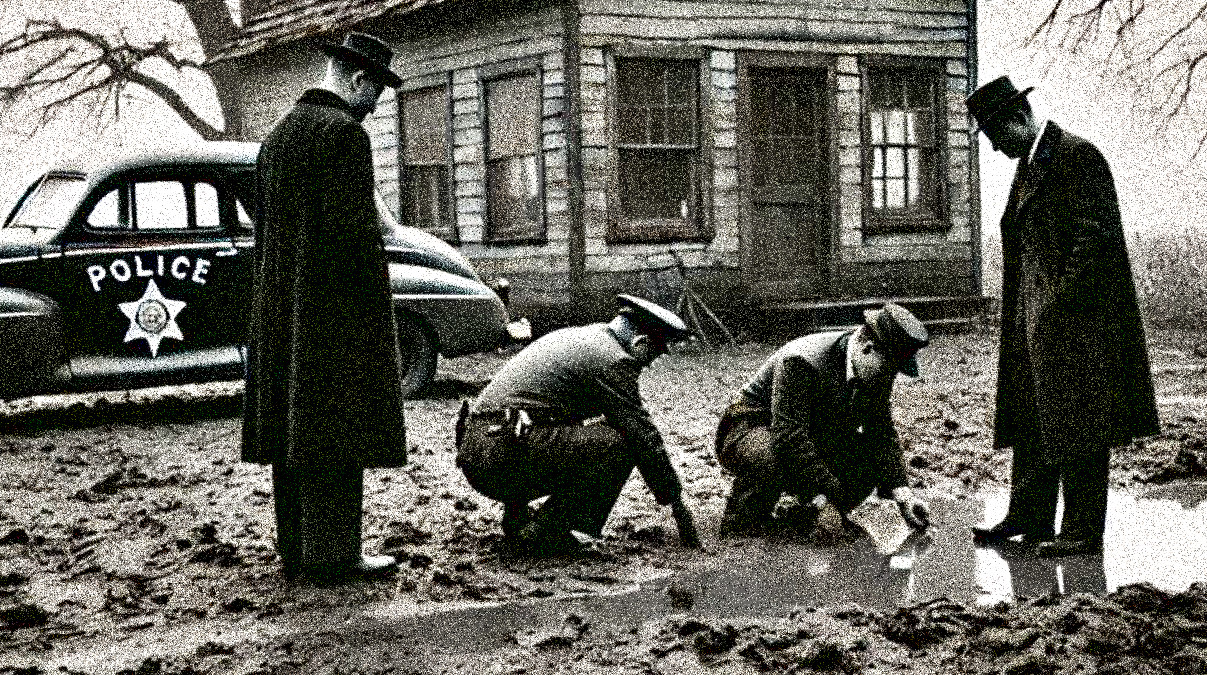
The murder of John Myers sparked a complex investigation involving local, state, and federal law enforcement, as they struggled to untangle conflicting witness accounts, trace potential suspects, and pursue elusive leads across state lines.
The investigation into who killed John Myers and why began immediately and included law enforcement from Tuscarawas County, the State of Ohio, and the FBI. A wide net was cast to find the killer or killers using information gleaned from the various witnesses as well as looking at similar crimes committed in neighboring states. There were challenges to the investigation though due to inconsistencies with witness testimony and observations of the investigators themselves.
The first challenge rested on determining just how many perpetrators law enforcement was looking for. While Bolivar’s mayor-elect, and assault victim, Bernard Christman stated that he saw only the one man who assaulted him, Zoar Marshall Charles Swank believed there may have been two men in the car that he and bartender Joe Orzeck chased from Zoar to Dover the night of the killing. Not surprisingly, law enforcement investigators chose to follow the lead of Marshall Swank and began looking for two potential perpetrators driving what Swank believed to be a 1939 green Oldsmobile or Buick sedan with yellow license plates.

Newspaper headline reporting the robbery and murder of John Myers, November 1947. (Source: newspapers.com) 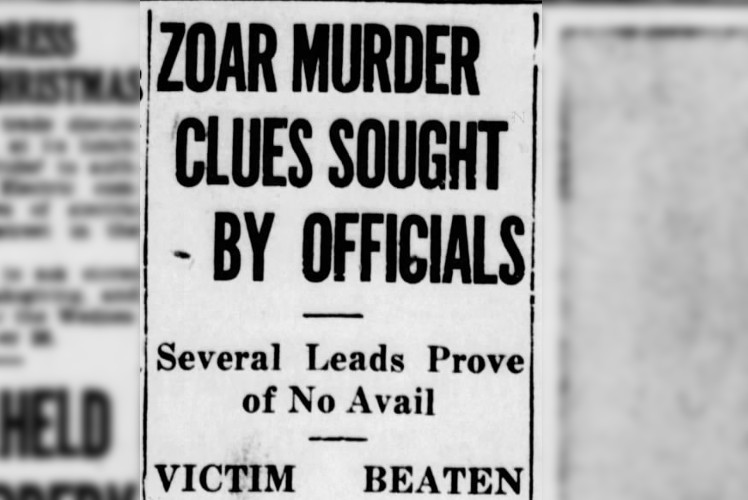
New Philadelphia, Ohio newspaper headline on the investigation into the murder of John Myers, November 1947. (Source: newspapers.com) 
Advertisement for a 1939 Buick sedan. (Source: pinterest.com) 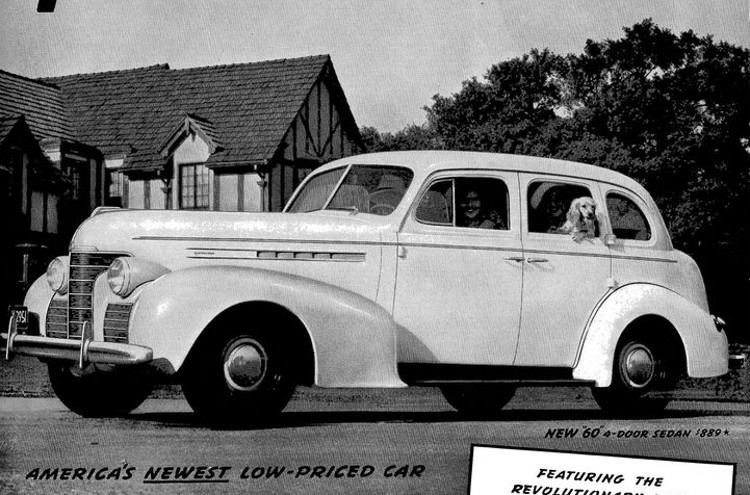
Advertisement for a 1939 Oldsmobile sedan. (Source: etsy.com)
Following the lead of two perpetrators, law enforcement learned the day after John Myers’s murder of the killing of man in Michigan by two male hitchhikers who robbed him, murdered him, and then stole his car. Knowing that the 1947 Michigan license plate was yellow and believing that it might be possible that these men had driven to Ohio and been responsible for Myers’s murder as well, local law enforcement made inquiries about the case. Unfortunately for the Myers investigation, the automobile stolen by the two men was a 1947 Plymouth Convertible Coupe and not a 1939 Buick or Oldsmobile sedan.
Continuing to follow Marshall Swank’s lead on what he claimed he saw the night of the murder, two other potential suspects were sought after as well. The two young men, both in their twenties, had stayed in Mineral City the night before Myers’s murder and visited the tavern of Howard Brinkman (1905-1975) there. Both men were seen at the tavern on the afternoon of John Myers’s murder and patrons and staff commented that they believed the men “talked like West Virginians.” An important clue to investigators at the time due to the fact that West Virginia often used a yellow license plate during the 1940s. Unfortunately, no one saw the two men’s vehicle nor ever managed to get their names.

Excerpt from a newspaper article on leads in the John Myers murder case, November 1947. (Source: newspapers.com) 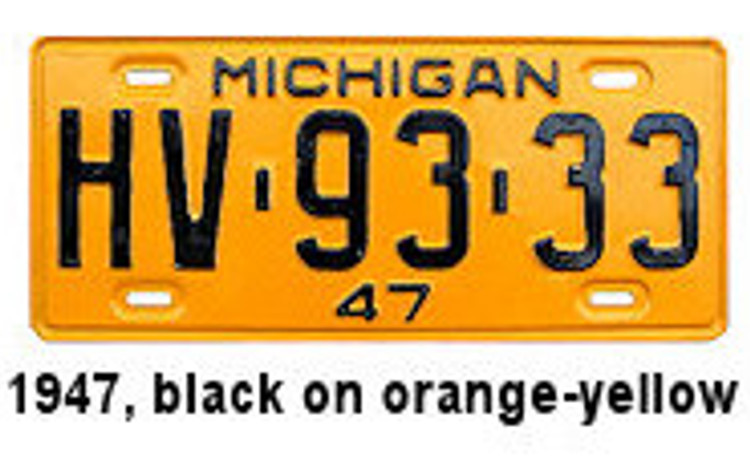
1947 Michigan license plate. (Source: worldlicenseplates.com) 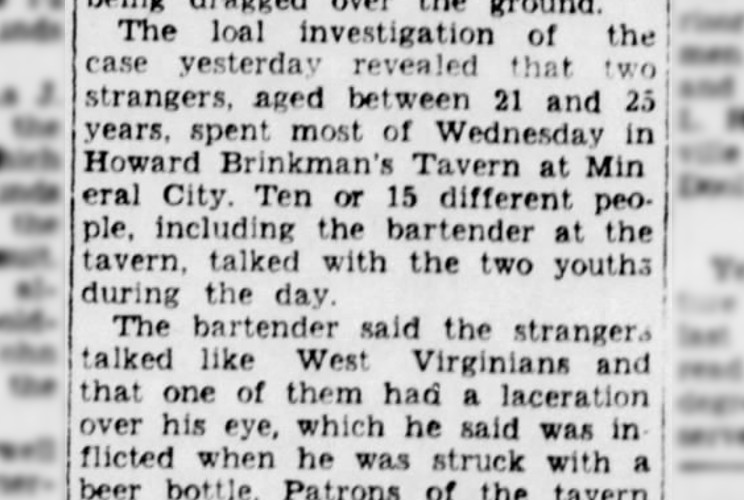
Excerpt from a newspaper article on leads in the John Myers murder case, November 1947. (Source: newspapers.com) 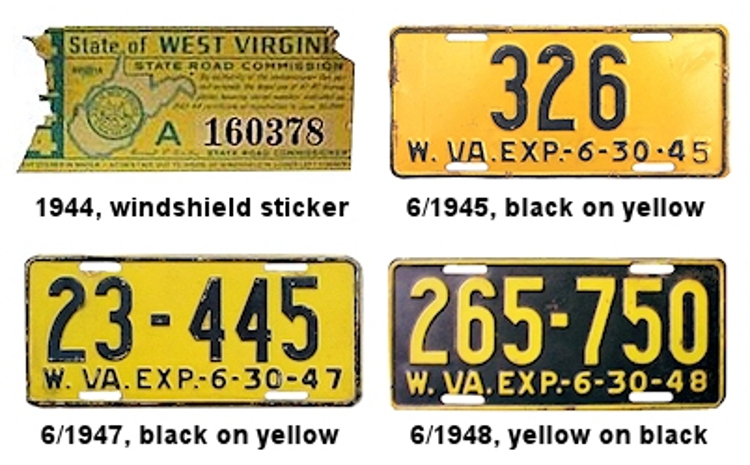
Sampling of 1940s West Virginia license plates, 1944-1948. (Source: worldlicenseplates.com)
Another angle of investigation came as a result of the post mortem conducted by Tuscarawas County Coroner D. M. Ceramella (1907-1999). Given that no witnesses heard a gunshot and that Ceramella determined that Myers had been badly beaten before he was shot, the theory was posited that he had been killed elsewhere and his body was dumped at the tavern. This was despite the fact that there was ample eye-witness evidence of Myers entering and leaving the bar alive the night of his murder. Additionally, later tests by police (firing a handgun outside the tavern in Zoar) discovered that no one heard the test firings either.
Despite continuing to follow leads involving two perpetrators, the investigation into who murdered John Myers, and assaulted Bernard Christman, came up empty for the rest of November and into the first week of December. Early in December an Indiana man with a long history of violence, robbery, and prison escapes was arrested by the FBI outside Asheville, North Carolina for violating parole. He was returned to Indiana and, after he arrived, made a very interesting statement to authorities about a murder in Ohio. His name was Delbert Hershel Sizemore (1914-1974).

Report on the post mortem conducted on John Myers in the New Philadelphia, Ohio newspaper, November 1947. (Source: newspapers.com) 
Report in the New Philadelphia, Ohio newspaper on the test firing conducted in Zoar, November 1947. (Source: newspapers.com) 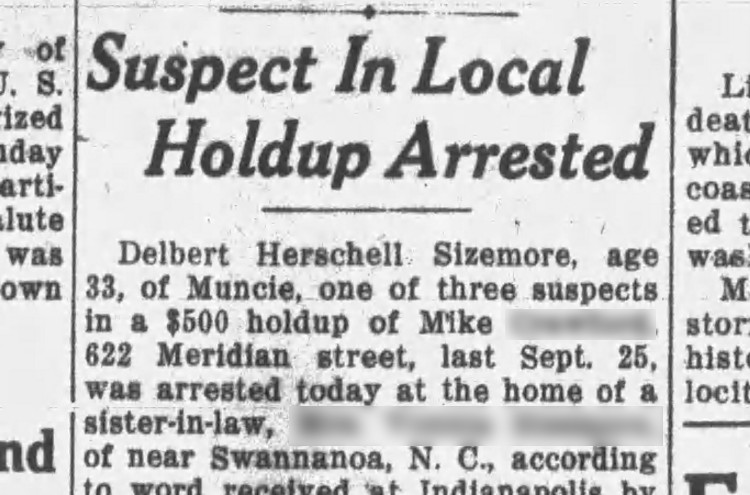
Report in the Anderson, Indiana newspaper on the arrest of Delbert Sizemore in North Carolina, December 1947. (Source: newspapers.com) 
Delbert Sizemore’s mugshot in the New Philadelphia, Ohio newspaper, December 1947. (Source: newspapers.com)
Enjoy my stories?

© Noel B. Poirier, 2025
 Tuscarawas County Stories