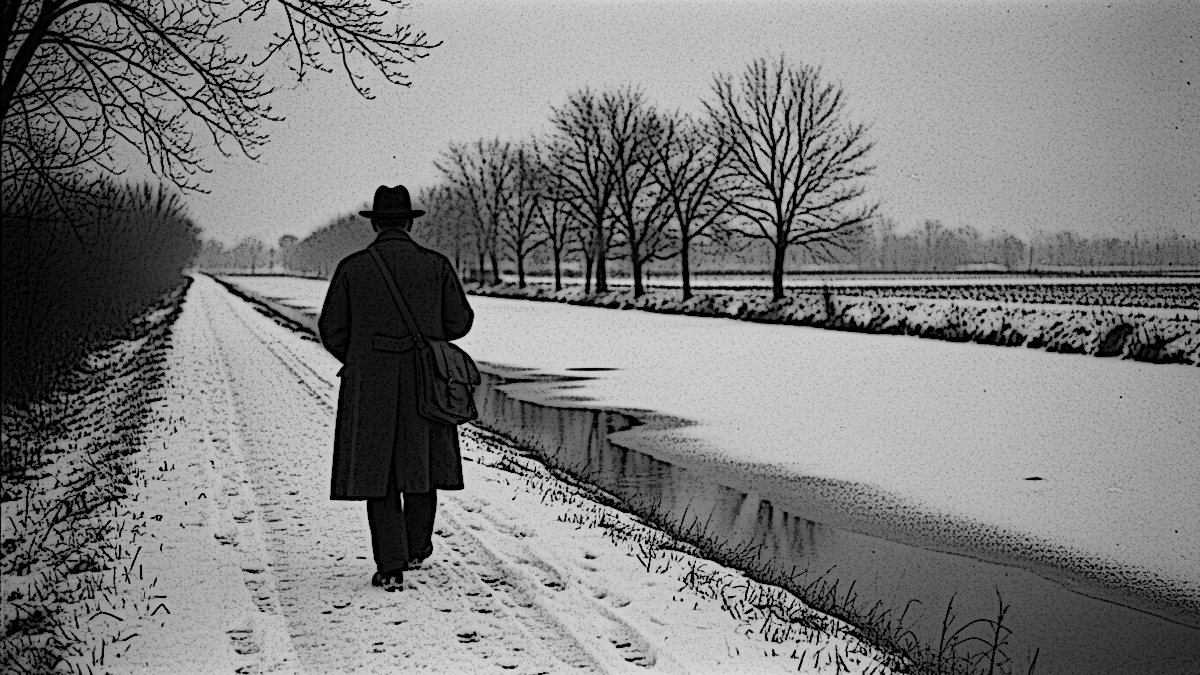
A rural mail carrier vanished one November night in 1909 and left the Tuscarawas County community searching for answers.
Content warning: This post contains references to suicide. If you or someone you know has a mental illness, is struggling emotionally, or has concerns about their mental health, there are ways to get help. Click here for resources to find help for you, a friend, or a family member.
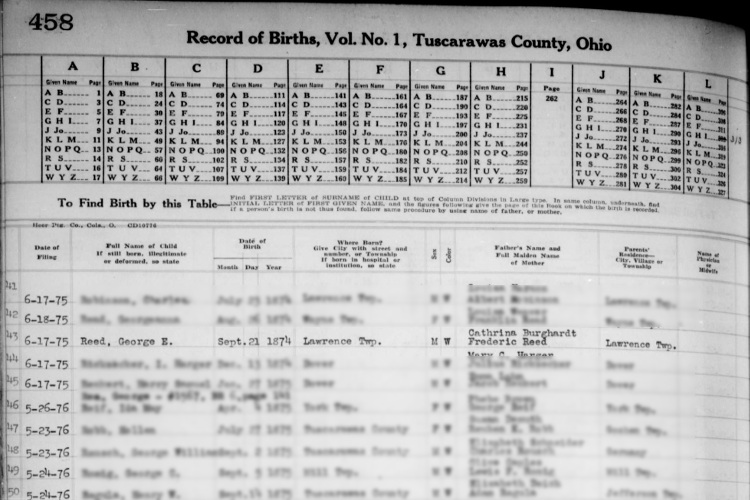
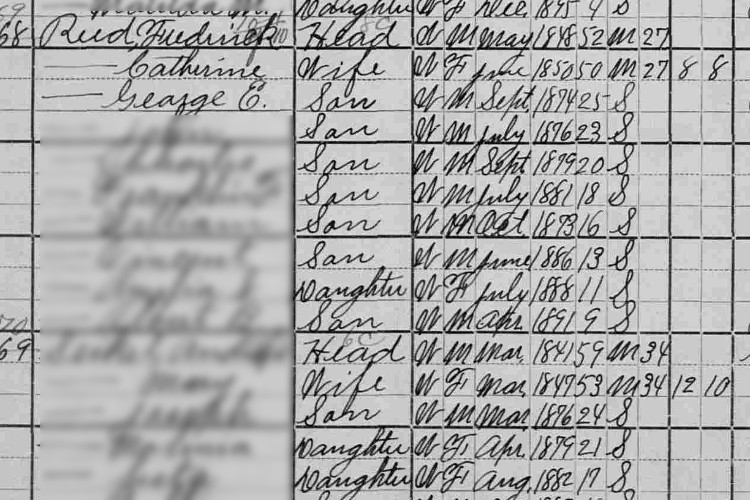
George E. Reed (1874-1909) was born in Lawrence Township, Tuscarawas County, Ohio. He was the son of Frederic Reed (1848–1918), an Ohio-born farmer, and his wife Catharina Burghardt Reed (1850–1934). George lived with his parents and two younger siblings in Dover Township, where his father was recorded as a farmer in the census of 1880. The family grew significantly by the time the 1900 census was taken; that census showed George residing in Dover Township with his parents and seven younger siblings. George, then around 16 years of age, was employed as a laborer in a local brick yard.
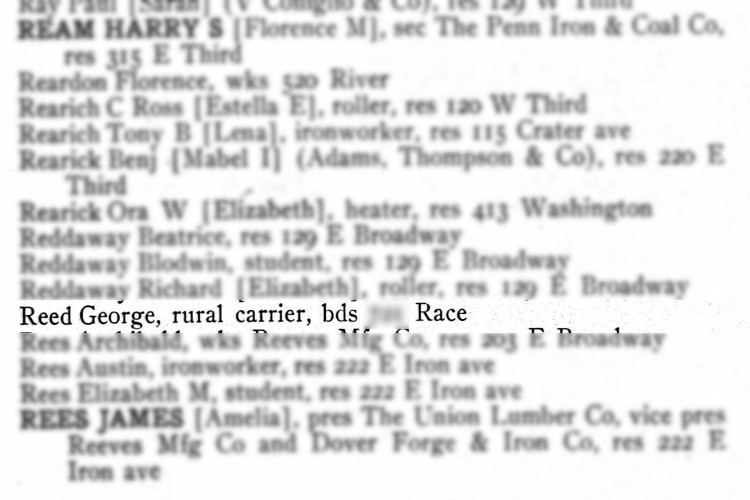
George Reed transitioned into public service work by 1907 and boarded in a home on Race Street in Dover, Ohio. George was employed as a rural mail carrier, assigned to Route No. 4 out of the Canal Dover post office. Still single, he was regarded by those who knew him as an honest, hardworking young man and had accumulated modest property holdings, including several rental houses near Canal Dover. Contemporaries of George also mentioned that, while a hard worker, he was not intellectually developed and was prone to bouts of depression.
George Reed was last seen on the evening of Sunday, November 14, 1909, after spending the afternoon with his parents at their home about two miles outside of Canal Dover. The family noted that George appeared in good spirits and he stated that he needed to return home to feed his horses and so set out on foot in the direction of the Ohio Canal towpath back to Dover. When he failed to report for work the following morning, concern grew quickly, and extensive searches began. These included organized search parties who dragged and even dynamited portions of the canal, offering of a monetary reward, and newspaper notices across Ohio. Despite these efforts, Reed remained missing for months, and authorities eventually abandoned the theory that he had drowned.
Several months later, on March 9, 1910, the badly decomposed body of a man was discovered in the Ohio Canal near the Blicktown lock by two boys from Canal Dover. The remains were recovered and taken to the undertaking rooms of Worm & Schaffer on Factory Street in Dover, where personal effects including a small round pocketbook containing several dollars and an old razor enabled one of George’s brothers to positively identify his body. Evidence suggested that the body may have traveled approximately four miles beneath winter ice before becoming lodged near the lock.
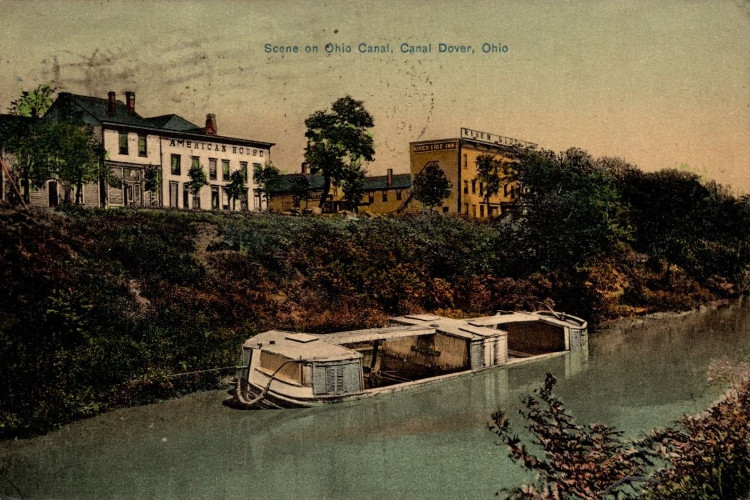
A postcard of the Ohio Canal in Dover, Ohio, c. 1910. (Source: ebay.com) 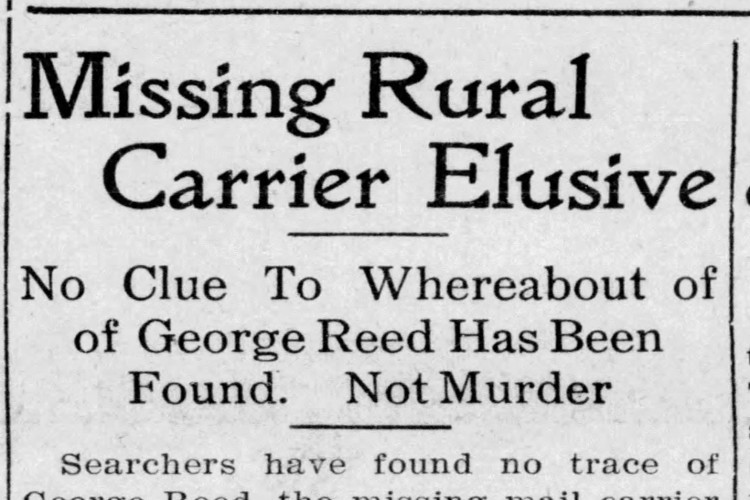
New Philadelphia, Ohio newspaper headline reporting on George Reed’s disappearance, November 1909. (Source: newspapers.com) 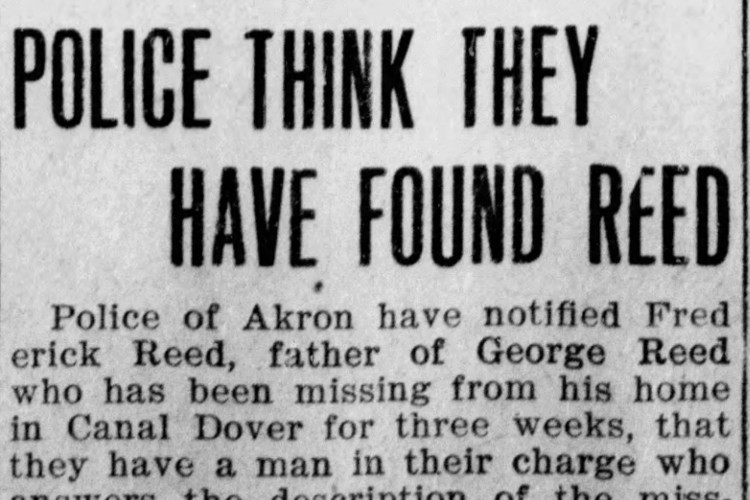
New Philadelphia, Ohio newspaper headline reporting on a possible lead in the investigation of George Reed’s disappearance, December 1909. (Source: newspapers.com)
The county coroner concluded that although the precise cause of death could not be determined due to the extensive deterioration of the body, the circumstances pointed the coroner to the possibility of suicide. He noted Reed’s occasional despondency and the absence of signs of robbery or foul play. Despite George Reed’s well-respected role in the community, the family decided to hold private funeral services on March 11, 1910, at his parents’ Dover Township home. George Reed was laid to rest in Maple Grove Cemetery in Dover.
We will never really know how 35-year-old mail carrier George Reed ended up in the Ohio Canal near Dover on a cold November night in 1`909. Like many such tragedies of the early twentieth century, the circumstances of his death were shaped as much by the limitations of the era as by the private struggles of the individual. His life story, preserved only in newspaper accounts and public records, stands as a sober reminder of the countless lives that remain undocumented and mostly forgotten.
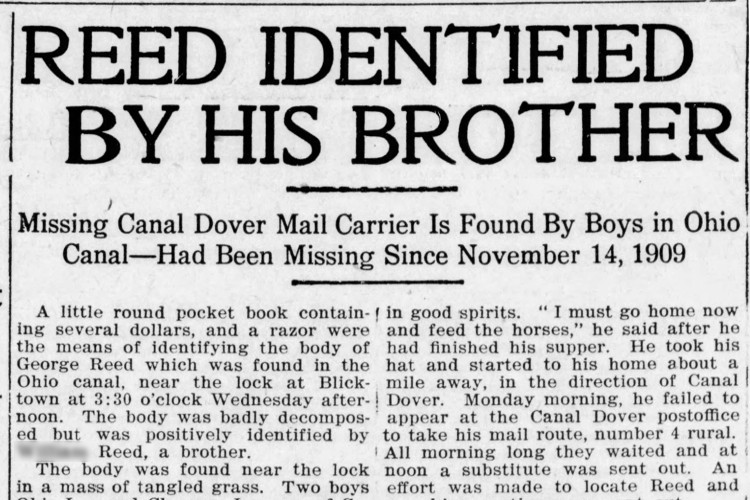
New Philadelphia, Ohio newspaper headline reporting on the discovery of George Reed’s body, March 1910. (Source: newspapers.com) 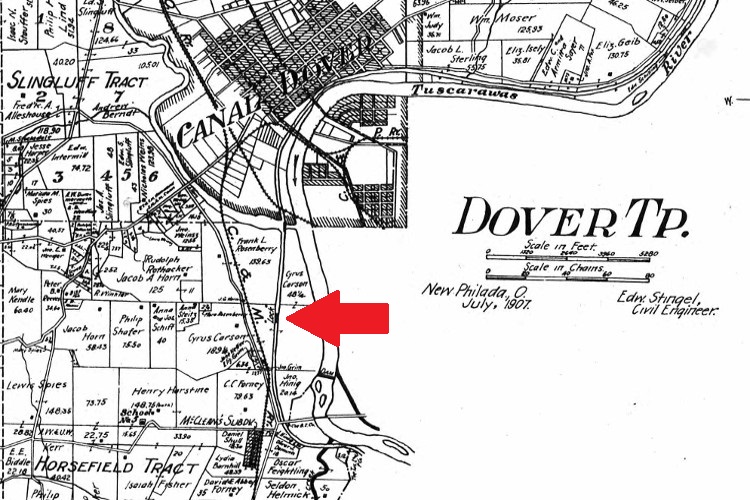
The location where George Reed’s body was discovered near the Ohio Canal lock at Blickstown highlighted on the 1908 map of Dover Township (Source: ancestry.com) 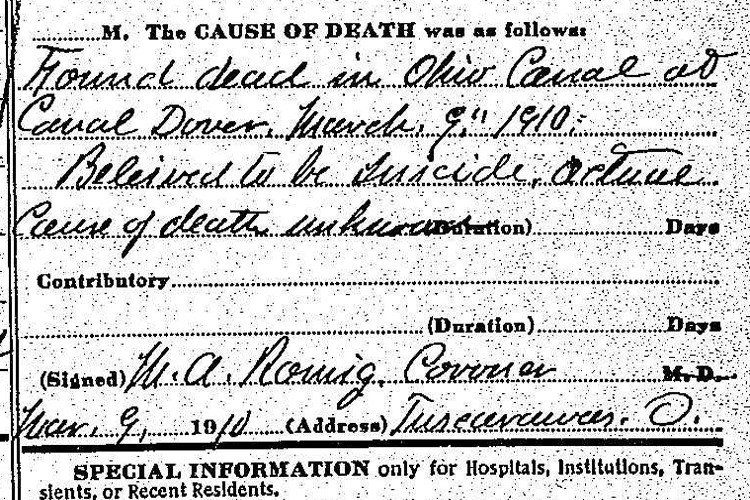
The coroner’s note on George Reed’s cause of death on Reed’s death certificate, March 1910. (Source: familysearch.org)
Enjoy my stories?

© Noel B. Poirier, 2026.
 Tuscarawas County Stories