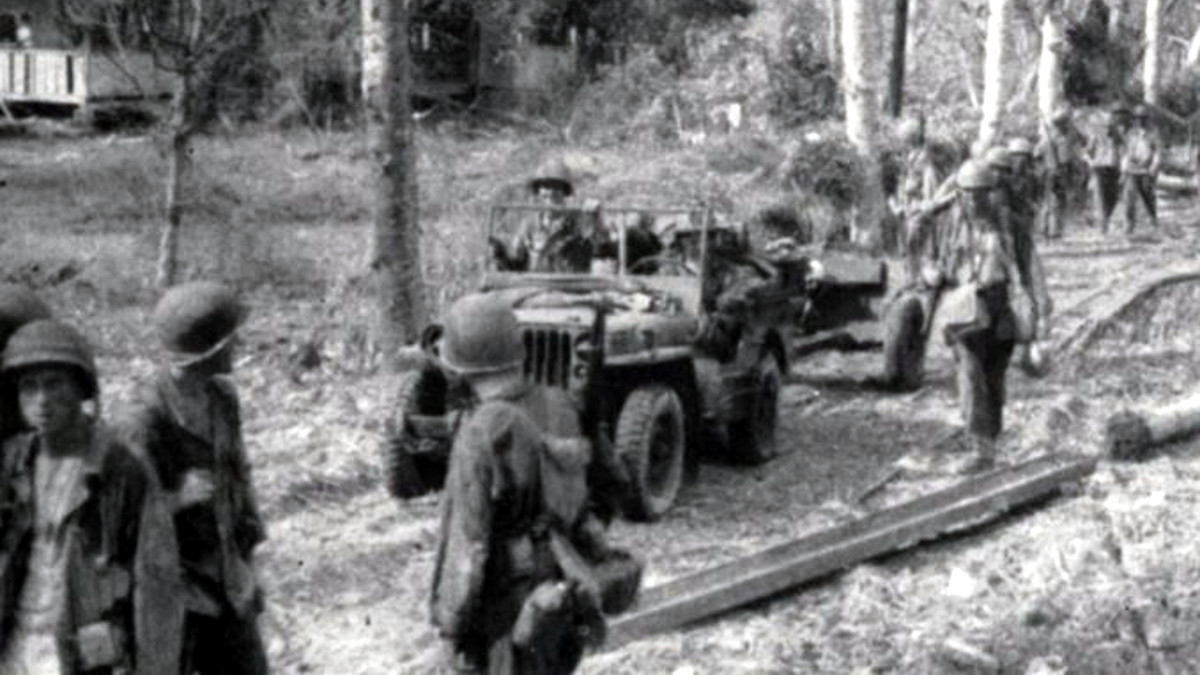
Carl Eugene Anderson’s short life traced a path from Depression-era Tuscarawas County to a distant Pacific battlefield.
Carl Eugene Anderson (1922-1942) was born in Tuscarawas County, Ohio, the son of George William Anderson (1884-1967), a coal miner, and Mabel Marie Collar Anderson (1889–1974). He entered the world as the Anderson family was growing and firmly rooted in Goshen Township, where hard physical labor shaped daily life. Census records from his early childhood show a household steadily expanding, with Carl growing up among numerous siblings while his father worked in the coal mines. By the late 1920s, however, the stability of the household began to fray as George and Mabel separated.
Carl’s boyhood unfolded amid economic uncertainty and frequent change. Mabel and her children lived on Front Street in New Philadelphia by 1932. That same year Carl contracted scarlet fever, an illness that could be deadly but from which he ultimately recovered. As his father drifted further from the household, boarding elsewhere and later facing charges of non-support, Carl came of age in a home sustained by his mother’s resilience and the wages of older brothers working as laborers in local factories.
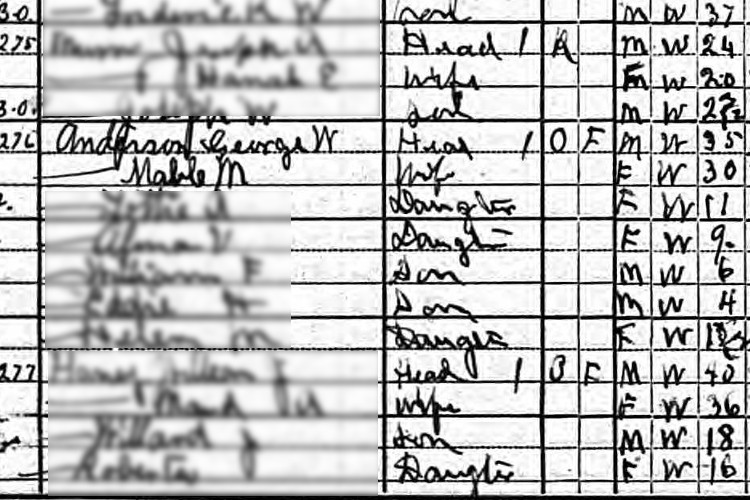
The Anderson family recorded on the 1920 Census for Tuscarawas County, Ohio. (Source: familysearch.org) 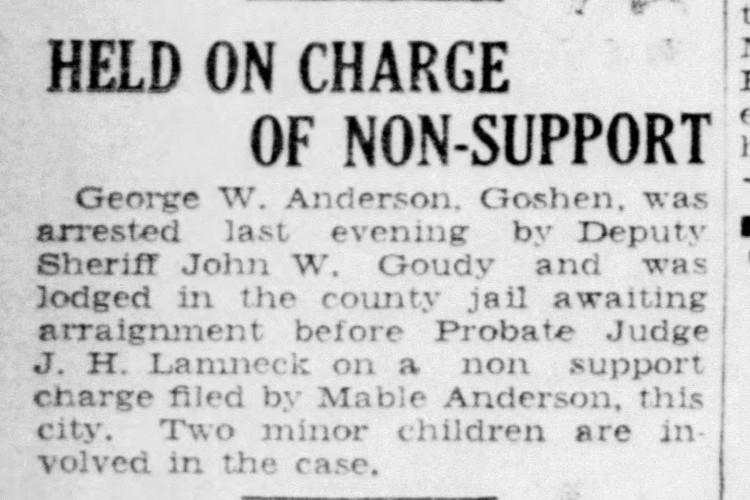
New Philadelphia, Ohio newspaper article on the Anderson family’s issues, March 1938. (Source: newspapers.com) 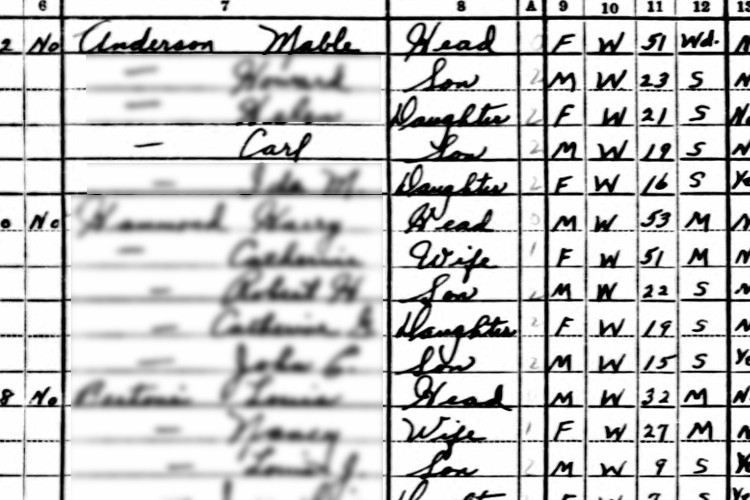
Mabel Anderson and family recorded on the 1940 Census for Tuscarawas County, Ohio. (Source: familysearch.org)
Carl worked as a stone mason for a National Youth Administration project in 1940 while he lived with his mother and siblings. Two years later, as the United States mobilized for war, he registered for the draft and reported that he was employed at Joe Rapport’s (1897-1957) junkyard. Described as 5 feet 5½ inches tall and weighing 132 pounds, with brown hair and a light brown complexion, Carl soon stepped into a larger national story when in November 1942 he entered the United States Army in Akron, Ohio. By December Carl was assigned to the 81st Infantry Division at Camp Rucker, Alabama, where he was placed in Company C of the 322nd Infantry Regiment, marking the close of his civilian life and the beginning of his military service.
The 81st Infantry Division was destined to see service in the Pacific Theater and, in late June 1944, elements began arriving in Hawaii. The division, including Carl Anderson’s 322nd Infantry Regiment (now deemed the 322nd Regimental Combat Team), invaded Angaur Island in the Palau group, as part of the Palau Islands campaign on September 17, 1944. After landing on Angaur, the regiment encountered rugged terrain and an enemy that relied on caves, bunkers, and concealed defensive positions rather than large-scale counterattacks. The 322nd advanced methodically inland, often under intense heat and limited water supplies, clearing fortified positions.
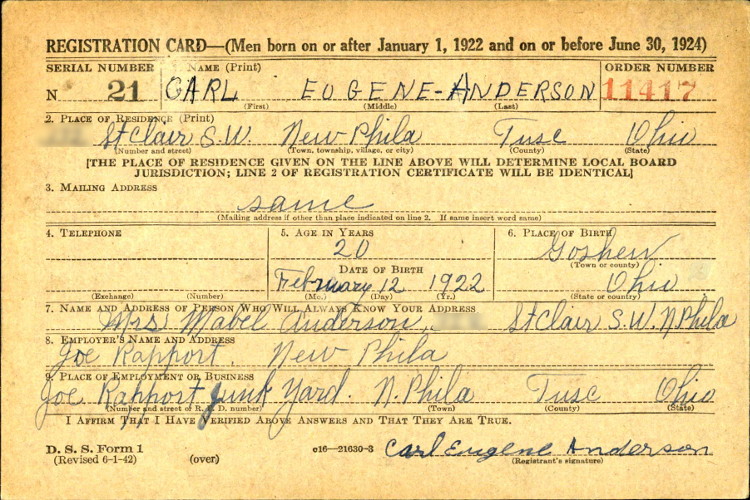
Carl Anderson’s World War Two draft registration card, June 1940. (Source: familysearch.org) 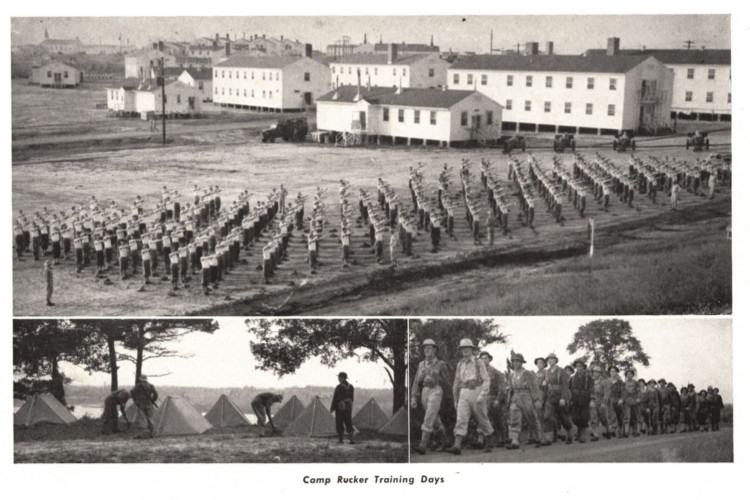
Men of the 81st Infantry Division training at Camp Rucker, Alabama, 1943 (Source: cgsc.contentdm.oclc.org) 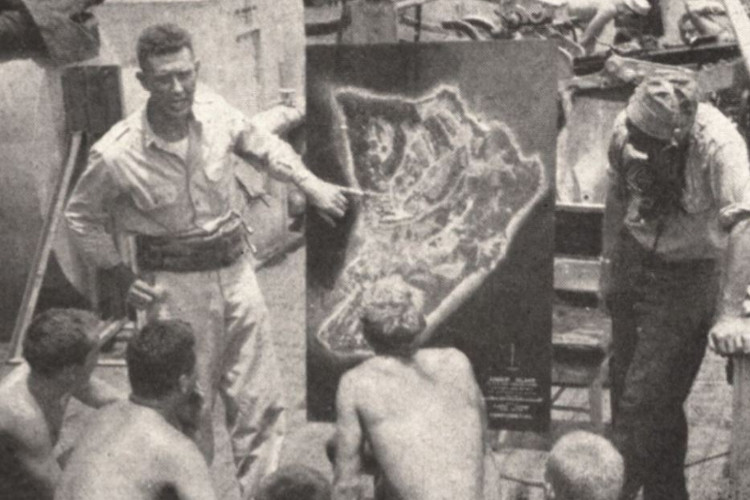
Men of the 322nd Regimental Combat Team being briefed before the invasion of Angaur, 1944. (Source: cgsc.contentdm.oclc.org)
As the battle progressed, the 322nd Regimental Combat Team, including Private First Class Anderson, was instrumental in breaking organized Japanese resistance and securing key objectives, including the island’s airfield area, which was vital to Allied operations in the western Pacific. Fighting frequently devolved into close-quarters engagements as American troops rooted out defenders from caves and ravines, a process that demanded patience, discipline, and imposed heavy casualties on both sides. Among the American casualties was Carl Anderson, wounded on September 27, 1944; he died from his wounds three days later.
News of Carl Anderson’s wounding and death did not reach New Philadelphia until the end of October and funeral services did not occur until the middle of November. The Anderson family held a simple funeral service at the First Baptist Church in New Philadelphia and Private Anderson’s body was laid to rest in the Sharon Moravian Cemetery. Carl Eugene Anderson’s life was shaped by family strife, labor, and duty, but it ended far from home. His sacrifice became part of the enduring legacy of a generation of men and women that answered the nation’s call to defeat fascism.
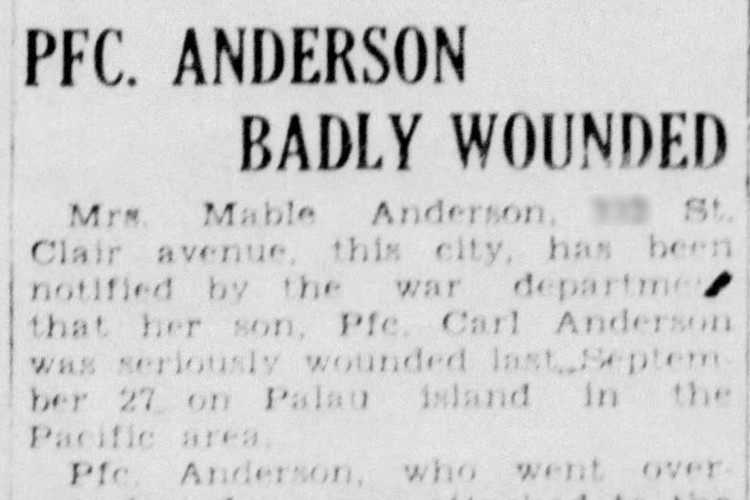
New Philadelphia, Ohio newspaper article reporting Carl Anderson’s wounding, October 1944. (Source: newspapers.com) 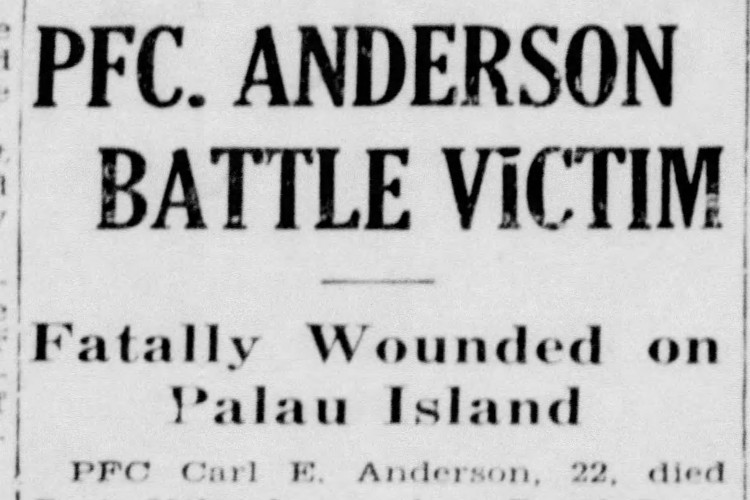
New Philadelphia, Ohio newspaper article reporting Carl Anderson’s death, October 1944. (Source: newspapers.com) 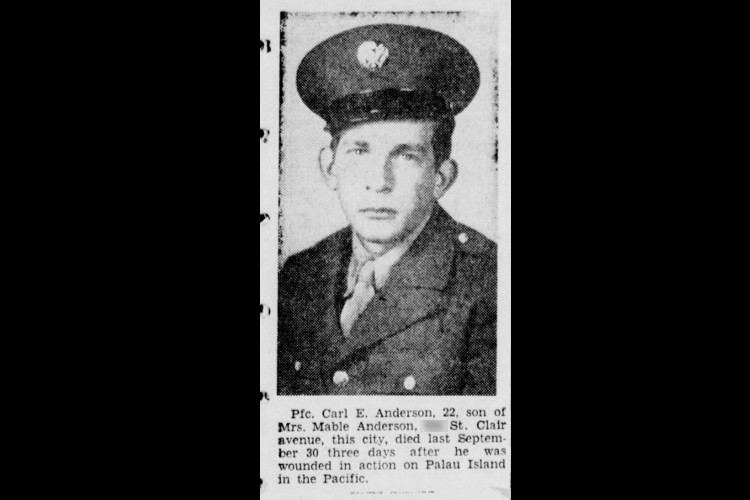
Photograph of Carl Anderson that appeared in the New Philadelphia, Ohio newspaper, November 1944. (Source: newspapers.com)
© Noel B. Poirier, 2026.
 Tuscarawas County Stories