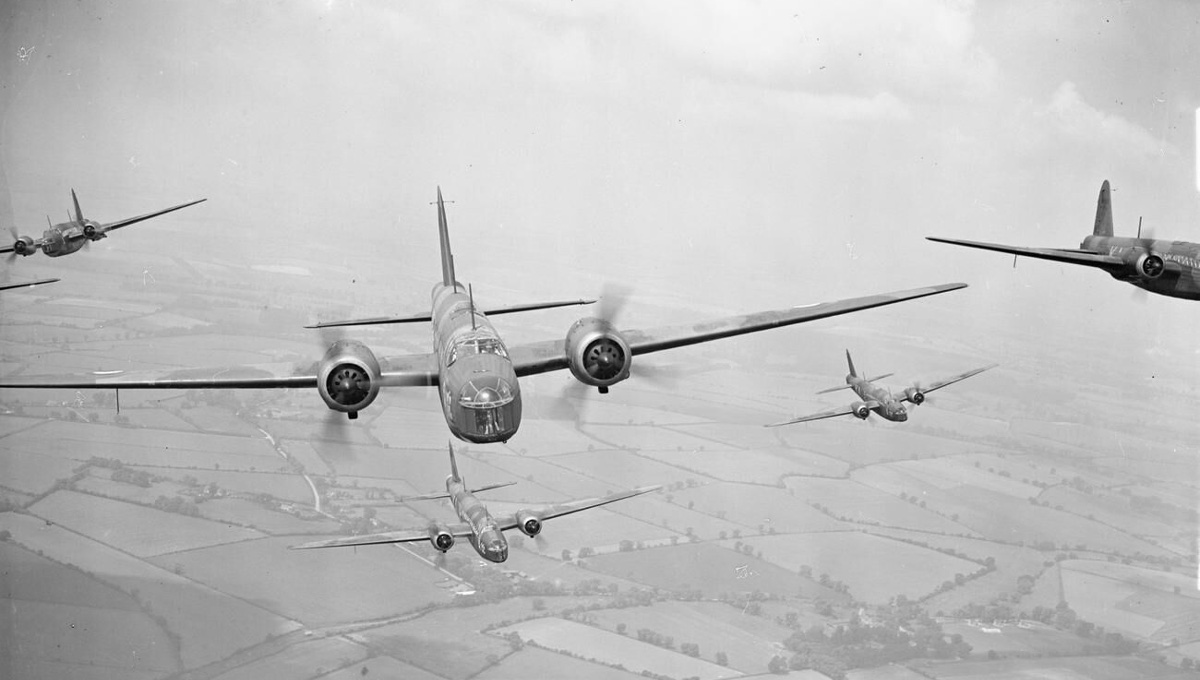
Born in Newcomerstown, Ohio, Paul Franklin Brawley rose from orphaned youth to wartime aviator.
Paul Franklin Brawley (1914-1942) was born in Newcomerstown, Ohio, the only child of Edward Brawley (1860-1922) and Lydia Miller (1876-1928). His parents married, three years before Paul’s birth, in Stark County, Ohio. It was Edward’s second marriage after the death of his first wife. Edward supported his family as a farmer, and Paul’s earliest years were likely shaped by rural life and the routines of a farming household.
When the census was taken in January 1920, Paul lived with his parents in Rome Township, Ashtabula County, Ohio, on his family’s farm. That ended abruptly in May 1922 when Edward Brawley died and left Lydia a widow with a young son. Lydia later remarried, but tragedy struck again in May 1928 when she died as well. Orphaned at fourteen, Paul was sent to Newcomerstown to live with the family of his mother’s sister, an upheaval that must have forced him to mature quickly and adapt to a new household.
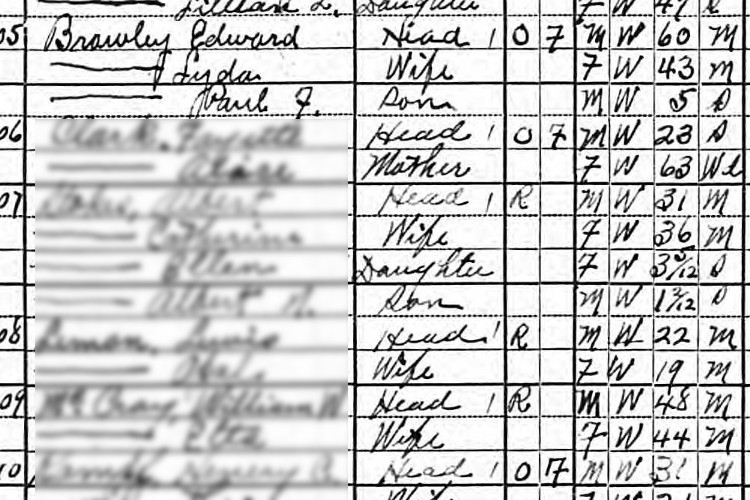
The Brawley family recorded on the 1920 census for Ashtabula County, Ohio. (Source: familysearch.org) 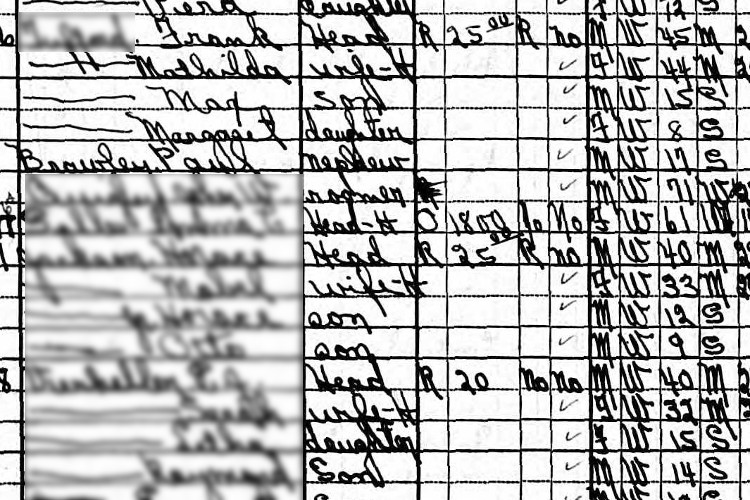
Paul Brawley recorded with his relatives’ family on the 1930 census for Newcomerstown, Ohio. (Source: familysearch.org) 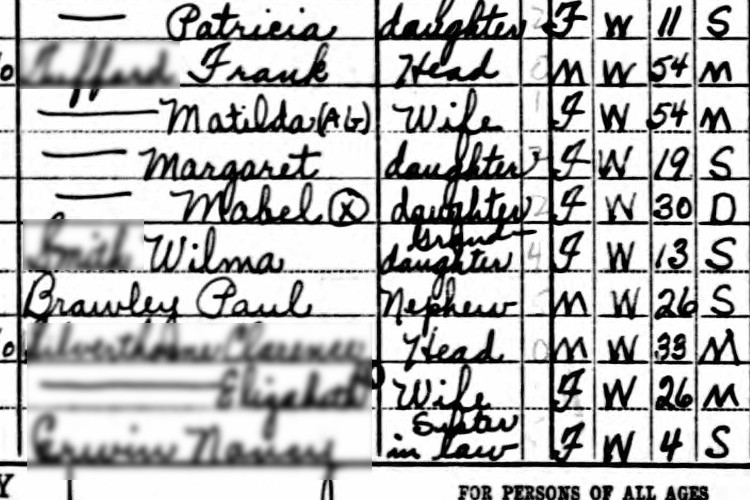
Paul Brawley recorded with his relatives’ family on the 1940 census for Newcomerstown, Ohio. (Source: familysearch.org) 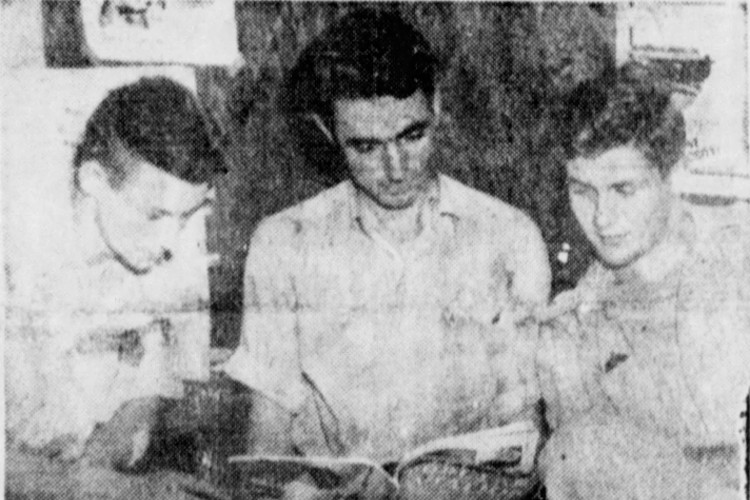
Paul Brawley (center) photographed taking part in the Civil Air Authority program at New Philadelphia, Ohio’s airport, July 1940. (Source: newspapers.com)
Paul lived with his uncle and aunt in Newcomerstown when the 1930 census was taken. Paul’s uncle worked as a foreman for the Pennsylvania Railroad. Paul attended school locally and remained with this family through his teenage years. He completed his education and graduated from Newcomerstown High School in 1939. After graduation Paul found employment as a machinist for the Heller Tool & File Company, and there developed technical skills that hinted at both mechanical aptitude and ambition.
There’s no record of when Paul became interested in flying, but in July 1940 Paul participated in an aviation training program at the airport in New Philadelphia, Ohio. It was this experience that may very well have sparked his path toward military aviation. Paul lived and worked in Cleveland for the National Acme Company when he registered for the draft in October 1940. Rather than waiting to be called, he chose a more immediate route into service. In January 1941, Paul traveled to Toronto, Canada, and enlisted in the Royal Canadian Air Force.
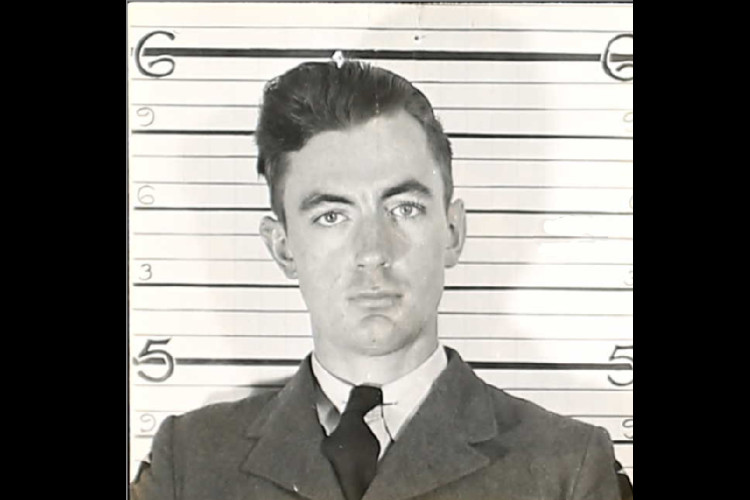
Photo of Paul Brawley taken at the time of his enlistment in the Royal Canadian Air Force, January 1941. (Source: findagrave.com) 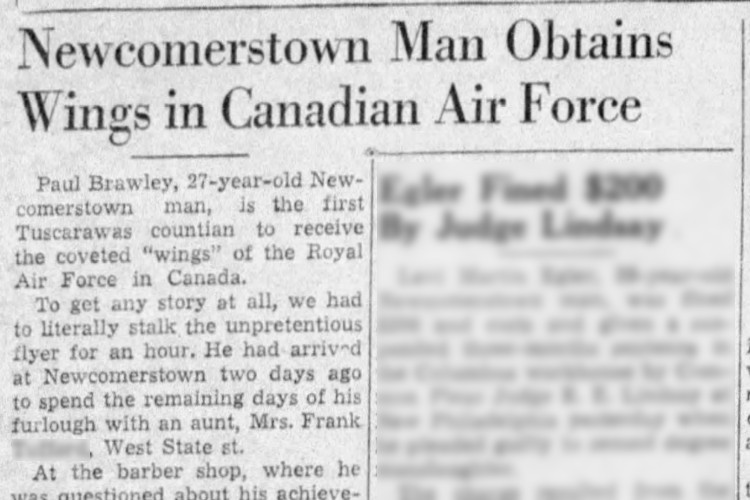
Article in the Coshocton, Ohio newspaper about Paul Brawley receiving his RCAF pilot’s wings, October 1941. (Source: newspapers.com) 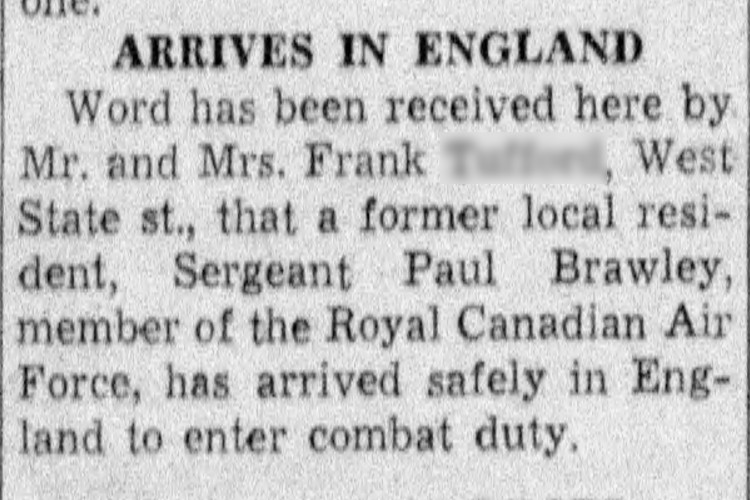
Article in the Coshocton, Ohio newspaper about Paul Brawley arriving in England, December 1941. (Source: newspapers.com) 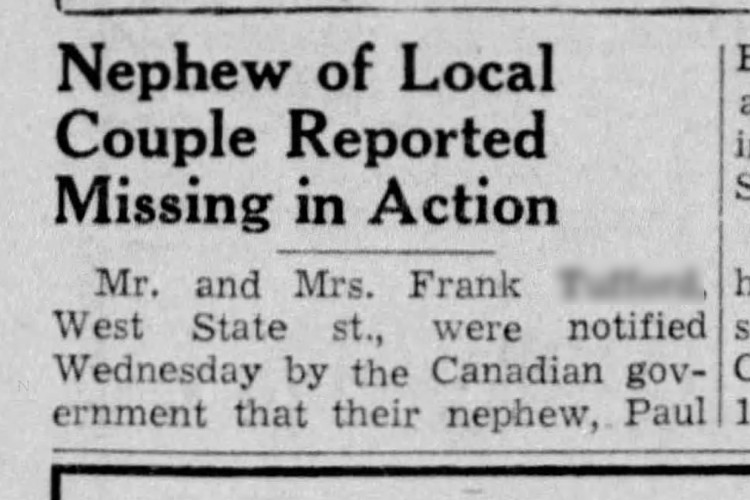
Article in the Coshocton, Ohio newspaper about Paul Brawley being missing in action, September 1942. (Source: newspapers.com)
Paul earned his wings in October 1941 and received an appointment as a sergeant. Two months later, he arrived in England for combat service as the air war over Europe intensified. He was promoted to Flight Sergeant and assigned to No. 101 Squadron of the Royal Air Force, flying Wellington bombers from RAF Stradishall in Suffolk by the fall of 1942. On the night of September 20, 1942, his aircraft (Wellington III # BJ689) was shot down by a German fighter over Novion-Porcien, France on its return from a bombing mission against Saarbrücken, Germany. Paul’s body was never officially recovered, and he was initially listed as missing.
It took until September 1943 for Paul Franklin Brawley to be officially declared dead, his loss recognized by both the Canadian and British governments with a posthumous citation for bravery. He was twenty-eight years old at the time of his death. His name is inscribed on the Canadian Bomber Memorial panels at the Runnymede Memorial in Surrey, England, among thousands who have no known grave. From a childhood shaped in Newcomerstown to a final sacrifice far from home, Paul Brawley’s life reflects the quiet resolve of a hometown son who chose service and gave the ultimate sacrifice in the fight against tyranny.
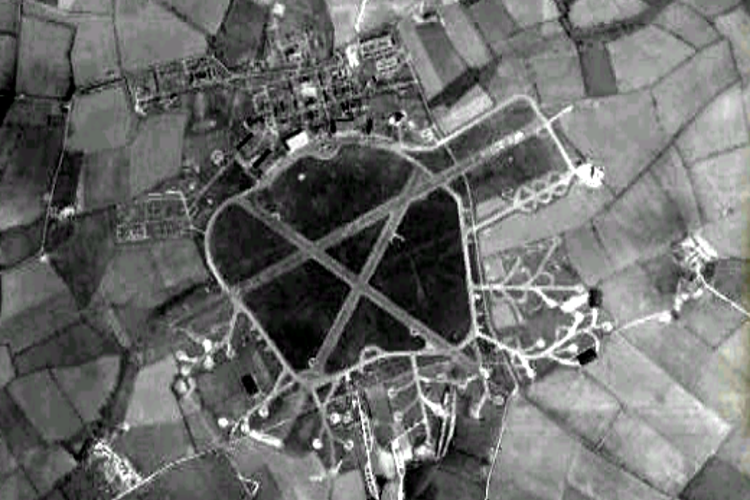
RAF Stradishall Airfield in Suffolk, England photographed in 1945. (Source: wikipedia.com) 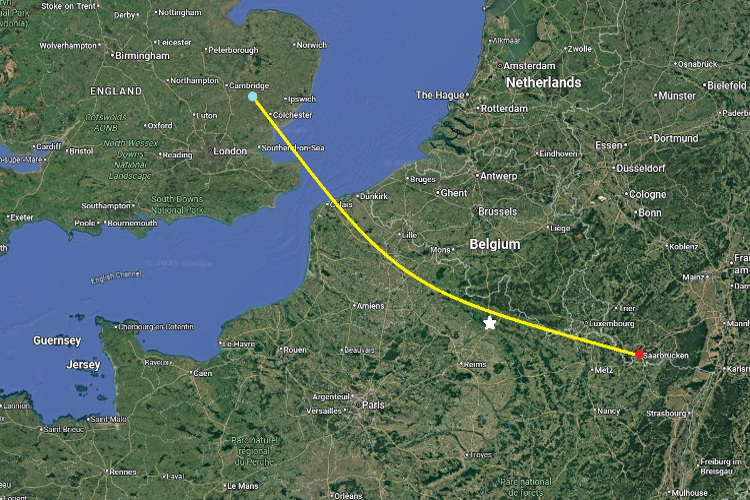
Map showing the approximate route flown by Brawley’s aircraft and where it was shot down (white star). (Source: google.com) 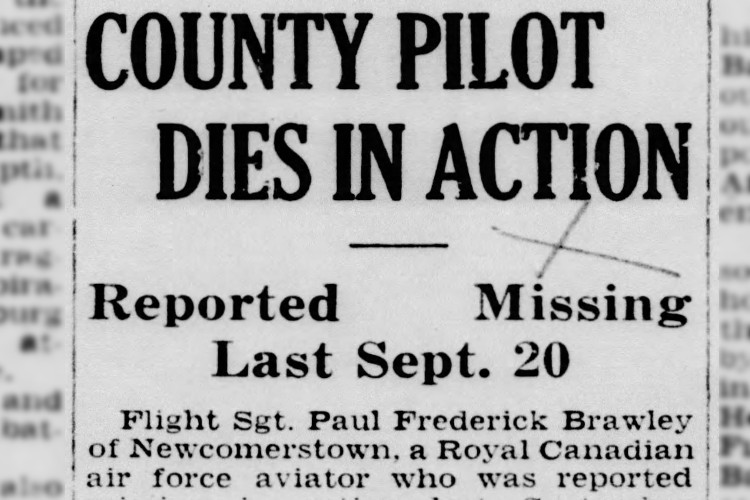
New Philadelphia, Ohio newspaper article on the death of Paul Brawley, June 1943. (Source: newspapers.com) 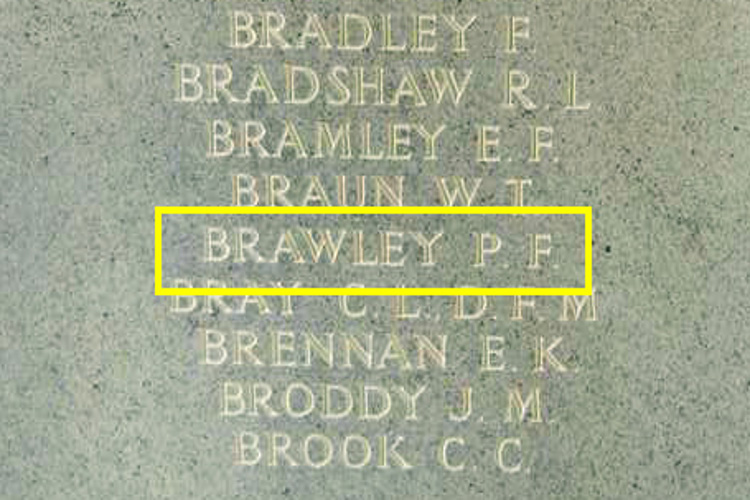
Paul Brawley’s name listed on the Canadian Bomber Memorial Panels at Runnymede Memorial, Englefield Green, Runnymede Borough, Surrey, England. (Source: findagrave.com)
© Noel B. Poirier, 2026.
 Tuscarawas County Stories