
Ferdinand Brucks (1830-1915) was born in Germany and immigrated to the United States when he was 22 years old. He arrived in Tuscarawas County shortly after his immigration and, in 1854, he married German-born Catherine Wegele (1837-1914). It is likely that Ferdinand chose Tuscarawas County as his home because of other family members who had previously arrived. Ferdinand worked as a coal miner and the couple, along with four children, settled in the community of Dover, Ohio by 1870.
Ferdinand’s occupation for most of his life was that of a coal miner, but he saw to it that one of his son’s learned the trade of tinsmithing and, later in life, Ferdinand worked as the clerk and bookkeeper for his son’s tinsmith business in Dover. It is possible that in the 1890s the Brucks family became beneficiaries of an estate, whether from Catherine’s side or Ferdinand’s is unknown, because during that decade they were selling off properties in Dover and Tuscarawas County. That income likely afforded them the money to build two virtually identical houses on Walnut Street in Dover. One of which became their home by 1903.
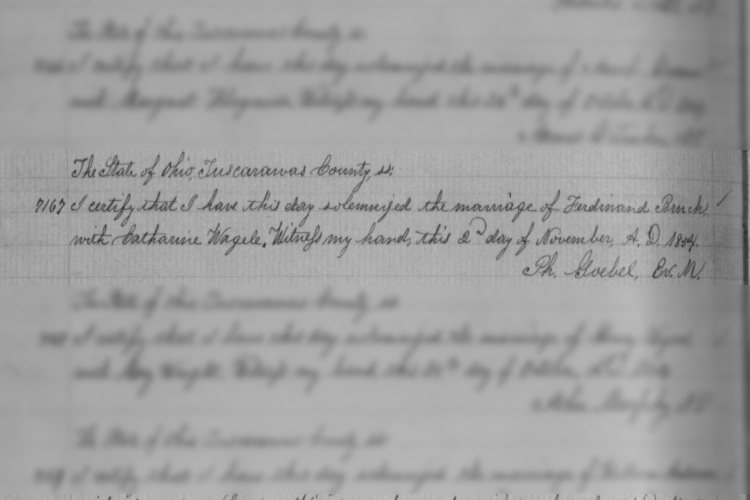
Marriage of Ferdinand Bruck and Catherine Wegele recorded in the Tuscarawas County records, November 1854. (Source: familysearch.org) 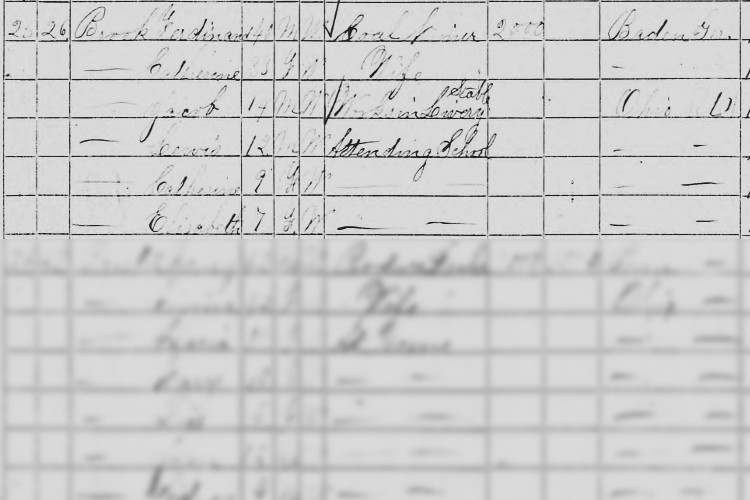
The Bruck family recorded on the 1870 census for Dover, Ohio. (Source: familysearch.org) 
Ferdinand and Catherine Bruck recorded on the 1900 census for Dover, Ohio. (Source: familysearch.org)
The houses that the Brucks built on the lot on Walnut Street were typical of many of the houses being built around the turn of the twentieth century. They were fairly simple gable end, two story homes in a style that would later morph into what was called the American Foursquare home. Though the houses built by the Brucks were not quite that, but more a merging of later Victorian styles with functionality rather than appearance being the most important aspect of the design. The fact that the homes are nearly identical indicate that it is possible that the Brucks purchased commercially available plans for the homes.
The homes they built featured a steeply pitched front gable roof with simple, undecorated eaves, a symmetrical shape with a rectangular footprint and two full stories originally with wood clapboard siding, a common exterior material choice for the period. The simple front porch has a shed-style roof supported by modest posts. The double-hung sash windows mirrored the overall symmetry of the home. A look around Tuscarawas County, Ohio will reveal that this style of home was prominent all across the county and typical of many working-class homes being built in the early 1900s.

1899 Sanborn Insurance Map showing the location of the Bruck home empty. (Source: loc.gov) 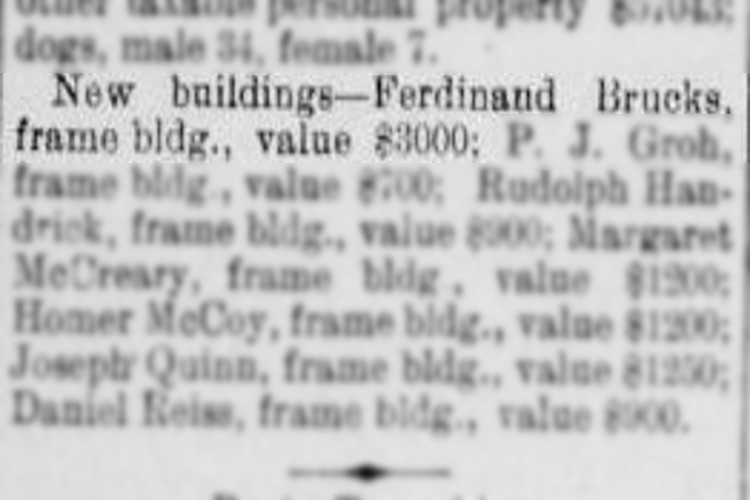
New Philadelphia, Ohio newspaper article possibly reporting on the recent construction of the Bruck home, May 1904. (Source: newspaperarchive.com) 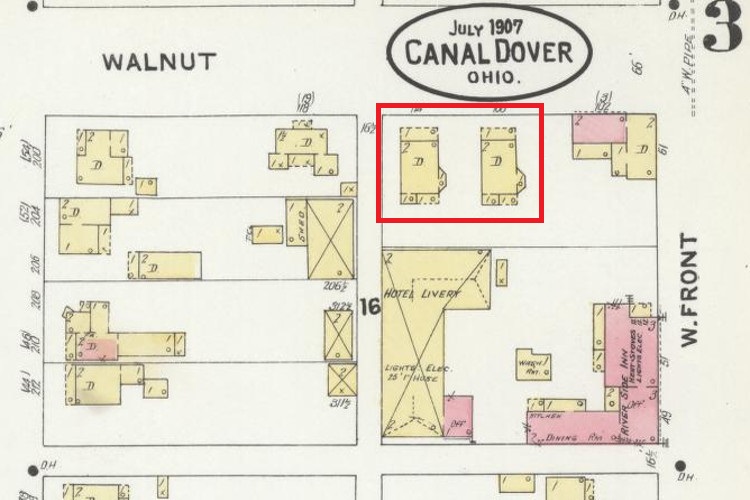
1907 Sanborn Insurance Map showing Bruck home and the neighboring home. (Source: loc.gov) 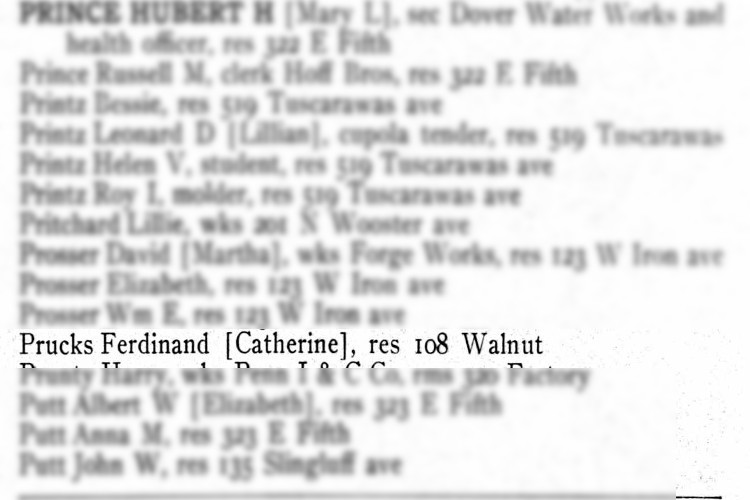
The Bruck family (misspelled) listed on Walnut Street in the 1903 Directory for Dover, Ohio. (Source: ancestry.com)
By the time that Ferdinand and Catherine Brucks lived in the home on Walnut Street, their children had long since left the home. Two of the family’s children, and their families, continued to live in Dover, Ohio. Ferdinand continued to work in his son’s tin shop throughout the first decade of the twentieth century. His son’s business was successful enough that he was able to own property on desirable Wooster Avenue in Dover. However, by the time the 1910 census for Dover was taken, Ferdinand was recorded as being retired.
Catherine Brucks preceded her husband in death; she died in December 1914. Ferdinand lived only a short time longer, dying in late September 1915. The couple only lived in their Walnut Street home for just over ten years. When Ferdinand died, the newspaper’s report of his death said that he was one of Dover’s most prominent men, and that while alive he was “one of the livest wires in Canal Dover.” Ferdinand and Catherine Brucks are buried in Maple Grove Cemetery in Dover, Ohio.
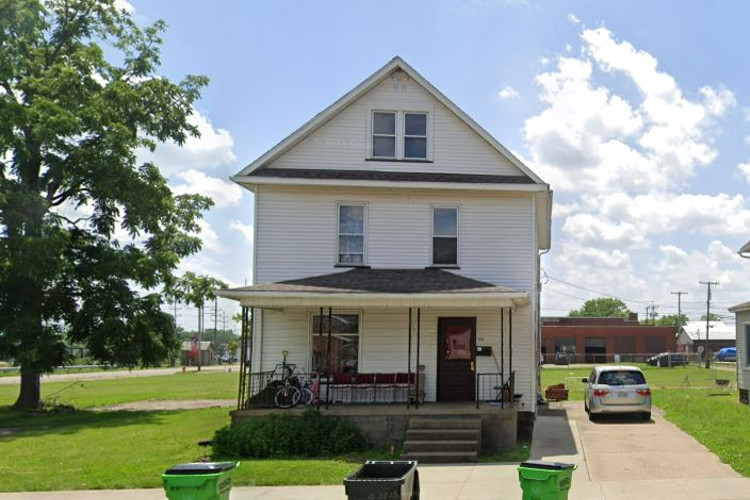
The Bruck home on Walnut Street, Dover, Ohio, 2025. (Source: google.com) 
The Bruck home on Walnut Street, Dover, Ohio, 2025. (Source: google.com) 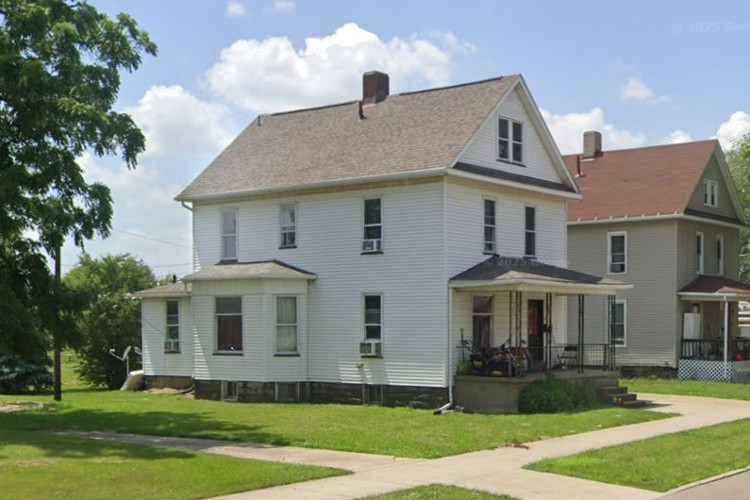
The Bruck home on Walnut Street, Dover, Ohio, 2025. (Source: google.com) 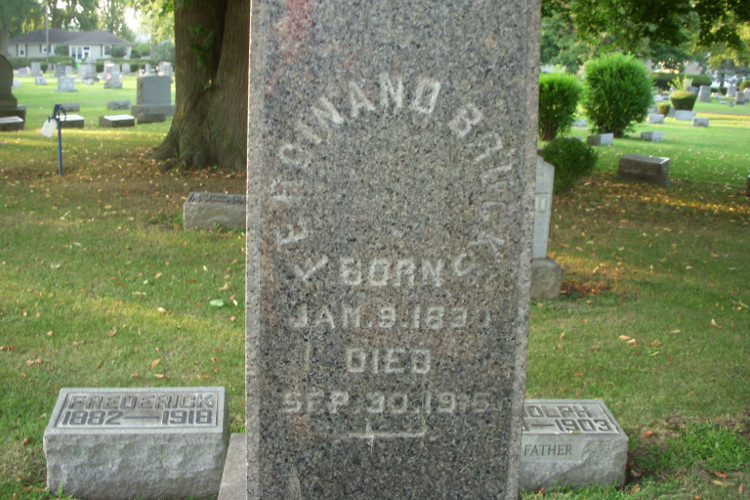
Ferdinand Brucks’ headstone in Maple Grove Cemetery, Dover, Ohio, 2018. (Source: findagrave.com)

© Noel B. Poirier, 2024.
 Tuscarawas County Stories