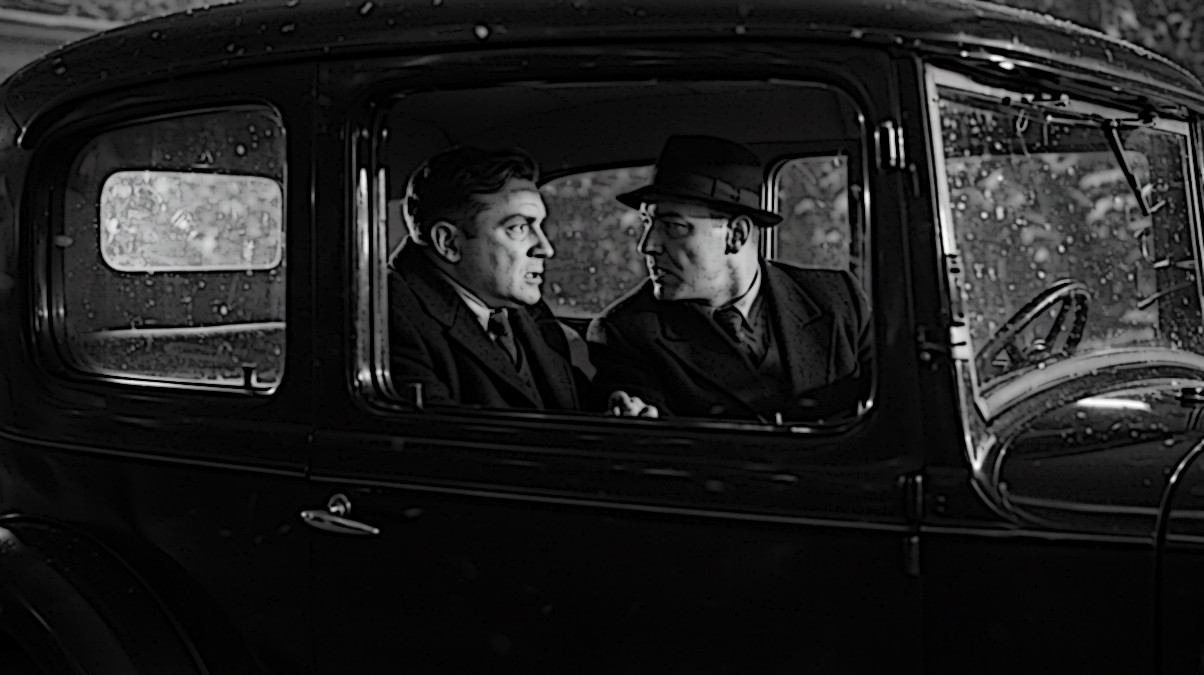
On New Year’s Eve 1930, a night of drinking in Tuscarawas ended in sudden violence and a man’s death.
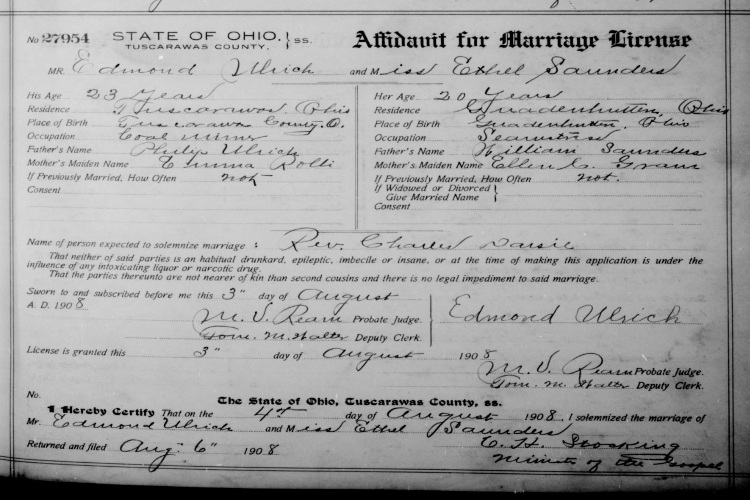
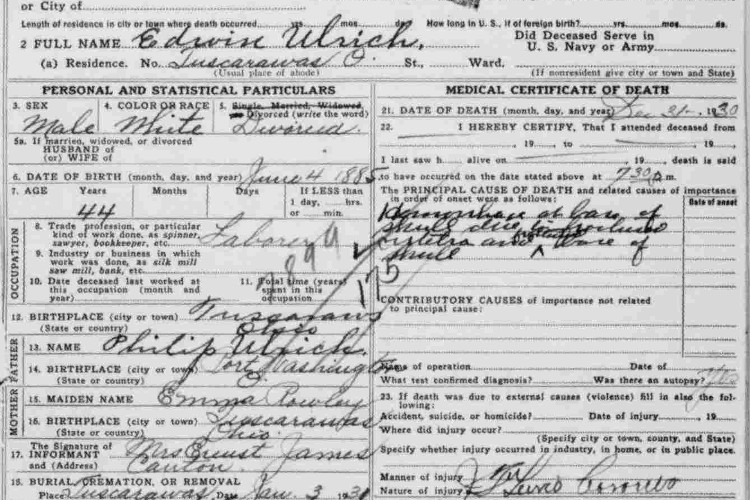
Edwin Ulrich (1885-1930), son of New York–born coal miner Philip Ulrich (1855–1929) and Ohio-born Emma Rowley (1856–1926), was born and raised in Tuscarawas County, Ohio. In 1908 he married Ethel Saunders (1888-?), but the marriage ended in divorce in 1915 after she cited his drinking and neglect. Ulrich spent much of his adult life engaged in heavy industrial labor, working as a glazier in Johnstown, Pennsylvania by 1918, then returning to Tuscarawas County where, in 1920, he was employed as a laborer in the clay works while living with his parents. Both parents were deceased by 1930 and he was then boarding with Roy Moore (1886-1936), a former police officer and coal miner, in Tuscarawas and supporting himself as a cement worker in a block factory.
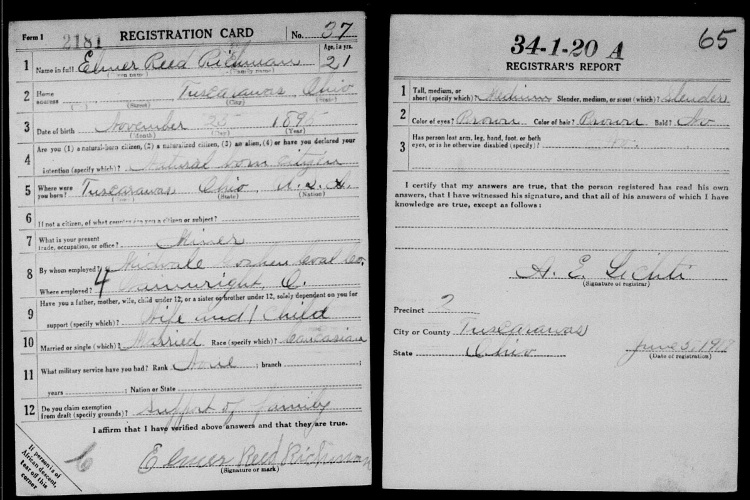
Elmer R. Reichman (1895-1983), son of Tuscarawas County farmer Henry Harrison Reichman (1850–1939) and Lydia Born (1854–1933), was born and raised in Warwick Township, Ohio. He married Catherine Montague (1895–1985) in 1915, and by 1917 the couple had started a family while he worked as a miner for the Midvale Goshen Coal Company. Reichman, his wife, and their two children resided with his parents in Warwick Township in 1920, where he remained employed in the coal industry. By 1930, he and Catherine were raising five children of their own in Warwick Township, and Reichman worked as a clay worker for a sewer pipe company.

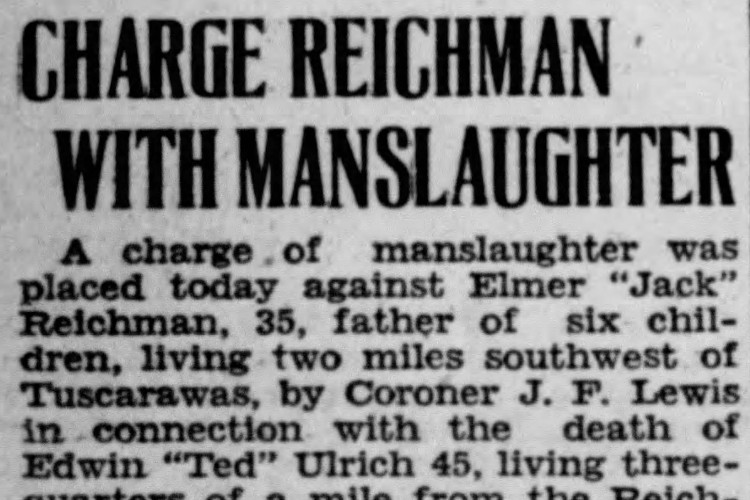
On New Year’s Eve of 1930, what began as a night of drinking and celebration near Tuscarawas ended in violence and death. A gathering at Roy Moore’s drew several men from the community, including Edwin Ulrich and neighbor Elmer Reichman. After the party, Ulrich and Reichman were together in Reichman’s automobile on the edge of town. According to Reichman’s account, Ulrich suddenly attacked him inside the car without warning or provocation. Reichman insisted he had no choice but to defend himself, and struck Ulrich twice with his fists. The blows proved devastating. Ulrich fell, or was thrown, from the car and landed with fatal injuries. His skull was fractured, and his neck broken. He died almost instantly on the roadside, two miles southwest of Tuscarawas, leaving behind more questions than answers.
Local Marshal Tom Fellers (1878-1961) arrested Reichman that very night and placed him in the Tuscarawas County Jail as Coroner James F. Lewis (1899–1977) began an investigation. Only Reichman and Ulrich were confirmed to have been present in the car at the time of the fatal fight and only Reichman’s version of events was known. Within days, Coroner Lewis recommended a charge of manslaughter against Reichman. He was released on a bond of $1,500 and later entered a plea of not guilty, maintaining that his actions were self-defense. The case was then prepared for a Tuscarawas County grand jury to determine what charge, if any, Reichman would face in a courtroom.
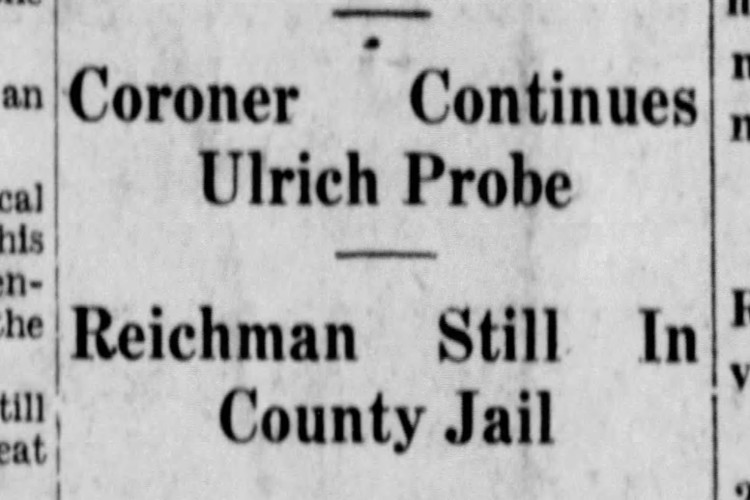
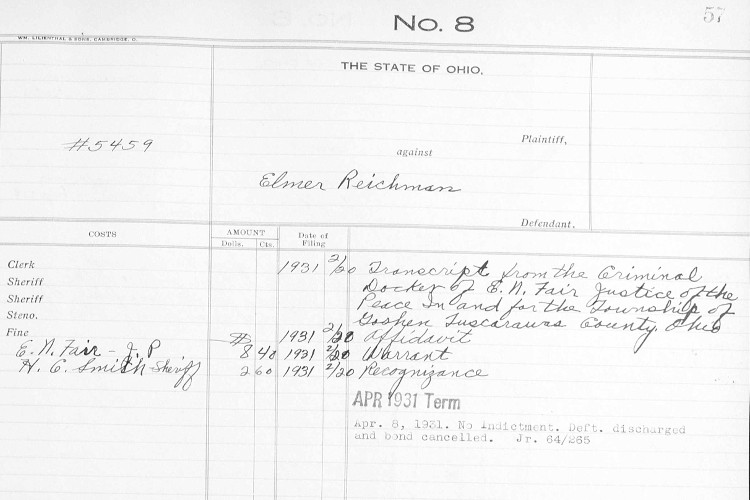
The investigation into Ulrich’s death continued until the grand jury finally met in April 1931 to review all the available evidence and witness testimonies. After a three day session, in which other cases were also reviewed, the grand jury determined to not bring any charges against Elmer Reichman in the death of Edwin Ulrich. Grand jury deliberations are secret and so what aspect of the evidence and testimony swayed them to not indict is unknown. Regardless, Elmer Reichman was free of any charges in Ulrich’s death on April 8, 1931.
The death of Edwin Ulrich was one of those tragic small-town episodes where personal struggles, heavy drinking, and sudden violence collided with irreversible consequences. Though his life ended abruptly on a dark roadside outside Tuscarawas, the legal system ultimately placed no blame on Elmer Reichman, who walked free after the grand jury refused to indict him. With no surviving witnesses beyond Reichman himself, the true nature of what happened inside that car on New Year’s Eve 1930 was left to speculation.
Enjoy my stories?

© Noel B. Poirier, 2025.
 Tuscarawas County Stories