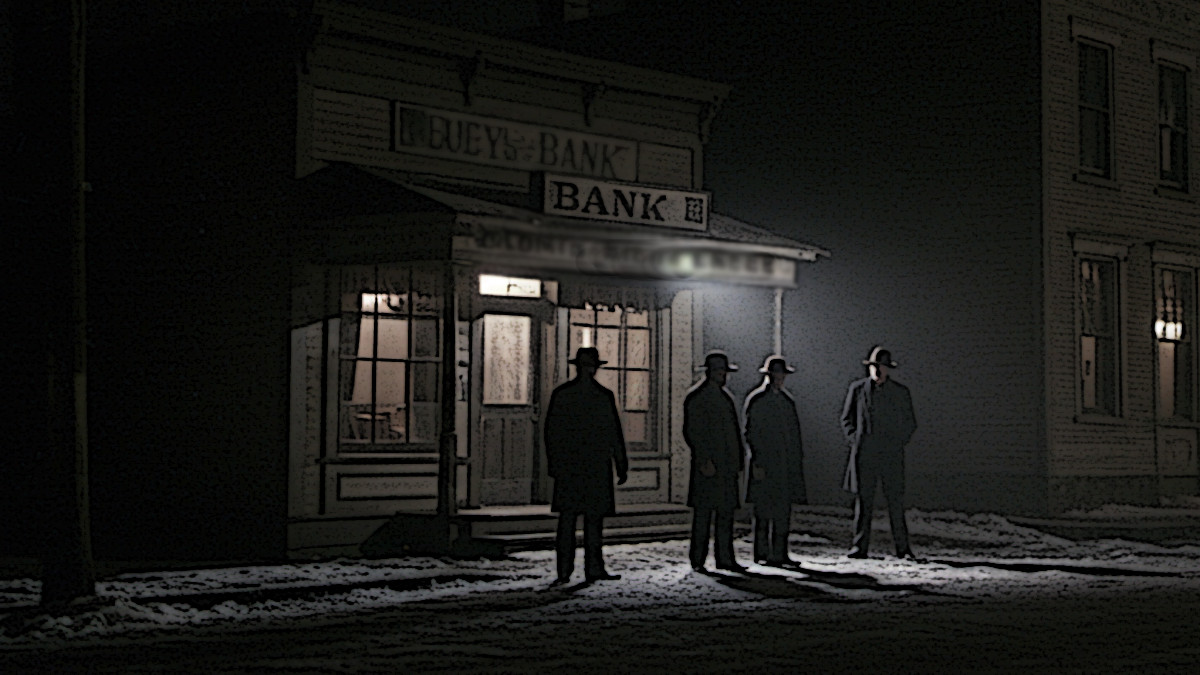
Gunfire shattered the quiet of Shanesville in 1900, when burglars blew open the town bank and terrorized villagers.
In the early morning hours of Thursday, December 13, 1900, the village of Shanesville was thrown into chaos when burglars attacked the private bank owned by John Doerschuk (1841-1916). Around 2 o’clock in the morning, neighbors were awakened by unusual noises. John Roth (1836-1924), a Civil War veteran who lived across the street, investigated with gun in hand and fired a shot toward the intruders, only to be met with a hail of bullets that forced him back to safety. Inside the Doerschuk home, a female houseguest called out when she realized the robbers were at work. A bullet struck the window casing near her head, convincing her to retreat indoors. Meanwhile, the burglars kept townspeople at bay with gunfire as they worked to blow open the bank’s safe.
The robbers were believed to have been five or six in number. They terrorized the townsfolk, firing at anyone who dared to appear in the street, and completed their work without serious resistance. Reports of the stolen amount varied widely, ranging from $1,500 to as high as $25,000, though the eventual indictment recorded the theft of $2,100 (modern equivalent of around $70,000). Banker Doerschuk wisely kept most of his funds in a Canton bank, and left only limited sums on hand in the bank in Shanesville. Once the safe was blown open and looted, the robbers fled in a stolen wagon toward the Wheeling & Lake Erie Railway, abandoned it, and disappeared into the night.

1908 map of Shanesville from the Tuscarawas County Atlas. (Source: ancestry.com) 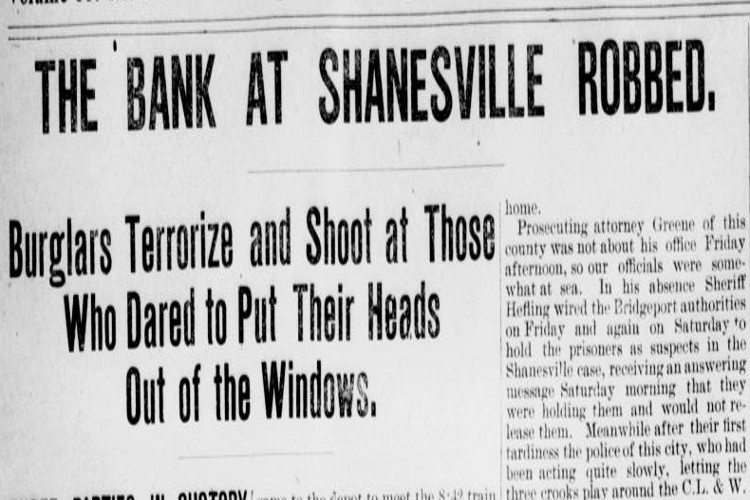
New Philadelphia, Ohio newspaper headline the day after the Shanesville bank robbery, December 1900. (Source: newspaperarchive.com) 
New Philadelphia, Ohio newspaper headline on the arrest of three of the Shanesville bank robbers, December 1900. (Source: newspaperarchive.com)
The following day, suspicion fell on three men who appeared in New Philadelphia at the Cleveland, Lorain and Wheeling railroad depot. Witnesses described them as strangers flashing large amounts of money, one of whom carried a satchel and bore a bandaged, bloodstained arm. The station’s express agent and others noted their presence at the depot, but out of fear no one confronted the trio of men. Only later, after being notified of the men, did Deputy Sheriff Charles J. Wagner attempt to alert authorities as the men boarded a train. They were trailed southward through Uhrichsville, where they joined the other burglars, and to the small community of Holloway where local residents reported them sleeping in a schoolhouse. The men then boarded a train for Wheeling, West Virginia on which they were intercepted by law enforcement. A confrontation took place on the moving train. One man escaped, but three men were arrested after a brief struggle.
The three men taken in custody—Robert Haley, James Fitzgerald, and John Day—were transferred to Tuscarawas County under heavy guard. When brought before the mayor, they denied any involvement, but evidence on their persons tied them to the burglary, including large sums of money, nitroglycerine, and safe-cracking tools. They were committed to jail under $3,000 bond each to await trial. Though accomplices remained at large, the arrests quieted the panic that had spread across the county. For weeks afterward, however, villagers and officials alike remained unsettled, convinced that the same gang had been responsible for multiple bank robberies across Ohio.
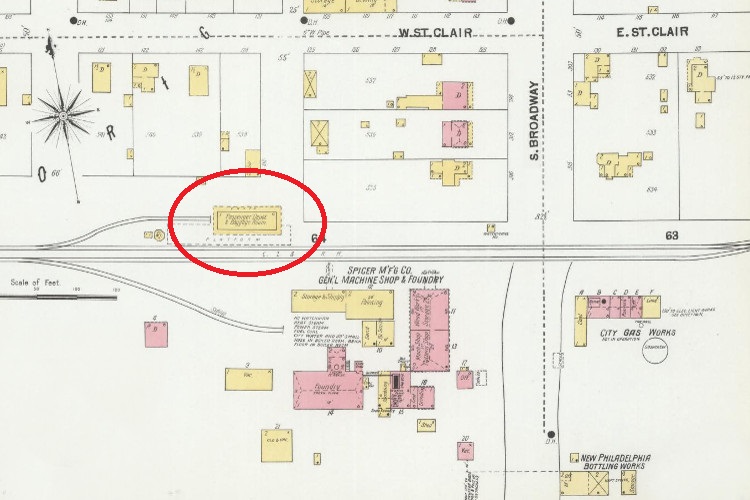
The Cleveland, Lorain and Wheeling Railway depot located in New Philadelphia, Ohio, 1901. (Source: loc.gov) 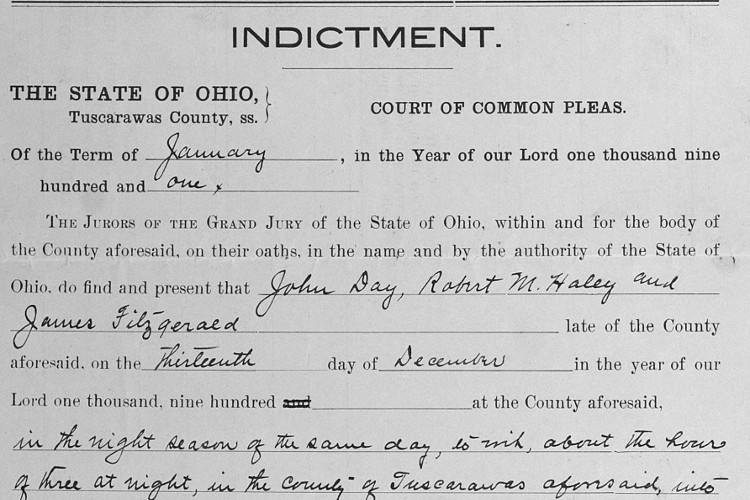
Detail from the indictment of the three burglary suspects, January 1901. (Source: familysearch.org) 
Detail from the three burglary suspects’ criminal case docket, 1901. (Source: familysearch.org)
The three men were indicted shortly after their arrest and all three plead ‘not guilty’ to the charges. They also all requested separate trials and were represented by separate defense attorneys. The burglars’ case went south though when one of the men, John Day, decided in February 1901 to change his plea to guilty. A few days later another of the burglars, James Fitzgerald, went to trial and after extensive questioning of witnesses was found guilty. A week later the third and final burglar’s trial took place and he, as well, was found guilty of the charge of burglarizing the Shanesville bank. All three men were sentenced to the Ohio State Penitentiary.
The fate of the other men who took part in the Shanesville bank burglary and shootout remains unknown. The fears of the community, that this gang was responsible for other robberies and even murder, proved well-founded when the captured men were implicated in several additional bank heists and at least one killing. As with many criminals of the era, the historical record of their lives after incarceration are difficult to trace. Yet for one night in Shanesville, the gang left behind a legacy of violence and terror that haunted the town for years to come.
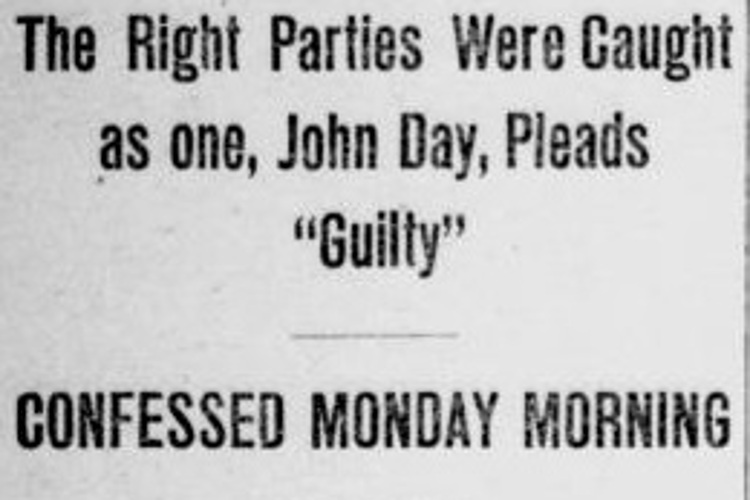
New Philadelphia, Ohio newspaper headline on the guilty plea of burglar John Day, February 1901. (Source: newspaperarchive.com) 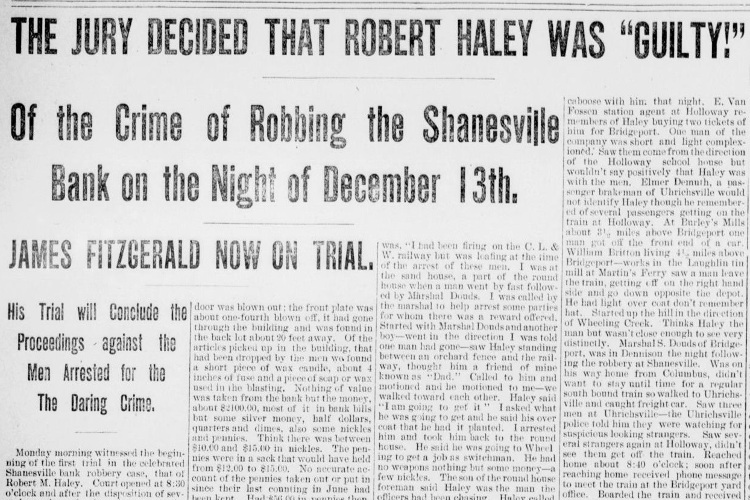
New Philadelphia, Ohio newspaper headline on the guilty verdict of burglar Robert Haley, February 1901. (Source: newspaperarchive.com) 
New Philadelphia, Ohio newspaper headline on the guilty verdict of burglar James Fitzgerald, February 1901. (Source: newspaperarchive.com)
Enjoy my stories?

© Noel B. Poirier, 2025.
 Tuscarawas County Stories