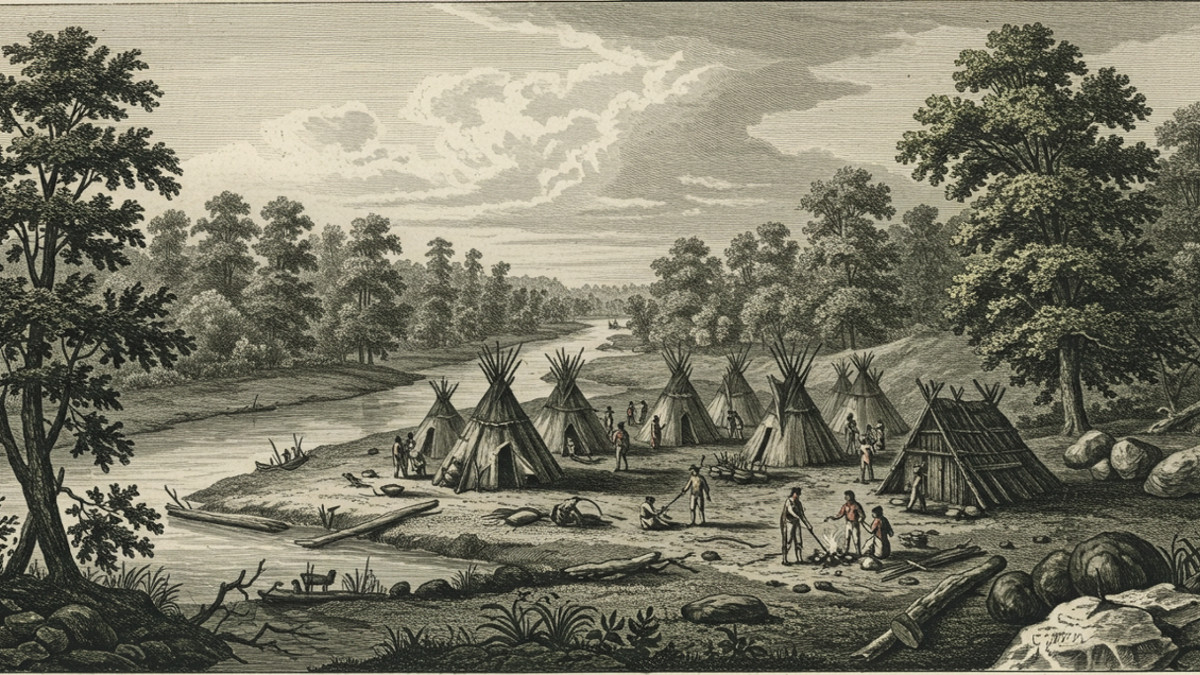
Before European settlers arrived, Tuscarawas County was home to a thriving indigenous community that gave the county its name.
Like many people, I spend a great deal of my time researching my family history. I try to discover who the “first” ancestor of mine was to settle somewhere, whether that’s my family line in Ohio, Canada, or elsewhere. Sometimes in the search for our “first families” we lose track of the fact that they often were far from the first to live in any given area. That fact is just as true when exploring the history of Tuscarawas County, Ohio as well. The name of the county itself reinforces the fact that the land was occupied for thousands of years before the first Europeans ever even imagined it existed.
William C. Mills, an early student of archaeology and Ohio’s indigenous people, excavated countless mounds and village sites throughout the state of Ohio and identified numerous mounds and village sites all across Tuscarawas County. His work at the turn of the 20th century, though in a modern sense crudely done, shed light on the people who occupied the Ohio region for generations before even the indigenous tribes we are familiar with; the Lenape (Delaware), the Shawnee, the Wyandot, etc. Tuscarawas County was dotted with such mounds and village sites, though most of those sites have been all but obliterated due to modern development.
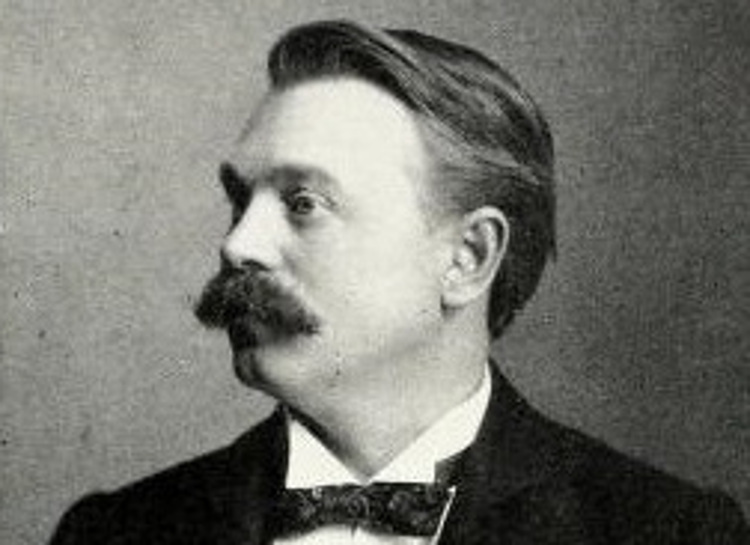
William C. Mills, c. 1898, from the book Records of the Past, Volume II, 1903. (Source: archive.org) 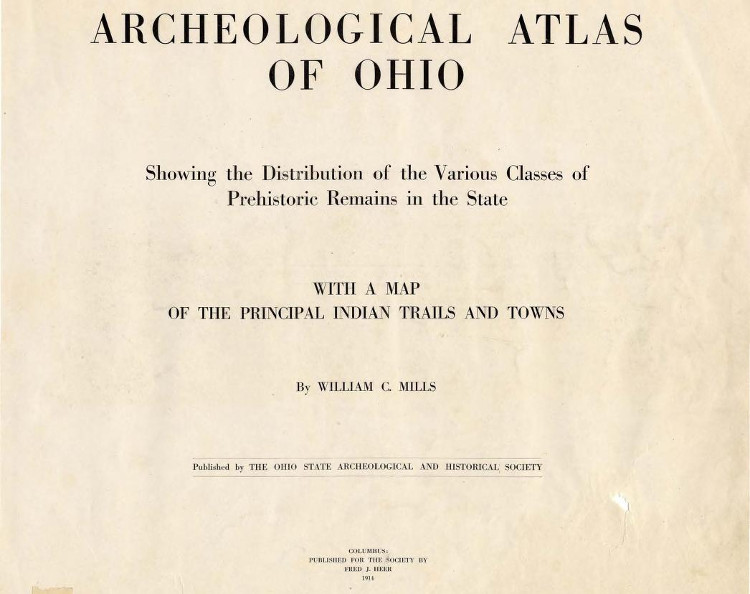
The title page of William C. Mills’ Archeological Atlas of Ohio, 1914. (Source: archive.org) 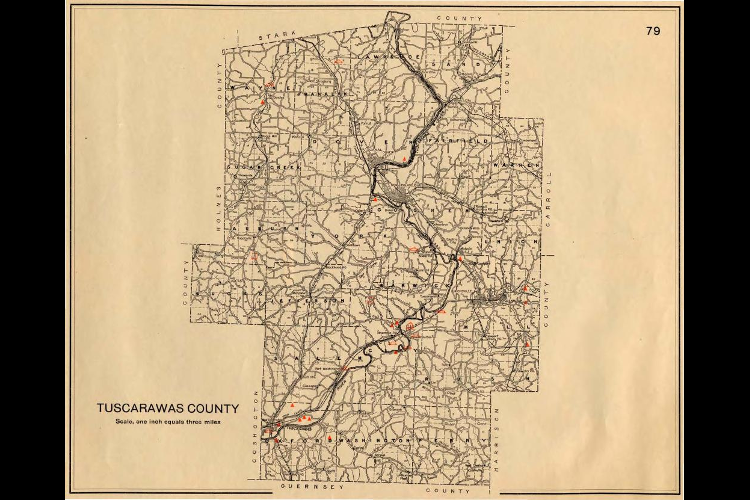
William C Mills’ map showing mounds and village sites (in red) in Tuscarawas County, 1914. (Source: archive.org)
One story of how Tuscarawas County received its name comes from the idea that the Tuscarora tribe, originally from North Carolina, settled and hunted in the region and gave it its name, though with modification. As the Tuscarora were a member of the Iroquois Confederacy, this version of its naming only strengthened the Iroquois claim over the Ohio region, and as no contemporary witnesses ever wrote about the Tuscarora inhabiting the area its accuracy is dubious. A more likely reason for the name Tuscarawas came from early Moravian missionary John Heckewelder.
By the time of the arrival of the Moravian missionaries in Ohio in the mid-18th century, the region was inhabited by bands of the Lenape tribe. These bands were driven west by treaties and conflicts over the years since European settlement in their home lands along the Delaware River in Pennsylvania. Moravians, in their efforts to convert, made a point of learning the indigenous languages so as to more effectively preach the gospel. It was John Heckewelder who pointed out that the word “tuscarawas” meant “old town” in the language of the Lenape bands then settled in modern Tuscarawas County. That “old town”, called Tuscarawas, was one of the largest in Ohio at the time and was located just outside present Bolivar, Ohio.
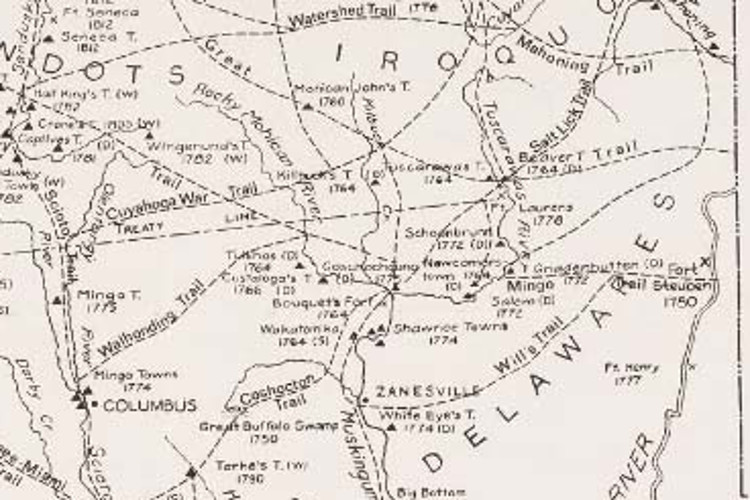
Modern map showing tribes, trails, and towns in eastern Ohio around 1776. (Source: google.com) 
Page from Moravian missionary David Zeisberger’s book on the Delaware language, 1776. (Source: archive.org) 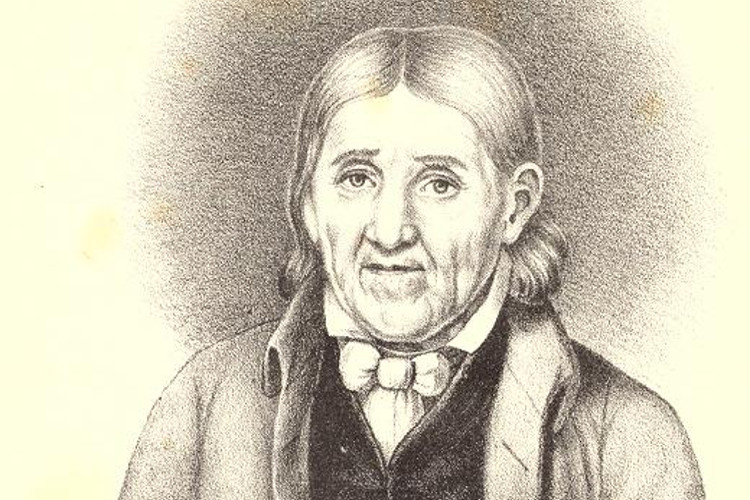
Moravian missionary John Heckewelder from a book about his life printed in 1847. (Source: archive.org)
The Lenape town of Tuscarawas, established around 1755 by the leader Tamaqua—known to Europeans as King Beaver—was located near where modern Sandy Creek and the Tuscarawas River come together. In 1761, Major Robert Rogers described the town as commanding “3,000 acres of cleared land” and sustaining a force of about 180 warriors, suggesting both agricultural productivity and military strength. The following year, missionary John Heckewelder recorded the community as consisted of roughly 40 wigwams, while in 1764 Colonel Henry Bouquet found it temporarily abandoned, though it had previously supported around 150 warriors. By 1771, however, missionary David Zeisberger observed Tuscarawas as uninhabited, a victim of warfare and westward European pressures.
Remembering the indigenous history of Tuscarawas County adds depth to our understanding of the land our families later came to inhabit. Long before farms, towns, and roads appeared, the valleys and rivers were home to thriving communities whose presence is now only faintly remembered in names, archaeological traces, and the rare accounts of early observers. The story of Tuscarawas, the Lenape “old town,” reminds us that our search for “first families” must stretch further back than our own ancestry, honoring those who lived, worked, and shaped the land for generations before European settlement.
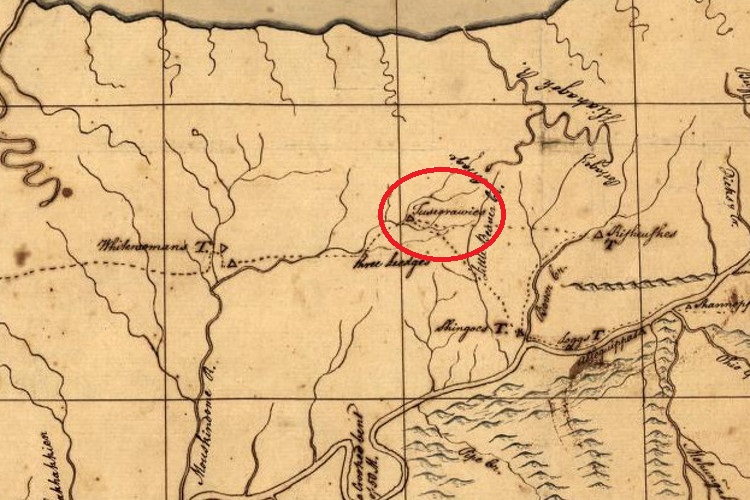
The village of Tuscarawas noted on an early 1750s map. (Source: loc.gov) 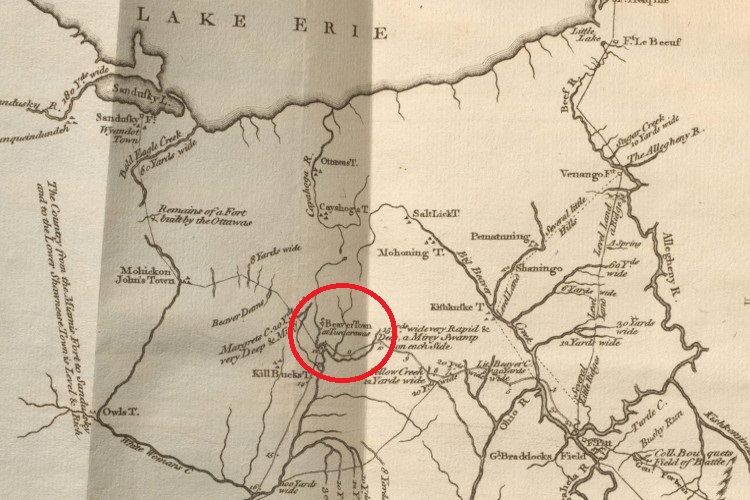
The village of Tuscarawas noted on an Henry Bouquet’s map of the region, 1766. (Source: archive.org) 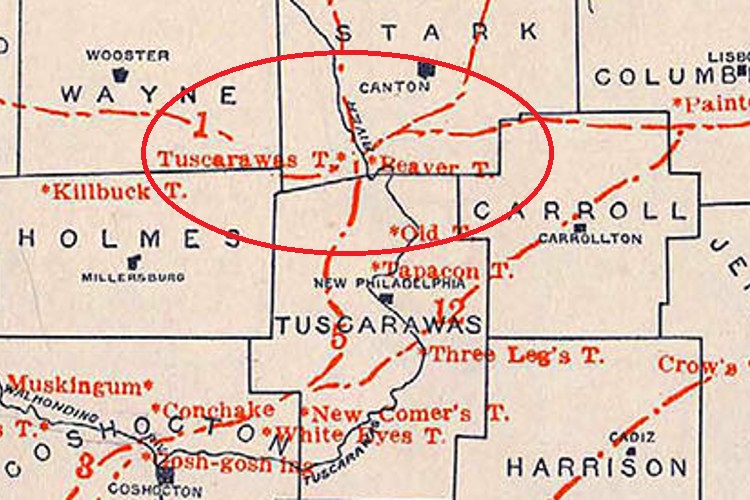
The village of Tuscarawas noted on William C. Mills map of Ohio native trails and towns, 1914. (Source: archive.org) 
Modern aerial view showing the general area where the Lenape village of Tuscarawas was located, 2025. (Source: google.com)
Enjoy my stories?

© Noel B. Poirier, 2025.
 Tuscarawas County Stories