
A Tuscarawas County immigrant couple’s quiet farm life was shattered with arsenic and suicide in 1855.
Content warning: This post contains references to suicide. If you or someone you know has a mental illness, is struggling emotionally, or has concerns about their mental health, there are ways to get help. Click here for resources to find help for you, a friend, or a family member.
John Jacob Hoffman was born in Germany in 1797 and eventually made his way to the United States, though the exact date of his immigration remains unknown. At some point either in Germany or Ohio, he married Mary, who was also of German birth, and together they settled in Holmes County, Ohio, near the small community of Winesburg. The Hoffmans relocated to York Township in neighboring Tuscarawas County by 1840, where they appeared in the federal census along with a young woman—likely a daughter—aged between 15 and 20. Their presence in the rural, agrarian community suggests that the Hoffmann sought to build a life rooted in farming and self-sufficiency, like many German immigrants of the time.
They were still residing in York Township when the 1850 census was taken, where John Jacob was listed as a farmer with real estate valued at $600—a modest but meaningful sign of stability. The couple later moved to the Ragersville area of Tuscarawas County, and by the summer of 1855, John Jacob was also farming a parcel of land about seven miles away near the small community of Stone Creek. Though the details of their earlier life and immigration are obscured by time, the available records trace a quiet, persistent arc of settlement, work, and community presence in one of Ohio’s historically German-speaking regions.

The Winesburg, Holmes County vicinity depicted in the 1907 Atlas of Holmes County, Ohio. (Source: ancestry.com) 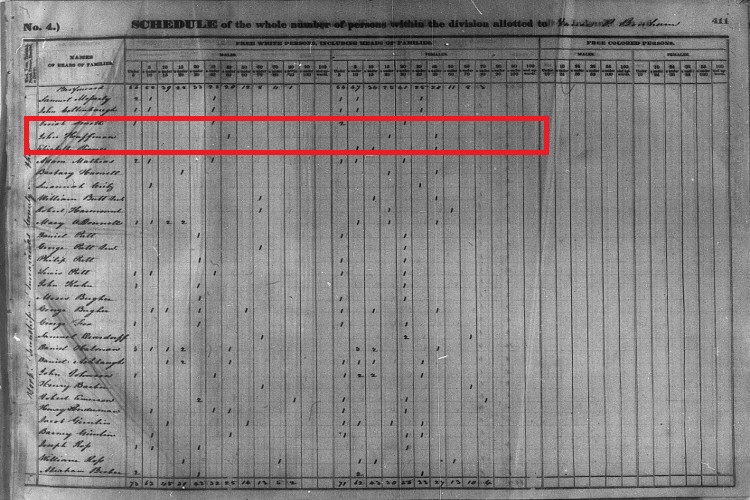
The Hoffmans recorded on the 1840 census for York Township, Tuscarawas County, Ohio. (Source: familysearch.org) 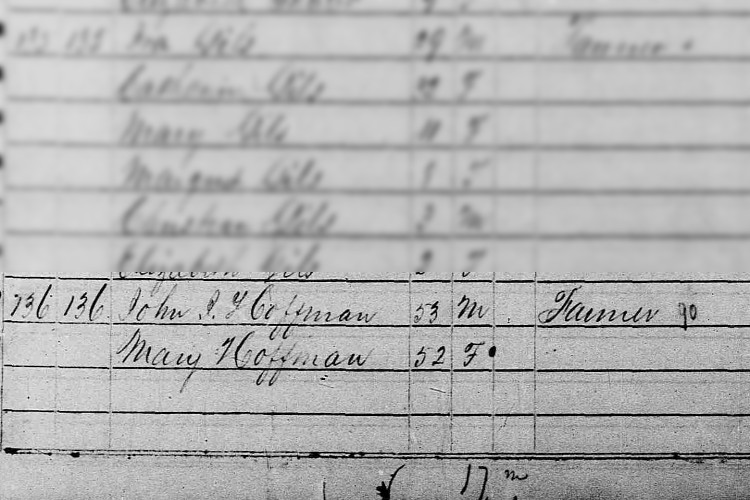
The Hoffmans recorded on the 1850 census for York Township, Tuscarawas County, Ohio. (Source: familysearch.org)
The Tuscarawas County community was shocked in the summer of 1855 when John Jacob Hoffman made a bold, and deliberate, attempt to poison his wife. On Sunday, July 17th, 1855, Hoffman laced cuts of meat with arsenic before leaving to undertake his farm work for the day. Mary Hoffman, unaware of what her husband had done, prepared a soup using the tainted meat. After eating some of the soup later, she was overcome and began to vomit profusely. A local doctor, Dr. Rhoadt, was called for and tested the soup by feeding it to the Hoffman’s dog, which promptly exhibited the same symptoms. Dr. Rhoadt investigated the meat crock and discovered several grains of arsenic. Fortunately, Mrs. Hoffman survived the poisoning and, by the time the report made several Ohio newspapers, was recovering.
It took local authorities two days to respond to the poisoning of Mrs. Hoffman. A warrant for Hoffman’s arrest for attempted murder was issued on the following Tuesday, and Hoffman was located at his property near Stone Creek, Ohio shortly after. When confronted by the arresting officers, he allegedly declared that they would never take him to jail alive. While in custody and being transported, Hoffman suddenly became seriously ill. He was placed into a carriage and rushed towards the doctor in Ragersville, but he died shortly after arriving.
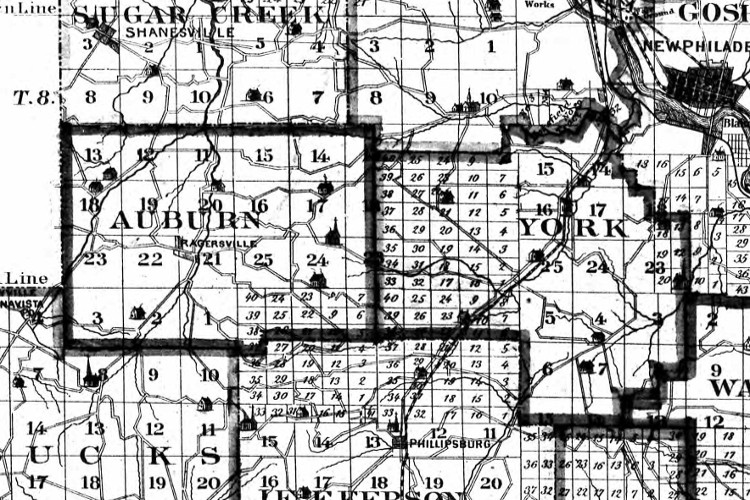
Auburn and York Townships, Tuscarawas County, Ohio from the 1875 Atlas of Tuscarawas County. (Source: ancestry.com) 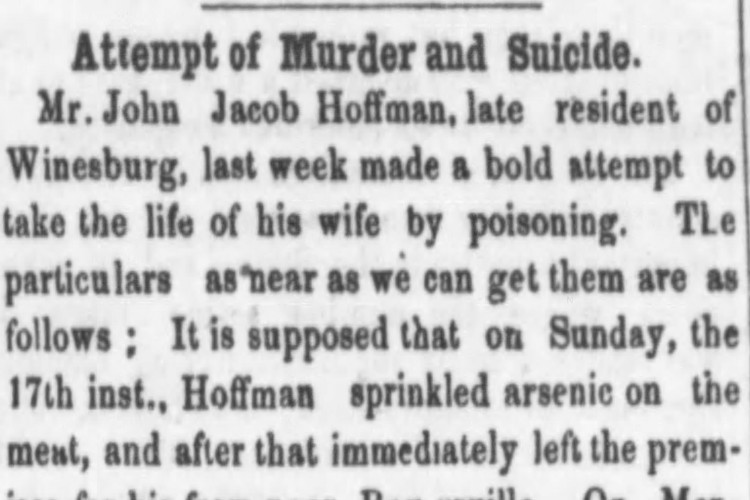
Portion of a newspaper story about the Hoffman case that appeared in a Carrol County, Ohio newspaper, August 1855. (Source: loc.gov) 
A c. 1854 arsenic bottle. (Source: collectorsweekly.com)
Given that Hoffman used poison in his attempt to murder his wife, suspicion soon turned to suicide. Newspaper reports later stated that he took a fatal dose of opium just before being transported by authorities. What became of Mary Hoffman after her husband’s attempt on her life remains unclear. It is possible that she remarried, though her age at the time may have made that unlikely. No individual matching her identity can be found in subsequent census records, suggesting she may have died before the 1860 census was taken.
The location of John Jacob Hoffman’s burial following his suicide is also uncertain, though it was likely in a graveyard near Ragersville or Stone Creek. His death brought a swift and grim end to an already disturbing episode, leaving behind an ailing and traumatized wife—and many unanswered questions. What could have compelled Hoffman, an aging farmer, to carry out such a deliberate and violent act? The incident stands as a haunting reminder of the quiet desperation that can lie hidden beneath even the most unassuming lives.
Enjoy my stories?

© Noel B. Poirier, 2024.
 Tuscarawas County Stories