
Four well-liked young men, a flooded bridge, and a night that nearly claimed their futures forever.
It was cold and rainy Sunday afternoon, January 12, 1913 when four friends decided to travel from Dover to visit Mineral City’s newspaper office. It was a trip the group – made up of Perry Floyd Bixler (1895-1972), linotype operator for the Daily Reporter newspaper, Lewis Lanzer (1889-1977), a mill worker, James Harriff (1892-1965), a railroad brakeman and Milton Earl Thompson (1892-1964), an advertising employee – made weekly. This trip would end dramatically different than their previous ones and almost cost the men their lives.
The men’s horse-drawn surrey, rented from Dover Liveryman Elmer Froelich (1871-1961), approached a nearly submerged bridge over the flooded Tuscarawas River near Zoar Station. Not appreciating the potential danger ahead, the men drove the horses forward through the chest-deep current. The horses struggled as they crossed the bridge and, suddenly, lost their footing. With a violent lurch, the carriage tilted and started to roll over as the horses fell, legs flailing, into the river.
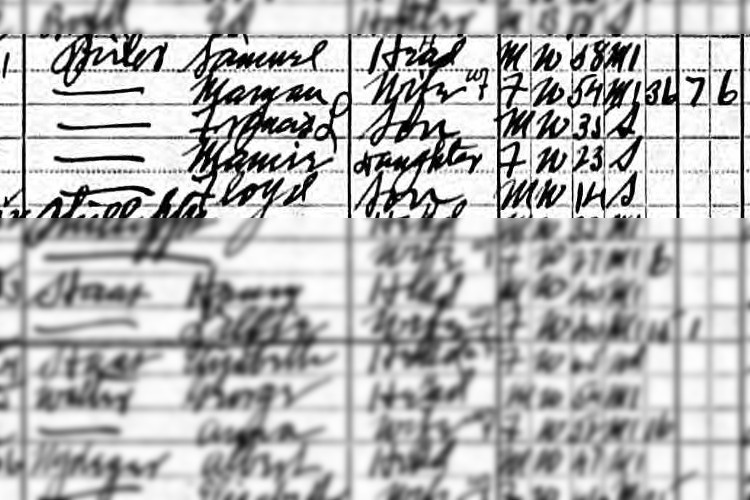
The Bixler family recorded on the1910 census for Dover, Ohio. (Source: familysearch.org) 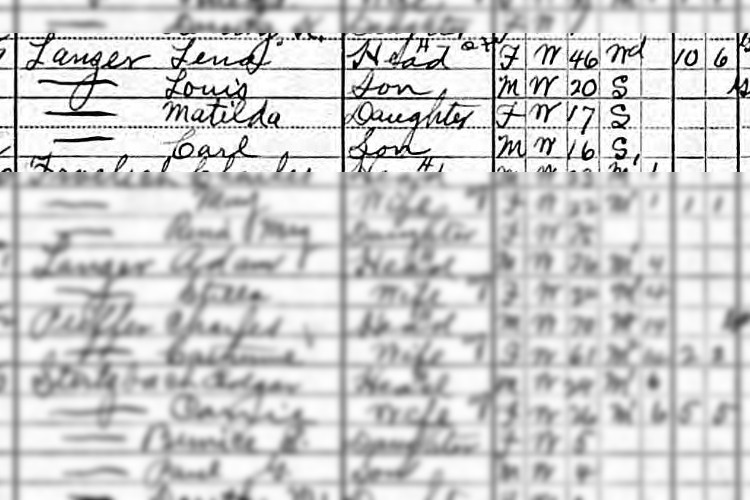
The Lanzer family recorded on the1910 census for Dover, Ohio. (Source: familysearch.org) 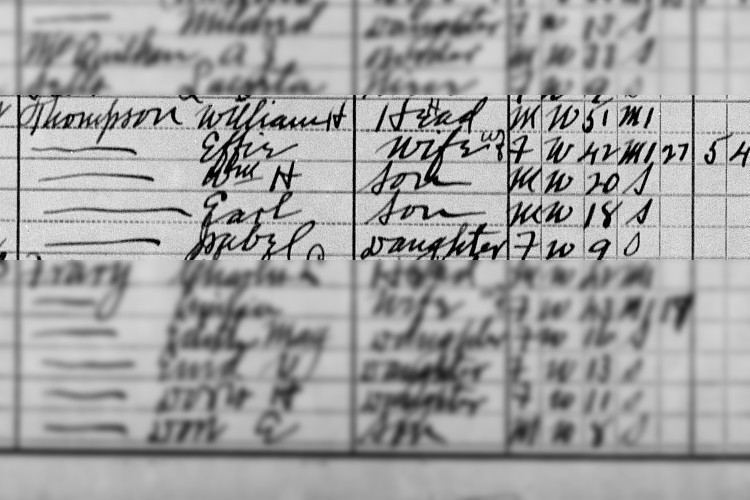
The Thompson family recorded on the1910 census for Dover, Ohio. (Source: familysearch.org) 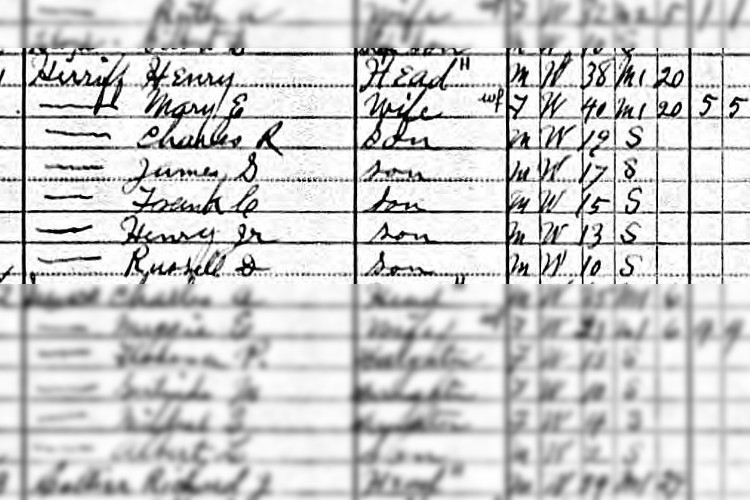
The Harriff family recorded on the1910 census for Dover, Ohio. (Source: familysearch.org)
The surrey completed its roll and the horses disappeared beneath the surface, dragging the carriage down the river. Bixler and Thompson, seated at the front, leapt into the icy water. Bixler, despite being battered by a horse’s hooves, managed to regain his balance and fought his way through the current to reach Thompson, who was slipping beneath the surface for the third time. With all the strength he could muster, Bixler pulled Thompson to the bank, saving his friend from certain death. Behind them, Lanzer and Harriff were swept away. The two men briefly clung to a lone telegraph pole as, moments later, the surging water tore them away from it.
The current carried Lanzer until his feet miraculously struck a hidden sandbar. Though nearly overcome by exhaustion and cold, he planted himself firmly and prepared for Harriff, who was vanishing beneath the waves. In a final moment of strength, Lanzer reached out and caught Harriff’s arm just before he could slip away. For nearly five agonizing minutes, the two men clung to the sandbar in the freezing water as rescuers scrambled onshore. At last, a rope was thrown from the bank. Harriff was hauled up, with Lanzer supporting his weight until both were pulled to safety, drenched and shaking but alive.
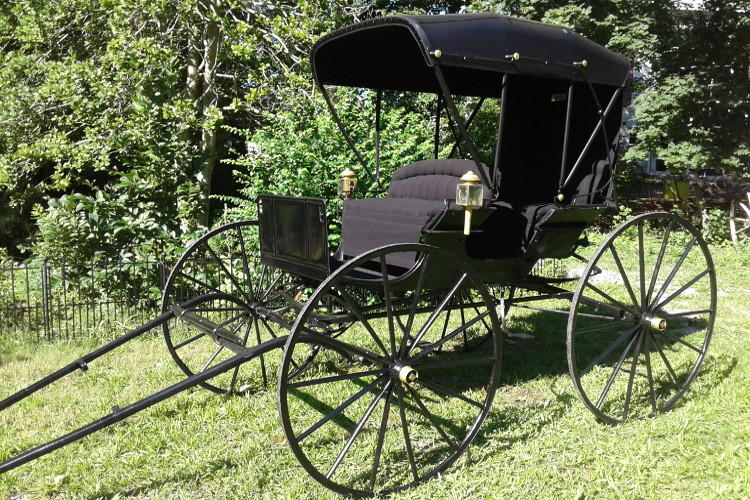
A common surrey carriage of the early 20th century, 2025. (Source: hanoverhistoricalsociety.com) 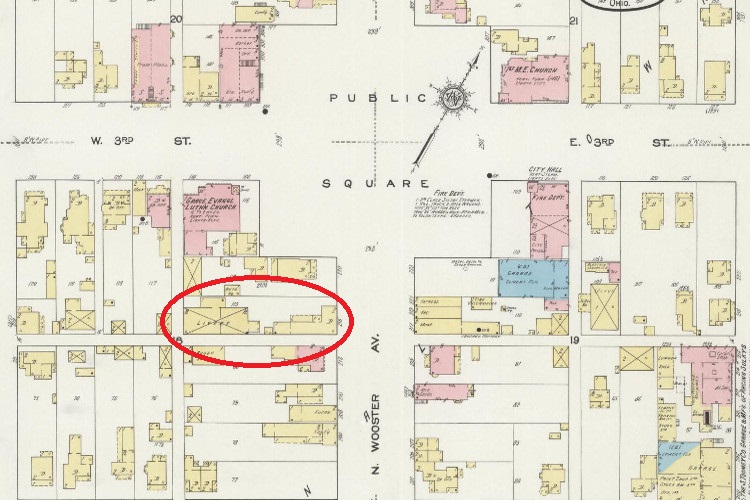
The location in Dover, Ohio of Elmer Froelich’s Livery where the four men rented the surrey for the ride to Mineral City, 1914. (Source: loc.gov) 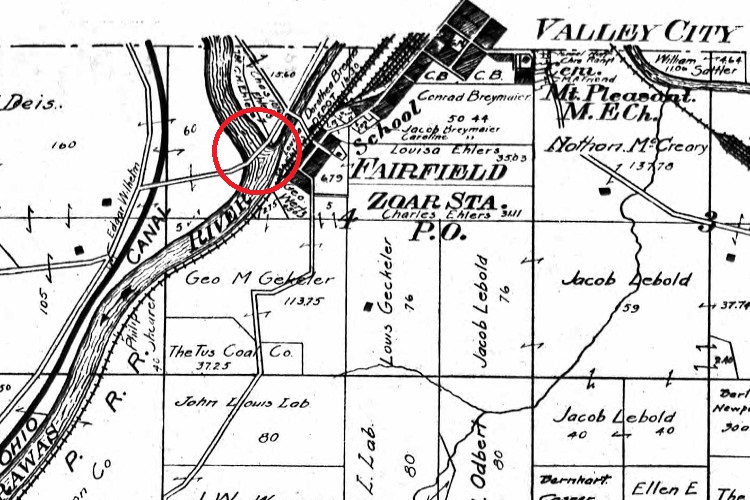
The location near Zoar Station of the bridge over the Tuscarawas River that the men attempted to cross, 1908. (Source: ancestry.com) 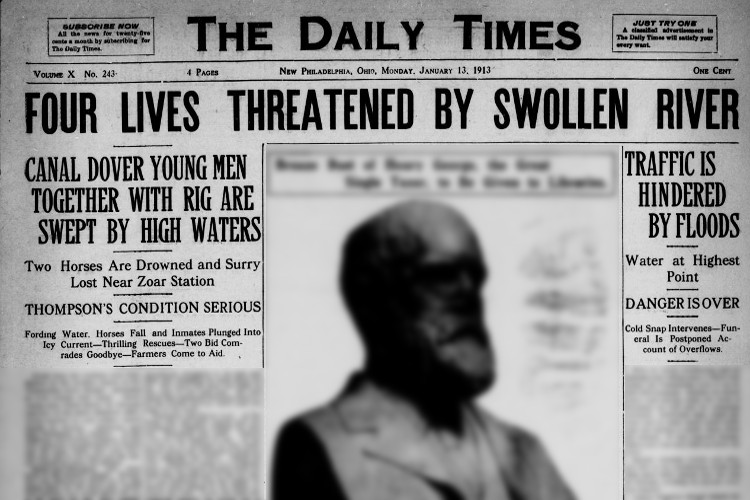
New Philadelphia, Ohio newspaper headlines the day after the accident, January 1913. (Source: newspapers.com)
Word of the near-tragedy made it to Canal Dover with rumors that the four men drowned. Family members made their way to the Dover side of the bank while torches were lit and megaphones shouted across the divide. For an hour, no word came—until finally, a shout echoed across the river: “Four! Four!” The young men were alive. Though the team and surrey were lost to the Tuscarawas River, the miraculous rescue turned what could have been a heartbreaking disaster into a tale of bravery, friendship, and survival.
Both Perry Floyd Bixler and James Harriff served in the United States Army during World War One. After his discharge Bixler went on to work for a number of years in the newspaper industry, before founding his own travel agency. James Harriff, following his discharge, moved to Canton where he worked in the automobile industry as a mechanic and salesman. Lewis Lanzer worked his entire life in the steel mill in Dover, Ohio, and retired there as a guard. Milton Earl Thompson also moved to Canton where he worked in the sign industry for the rest of his life. Though their paths later diverged, the harrowing night on the Tuscarawas River remained a defining moment. It was a test of courage and kinship that none of them likely ever forgot. In surviving, they not only preserved their futures but forged a bond that outlasted the floodwaters of 1913.
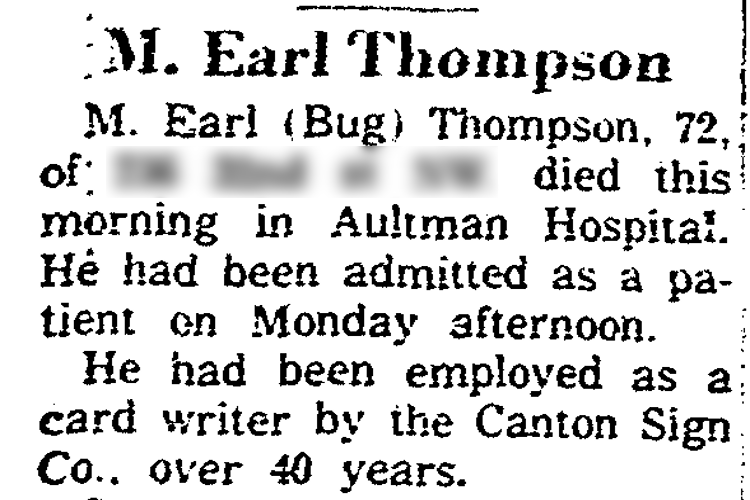
Milton Earl Thompson’s obituary in the the Canton, Ohio newspaper, February 1964. (Source: genealogybank.com) 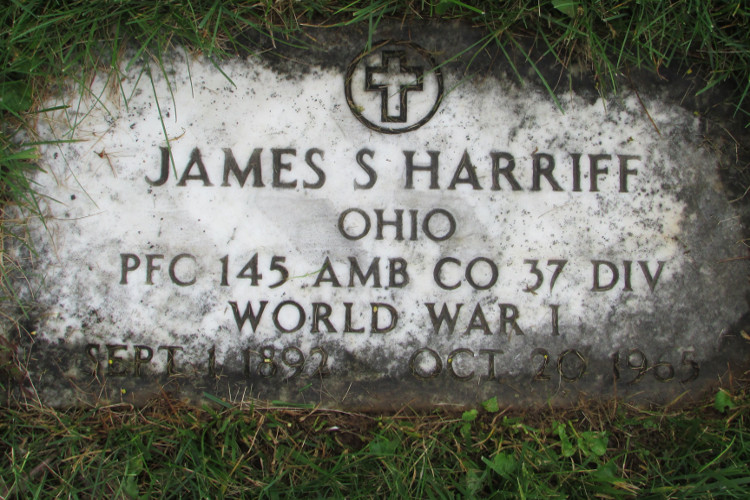
James S. Harriff’s headstone in a Canton, Ohio cemetery, October 1965. (Source: findagrave.com) 
Perry Floyd Bixler’s obituary in the Dover, Ohio newspaper, July 1972. (Source: newspapers.com) 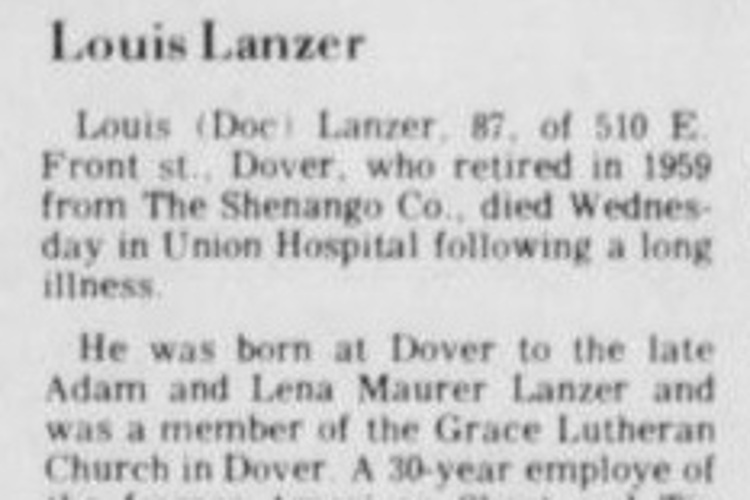
Louis Lanzer’s obituary in the Dover, Ohio newspaper, April 1977. (Source: newspapers.com)
Enjoy my stories?

© Noel B. Poirier, 2024.
 Tuscarawas County Stories