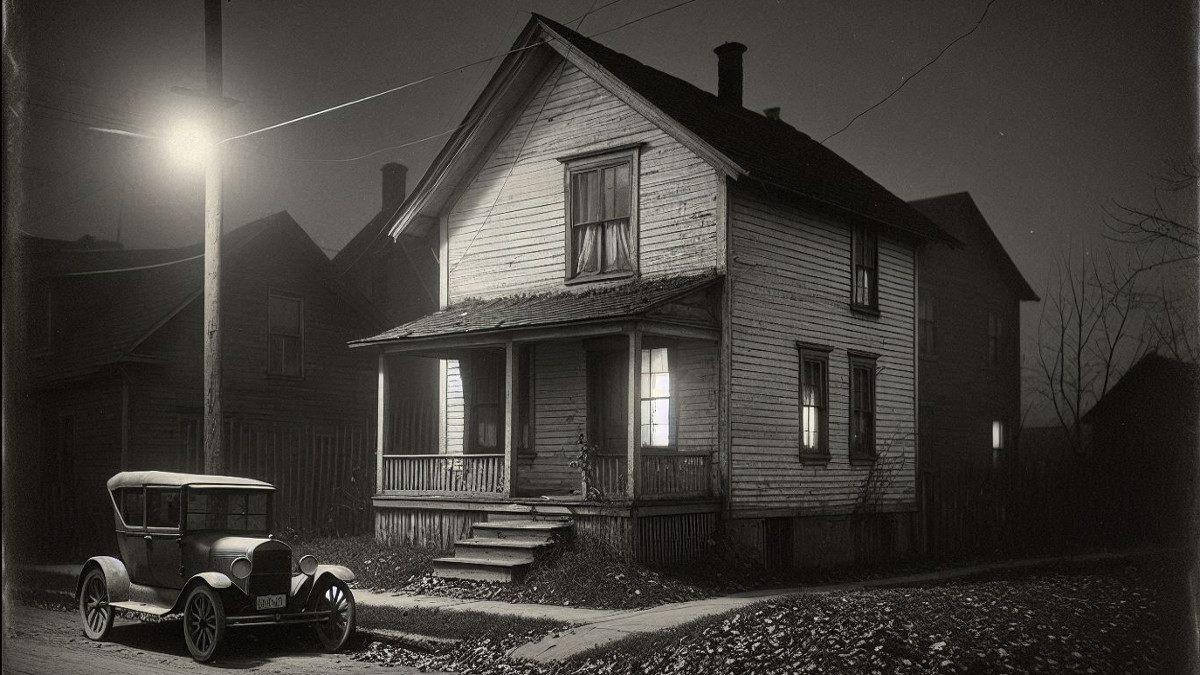
An Italian immigrant and widowed father was gunned down in a Dennison home in 1924, exposing a hidden past.
Domenico Macri (1880-1924), also recorded in some documents as Domineco Marci, was born in the Italian village of Mansoreto. He spent his early years there before he immigrated to the United States around the turn of the century. Macri settled in Belmont County, Ohio, where he found steady work as a coal miner, a common occupation among immigrants in the region. He married Henrietta Ritter of West Virginia around 1907, and together they had four daughters between 1908 and 1916. Sadly, Henrietta passed away sometime between 1915 and 1920, leaving Domenico a widower. Domenico applied for naturalization in 1913 and became a naturalized U.S. citizen two years later.
Macri and his daughters lived in Wheeling Township in Belmont County in 1920 and he was described on his naturalization paperwork as a man of modest build, weighing around 140 pounds, with dark brown hair and dark eyes. Sometime after 1920 he moved with his daughters to a house on South Second Street in Dennison, Ohio which had a large immigrant Italian community that worked in the town’s railroad shops and nearby coal and clay fields. It was while working for the Stillwater Clay Company that he may have met another Italian immigrant by the name of Frank Carboni (1904-?).
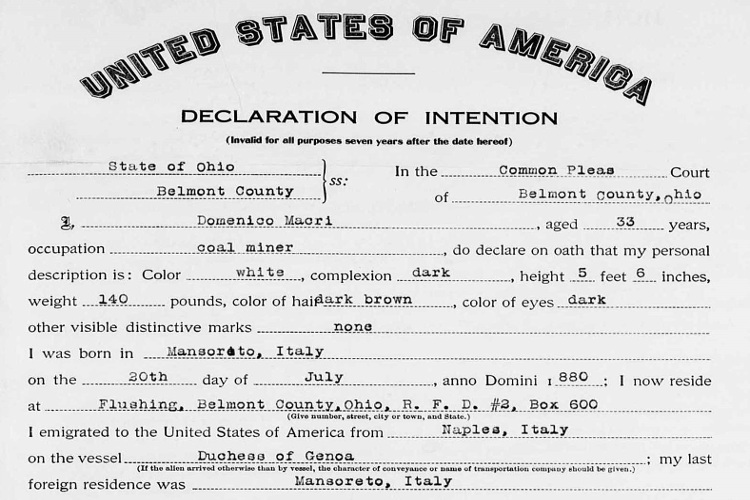
Domenico Macri’s declaration of intention to file for citizenship, July 1913. (Source: familysearch.org) 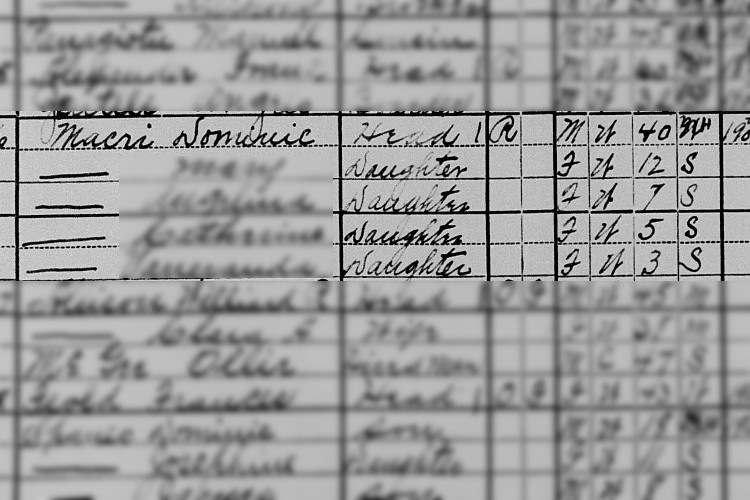
Domenico Macri and daughters recorded on the 1920 census for Wheeling Township, Belmont County, Ohio. (Source: familysearch.org) 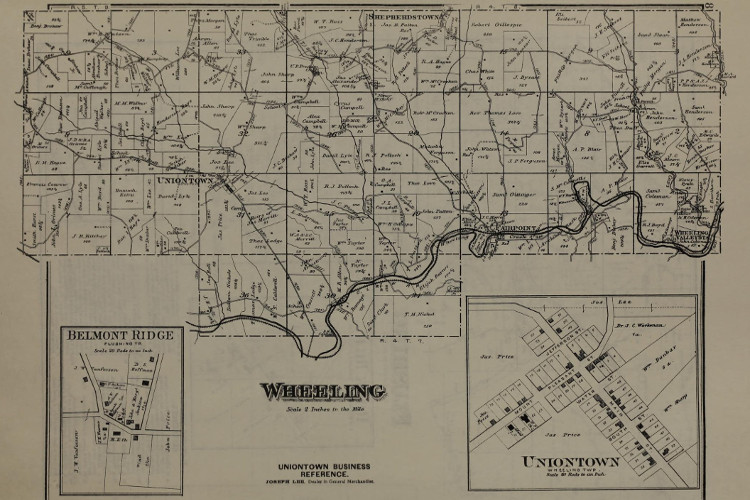
Map of Wheeling Township, Belmont County, 1888. (Source: archive.org)
Not much is known about Macri’s acquaintance Frank Carboni. It is not known when the younger man arrived in the United States, or Dennison for that matter. He was probably employed in the Dennison railroad shops or local coal and clay mines. Carboni rented a room in the house of a local Italian immigrant family headed by Alesandio De Benedetta (1891-1938) on South Fifth Street in July 1924 and it was where he resided when a confrontation with Domenico Macri occurred in October of that year. Whether Frank Carboni, or anyone else in Dennison, were aware of Domenico’s past is unclear.
Around 10:30 p.m. on the night of October 20, 1924, Domenico—armed with a .32 caliber Winchester revolver—gently opened the De Benedetta’s kitchen window and crawled into the darkened home. He made his way quietly to the stairway and ascended toward the room he knew belonged to Frank Carboni. As he reached the top of the stairs and stepped into the threshold of Carboni’s room, gunshots rang out from the shadowy bedroom. Domenico managed to fire a single shot, but he was struck by two bullets. One pierced his heart, and he collapsed to the floor, dead.
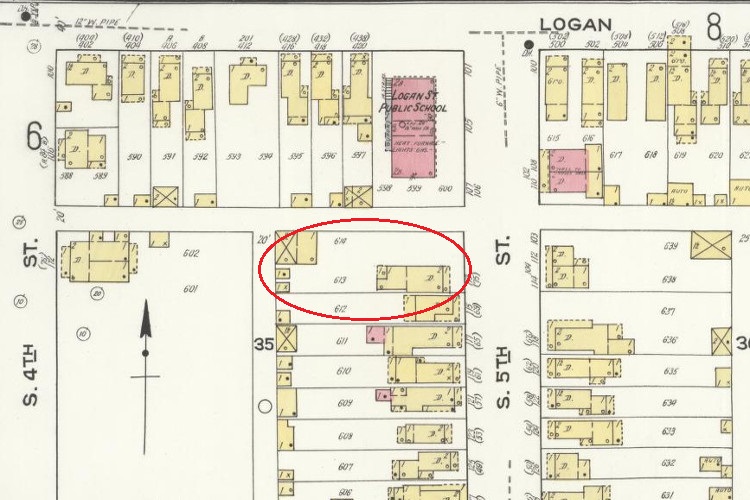
The De Benedetta home on South Fifth Street, Dennison, Ohio depicted on the 1921 Sanborn Map. (Source: loc.gov) 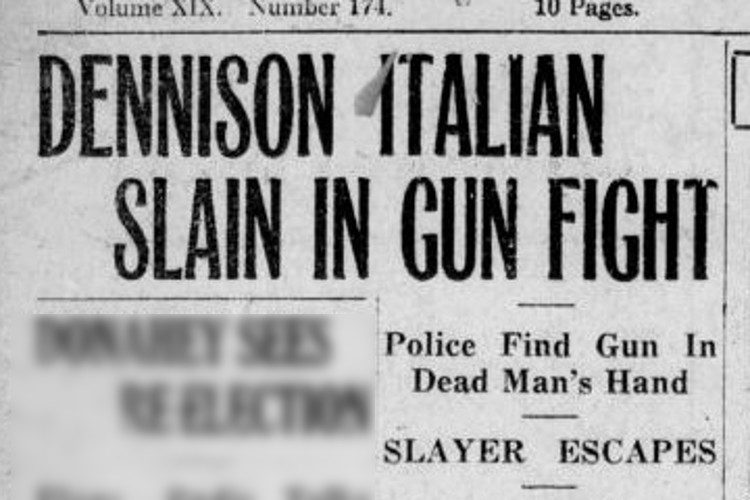
New Philadelphia, Ohio newspaper headline for the story of the killing of Domenic Macri, October 1924. (Source: newspaperarchive.com) 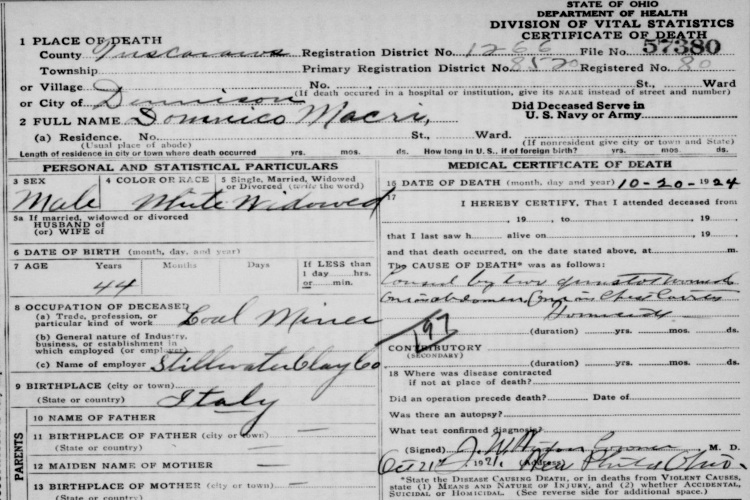
Portion of Domenic Macri’s death certificate, October 1924. (Source: familysearch.org)
Frank Carnobi quickly ran from the home as Alesandio De Benedetta contacted authorities. The police and coroner began their investigation immediately and what they discovered was that Macri was more than just a simple miner. They uncovered a secret past hidden from public view. Under the alias “Lanning,” Macri had amassed a criminal record in Belmont County, Ohio, tied to bootlegging operations and labor unrest. He was involved in the 1922 Lafferty Mine Strike Riot, a volatile episode in the county’s turbulent labor history. That same year, he was charged with manufacturing intoxicating liquors and was taken into custody. However, during a recess in court proceedings, Macri escaped and vanished before sentencing and was never apprehended. This revelation cast a shadow over the narrative of a quiet immigrant laborer.
Was Frank Carboni aware of Domenico Macri’s hidden past, and did he threaten to expose it? Or did the two men have a disagreement unrelated to Macri’s criminal history? Authorities never uncovered the true cause of the feud, as Carboni vanished into the vast anonymity of America’s immigrant labor force and was never seen again. Regardless, Domenico Macri’s killing was ruled an act of self-defense, clearing Carboni of any legal wrongdoing. Macri’s body was returned to Lafferty in Belmont County, Ohio, where he was laid to rest. The De Benedetta house still stands in Dennison, Ohio today—a silent witness to the events of that fateful night.
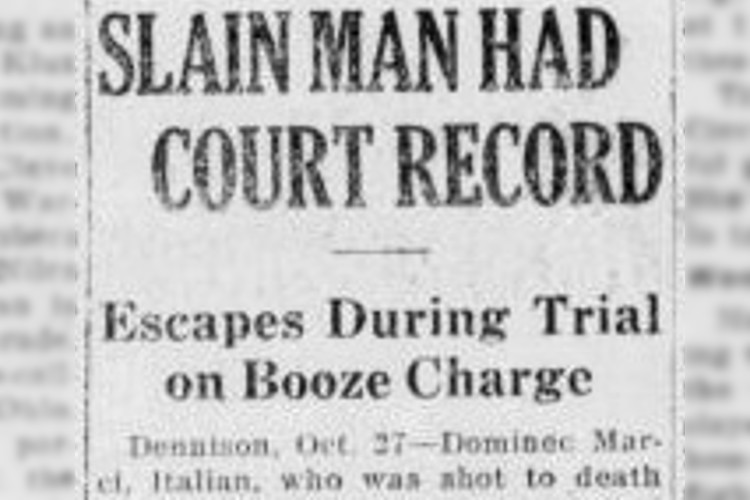
New Philadelphia, Ohio newspaper headline for a story on Domenico Macri’s past criminal activity, October 1924. (Source: newspaperarchive.com) 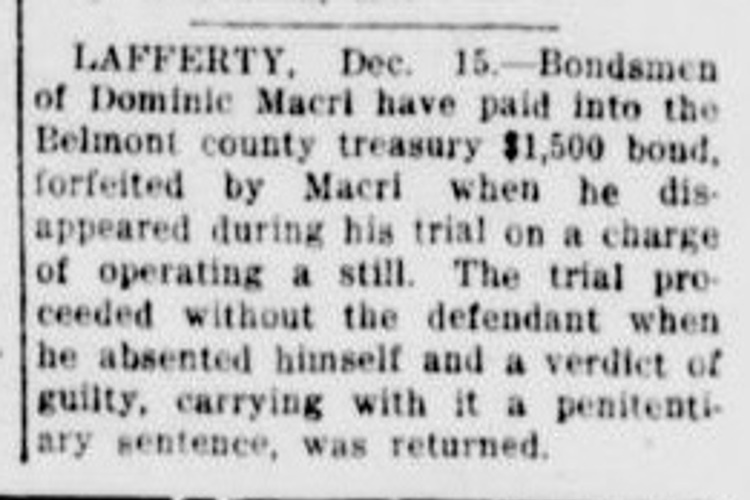
East Liverpool, Ohio newspaper article about Domenico Macri’s escape during his trial, December 1923. (Source: newspaperarchive.com) 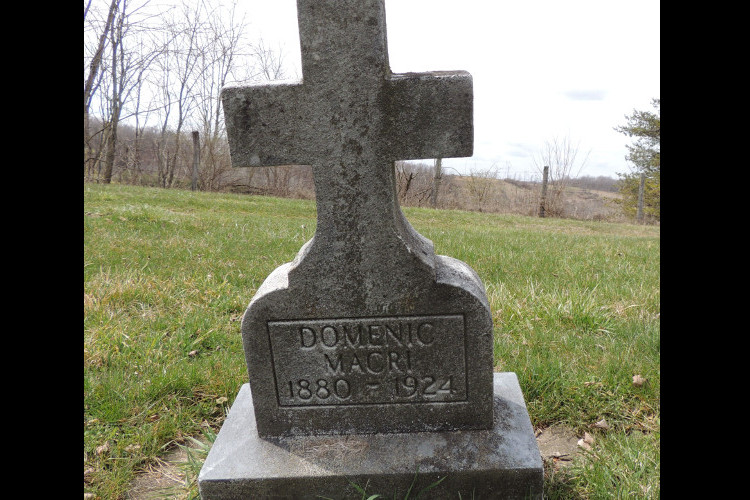
Domenico Macri’s headstone at St. Mary’s Cemetery in Lafferty, Ohio, 2018. (Source: findagrave.com) 
The De Benedetta house in Dennison, Ohio as it looked in 2012. (Source: google.com)
Enjoy my stories?


© Noel B. Poirier, 2024.
 Tuscarawas County Stories