
Fred Maurer’s return from the Arctic in 1914 marked the beginning of a new chapter in his life—one filled with public lectures, a growing reputation as an explorer, and an unshaken resolve to venture back into the icy unknown.
Fred Maurer returned to his home town on Thursday, November 12, 1914 after spending a harrowing year in the Arctic as part of the ill-fated expedition of Canadian Arctic explorer Vilhjalmur Stefansson. He was still suffering the effects of nearly frost-bitten feet and snow blindness in one eye when he arrived at his parents home on West High Street. Fred brought with him a black cat that had served as the expedition’s mascot throughout the ordeal. The cat settled into a new, comfortable, life in the Maurer’s New Philadelphia home and Fred was in high demand to share his story of exploration and survival.
During the next few years Fred Maurer, the only American survivor, travelled across Ohio and the United States presenting lectures on his year-long Arctic adventure. This was made easier by the fact that Stefansson employed a photographer during the earlier part of the trip and for the later rescue, that allowed for the presentation of these photos and movies at the lectures. These lectures, besides merely entertainment, were designed to build up support and funds for further Arctic excursions. Fred’s lecture, titled “A Fight for Life in the Arctic” included the presentation of stereo view images taken by Stefansson’s photographer.

New Philadelphia, Ohio newspaper story reporting Fred Maurer’s return home, November 1914. (Source: newspaperarchive.com) 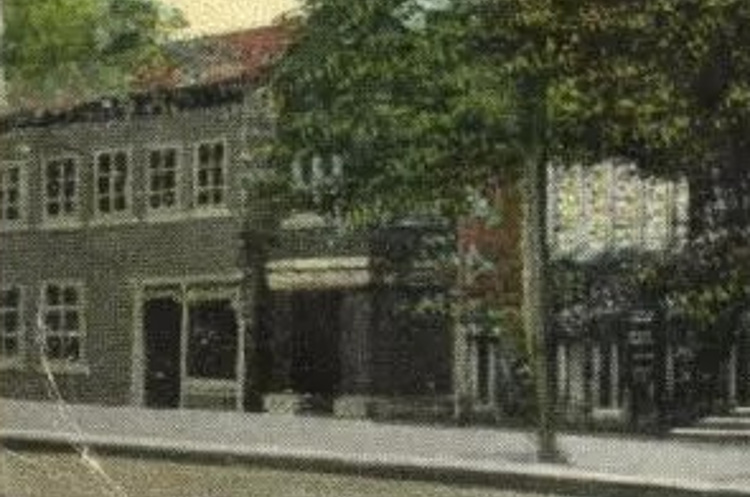
The Maurer tailor shop and residence (on left) depicted in an early 1920s postcard image. (Source: ebay.com) 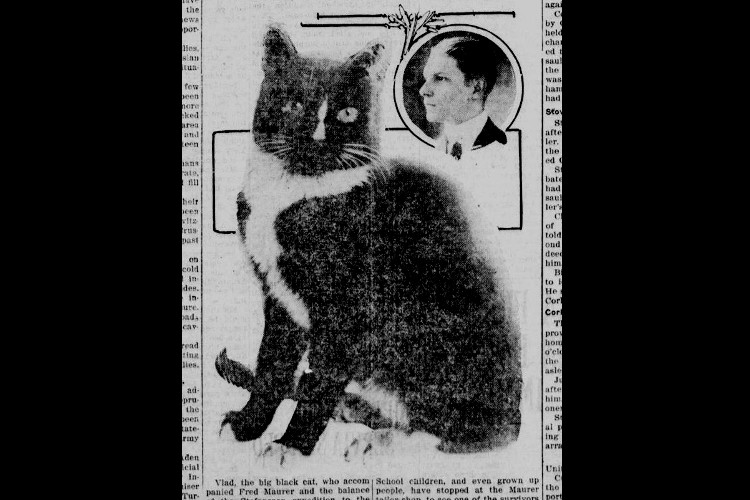
Photo of the Karluk’s mascot, a black cat they named “Vlad”, from the New Philadelphia, Ohio newspaper, November 1914. (Source: newspaperarchive.com) 
New Philadelphia, Ohio newspaper details highlighting Fred Maurer’s speaking engagements, 1914 & 1915. (Source: newspapers.com)
When Fred Maurer was not travelling and presenting his experience in the Arctic to audiences, he lived in Warren, Ohio where he found work as a clerk in the local Woolworth’s Department Store. It is possible that he chose Warren as it was near a young lady named Delphine Jones (1897-1981), who regularly visited family and friends in New Philadelphia during the 1910s and likely met Maurer there or during one of his lectures. Regardless, Maurer was far more interested in future Arctic explorations than he was in settling down, and that was encouraged by his mentor and friend Vilhjalmur Stefansson.
While war was raging in Europe, there were occasional reports of other potential survivors or remains from the members of the Karluk‘s crew that had set off prior to the move to Wrangel Island. Each time these stories appeared in the press, Fred Maurer expressed his willingness to return to the Arctic and locate his fellow explorers if at all possible. The United States entry into World War One put a pause on these efforts. Maurer initially tried to join the Navy or Marines but, after failing a physical due to his injuries received in the Arctic, was not enlisted until the Marine Corps realized his fame as an explorer and welcomed him into the Corps.
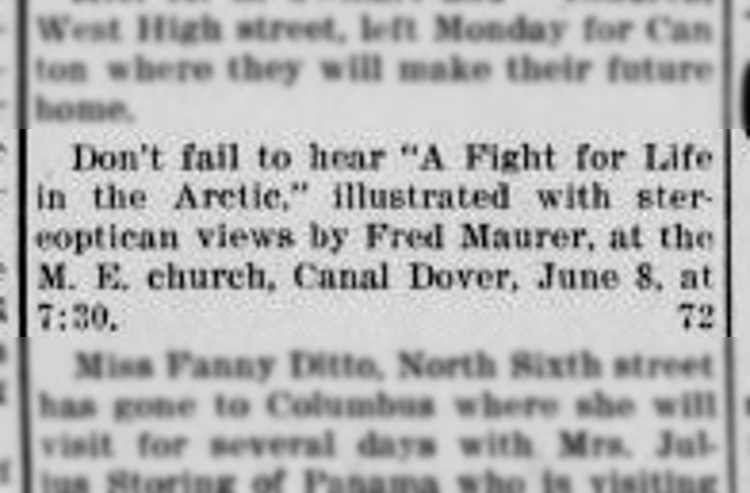
New Philadelphia, Ohio newspaper announcement of one of Fred Maurer’s lectures, June 1915. (Source: newspaperarchive.com) 
New Philadelphia, Ohio newspaper story about one of Delphine Jones’ visits to New Philadelphia, January 1915. (Source: newspaperarchive.com) 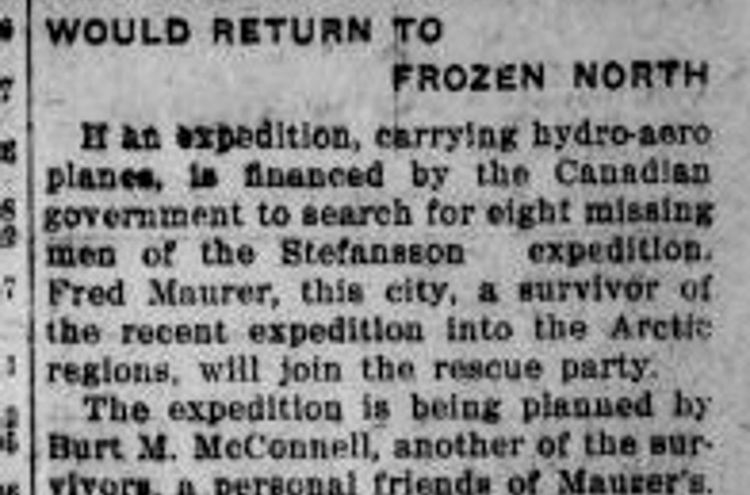
New Philadelphia, Ohio newspaper story about a possible additional survivor from the Karluk, January 1915. (Source: newspaperarchive.com) 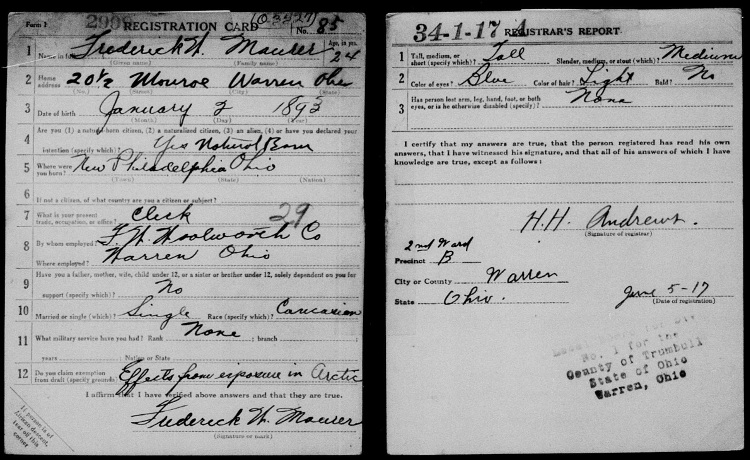
Fred Maurer’s World War One draft registration card, June 1917. (Source: familysearch.org)
The Marines kept Fred Maurer safe and sound at Parris Island, South Carolina for the duration of the war, preferring to use his fame as an explorer as a means of recruiting other Marines. Maurer rose through the ranks quickly during the war years and, when he was made inactive in September 1919, finished the war as a First Sergeant. Fred remained in the Marine Corps Reserves after he returned home and restarted his speaking tours, this time now accompanied by Delphine Jones and Vilhjalmur Stefansson.
Stefansson decided in 1921 to mount yet another expedition to Wrangel Island with an eye towards potentially claiming the Russian island for Canada or Great Britain. Despite neither of those countries’ desire to create an international incident over a desolate Arctic island, Stefansson convinced four men to make the effort. Fred Maurer was one of those men. Just nine days before leaving on his last Arctic adventure, Fred Maurer married Delphine Jones in Missoula, Montana at the home of the President of the University of Montana. Stefansson was Fred’s best man and it was the last time Delphine would see her new husband.
End of Part Three
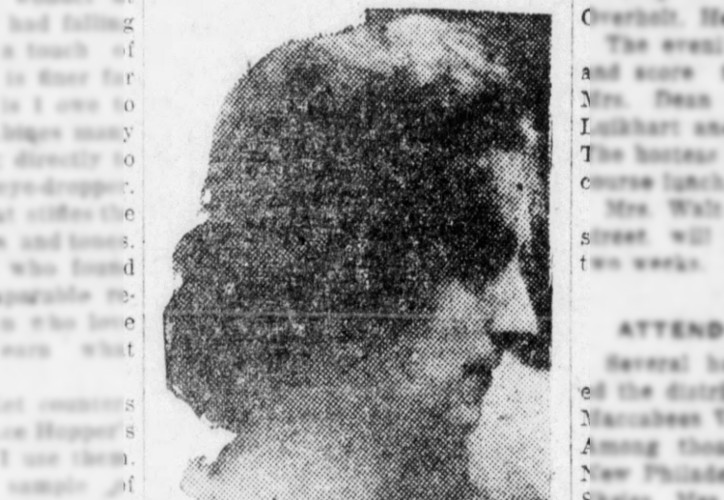
Photograph of Delphine Jones, Fred Maurer’s wife, that appeared in the New Philadelphia, Ohio newspaper, April 1925. (Source: newspaperarchive.com) 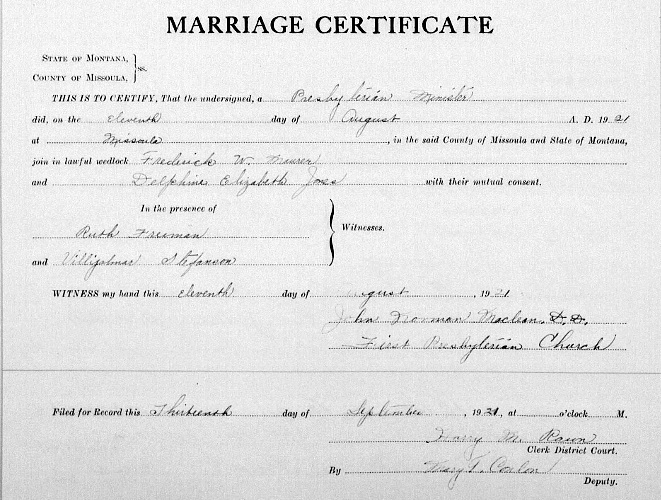
Marriage certificate of Fred Maurer and Delphine Jones, August 1921. (Source: familysearch.org) 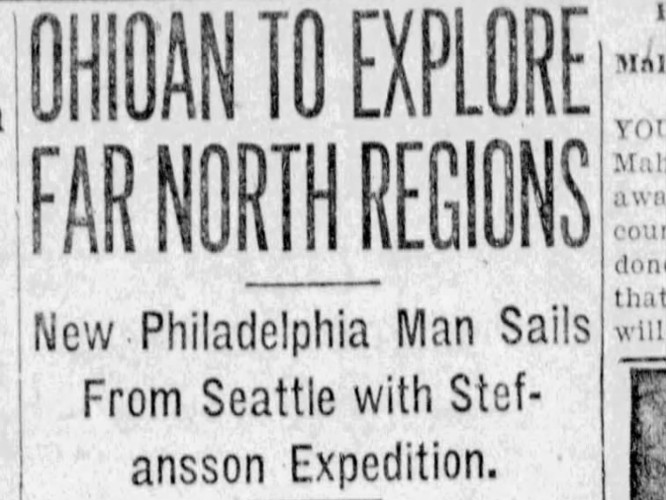
Cleveland, Ohio newspaper headline for a story on Fred Maurer’s final Arctic expedition to Wrangel Island, August 1921. (Source: newspapers.com)
Enjoy my stories?


© Noel B. Poirier, 2025.
 Tuscarawas County Stories