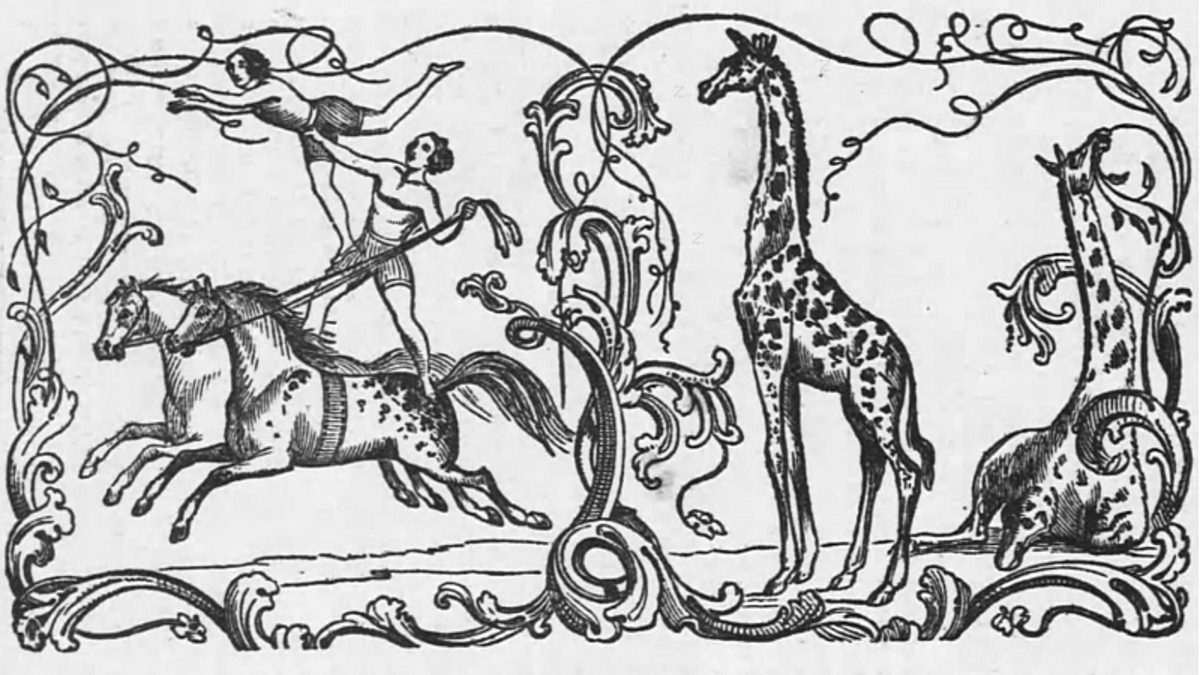
Tuscarawas County was visited by one of America’s first traveling circuses, bringing with it exotic animals, daring performances, and a touch of big-city spectacle.
The residents of Tuscarawas County, numbering around 26,000 in 1842, were treated that summer to a visit by one of America’s first travelling circuses. The advertisement for the circus, including a large illustration, appeared in the June 9, 1842 issue of the Ohio Democrat newspaper. It boasted of the “Hungarian Cousins” equestrian troupe, a “vaulting phenomenon”, gymnastic performances and a menagerie of living wild animals. Among the animals promoted were an elephant, birds, reptiles and the only living giraffe in North America.
The June, Titus, Angevine and Company Circus and Caravan planned two shows in Tuscarawas County that summer, one in Shanesville on Friday, June 24, 1842 and a second show in New Philadelphia on Saturday, June 25, 1842. It is not clear where the circus raised its tent in either location, but the colorful and noisy caravan must have been quite the sight to see for the rural, early 1800s Ohio community when it rolled into town. The circus’s promoters guaranteed that “the exhibition will be of a strictly moral character free from the many objections frequently made to entertainments of this description”.
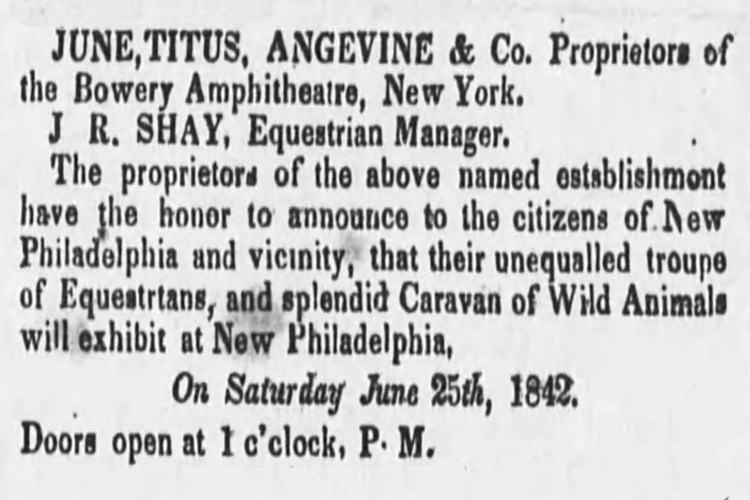
Portion of the advertisement for June, Titus, Angevine & Company circus that appeared in a New Philadelphia, Ohio newspaper, June 1842. (Source: newspapers.com) 
Lithograph of a 19th century circus caravan and tents. (Source: loc.gov) 
1840s promotional flyer for a circus juggler. (Source: loc.gov) 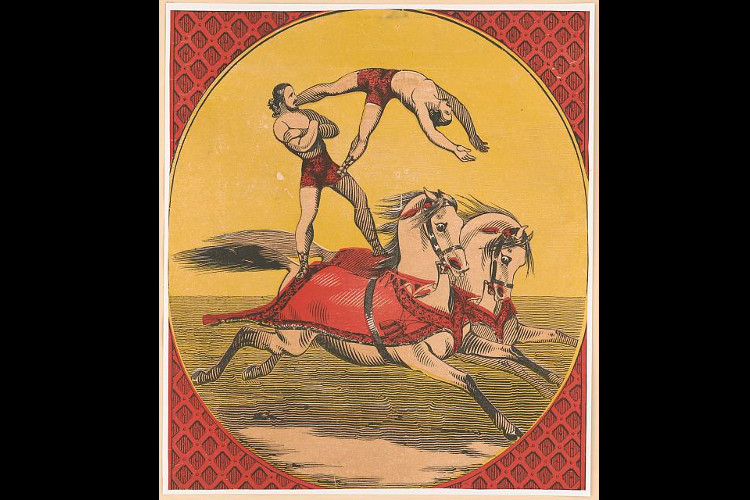
1830s depiction of a circus equestrian act. (Source: loc.gov)
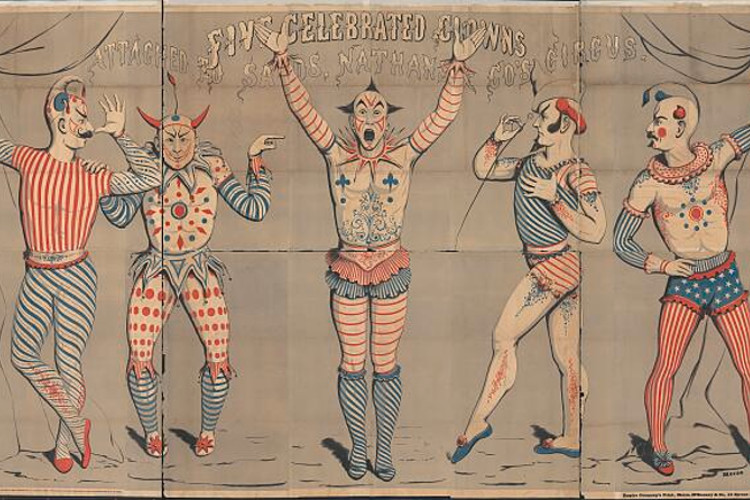
The circus’s owners, Lewis Titus (1800-1870), John June (1802-1884), and Caleb S. Angevine (1798-1859) hailed from Westchester County, New York originally, but established themselves as the Zoological Institute in New York City in the 1830s. There they kept a variety of wild and exotic animals that travelled the United States during the warmer months of the year attended by gymnasts, equestrian acts, clowns, and all the other trappings we associate with the modern circus.
During the spring and early summer of 1842 the circus toured throughout Ohio before it arrived in Tuscarawas County. The same advertisement for the circus that appeared in the New Philadelphia newspaper appeared in numerous other newspapers around the state. Prior to the June, Titus, Angevine and Company’s circus and caravan, the circus and the animal menagerie were typically two separate attractions, each with its own appeal. While the menagerie drew larger crowds, it was typically only open during the day. People who visited the menagerie during the day could then attend the circus show in the evening. Combining the two under one operation was a novelty in 1842.
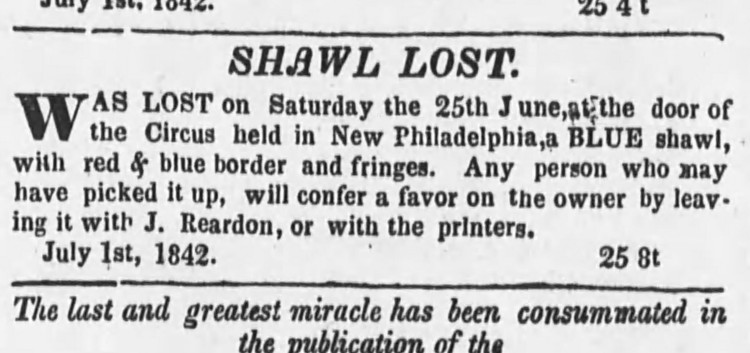
None of the newspapers reported on the circus afterwards, so how the circus was received by the community is unknown. The only other newspaper reference to the circus’s visit to Tuscarawas County was from an advertisement placed in a subsequent paper asking for help locating a shawl lost during one of the performances. Though the circus’s visit to Tuscarawas County left little trace in the historical record, it likely provided a brief but memorable glimpse of wonder and excitement to the quiet Ohio community in the summer of 1842.
Enjoy my stories?


© Noel B. Poirier, 2024.
 Tuscarawas County Stories