
Cover photo by Brenda Gottsabend
In the winter of 1910, amidst the warmth of Eagle Hall, a newcomer to New Philadelphia ignited the imagination of the community with a visionary proposal for an electrified welcome sign and set in motion a tale of civic pride that would span decades.
There were nearly 150 members of the New Philadelphia, Ohio business and civic community gathered at Eagle Hall for the semi-annual “smoker” held by the New Philadelphia Board of Trade in December 1910. It was a fairly casual affair, with speakers on a variety of community and civic minded subjects. Among the issues discussed were the need for a new and modern High School building, the funding and construction of a new public library, and raising chickens. Philip Barnhard (1875-1971), the Kentucky-raised, recently appointed manager of the Tuscarawas County Light, Heat and Power Company was also asked to present.
Philip was the son of a coach maker from the town of Cynthiana, in Harrison County Kentucky. After attending school Philip found work as a hardware salesman and, in 1902, married a Lexington, Kentucky woman named Margaret Elma Lees (1875-1969). The couple moved to Lexington and Philip was hired as the superintendent of the interurban Georgetown and Lexington Traction Company in 1903. Four years later, when Tuscarawas County’s A. Beyer Electric Company was bought out, Philip was hired to serve as the general manager for the newly created Tuscarawas County Electric Light and Power Company.
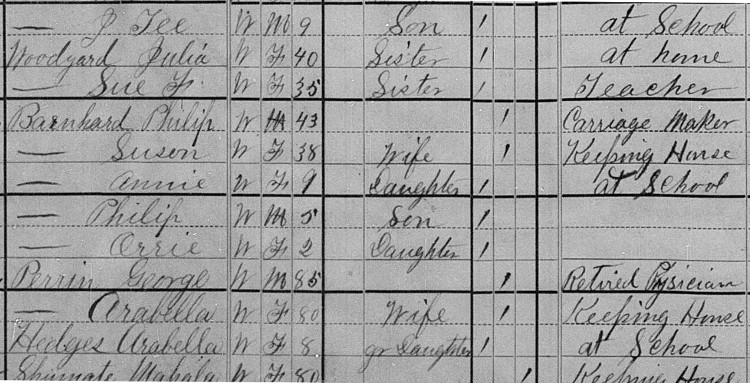
The Barnhard family recorded on the 1880 census for Cynthiana, Kentucky. (Source: familysearch.org) 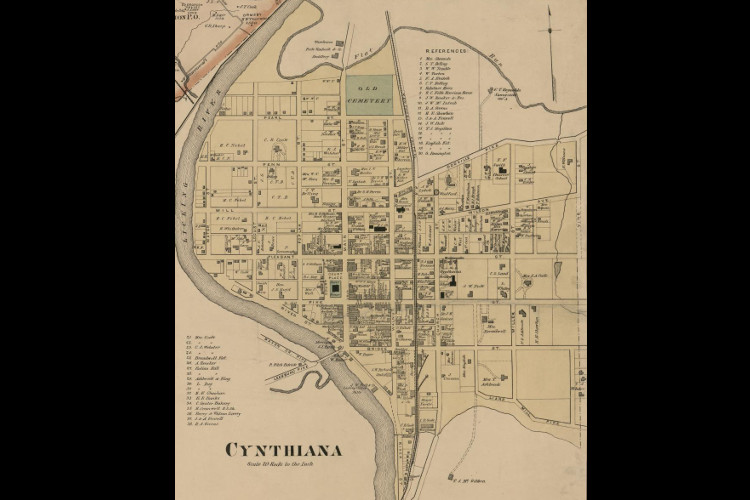
Map of the town of Cynthiana, Kentucky, 1877. (Source: loc.gov) 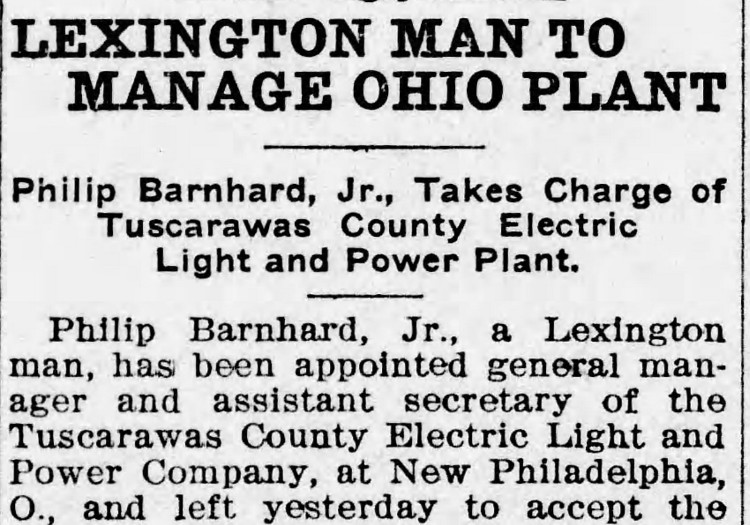
Article in the Lexington, Kentucky newspaper announcing Philip Barnhard’s appointment to his job in New Philadelphia, Ohio, May 1907. (Source: genealogybank.com)
Philip, his pregnant wife Elma, and their young son moved to New Philadelphia in the summer of 1907 where they rented a home on the 400 block of West Ray Street. A few months later, in December 1907, Elma gave birth to the couple’s second child, a daughter. Elma often took the children to visit family in Kentucky and Philip became a prominent member of local civic organizations. When he took the stage for his dramatic presentation at the 1910 Board of Trade event, it began with a simple question about the meaning of the term candle-power.
Standing in front of a large American flag that covered the front wall of the hall, Philip began to explain the term. Suddenly, all of the lights in the hall went out and it was plunged into darkness. The American flag behind Philip fell to floor revealing a large, electrified sign reading “Welcome to Our City” that flooded the room with light. Philip then proceeded to make the argument that a similar, larger version should sit atop the courthouse or other tall building on the public square to greet visitors to New Philadelphia. Immediately a motion was made that the Board of Trade aid in doing just that.
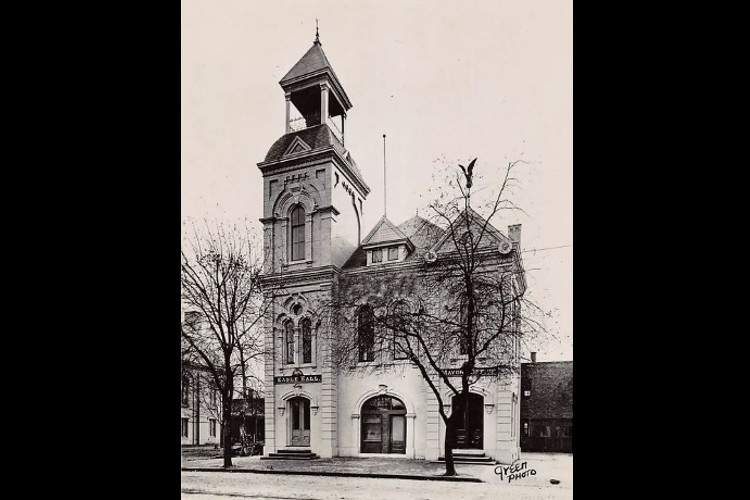
Postcard image of Eagle Hall in New Philadelphia, Ohio where Philip Barnhard first proposed the “Welcome to Our City” sign. (Source: ebay.com) 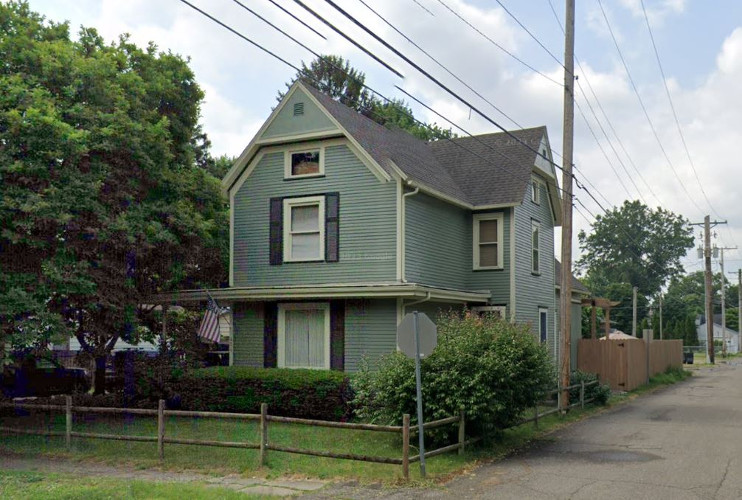
The house on West Ray Street (Ray Avenue NW) where the Barnard family lived while in New Philadelphia, Ohio, 2023. (Source: google.com) 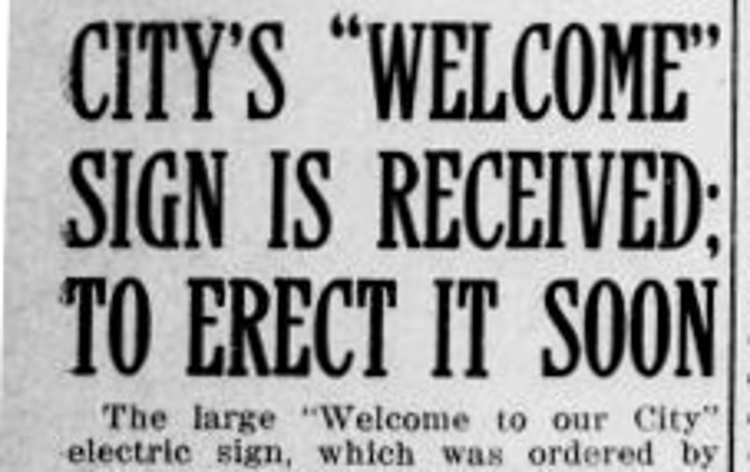
Headline in the New Philadelphia, Ohio newspaper announcing that the finished sign had arrived, September 1912. (Source: newspaperarchive.com) 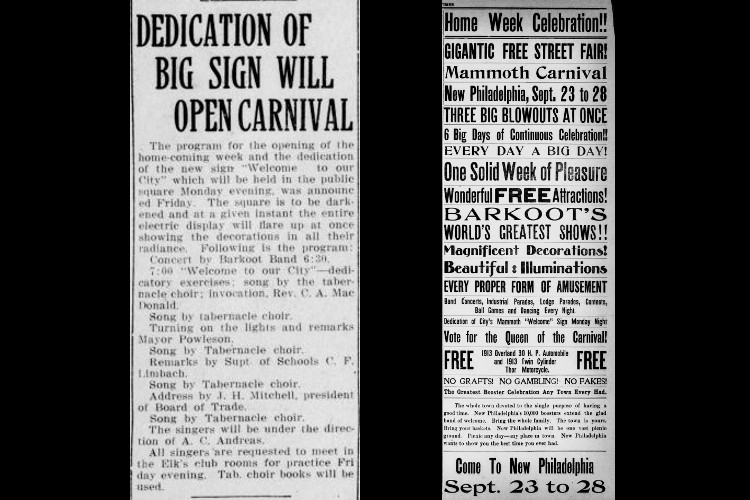
The Home Week Celebration promoted in the New Philadelphia, Ohio newspaper, September 1912. (Source: newspaperarchive.com)
It took just under two years for Philip Barnhard’s idea to come to fruition. It was decided that the sign would be installed in the late summer of 1912 atop the Alexander Block and unveiled during New Philadelphia’s grand Home Week Celebration held September 23rd to the 28th, 1912. Over three thousand people gathered in the square the first night of the festival to see the dedication and illumination of Philip Barnhard’s brainchild sign. The original sign, accompanied by an illuminated flag during and after World War One, lasted until hurricane force winds damaged it in 1936 and it had to be removed for safety reasons.
Philip Barnhard and his family left New Philadelphia in 1914 so he could accept a similar position with a power company located in Wabash County, Illinois. They returned now and then and, undoubtedly, took great pride in seeing the “Welcome to Our City” sign that he first proposed in Eagle Hall in 1910. Philip and Elma lived the rest of their lives in Illinois and both lived into their mid-90s. Elma died in February 1969 at the age of 93. Philip outlived Elma by just two years, dying in 1971 at the age of 96. They are both buried in Highland Memorial Cemetery in Mt. Carmel, Illinois.

Photograph taken during the 1912 Home Week Celebration showing he new “Welcome to Our City” sign on the Alexander Building, September 1912. (Photo courtesy of the Tuscarawas County Historical Society’s Carpenter Collection) 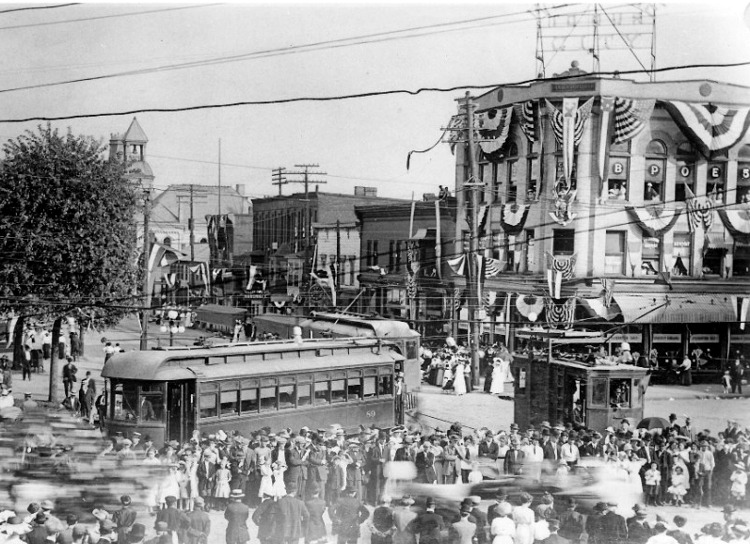
Photograph taken during the 1912 Home Week Celebration showing he new “Welcome to Our City” sign on the Alexander Building, September 1912. (Photo courtesy of the Tuscarawas County Historical Society’s Carpenter Collection) 
Postcard of New Philadelphia, Ohio’s public square showing the “Welcome to Our City” sign on top of the Alexander building, c. 1916. (Source: ebay.com) 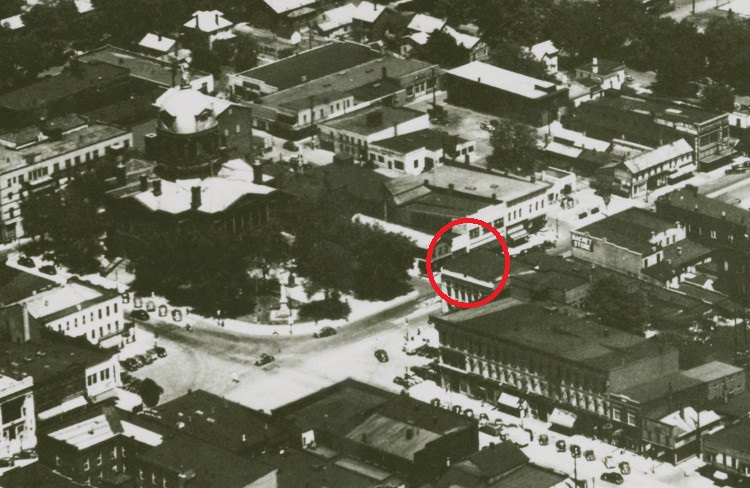
Photo of downtown New Philadelphia, Ohio taken shortly after the removal of the original “Welcome to Our City” sign on top of the Alexander building (circled), c. 1940. (Source: ohiomemory.org) 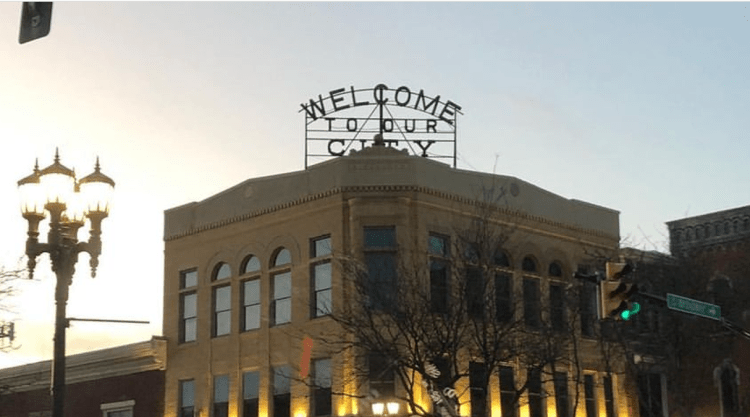
The modern “Welcome to Our City” sign atop the Alexander building in New Philadelphia, Ohio, 2023. 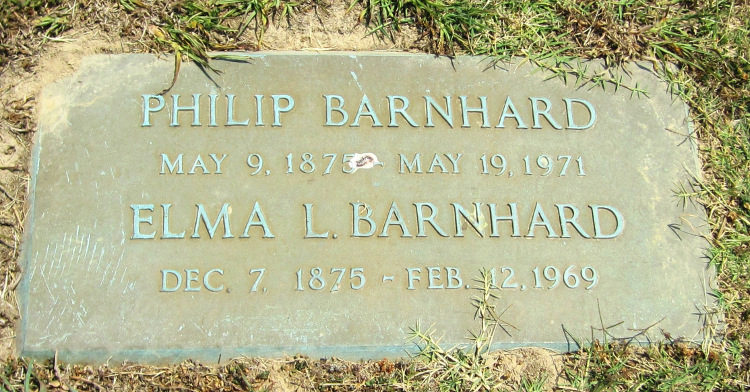
Philip and Elma Barnhard’s headstone at Highland Memorial Cemetery in Mt. Carmel, Illinois, 2012. (Source: findagrave.com)


© Noel B. Poirier, 2024.
 Tuscarawas County Stories