My employer, the Ohio Genealogical Society, recently acquired a collection of materials that included items and documents relating to a Tuscarawas County family. I thought I would explore the story of one of those family members.
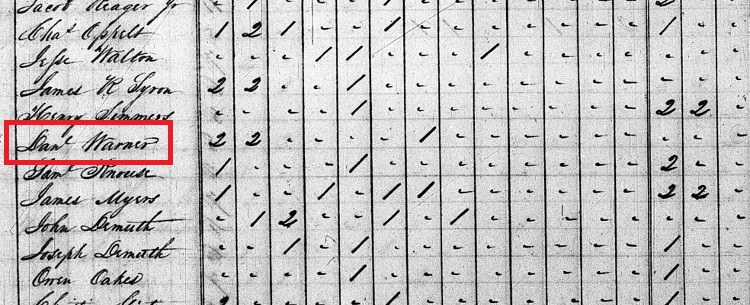
Jonas Warner (1821-1905) was born in February 1821 at the home of his parents on Fry’s Creek in Tuscarawas County, Ohio. Jonas’s father, Daniel Warner (1782-1835) arrived in Tuscarawas County from Pennsylvania around 1802. According to a Warner family history written in 1919, Daniel worked as a shingle-maker and sawyer before being drafted during the War of 1812 and marched to the relief of the siege of Fort Meigs in Maumee County, Ohio. The siege lifted before Daniel’s unit ever arrived and the troops were marched home shortly after.
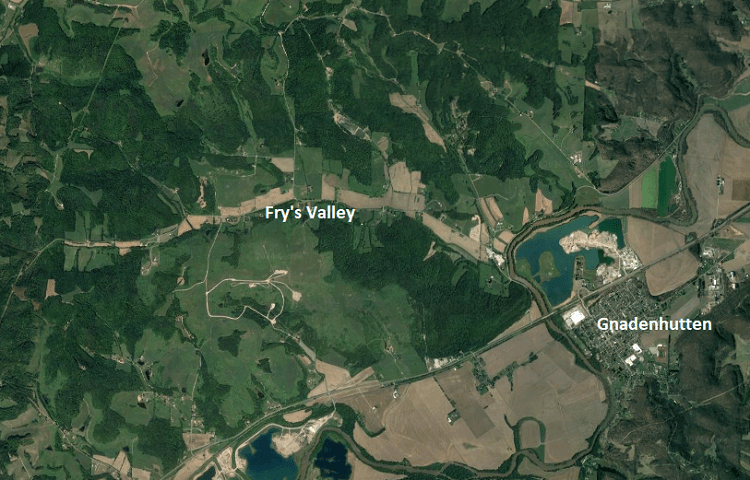
Daniel married a New York transplant named Mary Simmers (1798-1876) in February 1818 and the couple resided near Gnadenhutten and Fry’s Valley, Tuscarawas County for most of their lives. The couple had seven children, six sons and one daughter, and Jonas was the second oldest of those children. The children were educated in rudimentary log schoolhouses before Daniel Warner died in 1835 when Jonas was only 14 years old. Jonas was sent to work in nearby Trenton (now Tuscarawas), Ohio but ran away and rambled to Indiana for a short time before returning to Tuscarawas County. Mary Warner remarried in 1842, though there is evidence the marriage was short-lived.

After returning to Tuscarawas County, Jonas began to operate a sawmill and in 1845 married Catherine Lister (1828-1891). Jonas and Caroline started their family on the Warner family farm in Warwick Township before very briefly relocating to Indiana. After their return, around 1856, Jonas and Catherine purchased a farm in Warwick Township about halfway between Tuscarawas and New Philadelphia, Ohio. This would be their home for the next 30-plus years. After the failure of her second marriage, Jonas’s mother lived with Jonas, Catherine and their children until her death in 1876.
The Warner Farm contained a significant coal deposit and, in order to facilitate its mining and transportation, Jonas had tracks laid from the Ohio and Erie Canal to his property. Jonas and Catherine’s family included ten children by the middle of the 1860s, five sons and five daughters, though three of the children died between 1863 and 1866. The combination of Warner’s farm, sawmill, and coal enterprise afforded the family many luxuries, including having numerous family photographs taken at a time when that was an expensive endeavor. Many of those photographs survive in the collection of the Ohio Genealogical Society’s Lyle H. West Archive.

The Warner Farm shown on the map of Warwick Township in the 1875 Atlas of Tuscarawas County. (Source: ancestry.com) 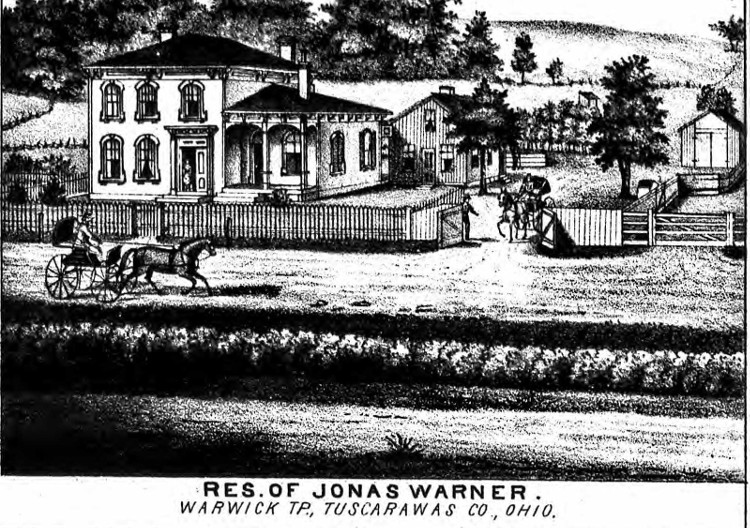
The Warner Farm in Warwick Township depicted in the 1875 Atlas of Tuscarawas County. (Source: ancestry.com) 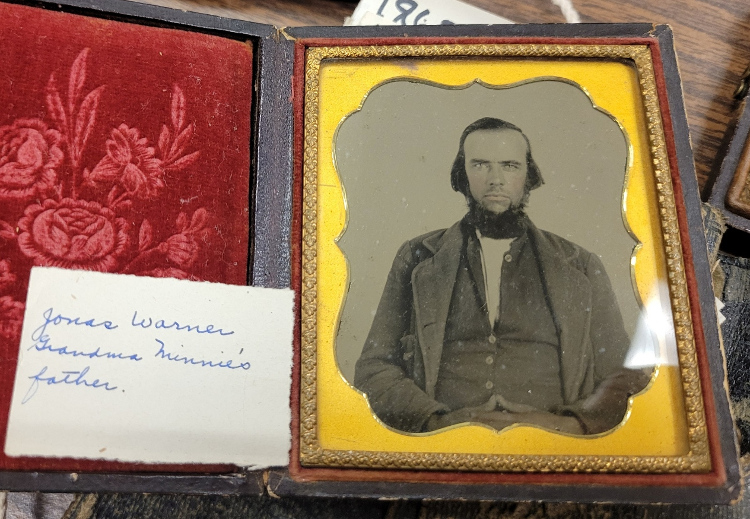
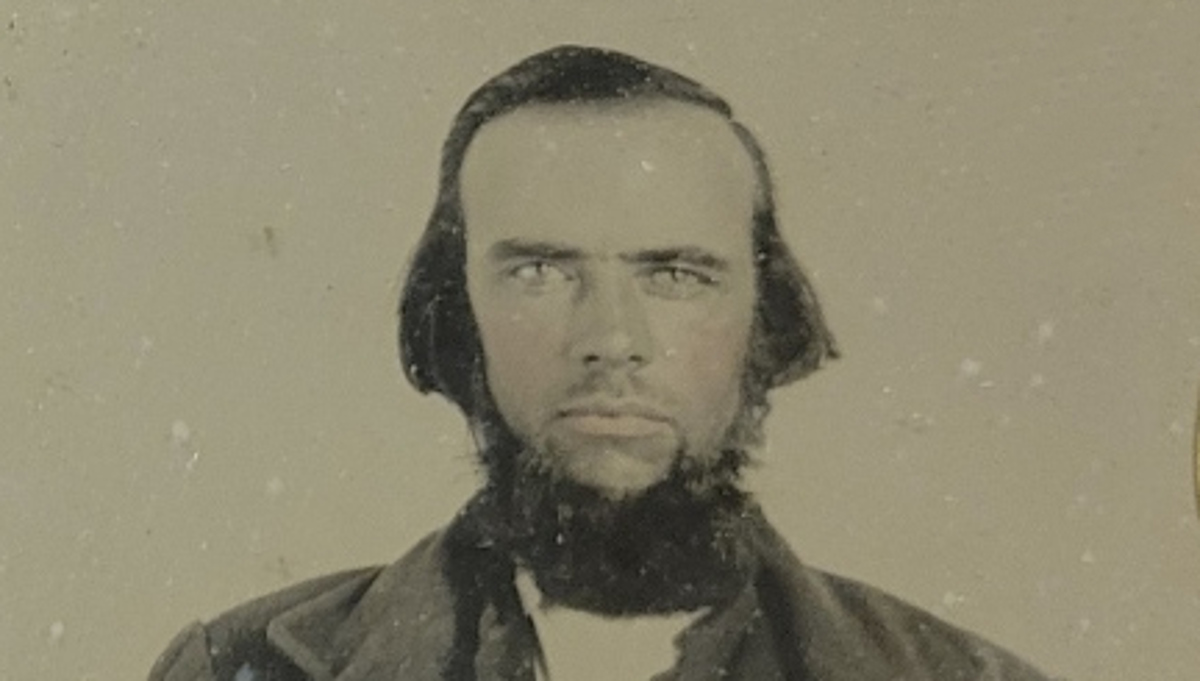
Photographic image of Jonas Warner found in the collection of the Ohio Genealogical Society’s Lyle H. West Archives in Bellville, Ohio, 2024. (Source: Photo taken by author) 
Photograph of a page from Jonas Warner’s receipt book containing business related to his farm and coal mining enterprise found in the collection of the Ohio Genealogical Society’s Lyle H. West Archives in Bellville, Ohio, 2024. (Source: Photo taken by author) 
An AI generated image of a canal boat loaded with coal, 2024. (Source: Microsoft CoPilot)
Jonas’s business successes also led to him becoming active in local politics, becoming a prominent member of the Whig and then Republican party, and he served for many years as a clerk for Warwick Township. He and Catherine saw to their children’s education, despite Jonas having received a modest education as a child. This dedication led to all of their sons becoming Methodist ministers, one attended Harvard University and another went on to become President of Baldwin University and later a State Senator for Cuyahoga County, Ohio.
After the death of his wife, Jonas Warner and a daughter moved from the family farm in Warwick Township to a home on South 5th Street (modern 2nd Street SW) in New Philadelphia. He began buying up lots throughout the city and now, in addition to his other interests, became a prominent landlord. Jonas’s health began to deteriorate in the spring of 1905 and, on June 15, 1905 at the age of 84 he died. The Warner family had come a long way from the days when Daniel Warner was splitting shingles and pit sawing logs on the banks of the Tuscarawas River in 1805.

The death of Catherine Warner reported in the New Philadelphia, Ohio newspaper, September 1891. (Source: newspaperarchive.org) 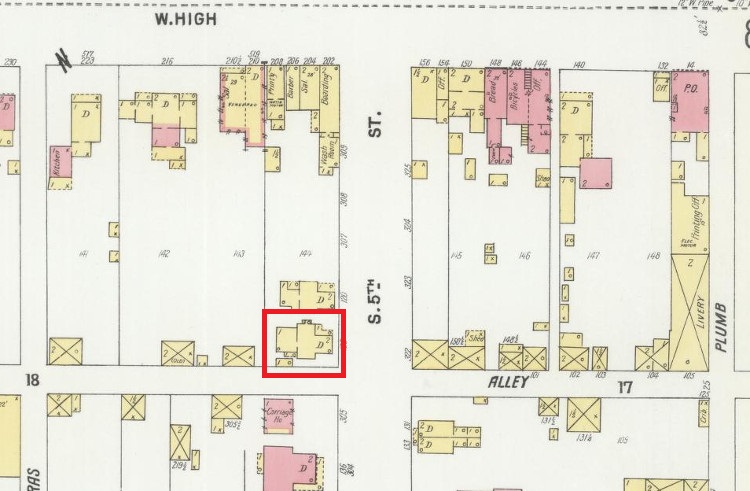
The location of Jonas Warner’s home on the 1901 Sanborn Map of New Philadelphia, Ohio where he lived after his wife’s death. (Source: loc.gov) 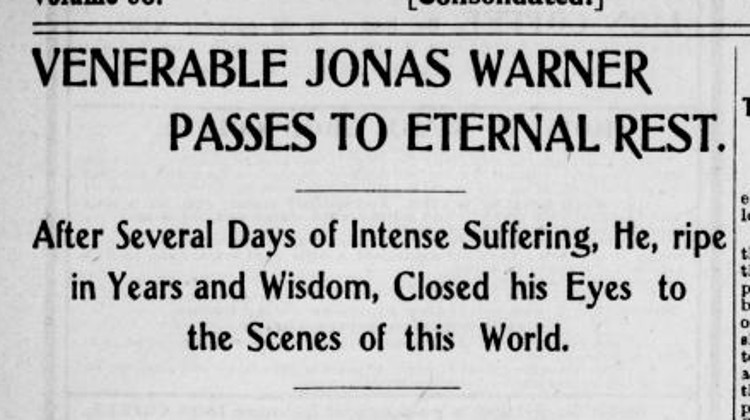
The death of Jonas Warner reported in the New Philadelphia, Ohio newspaper, June 1905. (Source: newspaperarchive.org) 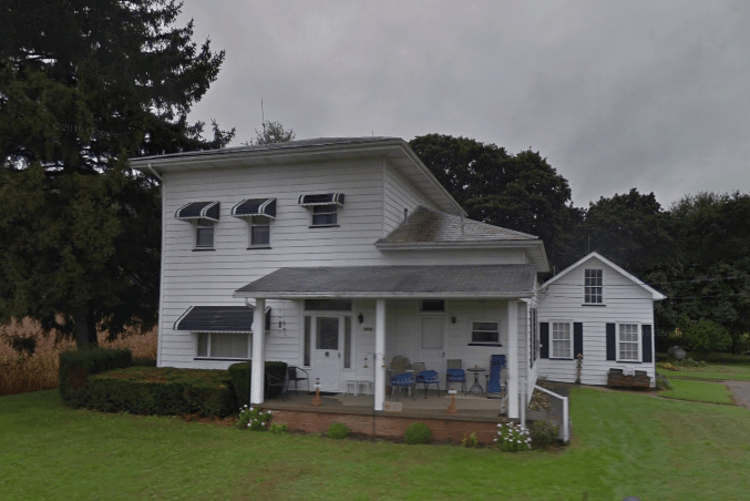
A 2018 view of the Warner farmstead in Warwick Township, Tuscarawas County, Ohio. (Source: google.com) 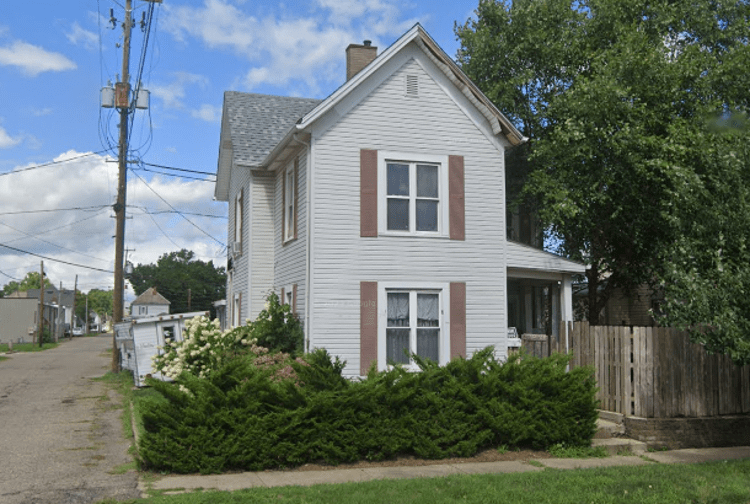
A 2023 view of Jonas Warner’s New Philadelphia, Ohio home. (Source: google.com)


© Noel B. Poirier, 2024.
 Tuscarawas County Stories