It was believed that she was the oldest resident of Tuscarawas County when she was interviewed in 1903. Born enslaved in rural Virginia in the early 19th century, her life carried her to New Philadelphia, Ohio where she lived in a small home on South 7th Street.
Harriet Mitchell, often referred to as “Grandmother” Mitchell, was interviewed by a reporter from the New Philadelphia Ohio Democrat and Times newspaper in May 1903. It was believed that she was then the oldest living person in Tuscarawas County and her story, as a black woman who had been born enslaved in Virginia, was a very different one than that typically found in Tuscarawas County in the early 20th century.
According to Harriet, she was born near Heathsville in Northumberland County, Virginia in August around 1808; she could not precisely remember the year. She stated that she grew up and lived on a nearby plantation owned by a man named Nutt. According to census records for Lancaster and Northumberland Counties, there was only one slave owning Nutt family, that of James Nutt (?-c. 1849) of Lancaster County, Virginia. It is possible, if not probable, that the Nutt plantation was located near the present crossroads community of Nuttsville in Lancaster County, Virginia.

The location of Heathsville, Northumberland County where Harriet Mitchell claimed to have been born, c. 1860s. (Source: loc.gov) 
James Nutt recorded on the 1840 Census for Lancaster County, Virginia. (Source: familysearch.org) 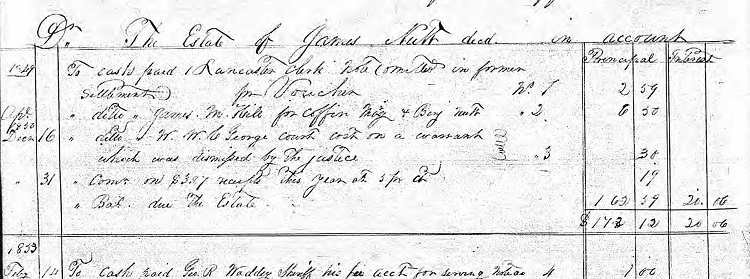
The estate of James Nutt recorded in the Lancaster County, Virginia Estate Records, 1853, indicating he had died before 1850. (Source: family search.org)
While living on the Nutt plantation, Harriet married an enslaved man named Isaac Nutt. Unfortunately, Isaac was sold to another slave owner shortly after their marriage. Harriet remarried, this time to an enslaved man named Vincent Mitchell from a neighboring plantation. Harriet and Vincent had five children before he was taken to Richmond, Virginia to be sold. Harriet’s owner, James Nutt, died around 1849 and his widow Jane died only a few years later leading ultimately to the division of the Nutt’s enslaved property around the beginning of the Civil War.
Harriet stated that, when the division occurred, her sister and her young son were taken to Richmond by their new owner to be sold. Unfortunately, her sister died on the way there and the owner, unable to get a good price for Harriet’s young son, merely left him there. During the chaos of the Civil War, Harriet was able to escape with her daughter Henrietta (1848-1881) to Washington, D.C. where the daughter likely met her husband, Edward Hunt (1815-1891). Edward had been born enslaved in Mississippi, worked on the Union trenches outside Vicksburg, and later served as a servant for a Union officer from Dover, Ohio in the 51st Ohio Infantry Regiment named Benjamin F. Croxton (1841-1900).

Depiction of an auction of enslaved persons in Richmond, 1856. (Source: loc.gov) 
A drawing by Edwin Forbes of African-American refugees in Northern Virginia, 1863. (Source: loc.gov) 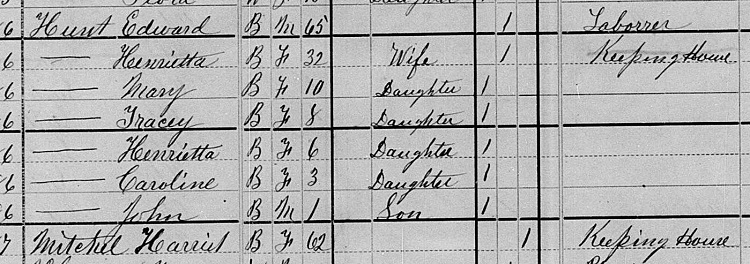
Harriet Mitchell and her daughter Henrietta’s family, recorded on the 1880 Census for New Philadelphia, Ohio. (Source: familysearch.org)
Harriet and her daughter’s family made their way to New Philadelphia, Ohio, via Pennsylvania, probably because of Edward’s experience with Captain Croxton. After arriving in New Philadelphia, Edward “Uncle Ned” Hunt, often spoke at churches and community gatherings about what life was like in the south under slavery. Edward worked as a night watchman for a local New Philadelphia Bank, run by another Civil War veteran and past-officer. Harriett meanwhile worked as a domestic and cleaned homes in the city. The extended family were living on West Front Street when Henrietta died in 1881, leaving Edward a widower.
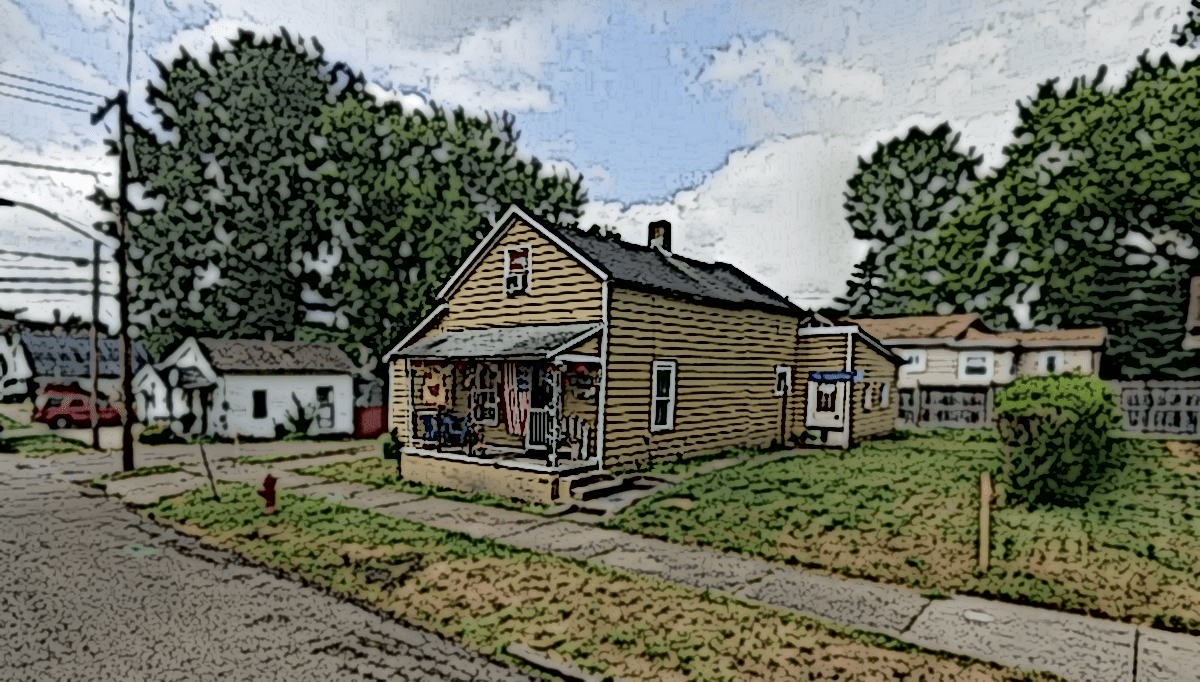
After Henrietta’s death, Harriet moved into a small, 1 1/2 story home on South 7th Street (modern 4th Street SW) in New Philadelphia. The house was a gable-ended version of the simple American Folk style with a full-width front porch and not much else. After Edward’s death in 1891, and his subsequent burial with full Grand Army of the Republic honors, Harriett’s grandchildren moved in with her. Harriet’s grandson, John Hunt (1878-1928), then serving in the 25th United States Infantry Regiment supported Harriett by sending money home to her regularly.
A year after her interview with the newspaper, Harriet Mitchell was moved to the County Infirmary where she soon died. Thanks to one reporter, her life story was not lost and a little house in New Philadelphia has a new story to tell.
Click here to read Harriet Mitchell’s original newspaper story.
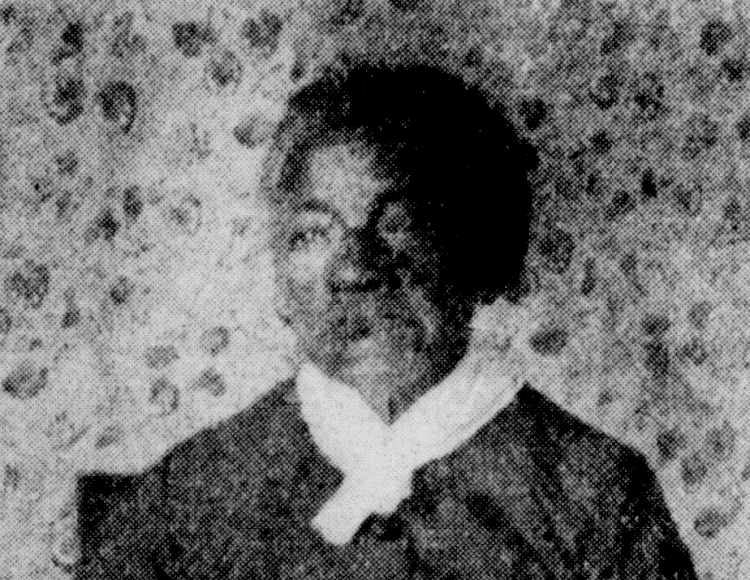
“Grandmother” Harriet Mitchell as photographed by the New Philadelphia, Ohio newspaper in 1903. (Source: newspaperarchive.com) 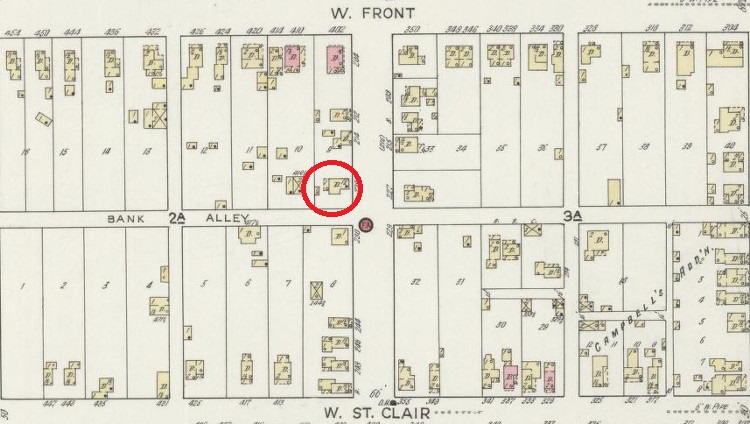
The Mitchell House depicted on the 1914 Sanborne Fire Insurance Map of New Philadelphia, Ohio. (Source: loc.gov) 
The Mitchell House in New Philadelphia, Ohio, 2023. (Source: google.com) 
The Mitchell House in New Philadelphia, Ohio, 2023. (Source: google.com)



© Noel B. Poirier, 2023.
 Tuscarawas County Stories