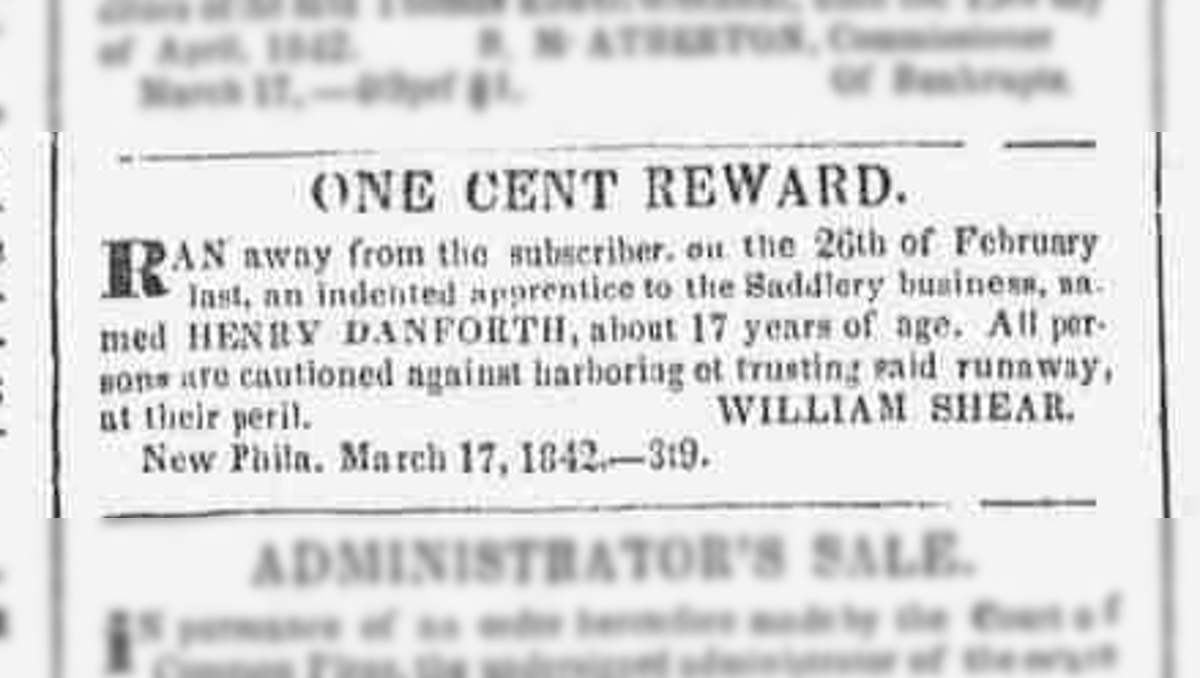
I stumbled across a runaway apprentice advertisement from 1842 and my curiosity got the better of me. I wanted to find out what happened to the apprentice whose master only offered one cent for his return. I was surprised by what I found.
If we are to believe the 1842 advertisement for runaway saddler apprentice Henry T. Danforth (1825-1862), he was someone not to be trusted. What caused Henry to runaway is from his New Philadelphia master is unknown, but his life after running away certainly points to a young man who wanted more than simply the small-town saddler’s life. Henry did just that, living a life that took him far away from New Philadelphia at times and that elevated him to the status of hero in a county and state not his own.
Henry was the son of Henry Danforth, Sr. (1793-1861), a carpenter by trade, and his wife Zilpha Cummings (1794-1864). Henry, Sr. and Zilpha were both born in Vermont and it was there that they were married in 1815. By the time Henry was born in 1825 the family had moved to Oneida, New York. They arrived in Tuscarawas County between 1830 and 1840, being first listed on the census for New Philadelphia (Lockport) in 1840. The younger Henry must have begun his apprenticeship before 1840 because he is not recorded in the Danforth household that year.
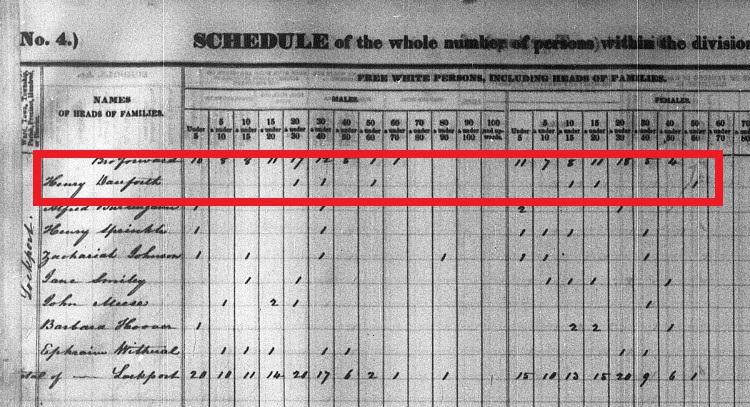
The Danforth family recorded on the 1840 Census for Lockport, Tuscarawas County, Ohio. (Source: familysearch.org) 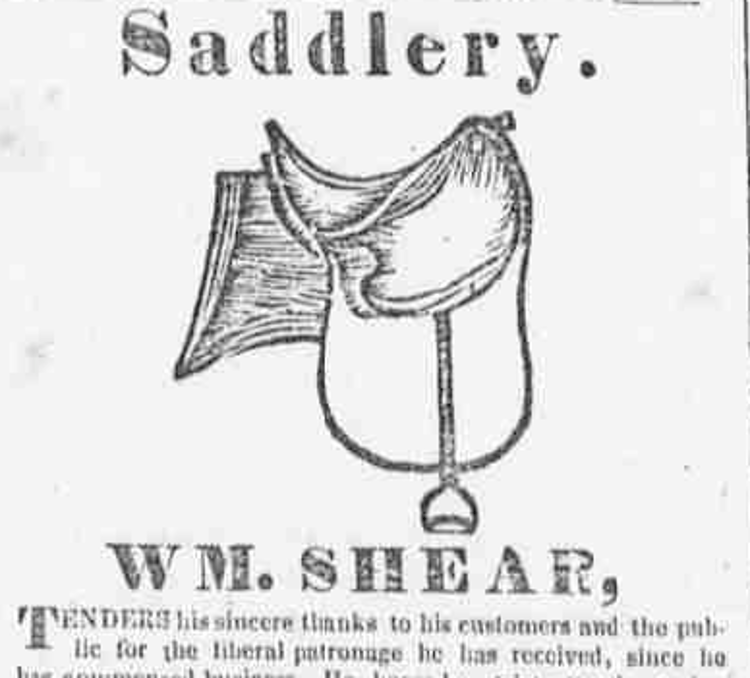
Advertisement for William Shear, Saddler and henry T. Danforth’s master, that appeared in the New Philadelphia, Ohio newspaper, July 1841. (Source: newspaperarchive.com) 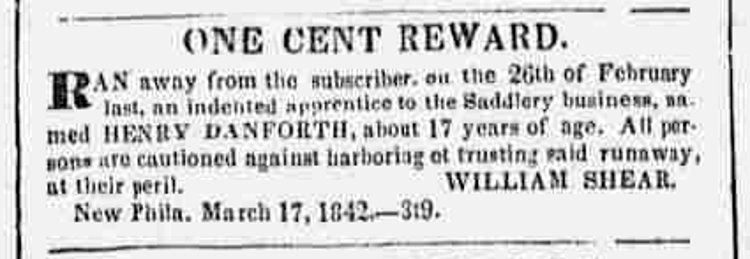
Advertisement placed by William Shear for his runaway apprentice, Henry T. Danforth, March 1842. (Source: newspaperarchive.com)
When Henry, Jr. ran away, he must not have run far because only four years later on October 9, 1846, in New Philadelphia, he enlisted for five years in the United States Army. From his enlistment record we learn that he was 5 foot 9 inches tall, had blue eyes and brown hair, was of fair complexion, and claimed to be a saddler by trade. Likely because of his skills as a saddler, he was assigned to serve in the United States Artillery. The war with Mexico had started only months before Henry, Jr.’s enlistment.
Henry, Jr. was assigned to Colonel Braxton Bragg’s artillery regiment where he served during the Mexican campaign, seeing action at the Battle of Buena Vista, where Bragg’s artillery were credited with contributing significantly to the victory. Henry, Jr. continued to serve with the regiment throughout the war and, by 1850, had risen to the rank of Corporal. After his enlistment expired in 1851 at Jefferson Barracks in St. Louis, Missouri his whereabouts are unclear, but he reenlisted for another five years in 1856 with the 1st United States Cavalry then operating in the Kansas Territory.
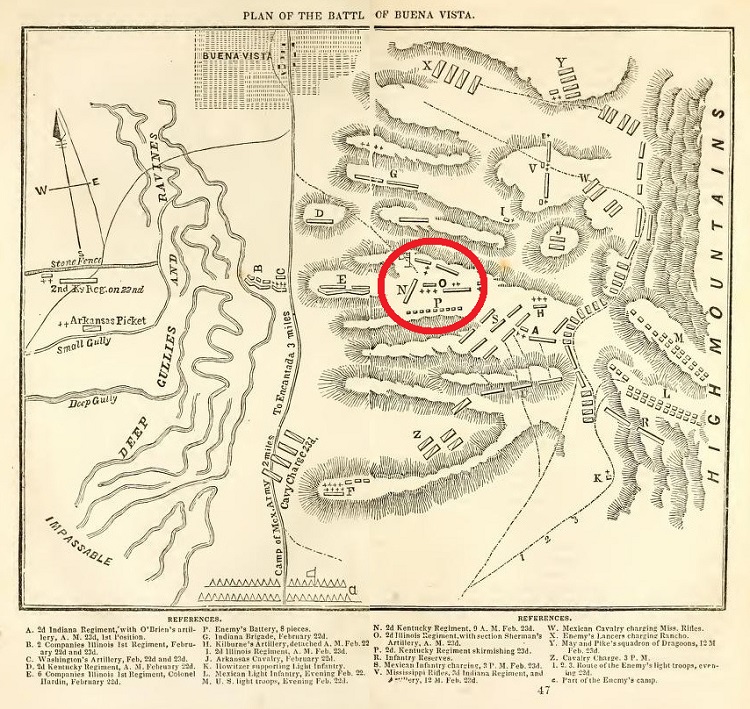
The location of Bragg’s artillery at the Battle of Buena Vista, Mexico (February 1847) on this map from the 1850 Pictorial History of the Mexican War, 1850. (Source: archive.org) 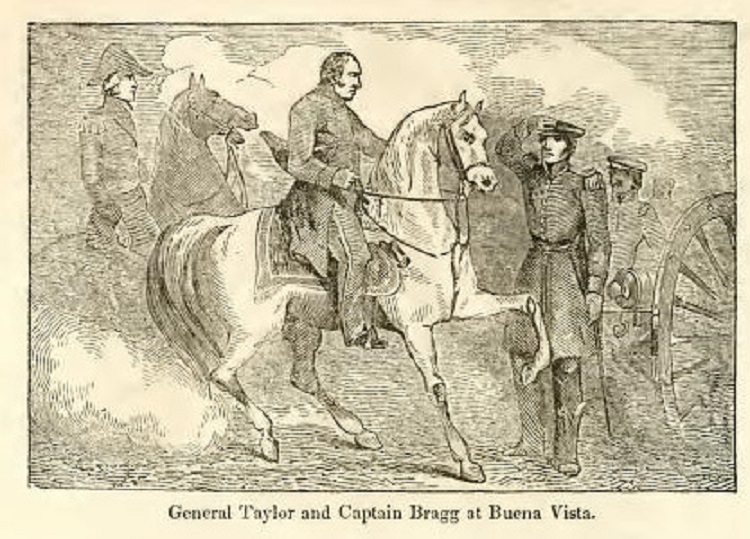
Image of General Zachary Taylor and then Captain Braxton Bragg at the Battle of Buena Vista, Mexico (February 1847) from the 1850 Pictorial History of the Mexican War, 1850. (Source: archive.org) 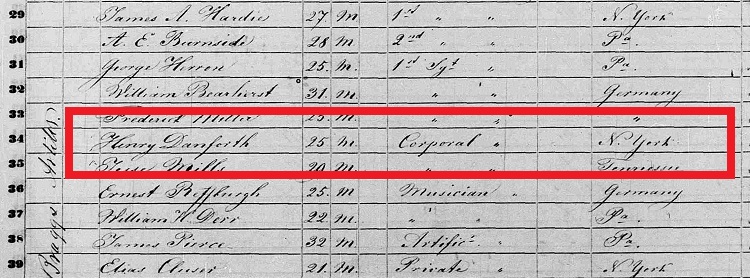
Henry T. Danforth recorded as a Corporal in Colonel Braxton Bragg’s regiment at Jefferson Barracks, Missouri in the 1850 census. (Source: familysearch.org)
Henry, Jr. was stationed with his regiment at Fort Leavenworth, Kansas and during his term of service took part in trying to keep the peace in “Bleeding Kansas” between pro and anti slavery factions, the Cheyenne War of 1857, and served under Captain “Jeb” Stuart. Henry Jr. rose to the rank of Sergeant in the 1st Cavalry by December 1858 and his family was lobbying the War Department for him to receive a Lieutenancy in the regiment or to be discharged. Henry, Jr. was discharged a year early and, by 1860, had returned home to New Philadelphia.
Sometime after July 1860 Henry Jr. moved to the small town of Mount Jackson in Lawrence County, Pennsylvania and, nine days after the attack of Fort Sumter in April 1862, he raised a company of men to serve three years in the “Mount Jackson Guards”. Henry, Jr. was named the unit’s first Captain and the company was shortly absorbed into the First Pennsylvania Light Artillery Regiment with the designation of Battery B. Shortly after the unit was created, Henry Danforth, Sr. died at his home in New Philadelphia. In only a few short months of service Henry, Jr. rose to the rank of Lieutenant Colonel, but declined a full Colonelcy and resigned because it would have required him to leave his unit. He reenlisted in the unit as a Private, but was given the rank of Second Lieutenant instead.
Battery B of the First Pennsylvania Light Artillery served principally in Maryland and Virginia during Henry Jr.’s service with the unit. The regiment was assigned to the Virginia Peninsula, and McClellan’s Peninsula Campaign, in June 1862. It was during the Battle of Glendale, part of the Seven Days Campaign, that Second Lieutenant Henry T. Danforth was killed in action attempting to hold off a Confederate assault on his position. Henry’s mother, after his death, applied for a pension from the Army and detailed her son’s many years of military service. She did not live long enough to collect though, dying in 1864. Henry, Jr. is buried, as a “local” hero, in the Westfield Presbyterian Cemetery in Mount Jackson, Pennsylvania.
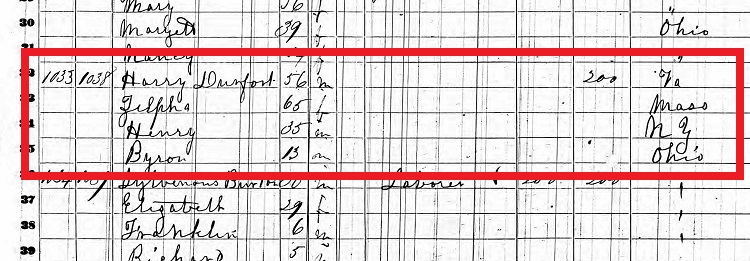
The Danforth family recorded on the 1860 census for New Philadelphia, Ohio. (Source: familysearch.org) 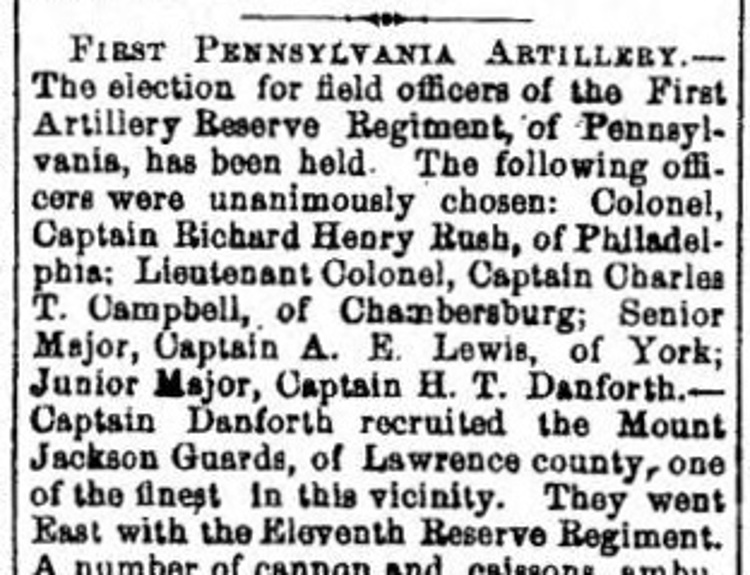
Mention of the Mount Jackson Guards and Henry T. Danforth in the Pittsburgh newspaper, August 1861. (Source: genealogybank.com) 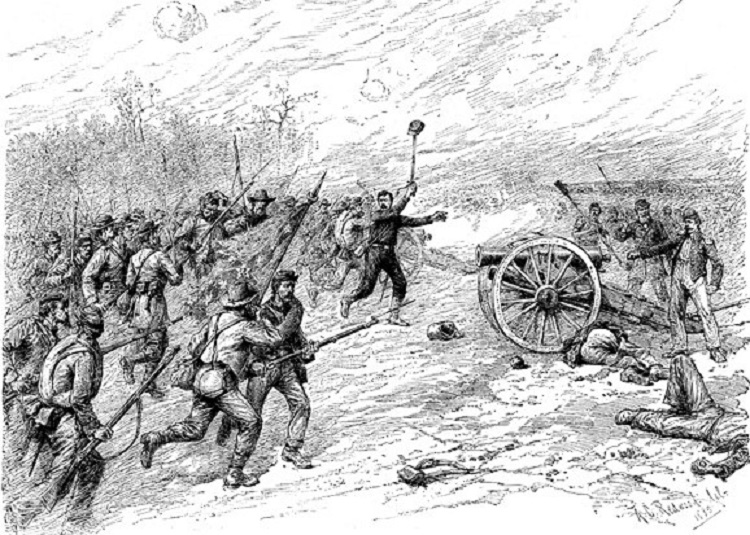
Drawing of Confederate troops assaulting a Union battery at the Battle of Glendale by Allen C. Redwood. (Source: wikipedia.com) 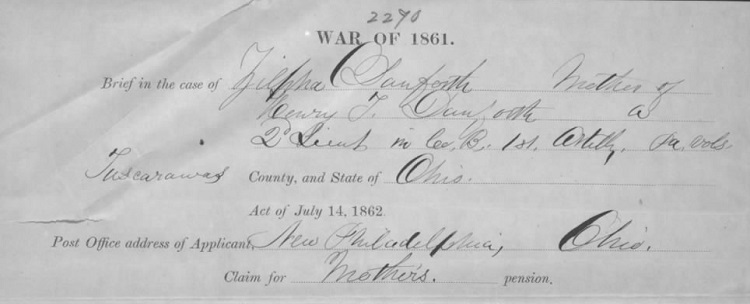
Excerpt from Henry T. Danforth’s mother’s application for a mother’s pension after the death of her son at the Battle of Glendale, 1863. (Source: fold3.com) 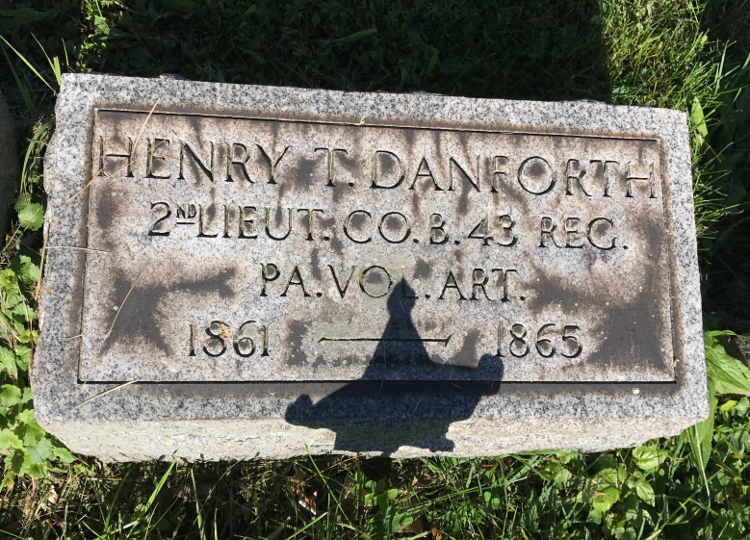
Henry T. Danforth’s headstone in the Westfield Presbyterian Cemetery in Mount Jackson, Pennsylvania, 2017. (Source: findagrave.com)



© Noel B. Poirier, 2023.
 Tuscarawas County Stories