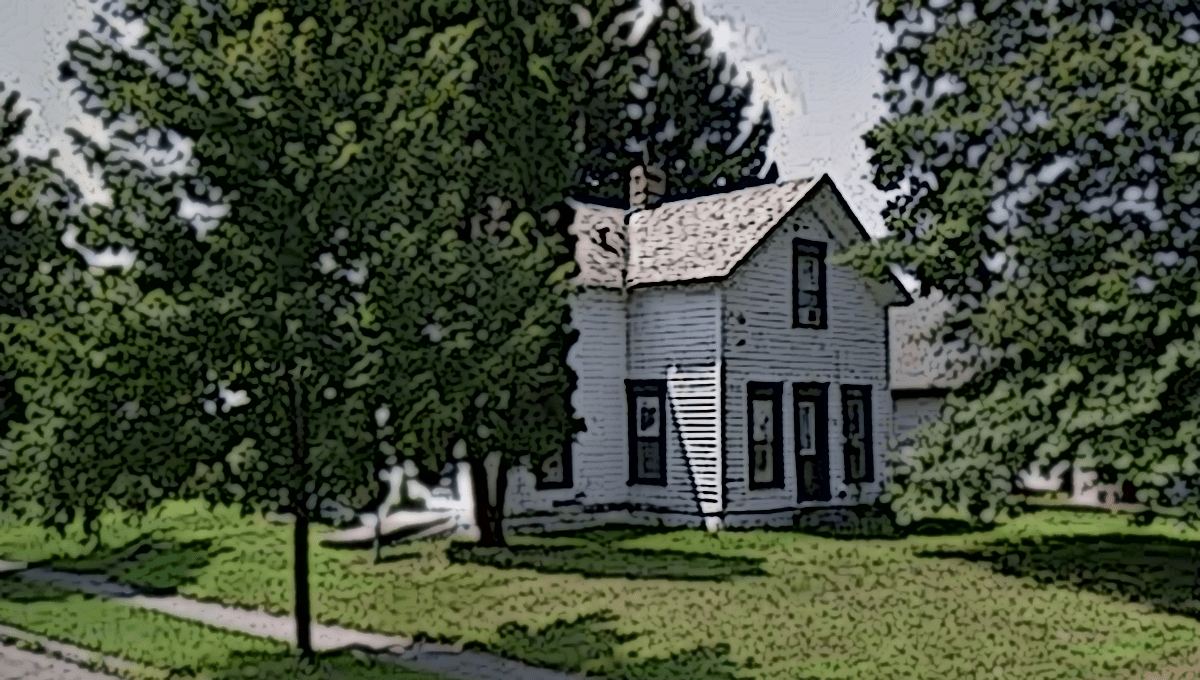
This house on the east end of Fair Avenue NE in New Philadelphia has definitely seen better days. That being said, its history is tied to a 19th century Swiss immigrant to America and Civil War veteran who lived in the city for nearly half a century.
The sources are somewhat contradictory when it comes to the arrival of the Weber family from Switzerland. Some records point to an 1853 arrival while others indicate and 1858 arrival. What is clear is that when Frederick Weber, Sr. (1802-1889) did arrive, he did so with his entire family in tow. Frederick and his wife Anna Barbara Ebersole (1815-1902) also brought with them to America at least four sons. Indications are that the family initially settled in the Cuyahoga County area upon their arrival in Ohio.
Frederick, Sr. was a blacksmith by trade, so it certainly made sense for him to locate somewhere he could easily find a market for his skills. He also made sure that his young sons all learned a trade as well and, by the time they were adults the family included a shoemaker, brickmaker, and two carpenters along with Frederick’s blacksmithing skills. The son who became a shoemaker, Frederick Weber, Jr. (1842-1914), enlisted in the 107th Ohio Volunteer Infantry Regiment during the Civil War and served until he was wounded during the Battle of Chancellorsville, Virginia.
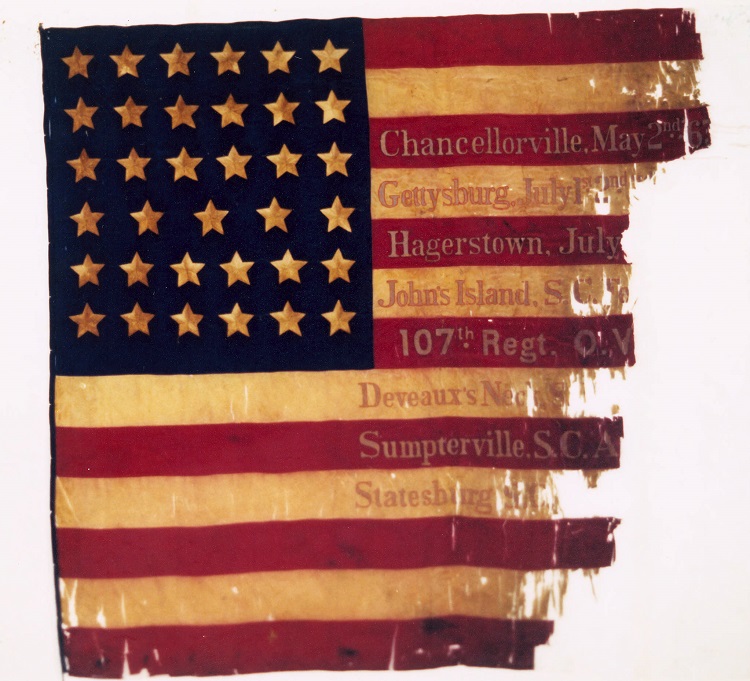
The battle flag of the 107th Ohio Volunteer Infantry Regiment, 1862-1865. (Source: ohiomemory.org) 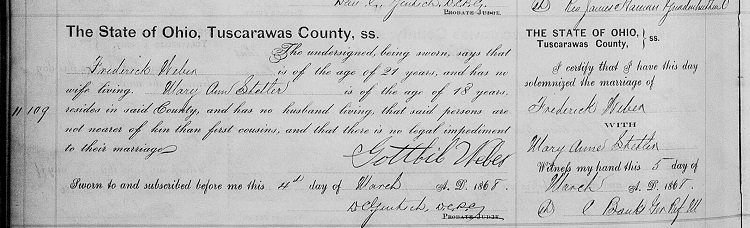
Marriage of Frederick Weber and Mary Anne Stettler recorded in the Tuscarawas County records, March 1868. (Source: familysearch.org) 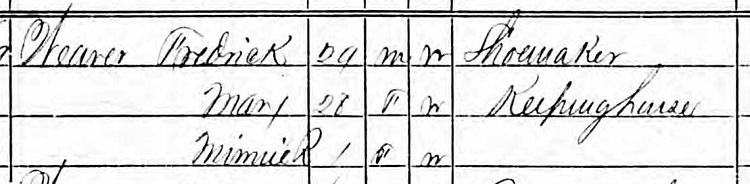
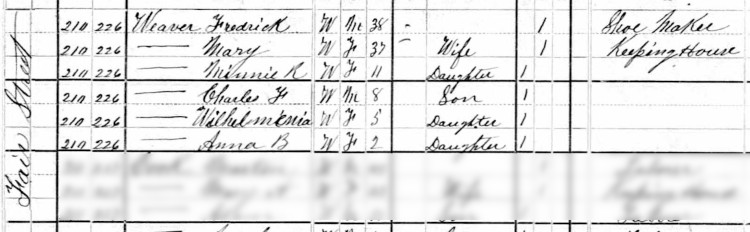
Frederick Weber and family (erroneously recorded as ‘Weaver’ in the 1870 census for New Philadelphia, Ohio. (Source: familysearch.org) 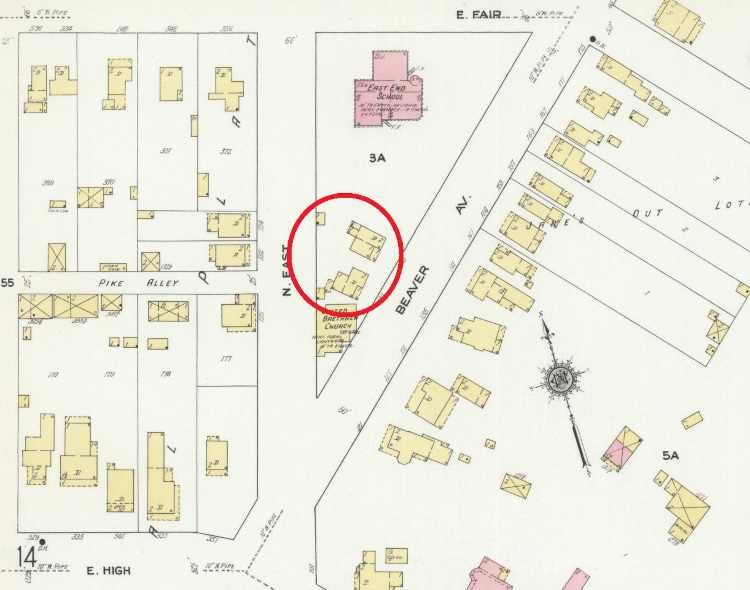
The Weber Family’s initial properties on Beaver Avenue, behind the United Brethren Church as seen on the 1910 Sanborne Map for New Philadelphia, Ohio. (Source: loc.gov)
The Weber family relocated to Tuscarawas County after the Civil War and settled on Beaver Avenue in New Philadelphia where their skills could be put to use in the growing community. Frederick, Jr. married fellow Swiss immigrant Mary Anne Stettler (1842-1937) in 1868 and the couple established their first household next door to Frederick’s parents on Beaver Avenue. The Weber homes in 1870 were located immediately behind the United Brethren Church that faced the intersection of High and Beaver Avenue. Ten years later, Frederick, Jr. and his growing family were recorded as living in their new home on East Fair Street.
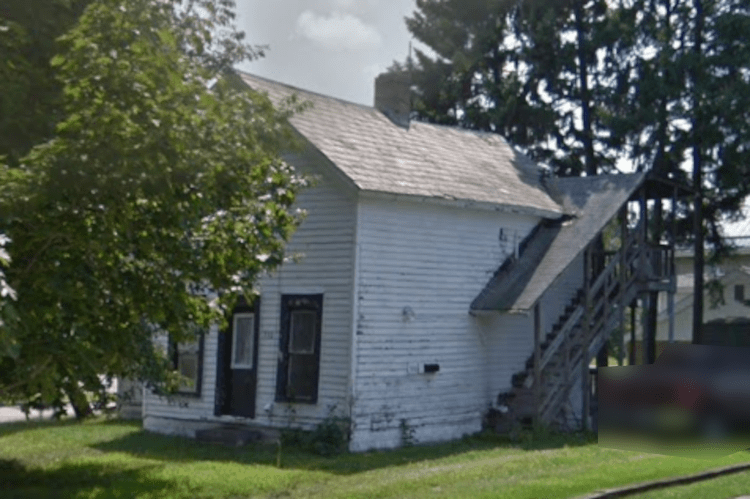
Whether the home at the corner of East Fair Street and East Street (modern 4th Street NE) was already built or Frederick had it built is unclear. Regardless, it certainly dates from well before the construction date recorded in the modern county auditor’s records. The home’s style is that of a two-story, gable-front family style of the very common National folk-architecture with a cross-gabled roof. If there was ever a porch over the centered front door, it was gone by 1910. At one point, there was a much larger 1-story addition off the back of the home, likely with a sloping shed-style roofline that added more living space. Undoubtedly, it was a modestly appointed home one would expect to find from a shoemaker and his family.
The Weber Family (again erroneously recorded as ‘Weaver’) on the 1880 Census for New Philadelphia, Ohio. (Source: familysearch.org) 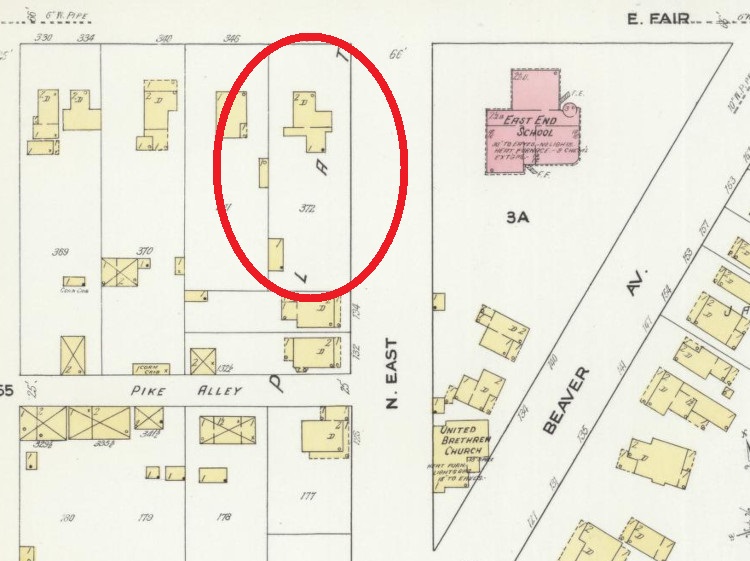
The Weber House as it appeared on the 1910 Sanborne Fire Insurance Map for New Philadelphia, Ohio. (Source: loc.gov) 
A 2014 aerial view of the Weber House showing much the same layout as the 1910 Sanborne Map, 2014. (Source: auditor.co.tuscarawas.oh.us)
Frederick Weber, Sr. died in May 1889 and left his estate to his wife Anna Barbara. She, and two of her unmarried sons, continued to live in the family home on Beaver Avenue until her death in 1902. Frederick, Jr. suffered from his war wounds throughout the remainder of his life and, in the mid-1890s, the pain forced him to retire from the shoe making business entirely. When one of their married daughter’s family grew to include eight children, the Webers decided to rent their Fair Street home to their son-in-law and their daughter; Frederick and Mary continued to live in their home as well.
Frederick, Jr.’s health continued to deteriorate after 1900 and, by 1913, he was confined to his bed. His confinement did not last very long though as Frederick, Jr. died in early June 1914. Frederick, Jr. was a lifelong member of the Grand Army of the Republic (G.A.R.) and the G.A.R. handled all of his funeral arrangements. Mary survived her husband by twenty-three years, passing away in March 1937 at the age of 94, still living in the home on Fair Avenue with her daughter. Frederick and Mary are buried in East Avenue Cemetery in New Philadelphia, Ohio.

Frederick Weber’s obituary, rife with errors, from the New Philadelphia, Ohio newspaper, June 1914. (Source: newspaperarchive.org) 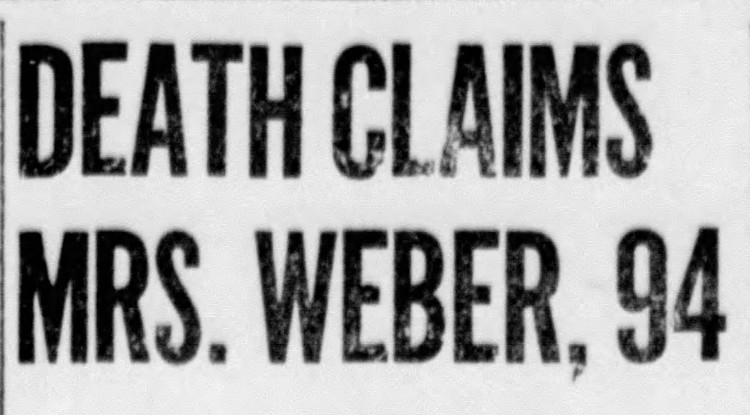
Mary Weber’s obituary in the New Philadelphia, Ohio newspaper, March 1937. (Source: findagrave.com) 
Frederick and Mary Weber’s headstone in East Avenue Cemetery, New Philadelphia, Ohio, 2011. (Source: findagrave.com) 
The Weber House on Fair Avenue NE in New Philadelphia, Ohio, 2023. (Source: google.com) 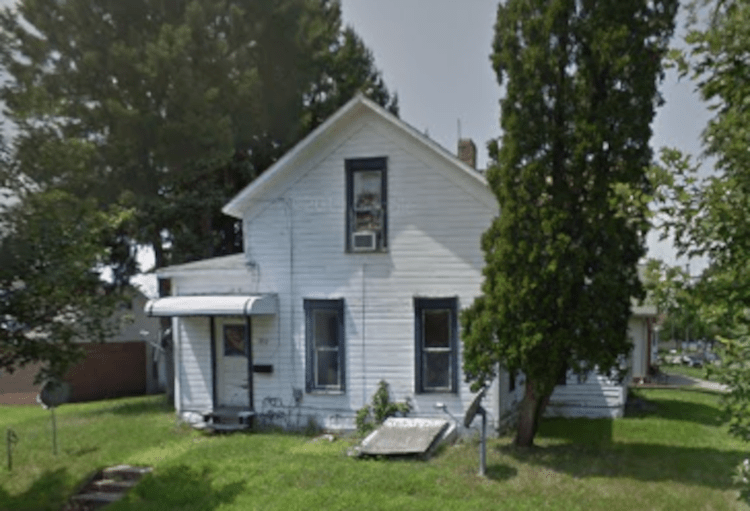

Like my stories?


© Noel B. Poirier, 2023.
 Tuscarawas County Stories